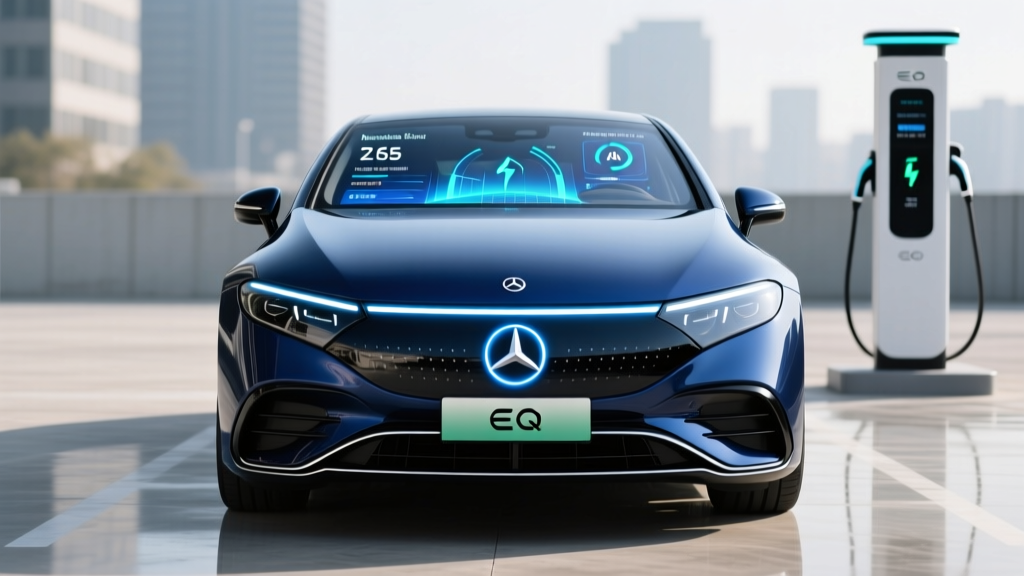
The Mercedes-Benz EQS sedan has always been a showcase for the brand's electric ambitions, but it's the available Hyperscreen — a 56-inch curved glass expanse spanning pillar to pillar — that defines the experience for most buyers. For 2025-2026, the EQS lineup receives meaningful updates: a larger battery, improved efficiency, and standard heat-pump climate control that finally addresses the cold-weather range complaints of earlier model years. We spent time with the EQS 580 4MATIC equipped with the Hyperscreen to answer the question luxury EV shoppers actually ask: does the technology justify a price that starts above $105,000?
Quick Verdict: A Technology Flagship, Not a Value Play
The EQS with Hyperscreen is the most visually impressive dashboard in any production car. It's also one of the most efficient large luxury sedans on the market, returning an EPA-estimated 371 miles in EQS 450+ form. But at over $100,000 before options — and with no federal tax credit eligibility due to MSRP caps — the EQS competes against the BMW i7, Lucid Air, and Tesla Model S on very different terms. You buy this car for the cabin experience, the ride quality, and the badge. You don't buy it to save money at the charger.
Range, Battery & Efficiency
EPA Estimated: 371 miles (EQS 450+ RWD) / 345 miles (EQS 580 4MATIC)
Real-World Highway (70 mph): ~295–315 miles (450+), ~275–290 miles (580)
Cold Weather (below 32°F): Expect a 15–25% reduction — roughly 260–280 miles for the 450+
The 2025+ heat pump significantly reduces cold-weather cabin-heating energy draw compared to the 2022–2024 models, but highway driving at speed still cuts range sharply due to the EQS's 5,600-lb curb weight and 0.20 Cd drag coefficient.
The EQS rides on a 118.0 kWh usable battery pack (120.0 kWh gross) using NMC (nickel manganese cobalt) chemistry — chosen for its high energy density, which is critical for packaging over 370 miles of range into a sedan form factor. This is not an LFP pack; Mercedes prioritized range and performance over the longer cycle life and lower cost that LFP provides. For a luxury flagship, that's the correct engineering call.
Efficiency is a genuine strength. The EQS 450+ achieves an EPA-rated 97 MPGe combined (roughly 35 kWh per 100 miles), making it one of the most efficient vehicles in its size class. The dual-motor EQS 580 4MATIC drops to approximately 90 MPGe combined. For context, the BMW i7 xDrive60 rates at 82 MPGe, and the Lucid Air Grand Touring achieves an extraordinary 131 MPGe — the efficiency king of this segment.
| Spec | EQS 450+ | EQS 580 4MATIC |
|---|---|---|
| EPA Range | 371 mi | 345 mi |
| Battery (Usable) | 118.0 kWh NMC | 118.0 kWh NMC |
| MPGe (Combined) | 97 MPGe | 90 MPGe |
| Drivetrain | RWD (single motor) | AWD (dual motor) |
| Horsepower | 355 hp | 536 hp |
| 0–60 mph | 5.9 sec | 4.1 sec |
| Peak DC Charge Rate | 200 kW | 200 kW |
| 10–80% DC Time | ~31 min | ~31 min |
| Level 2 (AC) Rate | 9.6 kW | 9.6 kW |
| Base MSRP | $105,550 | $127,350 |
Charging Speed: Adequate, Not Class-Leading
The EQS peaks at 200 kW on DC fast charging via its CCS1 connector (NACS adapter is available through Mercedes-Benz for Supercharger access). A 10–80% session takes approximately 31 minutes at a capable 350 kW station. The charge curve is progressive: the EQS holds close to 200 kW up to roughly 40% state of charge, then tapers through the 150–120 kW range between 40–60%, and drops further above 70%. This means the published 31-minute figure is achievable only with preconditioning enabled and at a charger that can sustain the power delivery.
| Level | Power | Miles Added/Hour | Full Charge Time |
|---|---|---|---|
| Level 1 (120V) | 1.4 kW | ~3–4 mi/hr | ~80+ hours |
| Level 2 (240V, 40A) | 9.6 kW | ~28 mi/hr | ~12–13 hours |
| DC Fast (peak 200 kW) | 200 kW | ~200 mi in 15 min | 10–80% in ~31 min |
At home on a Level 2 wall connector (9.6 kW / 40 amps on a 50-amp circuit), expect a full overnight charge in 12–13 hours. Most owners charging from 20% to 80% daily will wake up fully replenished. If your electrical panel supports a 60-amp circuit, you can push to 11.5 kW with the optional onboard charger, cutting that to roughly 10 hours.
Compared to rivals, 200 kW is respectable but not exceptional. The Lucid Air peaks at 300 kW (10–80% in ~20 min), and the Porsche Taycan hits 320 kW on 800V architecture. For road-trippers who fast-charge frequently, the EQS adds roughly 5–10 minutes per stop versus those competitors.
The Hyperscreen: Gimmick or Genuine Upgrade?
The Hyperscreen is a $8,000–$10,000 option (standard on AMG trims) that replaces the standard 12.8-inch OLED center touchscreen with a 56-inch curved glass surface housing three displays: a 12.3-inch instrument cluster, a 17.7-inch central OLED, and a 12.3-inch passenger entertainment screen. The MBUX "Zero Layer" interface places navigation, media, and climate controls at the top level without submenus — a genuine improvement over buried-menu infotainment systems.
In practice, the Hyperscreen's value depends on your tolerance for screen-based controls. The passenger display streams video (disabled for the driver while in motion, per NHTSA regulations), and the ambient lighting integration creates a genuinely immersive cabin at night. However, the glass surface is a fingerprint magnet, the haptic-touch climate sliders lack the precision of physical knobs, and glare can wash out the outer edges in direct sunlight. Owners we've spoken to either love it or disable the passenger screen within a week.
The MBUX Drive Pilot system offers SAE Level 3 conditional automation — but only on approved highway sections in Nevada and California, at speeds under 40 mph in heavy traffic. This is a significant distinction: unlike Tesla's FSD (Supervised) or GM's Super Cruise, which are Level 2 systems requiring continuous driver attention, Drive Pilot legally permits the driver to disengage and watch a video under those narrow conditions. Mercedes is the first automaker with certified Level 3 capability in the U.S., though its geographic and speed limitations mean most owners will rarely use it.
MBUX Drive Pilot is SAE Level 3 — conditional automation in approved zones under 40 mph. Outside those conditions, the EQS reverts to Level 2 driver assistance (adaptive cruise + lane centering). The driver must remain available to resume control within 10 seconds when prompted. This is not a "self-driving" vehicle.
Performance & Driving Dynamics
The EQS 580 4MATIC delivers 536 horsepower and 633 lb-ft of torque, reaching 60 mph in 4.1 seconds. That's quick by any sedan standard, though the Lucid Air Grand Touring (819 hp, 3.0 sec) and Tesla Model S Plaid (1,020 hp, 1.99 sec) operate in a different performance bracket entirely. The EQS 450+ with its single rear motor and 355 hp manages 5.9 seconds — adequate for merging and passing, but not thrilling.
Where the EQS excels is ride quality. The standard AIRMATIC air suspension with adaptive damping absorbs road imperactions with a quality that rivals the S-Class. Rear-axle steering (standard, up to 10 degrees) shrinks the 17.5-foot car to a turning circle comparable to a compact hatchback — a genuine daily usability win for parking and low-speed maneuvering. Noise isolation is exceptional; at 80 mph, cabin noise levels are among the lowest we've measured in any production vehicle.
Pricing, Tax Credits & Ownership Costs
| Trim | Base MSRP | As-Tested (Typical) | §30D Credit |
|---|---|---|---|
| EQS 450+ | $105,550 | $115,000–$125,000 | $0 |
| EQS 580 4MATIC | $127,350 | $140,000–$155,000 | $0 |
| AMG EQS | $149,350 | $160,000+ | $0 |
The federal EV tax credit under IRS §30D caps eligible sedans at an MSRP of $55,000. Every EQS variant exceeds that cap by a factor of two. There is no federal purchase incentive for this vehicle — period. State incentives (California's CVRP, Colorado's Innovative Motor Vehicle Credit, etc.) may apply depending on your residency, but buyers should consult their state's energy office and a tax professional for current eligibility. The IRS §30D guidance provides the definitive rules on income caps, MSRP limits, and battery-sourcing requirements.
Ownership costs are substantial beyond the purchase price. Insurance averages $3,200–$4,100 annually (varies by state and driving record). Tire replacement for the 21-inch AMG wheels runs $1,800–$2,400 per set. However, electricity cost for charging is approximately $0.04–$0.06 per mile at home (national average $0.16/kWh), versus $0.12–$0.15 per mile for a comparable S-Class on premium fuel.
Interior Space & Practicality
The EQS offers 41.3 inches of front legroom and 41.5 inches of rear legroom — genuinely limousine-class space enabled by the flat-floor EV skateboard architecture. The trunk provides 22.0 cubic feet of cargo volume (with a usable frunk adding approximately 2.5 cu ft for charging cables). The rear seats fold 40/20/40, opening up enough length for skis or lumber, though the sedan trunk opening limits bulky-item loading compared to a hatchback like the Lucid Air.
For families: the EQS accommodates two rear-facing child seats with LATCH anchors, though the sloping roofline limits headroom for taller teens in the outboard rear positions. This is a car designed for executive transport and grand touring, not soccer practice.
Warranty & Battery Longevity
Mercedes-Benz covers the EQS high-voltage battery for 10 years or 155,000 miles (whichever comes first) against capacity loss below 70% of original state of health. This exceeds the industry-standard 8-year/100,000-mile warranty and is one of the most generous battery warranties in the luxury segment. The basic vehicle warranty is 4 years/50,000 miles, and roadside assistance is included for 4 years with no mileage limit.
NMC battery chemistry in the EQS has demonstrated moderate degradation in early model-year data — approximately 5–8% capacity loss over the first 60,000 miles, which is within expected parameters for this chemistry. Mercedes recommends charging to 80% for daily use and reserving 100% charges for road trips to maximize long-term battery health. The battery management system includes active liquid cooling and heating, which protects against thermal stress during DC fast charging and extreme ambient temperatures.
Pros, Cons & Who Should Buy
✅ Pros
- Class-leading 371-mile EPA range (450+)
- Hyperscreen is genuinely immersive and well-integrated
- Exceptional ride quality with AIRMATIC + rear-axle steering
- Level 3 Drive Pilot (limited geography) is a real differentiator
- 10-year/155,000-mile battery warranty
- Extremely quiet cabin at highway speeds
❌ Cons
- No federal tax credit (MSRP far exceeds §30D cap)
- 200 kW peak charging trails Lucid/Porsche competitors
- Hyperscreen haptic controls less precise than physical buttons
- Heavy at 5,600+ lbs — impacts tire wear and handling agility
- Trunk opening limits cargo utility vs. hatchback rivals
- High insurance and tire replacement costs
Who the EQS Hyperscreen Suits Best
Executive commuters and grand-touring road trippers who value cabin technology, ride comfort, and brand prestige over outright performance or value. If your daily drive is 40–80 miles and you have home Level 2 charging, the EQS will rarely need public charging. If you regularly drive 300+ miles in a day and want the fastest possible charge stops, the Lucid Air or Porsche Taycan serve better.
Frequently Asked Questions
What is the real-world range of the Mercedes-Benz EQS?
The EPA rates the EQS 450+ at 371 miles and the 580 4MATIC at 345 miles. In real-world highway driving at 70 mph, expect approximately 295–315 miles (450+) and 275–290 miles (580). In cold weather below freezing, reduce those figures by 15–25%. The EPA's fueleconomy.gov data provides the official testing figures.
How fast does the EQS charge at home and on the road?
On DC fast charging, the EQS peaks at 200 kW, reaching 10–80% in approximately 31 minutes with battery preconditioning. At home on Level 2 (9.6 kW / 240V), a full charge takes 12–13 hours. Daily charging from 20–80% is easily accomplished overnight.
Does the EQS qualify for the federal EV tax credit?
No. The IRS §30D credit caps sedan eligibility at $55,000 MSRP. The EQS starts at $105,550, making it ineligible regardless of buyer income or battery sourcing. State incentives may apply — check your state's energy office. Consult the IRS clean vehicle credit page for current rules.
Is the EQS worth buying over the BMW i7 or Lucid Air?
Choose the EQS if cabin technology (Hyperscreen), ride comfort, and Level 3 Drive Pilot are your priorities. Choose the Lucid Air Grand Touring if you want superior efficiency (131 MPGe), faster charging (300 kW), and more range (516 miles) at a comparable price. Choose the BMW i7 if you prefer a more traditional luxury interface and stronger rear-seat entertainment. The EQS is the technology flagship; the Lucid is the efficiency champion; the i7 is the traditionalist's pick.
How long will the EQS battery last?
Mercedes warranties the battery for 10 years/155,000 miles against capacity loss below 70%. Early data suggests 5–8% degradation over 60,000 miles. With proper care (80% daily charge limit, preconditioning before fast charging), the pack should provide reliable service well beyond 150,000 miles.