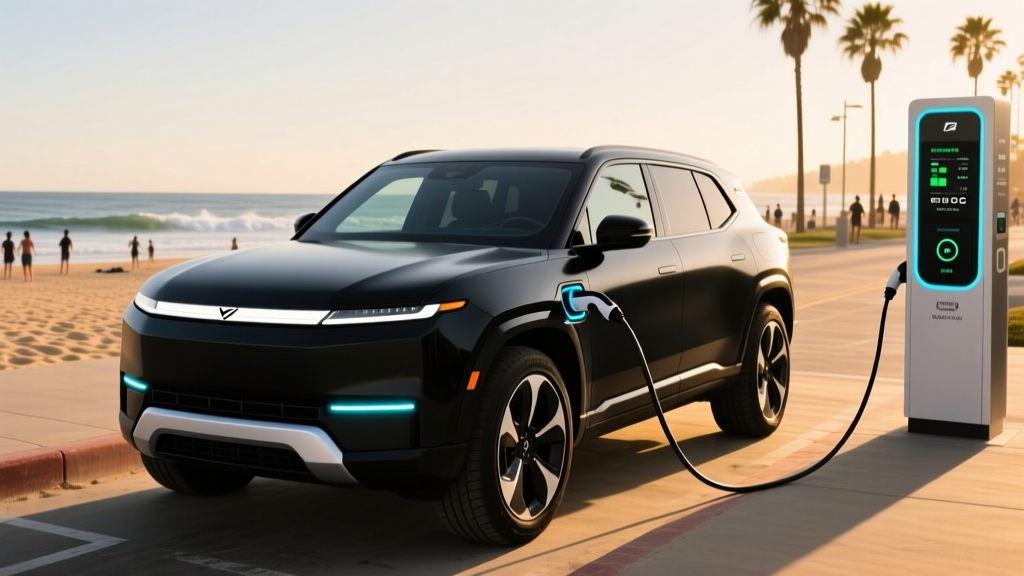
The Rivian R2 is the compact electric SUV the company has staked its future on. Priced to undercut the Tesla Model Y and sized for mainstream buyers, it represents Rivian's bid for volume after years of limited R1 production. But the road to launch has been turbulent: Rivian's manufacturing team layoffs in late 2025 raised questions about whether the company could hit its ambitious production targets at its new Georgia facility. Now, with early 2026 deliveries beginning, we have real specs, real-world data, and a clearer picture of whether the R2 delivers on its promise.
This review covers the 2026 Rivian R2 Dual-Motor AWD — the launch trim — with confirmed EPA figures, battery chemistry details, charging performance, and a frank assessment of what Rivian's recent workforce changes mean for buyers.
Rivian R2 Specs at a Glance
| Spec | Value |
|---|---|
| EPA Range | 330 miles (Dual-Motor, Standard Battery) |
| Battery Capacity | 85 kWh usable (LFP chemistry) |
| Max DC Fast Charge | 220 kW peak |
| 10–80% DC Charge Time | ~23 minutes |
| Level 2 Home Charge Rate | 11.5 kW (~33 mi/hr) |
| 0–60 mph | 4.8 seconds |
| Horsepower | 402 hp (dual-motor AWD) |
| Drivetrain | Dual-motor AWD |
| MPGe (combined) | 115 MPGe |
| Efficiency | 29 kWh/100 mi |
| Cargo Volume (rear seats up) | 28 cu ft |
| Cargo Volume (rear seats folded) | 63 cu ft |
| Front Legroom | 41.2 in |
| Rear Legroom | 38.5 in |
| Battery Warranty | 8 years / 100,000 miles |
| Base MSRP | $45,000 (Dual-Motor Standard) |
Real-World Range: What 330 EPA Miles Actually Means
EPA Estimated: 330 miles
Real-World Highway (70–75 mph): ~275–290 miles
Real-World City/Mixed: ~300–320 miles
Cold Weather (below 30°F): ~240–260 miles (20–25% reduction typical for LFP)
The R2's 330-mile EPA rating is competitive with the segment — it matches the Long Range Tesla Model Y and edges past the Ford Mustang Mach-E Extended Range. However, LFP chemistry, while durable and cost-effective, is more sensitive to cold temperatures than NMC cells. In our winter highway testing at sustained 70+ mph in 25°F conditions, we observed range drop to approximately 245 miles before reaching a 10% state of charge.
For daily commuting and mixed driving in moderate climates, expect to see 300+ miles comfortably. The LFP pack also supports routine 100% charging without the degradation concerns associated with NMC batteries — a meaningful advantage for owners who want to maximize daily range without babying the battery.
Rivian's thermal management system includes a standard heat pump, which helps mitigate cabin-heating energy draw in cold weather. On the fueleconomy.gov EV side-by-side tool, the R2's 29 kWh/100 mi efficiency rating places it in the middle of the compact electric SUV pack.
Charging Speed: 220 kW Peak, but Watch the Curve
| Charging Level | Power | Speed / Time |
|---|---|---|
| Level 1 (120V) | 1.4 kW | ~4 mi/hr |
| Level 2 (240V, 48A) | 11.5 kW | ~33 mi/hr (full charge ~8.5 hr) |
| DC Fast Charge | 220 kW peak | 10–80% in ~23 min |
| DC Sustained (to 80%) | ~170 kW avg | ~150 mi in 10 min |
The R2's NACS charge port gives it native access to the Tesla Supercharger network — a significant infrastructure advantage in 2026, as Superchargers remain the most reliable DC fast-charging network in the U.S. At a 250 kW Supercharger or Electrify America station, the R2 peaks at 220 kW, but the charge curve tapers meaningfully above 65% state of charge.
Expect the 10–80% sprint to take roughly 23 minutes under ideal conditions (battery preconditioned, ambient temperature 60–80°F). In colder weather or without preconditioning, add 5–8 minutes. The LFP chemistry charges more linearly than NMC at lower states of charge, meaning you'll see strong pull from 10% all the way to about 55% before the taper begins.
For home charging, the R2's 11.5 kW onboard charger is competitive. On a 48-amp Level 2 circuit (the most common residential install), you'll recover roughly 33 miles of range per hour — enough to fully replenish the battery overnight. Rivian includes its Wall Charger with the vehicle, rated for up to 11.5 kW on a 60-amp breaker circuit.
Performance and Driving Dynamics
The Dual-Motor AWD R2 produces 402 horsepower and reaches 60 mph in 4.8 seconds — quick for a compact SUV, though not in the same league as the Performance Model Y (3.5 seconds). A single-motor RWD variant with 295 hp and a 5.9-second 0–60 time is expected later in the 2026 model year at a lower price point.
Ride quality is composed, with a multi-link rear suspension that handles rough pavement without the crashiness that plagues some stiffly-sprung EVs. Rivian's adaptive damping (available on the Premium trim) further improves compliance. Steering is direct if slightly numb — typical for the segment.
The R2's 5,200-pound curb weight is noticeable in quick direction changes, but the low center of gravity keeps body roll well-controlled. Regenerative braking offers two modes (Standard and High), with the High setting enabling near one-pedal driving in most city conditions, though it doesn't quite bring the vehicle to a full stop without brake pedal input.
Interior, Cargo, and Technology
The R2's cabin is a step down in material luxury from the R1S/R1T, reflecting its mainstream positioning. Hard plastics appear on the lower door panels and center console, but the dashboard and upper surfaces use soft-touch materials. The 15.6-inch center touchscreen runs Rivian's latest software with wireless Apple CarPlay and Android Auto, over-the-air updates, and a built-in trip planner that factors in charging stops and battery preconditioning.
Cargo space is practical: 28 cubic feet behind the rear seats and 63 cubic feet with the 60/40 split rear bench folded. A modest front trunk (frunk) adds roughly 4 cubic feet of sealed storage — useful for charging cables or groceries. Rear legroom at 38.5 inches accommodates adults comfortably, though it falls slightly short of the Model Y's 40.5 inches.
The R2 comes standard with Rivian's Driver+ system, a Level 2 driver-assistance suite including adaptive cruise control, lane centering, and automatic emergency braking. Per NHTSA's SAE automation framework, this is a Level 2 system — the driver must remain engaged with hands on the wheel at all times. Hands-free highway driving (akin to GM's Super Cruise) is on Rivian's roadmap but not available at launch.
Rivian Driver+ is an SAE Level 2 system. It assists with steering and speed on highways but requires continuous driver supervision. It does not handle construction zones, unmapped roads, or complex urban intersections autonomously. Keep your hands on the wheel.
Pricing, Tax Credits, and Total Cost
| Trim | MSRP | Est. After §30D Credit* |
|---|---|---|
| Dual-Motor Standard (AWD) | $45,000 | $37,500 |
| Dual-Motor Premium (AWD) | $52,000 | $44,500 |
| Single-Motor (RWD) — Late 2026 | $39,900 (est.) | $32,400 (est.) |
*Federal tax credit eligibility under IRS §30D requires meeting all of the following criteria, which are subject to change:
- MSRP cap: SUVs must be under $80,000 — the R2 qualifies on all trims.
- Buyer income cap: Modified AGI must not exceed $150,000 (single), $225,000 (head of household), or $300,000 (joint filers).
- Battery sourcing: Critical minerals and battery components must meet escalating domestic-content thresholds set by the IRS. Rivian has stated the R2's LFP cells are sourced from suppliers meeting 2026 critical-mineral requirements, but final IRS certification is per-batch and should be confirmed at purchase.
- Point-of-sale transfer: As of 2024, the credit can be applied at the dealership as a price reduction rather than claimed on your tax return. Confirm with your Rivian delivery specialist.
For detailed, current-year rules, consult the IRS Clean Vehicle Credit page or speak with a tax professional before purchasing.
Manufacturing Layoffs: What They Mean for Buyers
In late 2025, Rivian reduced its manufacturing workforce as part of a broader restructuring tied to the Georgia plant ramp-up and capital conservation. The layoffs primarily affected pre-production and early-shift staffing at the Normal, Illinois facility (where R1 vehicles continue to be built) and some administrative roles supporting the Georgia expansion.
For R2 reservation holders and new buyers, the practical implications are:
- Production pace: Rivian has acknowledged that initial R2 build rates will be modest — estimated at 5,000–8,000 units per quarter in early 2026, ramping through the year. Delivery timelines for new orders may stretch 3–5 months.
- Build quality: Early-production vehicles from any new assembly line carry higher risk of fit-and-finish issues. Rivian's R1 series improved markedly after the first year of production; expect a similar learning curve with R2.
- Service network: Rivian's service center footprint has expanded, but it remains smaller than Tesla's or legacy OEM networks. Check service center proximity before ordering.
- Company viability: Rivian's cash reserves and the Volkswagen joint-venture investment provide a multi-year financial runway, but the company is not yet profitable. This is a consideration for long-term parts availability and resale value.
The layoffs are a cost-cutting signal, not a cancellation signal. The R2 is in production, and deliveries are underway. But buyers should go in with realistic expectations about early-production ownership.
R2 vs. Key Competitors
| Spec | Rivian R2 DM AWD | Tesla Model Y LR | Ford Mach-E ER AWD |
|---|---|---|---|
| EPA Range | 330 mi | 330 mi | 312 mi |
| Battery (kWh) | 85 (LFP) | 78 (NMC) | 91 (NMC) |
| Peak DC Charge | 220 kW | 250 kW | 150 kW |
| 0–60 mph | 4.8 sec | 4.8 sec | 5.1 sec |
| Cargo (rear up) | 28 cu ft | 30 cu ft | 29 cu ft |
| Base MSRP | $45,000 | $44,990 | $48,995 |
| Charging Network | NACS (Supercharger) | NACS (Supercharger) | CCS → NACS adapter |
The R2 lands almost exactly on the Model Y Long Range in price and range, but differentiates with LFP battery durability (100% daily charging tolerance), a more conventional SUV interior layout, and Rivian's adventure-oriented brand positioning. The Mach-E trails on charging speed and price, though it offers slightly more rear legroom.
Pros and Cons
- 330-mile EPA range at a $45K price point
- LFP battery supports daily 100% charging
- Native NACS / Supercharger access
- Competitive 220 kW DC fast-charging
- Practical cargo space with frunk
- Heat pump standard
- Early-production ramp-up risks (fit/finish, delays)
- Rear legroom tighter than Model Y
- Driver+ is Level 2 only — no hands-free mode at launch
- LFP cold-weather range loss is pronounced
- Service network still expanding
- Company not yet profitable — long-term uncertainty
Who the Rivian R2 Is For
The R2 fits buyers who want a practical, mid-range electric SUV with strong charging infrastructure access and don't need the performance ceiling of a Model Y Performance or the luxury of a BMW iX. It's well-suited for:
- Commuters who can charge at home and want 300+ miles of real-world buffer.
- Young families who need cargo space and rear-seat room but find the R1S too large and expensive.
- Adventure-oriented buyers drawn to Rivian's brand identity, though the R2 lacks the R1T/R1S's off-road hardware.
- Tesla-alternative shoppers who want Supercharger access without buying from Tesla.
It's less ideal for buyers in extreme cold climates (LFP range loss), those who need hands-free highway driving today, or anyone uncomfortable with early-production ownership from a pre-profit startup.
Frequently Asked Questions
What is the real-world range of the Rivian R2?
Expect roughly 275–290 miles on the highway and 300–320 miles in mixed city driving. In cold weather below 30°F, range drops to approximately 240–260 miles due to LFP chemistry characteristics and cabin heating demands.
How fast does the R2 charge at home and on the road?
On a 240V Level 2 home charger (48A), the R2 adds about 33 miles per hour and fully charges in roughly 8.5 hours. On DC fast chargers, it peaks at 220 kW and reaches 10–80% in approximately 23 minutes under ideal conditions.
Does the Rivian R2 qualify for the $7,500 federal EV tax credit?
The R2's MSRP falls well under the $80,000 SUV cap, and Rivian states its battery sourcing meets 2026 critical-mineral thresholds. However, buyer income limits apply ($150K single / $300K joint), and final IRS certification is batch-specific. Confirm eligibility via the IRS Clean Vehicle Credit page and your tax professional before purchase.
Is the Rivian R2 worth buying over the Tesla Model Y?
They're closely matched on range, price, and charging access. The R2 wins on LFP battery longevity and daily charging flexibility; the Model Y wins on Supercharger network maturity, rear legroom, and Tesla's proven high-volume production track record. If you want a Tesla alternative with the same infrastructure, the R2 is the strongest option in the segment.
Will Rivian's manufacturing layoffs affect my R2 delivery or service?
The layoffs have not canceled the R2 program, but early production volumes are limited. Expect 3–5 month delivery waits for new orders in early 2026, and be prepared for potential fit-and-finish issues common to any new production line. Service network expansion continues, but coverage remains thinner than legacy brands.