Quick Verdict: The Right-Size Electric SUV
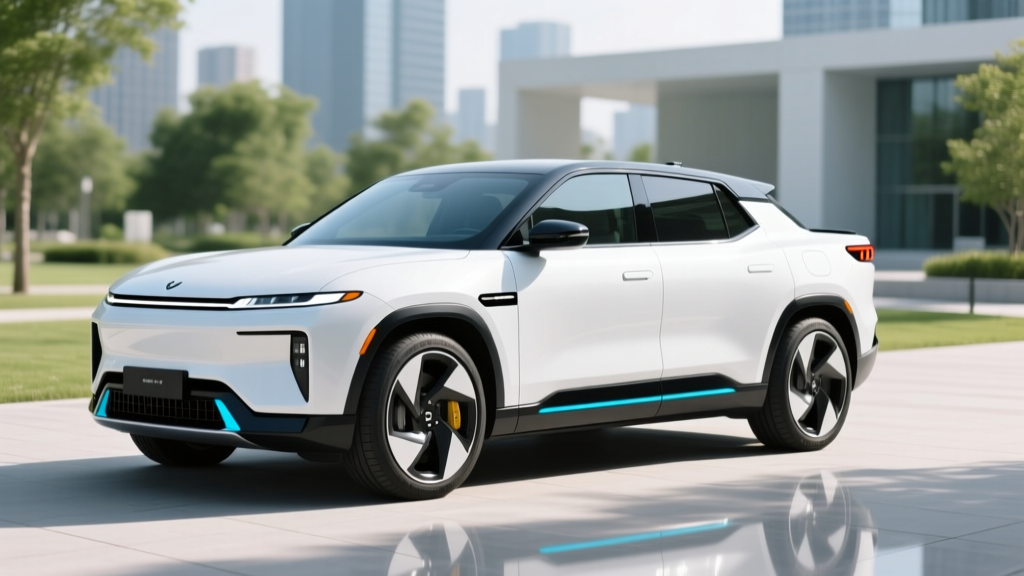
The Rivian R2 is the smaller, more affordable sibling to the R1S, built on a new mid-size platform designed to undercut the luxury EV SUV segment on price without sacrificing the adventure-ready ethos Rivian has built its brand on. For buyers who've been eyeing the R1S but balked at the $75,000+ starting price, the R2 slots in at a significantly lower entry point while retaining core Rivian DNA: a skateboard chassis, available dual-motor AWD, and a strong focus on outdoor utility.
This review covers everything from the Rivian R2 length and exterior dimensions to real-world range expectations, charging speeds, pricing after federal tax credits, and how it stacks up against the Tesla Model Y, Hyundai Ioniq 5, and Ford Mustang Mach-E. All specifications below reflect Rivian's announced preliminary figures for the 2026 model year. Final EPA certification and pricing may shift before deliveries begin.
Rivian R2 Length, Exterior Dimensions, and Curb Weight
The search interest around the Rivian R2 length is understandable — this is a vehicle positioned between compact crossovers and mid-size SUVs, and its physical footprint determines garage fit, parking ease, and interior volume. Here's what Rivian has disclosed:
| Dimension | Rivian R2 | Rivian R1S (for comparison) | Tesla Model Y |
|---|---|---|---|
| Overall Length | ~183 inches | 200.8 inches | 187.0 inches |
| Wheelbase | ~113 inches | 121.1 inches | 113.8 inches |
| Width (excl. mirrors) | ~76 inches | 81.8 inches | 75.6 inches |
| Height | ~66 inches | 73.0 inches | 63.9 inches |
| Curb Weight (est.) | ~4,800 lbs | ~6,800 lbs | ~4,400 lbs |
| Ground Clearance | ~8.5 inches | 14.9 inches (max) | 6.6 inches |
At roughly 183 inches, the R2 length is about four inches shorter than the Tesla Model Y, making it genuinely compact for a two-row electric SUV. The shorter overhangs and tall-for-its-class ride height give it a purposeful stance while keeping the footprint manageable for urban parking. The wheelbase is nearly identical to the Model Y, which typically translates to competitive rear-seat legroom despite the shorter overall length.
Range, Battery, and Efficiency
EPA Estimated Range: Up to 330 miles (Dual-Motor, largest battery option)
Real-World Expectation: ~265–290 miles at sustained highway speeds (70–80 mph); ~230–255 miles in cold weather (below 32°F) with cabin heating active. City and mixed driving will track closer to the EPA sticker.
Rivian has confirmed the R2 will use a lithium iron phosphate (LFP) battery pack, a chemistry choice that prioritizes cycle longevity, thermal stability, and lower cost over maximum energy density. The estimated usable capacity is approximately 75 kWh for the standard pack and closer to 92 kWh for the extended-range option that achieves the 330-mile target.
| Spec | Standard Range | Extended Range |
|---|---|---|
| Battery Chemistry | LFP | LFP |
| Usable Capacity (est.) | ~75 kWh | ~92 kWh |
| EPA Range (est.) | ~270 miles | ~330 miles |
| Efficiency (est.) | ~28 kWh/100mi (~120 MPGe) | ~28 kWh/100mi (~120 MPGe) |
The LFP chemistry decision is significant. LFP batteries tolerate regular 100% charging without the degradation concerns associated with NMC packs — meaning daily charging to full is fine, and the usable window is effectively larger than the raw kWh number suggests. However, LFP is heavier and less energy-dense, which is why the R2's extended-range pack is larger than comparable NMC packs in competitors. LFP also performs less optimally in extreme cold, so buyers in northern climates should budget for 20–30% range loss in sub-freezing winter conditions. Rivian's heat pump and thermal management system will mitigate some of this, but physics is physics.
For real-world context: on a 300-mile highway road trip at 75 mph in moderate temperatures, expect to arrive with roughly 10–15% state of charge remaining on the extended-range model. In winter, that same trip would require a charging stop.
Charging Speed: DC Fast Charge and Home Level 2
| Charging Level | Power / Rate | Speed | Notes |
|---|---|---|---|
| Level 1 (120V) | ~1.4 kW | ~4 miles/hour | Emergency/top-up only |
| Level 2 (240V, 48A) | ~11.5 kW | ~33 miles/hour | Full charge overnight (~9 hrs for extended pack) |
| DC Fast Charge (peak) | ~190 kW | 10–80% in ~28 min | Peak rate not sustained; tapers significantly above 80% |
The R2's estimated 190 kW peak DC fast-charge rate is adequate but not class-leading. The Hyundai Ioniq 5 peaks at 240 kW on an 800V architecture, and the Tesla Model Y Juniper refresh targets similar speeds. The practical difference: at a 350 kW Electrify America or Tesla Supercharger stall, the R2 will add roughly 150 miles in 15 minutes under ideal conditions, while the Ioniq 5 can add closer to 185 miles in the same window.
A critical nuance for LFP batteries: the charge curve tends to hold peak power longer in the mid-SoC range compared to NMC, but tapers sharply past 85–90%. For road-trip planning, plan your stops around the 10–80% window where charging is fastest. Rivian's navigation system should handle preconditioning automatically when a charger is set as your destination — a feature that warms the battery to optimal charging temperature and can shave several minutes off your stop.
For home charging, Rivian will offer a Wall Connector–style unit. On a 48-amp, 240V circuit (requiring a 60-amp breaker), expect roughly 33 miles of range added per hour. A full overnight charge from 10% to 100% takes approximately 8–9 hours for the extended-range pack. Home installation costs typically run $800–$2,200 depending on your electrical panel capacity and run length — budget for a potential panel upgrade if you're still on a 100-amp service.
Performance and Drivetrain
| Spec | Single-Motor RWD | Dual-Motor AWD |
|---|---|---|
| Horsepower | ~275 hp | ~450 hp |
| Torque (lb-ft) | ~300 | ~500 |
| 0–60 mph | ~6.5 sec | ~4.5 sec |
| Drivetrain | Rear-Wheel Drive | All-Wheel Drive |
| Towing Capacity (est.) | ~2,500 lbs | ~4,000 lbs |
The dual-motor AWD variant is where the R2 makes its performance statement. At an estimated 4.5 seconds to 60 mph, it's genuinely quick — competitive with the Tesla Model Y Long Range AWD and significantly quicker than most gas-powered compact SUVs. The single-motor RWD version prioritizes efficiency and affordability, and 6.5 seconds is more than adequate for daily driving and highway merging.
Rivian's skateboard platform gives the R2 a low center of gravity despite its crossover ride height, which should translate to composed handling on winding roads. The available air suspension (a Rivian signature) would enable adjustable ground clearance for light off-road use — something no Model Y or Ioniq 5 offers. The estimated 4,000-pound towing capacity on the AWD model is enough for a small camper trailer or a pair of dirt bikes, though it falls well short of the R1T's 11,000-pound rating.
Interior, Cargo, and Technology
The R2's interior follows the R1S/R1T design language: minimalist, material-forward, and oriented around a large central touchscreen. Rivian has confirmed a 15.4-inch center display and a smaller driver instrument cluster, along with a head-up display.
| Measurement | Rivian R2 (est.) | Tesla Model Y |
|---|---|---|
| Front Legroom | ~41 inches | 41.8 inches |
| Rear Legroom | ~37 inches | 41.6 inches |
| Cargo (behind 2nd row) | ~28 cu ft | 30.2 cu ft |
| Cargo (seats folded) | ~65 cu ft | 72.1 cu ft |
| Front Trunk (Frunk) | ~8 cu ft | 4.1 cu ft |
| Seating Capacity | 5 passengers | 5–7 passengers |
The Rivian R2 length translates to slightly less cargo volume than the Model Y, particularly with seats folded. However, the R2's boxier silhouette and taller roofline may offer better usability for bulky items like bikes or kayaks — and the frunk is substantially larger, which matters for gear storage on adventures. Rivian's signature Gear Tunnel (if offered on the R2) would provide additional enclosed storage that neither the Model Y nor Ioniq 5 can match.
On the technology front, Rivian's in-house software stack is among the best in the EV space. The R2 will ship with Rivian's latest ADAS suite, which includes adaptive cruise control, lane-centering assist, and automated parking. This is an SAE Level 2 driver-assist system — it requires continuous driver attention and hands-on or eyes-on supervision at all times. It is not autonomous driving. Rivian has hinted at a more advanced "Driver+" feature for highway hands-off capability (still Level 2 under the SAE framework), but availability and pricing for that feature remain unconfirmed.
Notable tech features include:
- Over-the-air software updates for performance, range optimization, and feature additions
- Integrated adventure features: trail maps, waypoint navigation, camp mode with climate control
- Vehicle-to-load (V2L) capability for powering external devices — a standout for camping and job-site use
- NACS (Tesla-style) charge port native, providing access to the Tesla Supercharger network without an adapter
Pricing, Trims, and Federal Tax Credit Eligibility
| Trim / Config | Est. Base MSRP | Est. After §30D Credit |
|---|---|---|
| Standard Range RWD | $45,000 | ~$37,500 (if eligible) |
| Standard Range AWD | $50,000 | ~$42,500 (if eligible) |
| Extended Range AWD | $57,000 | ~$49,500 (if eligible) |
The R2's headline price — starting around $45,000 — positions it directly against the Tesla Model Y Long Range and undercuts the R1S by roughly $30,000. But the federal tax credit picture requires careful attention.
- MSRP Cap: SUVs must be at or below $80,000 — all R2 trims clear this.
- Buyer Income Cap: Modified AGI must not exceed $150,000 (single), $225,000 (head of household), or $300,000 (joint). Verify against your tax situation.
- Battery Sourcing: Critical minerals and battery components must meet phased-in domestic/free-trade-agreement sourcing thresholds. LFP chemistry sourcing (largely Chinese supply chain) may affect eligibility — Rivian has not confirmed full §30D compliance for the R2 at launch.
- Point-of-Sale Transfer: Under current IRS rules, eligible buyers can transfer the credit to the dealer at purchase, reducing the purchase price directly rather than waiting for a tax refund.
- Assembly: Final assembly must occur in North America. The R2 will be built at Rivian's Normal, Illinois facility, satisfying this requirement.
Source: IRS §30D Clean Vehicle Credit. Tax credit rules are subject to legislative change. Consult a tax professional for your specific eligibility.
The battery sourcing requirement is the wildcard. LFP cells are predominantly manufactured by CATL and BYD in China, and the §30D critical-minerals and battery-component sourcing thresholds tighten annually. Rivian may source LFP cells from a free-trade-agreement partner or invest in domestic cell production to preserve credit eligibility, but until the company confirms compliance, buyers should not assume the full $7,500 credit will apply. Check fueleconomy.gov for the definitive eligibility list once the R2 is EPA-certified.
Warranty Coverage
| Coverage | Term |
|---|---|
| Battery Pack | 8 years / 100,000 miles (minimum 70% capacity retention) |
| Powertrain / Drive Units | 8 years / 100,000 miles |
| Bumper-to-Bumper | 5 years / 60,000 miles |
| Roadside Assistance | 5 years / 60,000 miles |
Rivian's existing warranty on the R1S and R1T is competitive with the EV segment standard. The 8-year/100,000-mile battery warranty with a 70% capacity retention floor aligns with Tesla, Hyundai, and Ford. The LFP chemistry should provide strong long-term degradation characteristics — industry data on LFP packs suggests 90%+ capacity retention at 150,000 miles under normal use, meaning most owners will never approach the warranty threshold.
Pros, Cons, and Who Should Buy
- 330-mile extended range is competitive for the price point
- LFP battery allows daily 100% charging without degradation worry
- Native NACS port — full Supercharger network access
- V2L capability for camping and job-site power
- Adventure-oriented features (trail nav, camp mode, air suspension option)
- Strong build quality reputation from R1S/R1T ownership
- Sub-$45K starting price (before credit) undercuts R1S dramatically
- 190 kW peak DC charging is slower than Ioniq 5 (240 kW) and some competitors
- LFP cold-weather performance lags NMC — northern-climate buyers take note
- Cargo volume trails Model Y with seats folded
- §30D tax credit eligibility uncertain due to LFP battery sourcing
- Rear legroom may be tighter than Model Y (final dimensions pending)
- Rivian's service center network is still expanding — check local coverage
- Outdoor enthusiasts who want EV efficiency with genuine adventure capability (ground clearance, V2L, trail navigation)
- Two-person households or small families who don't need third-row seating but want more presence and utility than a compact hatchback
- Current R1S owners looking for a smaller daily driver or a second vehicle at a lower price point
- Buyers priced out of the R1S who want Rivian's design and software experience under $55K
Consider the Model Y instead if: maximum cargo space, the fastest Supercharger charging, and a proven service network are your top priorities.
Consider the Ioniq 5 instead if: 800V ultra-fast charging and a more distinctive design language matter most, and you don't need off-road capability.
Frequently Asked Questions
What is the Rivian R2 length?
The Rivian R2 length is approximately 183 inches, making it about four inches shorter than the Tesla Model Y and roughly 18 inches shorter than the R1S. This compact footprint aids parking and urban maneuverability while the ~113-inch wheelbase preserves interior space.
What is the real-world range of the Rivian R2?
The EPA-estimated range for the extended-range AWD model is targeted at 330 miles. In real-world highway driving at 70–80 mph, expect approximately 265–290 miles. In cold weather (below freezing), plan for 230–255 miles due to LFP chemistry's sensitivity to low temperatures and increased cabin heating demand.
How fast does the Rivian R2 charge?
DC fast charging peaks at an estimated 190 kW, achieving a 10–80% charge in approximately 28 minutes under ideal conditions. At home on a 240V, 48-amp Level 2 charger, expect roughly 33 miles of range per hour, or a full overnight charge in 8–9 hours.
Does the Rivian R2 qualify for the federal EV tax credit?
The R2 meets the MSRP cap ($80,000 for SUVs) and North American assembly requirements. However, the §30D battery-sourcing requirements for LFP chemistry are complex and tighten annually. Rivian has not confirmed full credit eligibility. Buyer income caps ($150K single / $300K joint) also apply. Verify on irs.gov and with a tax professional before purchasing.
Is the Rivian R2 worth buying over the Tesla Model Y?
The R2 offers advantages in ground clearance, V2L capability, adventure features, and LFP battery longevity. The Model Y counters with more cargo space, a more mature Supercharger and service network, and potentially faster charging. If outdoor utility and a distinctive brand experience matter, the R2 is compelling. If you prioritize maximum efficiency, space, and charging speed, the Model Y remains a strong default choice.
When can I buy the Rivian R2?
Rivian has announced the R2 with production targeted for 2026 at its Normal, Illinois facility. Reservations are open with a refundable deposit. Final EPA-certified specs, pricing, and delivery timelines will be confirmed closer to production start. All specifications in this review are preliminary and subject to change.
Sources: Rivian R2 Official Page, IRS §30D Clean Vehicle Credit, fueleconomy.gov. All specifications are preliminary estimates based on manufacturer announcements and are subject to change prior to EPA certification and production.