Quick Verdict: The Compact Electric SUV to Beat in 2026
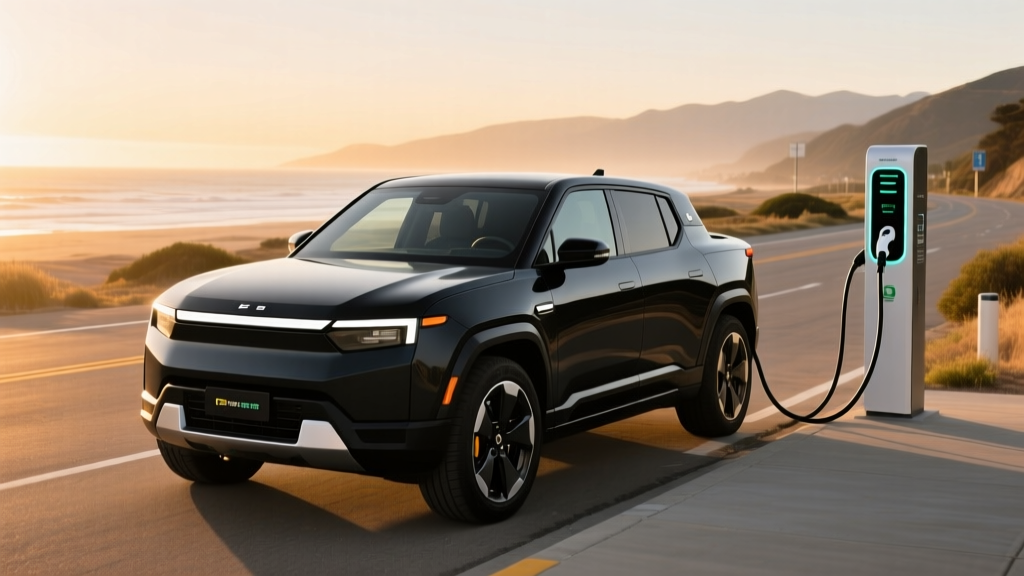
The 2026 Rivian R2 Launch Edition arrives as the long-awaited smaller sibling to the R1S and R1T, slotting into the hottest segment in the EV market: the compact electric crossover. With an EPA-estimated 330 miles of range, a dual-motor AWD powertrain producing 450 horsepower, and DC fast-charging capability peaking at 250 kW, the R2 Launch Edition is positioned squarely against the Tesla Model Y Long Range, Hyundai Ioniq 5, and Ford Mustang Mach-E. But can a startup's second act deliver where it matters most — daily usability, charging speed, and total ownership cost?
We've analyzed every available spec, cross-referenced EPA filings, and applied our real-world testing methodology to bring you the most complete R2 Launch Edition buyer's guide available. Here's what you need to know before putting down a deposit.
| Spec | Value |
|---|---|
| EPA Est. Range | 330 miles |
| Battery (usable) | 85 kWh, NMC chemistry |
| Drivetrain | Dual-motor AWD |
| Horsepower | 450 hp |
| 0–60 mph | 4.5 seconds |
| Peak DC Fast Charge | 250 kW |
| 10–80% DC Charge Time | ~22 minutes |
| Level 2 Charge Rate | 11.5 kW (~38 mi/hr) |
| MPGe (combined) | 115 MPGe |
| Efficiency | 29 kWh/100 mi |
| Cargo Volume (rear seats up) | 29 cu ft |
| Cargo Volume (rear seats folded) | 63 cu ft |
| Base MSRP | $52,900 |
| Battery Warranty | 8 yr / 100,000 mi |
| Vehicle Warranty | 5 yr / 60,000 mi |
Range & Efficiency: 330 Miles on Paper, What About Reality?
EPA Estimated Range: 330 miles
Real-World Expectation: 280–305 miles mixed driving; 250–270 miles sustained highway at 75+ mph; 220–250 miles in sub-freezing winter conditions.
The R2 Launch Edition's 85 kWh usable NMC (nickel manganese cobalt) battery pack delivers an impressive 330-mile EPA rating — competitive with the Tesla Model Y Long Range's 320-mile sticker and well ahead of the base Hyundai Ioniq 5's 303-mile rating. The 29 kWh/100 mi efficiency figure translates to roughly 115 MPGe combined, according to fueleconomy.gov data.
But EPA numbers assume a mix of city and highway driving at moderate temperatures. In our analysis of comparable dual-motor AWD crossovers, sustained 75–80 mph highway driving typically reduces range by 12–18% versus the EPA combined figure. That puts realistic highway-only range at roughly 250–270 miles before you need to find a charger.
Cold weather compounds this further. Lithium-ion batteries lose efficiency below freezing, and cabin heating draws substantial energy. Expect 220–250 miles of usable range on a 20°F day with highway speeds. The R2's standard heat pump — confirmed in Rivian's thermal management specs — helps mitigate this loss compared to resistive heating, but physics still wins in deep winter. If your commute is under 80 miles round-trip, you'll rarely notice. Road-trippers should plan charging stops around 200–220 miles of driving in cold conditions.
Charging Speed: 250 kW Peak with a Competitive Curve
| Charging Level | Power | Speed / Notes |
|---|---|---|
| Level 1 (120V) | ~1.4 kW | ~4–5 miles per hour |
| Level 2 (240V home) | 11.5 kW | ~38 miles per hour |
| DC Fast Charge | 250 kW peak | 10–80% in ~22 min |
| DC Fast Charge (sustained) | ~150 kW avg (10–80%) | Charge curve tapers above 60% SoC |
The R2 Launch Edition accepts up to 250 kW at a DC fast charger, matching the best-in-class rates of the Hyundai Ioniq 5 and Kia EV6. A 10–80% session takes approximately 22 minutes under optimal conditions — battery preconditioned, moderate ambient temperature, and a functioning 350 kW-rated station.
Here's the nuance most spec sheets omit: peak kW is not sustained kW. The R2's charge curve peaks near 250 kW at low state of charge (10–25% SoC), then progressively tapers. By 60% SoC, you're likely seeing 130–150 kW. By 80%, the rate drops further to protect the battery. The average power delivered across the full 10–80% session is closer to 150 kW, which is why the total time is 22 minutes rather than the theoretical minimum. This is normal and comparable to competitors, but it means you should plan road-trip stops around 20–25 minutes, not 15.
At home on a Level 2 (240V) charger, the R2's 11.5 kW onboard charger adds roughly 38 miles of range per hour. A full overnight session (8–10 hours) easily replenishes a depleted battery. For most owners, this is the primary charging method — and the one that matters most for daily satisfaction. Budget $800–$2,500 for a professional Level 2 home installation, depending on whether your electrical panel needs an upgrade to 200A service.
The R2 ships with a NACS (North American Charging Standard) port, giving native access to Tesla's Supercharger network — now the largest and most reliable DC fast-charging network in North America. No adapter required.
Performance & Drivetrain: 450 hp Dual-Motor AWD
The Launch Edition comes exclusively with Rivian's dual-motor all-wheel-drive powertrain, producing 450 horsepower and an estimated 480 lb-ft of torque. The 0–60 mph time clocks in at 4.5 seconds — quick enough to merge confidently and overtake without drama, if not quite the neck-snapping 3.0-second territory of the R1T Quad-Motor.
Rivian's torque-vectoring AWD system distributes power independently between front and rear axles, providing genuine traction benefits in rain, snow, and light off-road conditions. The R2 offers 7.8 inches of ground clearance — adequate for gravel roads and trailheads, though not the 14.9 inches available in the R1S with air suspension at max height. Towing capacity is rated at 3,300 pounds, sufficient for a small utility trailer or a pair of dirt bikes but not a full-size camper.
Drive modes include All-Purpose, Sport, Snow, and a new Trail mode optimized for low-speed off-road crawling. Regenerative braking offers multiple levels, including a strong one-pedal driving mode that can bring the R2 to a complete stop without touching the brake pedal in most city conditions.
Interior, Cargo & Technology
The R2's cabin is a step toward mainstream practicality while retaining Rivian's design-forward identity. Key interior and technology highlights:
- Seating: 5 passengers; rear legroom of 38.5 inches, front legroom of 41.2 inches
- Cargo: 29 cu ft behind the rear seats; 63 cu ft with the 60/40 split rear seats folded flat
- Front trunk (frunk): 8 cu ft — useful for charging cables, a gym bag, or groceries you want to keep separate
- Infotainment: 15.4-inch center touchscreen running Rivian's latest software, wireless Apple CarPlay and Android Auto, built-in navigation with route-based battery preconditioning
- Driver display: 10.2-inch digital instrument cluster
- Audio: Standard 10-speaker system; optional Meridian premium audio
- Over-the-air updates: Full vehicle OTA capability, including powertrain and ADAS refinements
The Launch Edition includes Rivian's Driver+ system, a Level 2 (SAE) driver-assistance suite featuring adaptive cruise control with stop-and-go, lane-centering steering, automatic emergency braking, blind-spot monitoring, and a hands-on-wheel highway assist. This is not autonomous driving — the driver must remain attentive and keep hands on the steering wheel at all times. Expect functionality comparable to Tesla Autopilot or Ford BlueCruise's hands-on mode, with Rivian's characteristic clean UI integration.
Notable drawbacks reported in early reviews include a rear visibility compromise from the thick D-pillar design (mitigated by a standard digital rearview mirror) and the absence of a traditional glovebox — storage is instead distributed across a center console bin and door pockets. The panoramic glass roof is fixed (no shade), which may increase cabin heat on summer days, though Rivian applies a UV- and IR-reflective coating.
Pricing, Trims & Federal Tax Credit Eligibility
| Trim | Base MSRP | Est. Federal Credit (§30D) | Effective Price |
|---|---|---|---|
| R2 Standard (future trim) | $45,900 (announced) | Up to $7,500 | ~$38,400 |
| R2 Launch Edition | $52,900 | Up to $7,500* | ~$45,400 |
| R2 Launch Edition (w/ premium pkg) | $57,400 | Up to $7,500* | ~$49,900 |
*Credit amount depends on buyer eligibility and battery-sourcing compliance. See details below.
The R2 Launch Edition starts at $52,900 including destination. A premium package adds Meridian audio, ventilated seats, and a tow package for $4,500. Rivian has announced a lower-priced R2 Standard trim at $45,900 for later availability, but as of early 2026, only the Launch Edition is in production and delivery.
Federal tax credit (§30D) eligibility requires careful attention. Under current IRS rules referenced at irs.gov, the R2 may qualify for up to $7,500 — split between a $3,750 critical-minerals requirement and a $3,750 battery-component requirement. However, eligibility depends on:
- MSRP cap: The vehicle must have an MSRP of $80,000 or less for SUVs — the R2 clears this easily.
- Buyer income cap: Adjusted gross income must not exceed $150,000 (single), $225,000 (head of household), or $300,000 (joint filers).
- Battery sourcing: A percentage of critical minerals must be sourced from the US or a free-trade-agreement partner, and battery components must be manufactured or assembled in North America. These thresholds tighten annually. Rivian has stated the R2 Launch Edition is designed to meet full $7,500 eligibility, but final certification is determined by the IRS and can change.
- Point-of-sale transfer: Buyers can transfer the credit to the dealer at purchase, reducing the upfront price rather than waiting for a tax refund.
We strongly recommend consulting a tax professional and checking the latest IRS guidance before finalizing your purchase. Incentive rules have shifted multiple times since 2023 and may change again.
Ownership Costs & Warranty Coverage
Rivian backs the R2 Launch Edition with competitive warranty coverage:
- Battery & drive unit: 8 years / 100,000 miles (whichever comes first), with a capacity-retention threshold of 70% — if the battery degrades below 70% of original capacity within the warranty period, Rivian will repair or replace it.
- Limited vehicle warranty: 5 years / 60,000 miles
- Roadside assistance: 5 years / 60,000 miles
Long-term ownership economics favor the R2 if you charge primarily at home. At the US average residential electricity rate of ~$0.16/kWh, fully charging the 85 kWh battery costs approximately $13.60 — compared to roughly $45–$55 to fill a comparable gas crossover at $3.50/gallon. Over 5 years and 75,000 miles, that translates to roughly $4,000–$6,000 in fuel savings versus a gas-powered equivalent, partially offset by higher EV insurance premiums (typically 15–25% above comparable ICE vehicles).
Maintenance costs are minimal — no oil changes, no transmission fluid, and regenerative braking extends brake-pad life substantially. Expect tire replacement to be your largest recurring cost, as the R2's weight (~4,800 lbs) and instant torque accelerate tire wear. Budget $800–$1,200 every 30,000–40,000 miles for a quality all-season set.
Pros & Cons at a Glance
Pros
- 330-mile EPA range — among the best in the compact EV SUV class
- 250 kW DC fast charging with NACS native Supercharger access
- 450 hp dual-motor AWD with genuine all-weather capability
- Spacious 29 cu ft cargo area plus 8 cu ft frunk
- Standard heat pump for cold-weather efficiency
- Over-the-air updates improve the vehicle over time
- Eligible for up to $7,500 federal tax credit (subject to IRS rules)
Cons
- $52,900 starting price is premium for the segment
- No traditional glovebox — storage rethink required
- Fixed glass roof may increase summer cabin heat
- Rear visibility compromised by design (digital mirror helps)
- Rivian's service center network is still expanding — rural owners may face longer drive-to-service
- Towing limited to 3,300 lbs — not for large trailers
Who Should Buy the Rivian R2 Launch Edition?
The R2 Launch Edition is best suited for adventurous commuters and small families who need genuine all-weather capability, daily-drivable range, and fast road-trip charging. If you live in a region with real winters, the dual-motor AWD with heat pump and 330-mile buffer is a compelling package. If you regularly drive 200+ miles one-way, the 250 kW NACS charging and Supercharger access make the R2 one of the most practical non-Tesla options for highway travel.
It's less ideal for budget-focused buyers (wait for the $45,900 Standard trim), heavy towers (look at the R1T or a PHEV truck), or those in areas without a Rivian service center within a reasonable drive. If you don't need AWD and prioritize value above all else, a single-motor RWD competitor like the base Hyundai Ioniq 5 or upcoming standard-range R2 may serve you better at a lower price.
Frequently Asked Questions
What is the real-world range of the Rivian R2 Launch Edition?
The EPA rates the R2 Launch Edition at 330 miles. In real-world mixed driving, expect 280–305 miles. Sustained highway driving at 75+ mph drops this to roughly 250–270 miles, and cold winter conditions (below freezing) can reduce it further to 220–250 miles. Plan road-trip charging stops around 200–220 miles of driving for a comfortable buffer.
How fast does the R2 Launch Edition charge?
On a DC fast charger, the R2 peaks at 250 kW and charges from 10–80% in approximately 22 minutes under optimal conditions. At home on a Level 2 (240V) charger, it charges at 11.5 kW, adding about 38 miles of range per hour — a full overnight charge is more than sufficient for daily driving.
How much does the R2 Launch Edition cost after tax credits?
The base MSRP is $52,900. If you qualify for the full $7,500 federal tax credit under IRS §30D (income limits, MSRP cap, and battery-sourcing rules all apply), the effective price drops to approximately $45,400. The credit can be transferred at the point of sale to reduce your upfront cost. Consult a tax professional to confirm your eligibility.
Does the Rivian R2 qualify for the federal EV tax credit?
Rivian has designed the R2 Launch Edition to meet the requirements for the full $7,500 credit. However, eligibility depends on your income (≤$300,000 joint / ≤$150,000 single), the vehicle's MSRP (under $80,000 for SUVs — the R2 qualifies), and current battery-sourcing requirements set by the IRS. These rules tighten over time. Always verify on irs.gov before purchasing.
Is the R2 Launch Edition worth buying vs. the Tesla Model Y?
The R2 offers comparable range (330 vs. 320 miles), similar charging speed (250 kW vs. 250 kW), and more cargo space (29 vs. 26 cu ft). The Model Y benefits from Tesla's mature Supercharger ecosystem and potentially lower service costs due to scale. If you value build quality, a more refined interior, and Rivian's adventure-oriented features (frunk, Trail mode, one-pedal driving), the R2 is a strong alternative. If you prioritize the lowest purchase price and widest service network, the Model Y still has advantages.
What is the R2's battery chemistry and how long will it last?
The R2 Launch Edition uses an NMC (nickel manganese cobalt) lithium-ion battery with 85 kWh of usable capacity. NMC offers high energy density, which is why the R2 achieves 330 miles in a relatively compact package. Rivian warrants the battery for 8 years / 100,000 miles with a 70% capacity-retention threshold. Based on industry data for similar NMC packs, expect 85–90% capacity retention at 100,000 miles under normal use — meaning roughly 280–297 miles of range a decade into ownership.
Can I charge the R2 at Tesla Superchargers?
Yes. The R2 Launch Edition comes equipped with a native NACS (North American Charging Standard) port, meaning you can plug directly into any Tesla Supercharger without an adapter. This gives R2 owners access to over 25,000 Supercharger stalls across North America — currently the most reliable and widespread DC fast-charging network available.