If you've been searching for Rivian R2 images and concrete details on the automaker's most accessible vehicle yet, you're not alone. The R2 is Rivian's bid to crack the mainstream compact electric SUV segment — a space currently dominated by the Tesla Model Y, Ford Mustang Mach-E, and Hyundai Ioniq 5. First revealed in March 2024 and slated for production in the first half of 2026 at Rivian's Normal, Illinois facility, the R2 promises a smaller footprint, a lower starting price, and the brand's signature adventure-oriented design language.
Because the R2 is not yet in customer hands, every specification below is based on Rivian's officially published preliminary data and statements from CEO RJ Scaringe. We'll update this profile with EPA-certified figures the moment they're posted to fueleconomy.gov. Until then, treat the numbers as well-informed estimates — not guarantees.
What the Latest Rivian R2 Images Reveal About Design and Packaging
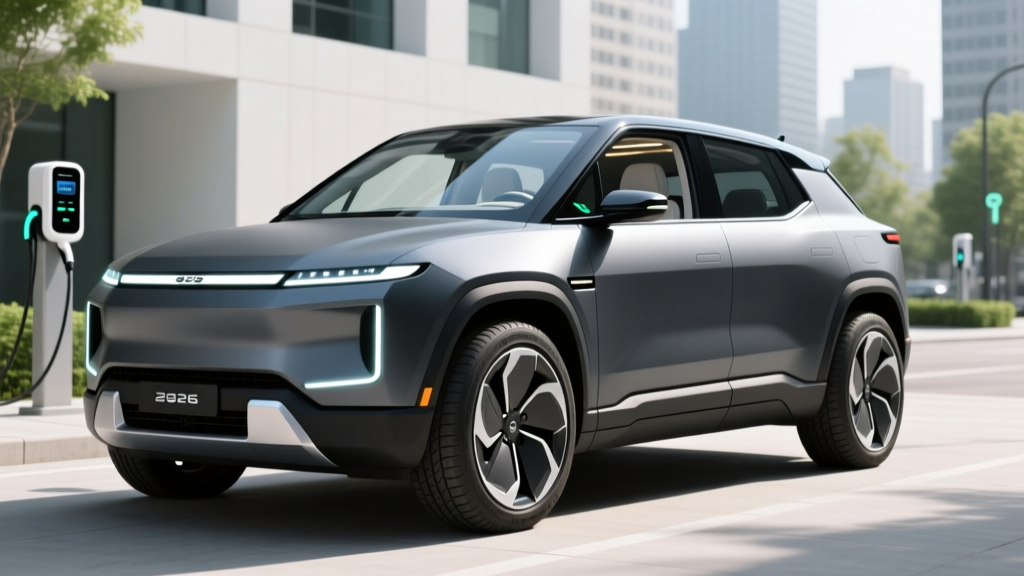
The most striking thing about the Rivian R2 images released to date is how much of the R1S DNA survives the downsizing. The R2 rides on a brand-new, smaller skateboard platform with an estimated wheelbase around 113 inches — roughly 4 inches shorter than the R1S. Overall length is expected near 185 inches, placing the R2 squarely in the compact crossover class alongside the Model Y (187 in.) and Ioniq 5 (182.7 in.).
Key design elements visible in official imagery include:
- Signature stadium headlights — a slimmer, more angular interpretation of the R1's oval clusters, likely using micro-LED elements.
- Flat roofline and upright tailgate — maximizing cargo volume behind the second row, a lesson Rivian learned from R1S owners who wanted more vertical space.
- Flush door handles and a frunk — the R2 retains a front trunk, though smaller than the R1T's 11-cu-ft gear tunnel.
- Single-motor RWD and dual-motor AWD configurations — the R2 will be Rivian's first rear-wheel-drive offering, critical for hitting a lower starting MSRP.
- Minimalist interior with a single center display — the R2 ditches the R1's dual-screen layout for a single, larger touchscreen (estimated 15+ inches), reducing parts count and cost.
Rivian has also confirmed the R2 will feature a single-piece cast rear underbody, similar to Tesla's gigacasting approach, which reduces weight and manufacturing complexity — a move that directly supports the sub-$50,000 price target.
Preliminary Specifications: Range, Battery, and Performance
Here's what we know — and what we're estimating — based on Rivian's disclosures and industry analysis of the new platform.
| Spec | Standard Range (RWD est.) | Extended Range (AWD est.) |
|---|---|---|
| Battery Capacity (usable) | ~72 kWh (LFP) | ~92 kWh (NMC) |
| EPA Est. Range | ~270 mi (est.) | ~330+ mi (Rivian target) |
| Drivetrain | Single Motor RWD | Dual Motor AWD |
| Horsepower | ~280 hp (est.) | ~550 hp (est.) |
| 0–60 mph | ~6.5 sec (est.) | ~3.5 sec (est.) |
| Max DC Fast Charge | ~175 kW (est.) | ~220 kW (est.) |
| 10–80% DC Charge Time | ~28 min (est.) | ~24 min (est.) |
| Level 2 Home Charging | 11.5 kW (~33 mi/hr) | 11.5 kW (~33 mi/hr) |
| Base MSRP | ~$45,000 | ~$52,500 (est.) |
Battery Chemistry: LFP for Standard Range, NMC for Extended
Rivian has indicated the R2 will use a dual-chemistry battery strategy, mirroring what Tesla and Ford have done:
| Attribute | LFP (Lithium Iron Phosphate) | NMC (Nickel Manganese Cobalt) |
|---|---|---|
| Energy Density | Lower — heavier pack for same kWh | Higher — more range per pound |
| Cycle Life | 3,000+ cycles (superior longevity) | 1,500–2,000 cycles |
| Cold-Weather Performance | Moderately worse in extreme cold | Better low-temp discharge |
| Charging to 100% | Recommended regularly for calibration | Better kept at 80% daily; 100% for trips |
| Cost | Lower — supports sub-$45K MSRP | Higher — reserved for Extended Range |
| Cobalt Content | Zero cobalt | Contains cobalt and nickel |
The LFP pack is critical for the R2's price positioning. LFP cells cost roughly 20–30% less per kWh than NMC, and their longer cycle life means the battery should outlast the vehicle's practical lifespan for most owners. The trade-off is slightly less range in a heavier package — acceptable for a commuter-oriented Standard Range model.
Charging Speed and Infrastructure
| Level | Power | Miles Added per Hour | Use Case |
|---|---|---|---|
| Level 1 (120V) | ~1.4 kW | ~3–4 mi/hr | Overnight trickle; emergency top-ups |
| Level 2 (240V, 48A) | 11.5 kW | ~33 mi/hr | Daily home charging; full charge in 7–9 hours |
| DC Fast Charge | Up to ~220 kW (AWD) | ~180 mi in 15 min (peak) | Road trips; 10–80% in ~24 min (est.) |
A critical detail: peak kW is not sustained kW. The estimated 220 kW peak on the Extended Range AWD model will likely taper significantly above 60% State of Charge (SoC). Expect average charging power from 10–80% closer to 150–170 kW, which is why the 10–80% time sits around 24 minutes rather than a theoretical 18. This is normal for the segment — the Hyundai Ioniq 5 and Tesla Model Y behave similarly.
The R2 will ship with the NACS (North American Charging Standard) connector natively, giving it direct access to the Tesla Supercharger network — the most reliable DC fast-charging infrastructure in North America. This is a major advantage over CCS-only vehicles that still rely on Electrify America or third-party networks with spotty uptime records.
Pricing, Trim Levels, and Federal Tax Credit Eligibility
Rivian CEO RJ Scaringe has repeatedly stated the R2 will start around $45,000 before incentives. Here's the projected pricing structure:
| Trim | Est. MSRP | Max §30D Credit | Est. Net Price |
|---|---|---|---|
| Standard Range RWD | $45,000 | $7,500 | $37,500 |
| Extended Range RWD | $49,000 | $7,500 | $41,500 |
| Extended Range AWD | $52,500 | $7,500 | $45,000 |
- MSRP cap: SUVs must be ≤ $80,000 (R2 clears this easily)
- Buyer income cap: AGI ≤ $150,000 (single) / $300,000 (joint)
- Battery sourcing: Critical minerals and battery components must meet escalating domestic/free-trade-partner thresholds — these tighten annually through 2029
- Point-of-sale transfer: As of 2024, the credit can be transferred to the dealer at purchase, reducing the out-of-pocket price immediately
Interior Space, Cargo, and Practicality
Based on the R2's exterior dimensions and Rivian's packaging approach, here are estimated interior metrics compared to key rivals:
- Cargo behind 2nd row: ~28–32 cu ft (est.) — competitive with Model Y (~30 cu ft behind 2nd row) and larger than Ioniq 5 (~27 cu ft)
- Front headroom: ~40+ in. (est.) — the R2's flat floor and upright roofline maximize vertical space
- Rear legroom: ~38 in. (est.) — adequate for adults on longer trips
- Frunk: ~5–7 cu ft (est.) — smaller than R1S but useful for charging cables and groceries
- Seating: 5-passenger, 2-row layout only (no 3rd row — that's the R1S's territory)
Rivian has confirmed the R2 will feature a flat-load floor with the rear seats folded, addressing a common R1S complaint about the cargo step-up. The single-piece cast rear structure enables this by eliminating cross-members that intrude into the cargo area.
Tech, Driver Assistance, and Software
The R2 will launch with Rivian's next-generation software stack, which the company has been developing in parallel with the R2 hardware. Expected features include:
- Single 15+ inch center touchscreen running Rivian's proprietary OS — no CarPlay/Android Auto confirmation yet, though Rivian has historically supported neither, preferring its native interface
- Rivian Driver Assist (Level 2 SAE): Adaptive cruise, lane centering, and highway assist on mapped roads. This is a supervised system — the driver must remain engaged at all times. It is not autonomous driving.
- Over-the-air (OTA) updates: Rivian's OTA track record with the R1 fleet has been strong, with meaningful feature additions delivered quarterly
- Digital key and phone-as-key via the Rivian app
- Camp Mode and Gear Guard — carryover features from the R1 platform for the adventure crowd
Warranty Coverage
Rivian's current R1 warranty provides a useful baseline for what to expect:
- Battery & Powertrain: 8 years / 100,000 miles (minimum, consistent with industry standard and EPA-mandated reporting thresholds for capacity retention)
- Bumper-to-Bumper: 5 years / 60,000 miles (R1S/R1T current coverage)
- Capacity Retention Threshold: Typically 70% of original capacity during the warranty period — Rivian has not published R2-specific terms yet
With the LFP pack's superior cycle life (3,000+ full cycles before significant degradation), Standard Range R2 owners may find the battery outlasts the vehicle itself. At one full cycle per day, 3,000 cycles equals roughly 8.2 years of daily full-discharge use — far more than most owners will demand.
How the R2 Stacks Up Against Competitors
The compact electric SUV segment in 2026 is fiercely competitive. Here's the R2's positioning relative to the vehicles it must beat:
- Tesla Model Y: The volume king. EPA range up to 320 mi, Supercharger access, and a starting price near $44,990. The R2 must offer superior build quality, interior materials, and off-road credibility to justify any premium.
- Hyundai Ioniq 5: Starts around $42,000, EPA range up to 305 mi, and class-leading 800V architecture enabling 10–80% charges in ~18 minutes. The Ioniq 5 charges faster than the R2 is expected to.
- Ford Mustang Mach-E: EPA range up to 320 mi, BlueCruise hands-free driving on mapped highways, and strong dealer network for service. Starting near $43,000.
✓ Pros
- Sub-$45K starting price opens EV access to a wider audience
- NACS native — direct Supercharger access without adapters
- LFP battery option for longevity and lower cost
- Rivian's adventure brand identity and community
- US-built in Illinois (supports §30D sourcing requirements)
- Flat-load cargo floor and practical packaging
✗ Cons
- Unreleased — no EPA-certified specs or real-world testing yet
- Charging speed (~220 kW peak) trails Ioniq 5's 800V system
- No Apple CarPlay / Android Auto likely
- Rivian's service network is still growing — limited in rural areas
- Brand-new platform — first-year production risk
- Exact §30D eligibility depends on unconfirmed battery sourcing
Who the Rivian R2 Is For
The R2 targets a specific buyer profile:
- Adventure-oriented commuters who want a smaller, more affordable EV that can still handle light off-road duty, camping, and gear-hauling — but don't need the R1S's 3-row size or $75K+ price.
- Tesla-curious shoppers who like the Model Y's efficiency and Supercharger access but want better build quality, a more distinctive design, and a company culture focused on outdoor lifestyle.
- First-time EV buyers priced out of the R1T/R1S but drawn to Rivian's brand, software, and community. The ~$37,500 net price (after credit) on the Standard Range model puts the R2 in direct competition with well-equipped gas crossovers on total cost of ownership.
The R2 is not for buyers who need 3-row seating (look at the R1S or Kia EV9), who want the absolute fastest charging in the segment (Ioniq 5 or Ioniq 6), or who require an established dealer service network within 20 miles (Ford Mach-E or Chevrolet Equinox EV).
Frequently Asked Questions
What is the real-world range of the Rivian R2?
Rivian targets 330+ miles EPA for the Extended Range AWD model, but this is not yet certified. In real-world highway and cold-weather driving, expect 260–290 miles from that variant. The Standard Range RWD model is estimated at ~270 miles EPA, translating to roughly 210–240 miles in adverse conditions. We'll update with certified EPA data when it's published on fueleconomy.gov.
How fast does the R2 charge at home and on the road?
At home on a Level 2 (240V, 48A) charger, the R2 is expected to accept 11.5 kW, adding roughly 33 miles of range per hour — a full overnight charge in 7–9 hours. On DC fast chargers, the Extended Range AWD model is estimated to peak around 220 kW, reaching 10–80% in approximately 24 minutes. Actual sustained speeds will taper above 60% SoC.
How much does the Rivian R2 cost after tax credits?
The Standard Range RWD model is expected to start around $45,000 MSRP. If you qualify for the full $7,500 §30D federal tax credit (income caps, battery sourcing requirements, and MSRP limits apply), the effective price drops to approximately $37,500. The credit can now be transferred at the point of sale, reducing your out-of-pocket cost at the dealership. Always verify current eligibility with the IRS and a tax professional.
Is the Rivian R2 worth buying vs. the Tesla Model Y or Hyundai Ioniq 5?
The R2 makes sense if you value Rivian's brand identity, native NACS/Supercharger access, US manufacturing, and adventure-oriented features. The Model Y offers more proven efficiency and a mature service network. The Ioniq 5 offers faster charging via its 800V architecture. The R2's case hinges on build quality, software refinement, and whether Rivian can deliver on its pricing promises at scale.
Does the Rivian R2 qualify for the federal EV tax credit?
Likely yes for the base models, but it's not guaranteed. The R2's MSRP (well under the $80,000 SUV cap), US assembly in Illinois, and Rivian's push toward domestic battery sourcing all support eligibility. However, the critical-mineral and battery-component thresholds under §30D tighten annually. Rivian has not publicly confirmed the R2's full supply-chain compliance. Check the latest eligibility list at fueleconomy.gov before purchasing.
When can I actually buy the Rivian R2?
Rivian has targeted production start in the first half of 2026 at its Normal, Illinois factory. Reservations are open with a refundable deposit. Early deliveries will likely prioritize reservation holders and fleet orders. Volume production ramping to meaningful scale is expected in late 2026 or early 2027.
Note: This article is based on Rivian's preliminary announcements and industry analysis. All specifications are estimates until EPA-certified data is published. AutoEdgeView will update this profile with verified figures as they become available. Images referenced in this article are sourced from Rivian's official press materials.