The Short Answer on the Defender EV
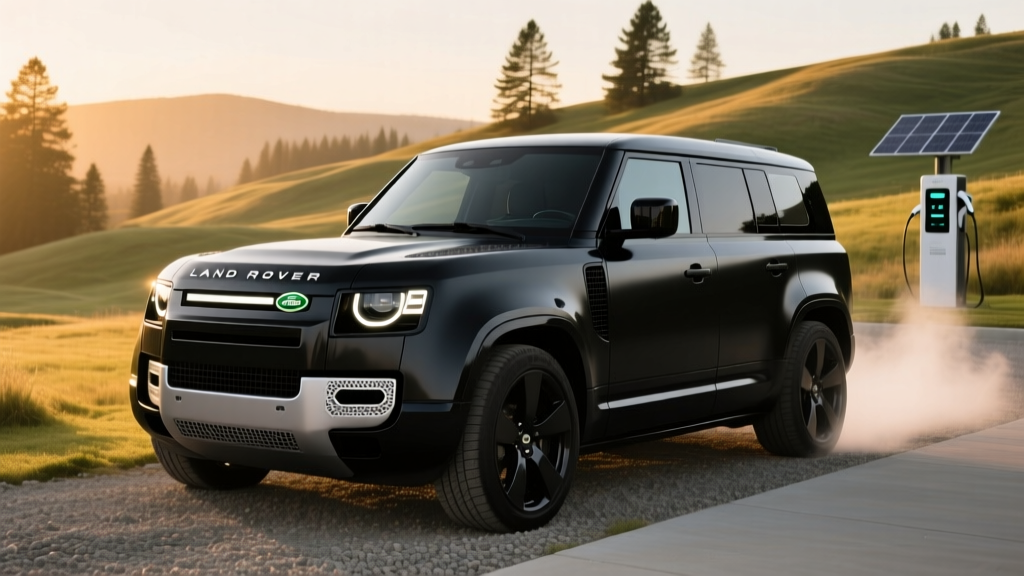
The Land Rover Defender EV (officially the Defender Octa Electric and broader electric Defender lineup) is not yet on sale as of early 2026. Jaguar Land Rover has confirmed an all-electric Defender is in development on the EMA (Electric Modular Architecture) platform, with production expected to begin in late 2026 or 2027. Based on JLR's announced specs and the sibling Range Rover Electric prototype, we estimate a 100+ kWh battery (likely NMC chemistry), 280–320 miles of EPA range, and a starting MSRP near $85,000–$95,000 before incentives. If you need an electric SUV today, alternatives like the Rivian R1S, Mercedes EQS SUV, or BMW iX are already delivering. If you can wait, the Defender EV promises serious off-road capability with zero tailpipe emissions — but real-world range, charging infrastructure access, and total ownership cost deserve a hard look before you reserve one.
What We Know About the Defender EV So Far
Jaguar Land Rover has been deliberate — some would say slow — in its electrification strategy. The company's "Reimagine" plan, announced in 2021 and updated through 2025, commits JLR to offering an all-electric variant across every nameplate by the end of the decade. The Range Rover Electric (built on the MLA-Flex platform) is the first to arrive, with customer deliveries beginning in limited markets in late 2025. The Defender EV is next in line, but it will ride on the dedicated EMA platform, which JLR developed specifically for battery-electric vehicles rather than adapting an existing combustion architecture.
Here's what JLR has confirmed or strongly signaled through supply-chain reports and executive statements:
| Specification | Estimated / Confirmed |
|---|---|
| Platform | EMA (Electric Modular Architecture) |
| Battery capacity | ~100–120 kWh usable (NMC chemistry expected) |
| EPA range (est.) | 280–320 miles (final EPA cert pending) |
| Peak DC fast-charge rate | ~200–250 kW (estimated, 800V architecture likely) |
| 10–80% charge time (est.) | ~25–35 minutes at a compatible 350 kW charger |
| Level 2 onboard charger | 11–22 kW (expected dual-phase support) |
| 0–60 mph | ~4.5–5.5 seconds (dual-motor AWD) |
| Horsepower | ~450–550 hp (dual-motor configuration) |
| Towing capacity | ~7,500–8,200 lbs (target, per JLR capability standards) |
| Off-road features | Terrain Response EV, electronic air suspension, wading depth ~35 in |
| Expected base MSRP | $85,000–$95,000 (90 body style); $95,000–$110,000 (110/130) |
| Production start | Late 2026 or 2027 (Halewood plant, UK) |
| Battery warranty | Expected 8 years / 100,000 miles (per JLR standard) |
Note: All specs above are preliminary estimates based on JLR announcements, EMA platform disclosures, and industry analysis. Final EPA certification, pricing, and production timelines may differ. We will update this guide when official numbers are released.
Defender EV vs. Gas Defender: Real Cost and Capability Comparison
The current gas-powered Defender 110 with the P400 mild-hybrid inline-six starts around $64,800 and returns an EPA-estimated 19 MPG combined (source: fueleconomy.gov). The high-output V8 Defender Octa pushes past $150,000 and sips fuel at roughly 15 MPG combined. Let's model what five years of ownership looks like for a gas Defender 110 P400 versus the projected Defender EV, assuming 12,000 miles driven annually.
| Cost Category | Gas Defender 110 P400 | Defender EV (est.) |
|---|---|---|
| Purchase price (base MSRP) | $64,800 | $90,000 (est.) |
| Federal tax credit (§30D) | $0 | $0–$7,500 (see eligibility below) |
| Fuel / electricity (5 yrs) | $14,200 (at $3.75/gal, 19 MPG) | $4,800 (at $0.14/kWh home, ~3 mi/kWh) |
| Maintenance (5 yrs) | $4,500 (oil, filters, brakes, fluids) | $1,800 (cabin filter, wipers, tires, brake fluid) |
| Insurance (5 yrs, avg.) | $12,000 | $14,500 (EV premium ~15–20%) |
| Estimated depreciation | $32,000 (~49%) | $45,000 (~50%, luxury EV average) |
| Total 5-year cost | ~$127,500 | ~$151,100 (or ~$143,600 with full credit) |
The EV saves roughly $9,400 in fuel and $2,700 in maintenance over five years. But the higher purchase price, steeper insurance premiums, and potentially heavier depreciation mean the Defender EV will likely cost more overall than the gas model during the first ownership cycle. The math flips if you keep the vehicle 8–10 years, drive more than 15,000 miles annually, or if gas prices climb significantly.
Federal Tax Credit: Will the Defender EV Qualify?
This is where things get tricky. Under current IRS §30D rules, the federal clean vehicle credit offers up to $7,500 for qualifying new EVs, but several hurdles apply:
- MSRP cap: SUVs must have an MSRP at or below $80,000. A base Defender EV 90 might squeeze under this threshold, but the 110 and 130 body styles — and any mid-to-high trim — will almost certainly exceed it.
- Buyer income limits: Modified adjusted gross income cannot exceed $300,000 (joint filers), $225,000 (head of household), or $150,000 (single).
- Battery sourcing requirements: Critical minerals and battery components must meet escalating percentages from North American or FTA-partner sourcing. A UK-built Defender with a battery supply chain rooted in Asia or Europe may not meet the critical-minerals threshold, potentially reducing the credit to $3,750 or eliminating it entirely.
- Point-of-sale transfer: If eligible, you can transfer the credit to the dealer at purchase, reducing your out-of-pocket cost immediately rather than waiting for tax season.
Bottom line: Do not count on the full $7,500 credit for a Defender EV. The MSRP cap alone will disqualify most trims. Consult a tax professional and check the latest IRS guidance at the time of purchase — these rules are subject to legislative change.
Charging Reality: Home Setup and Public Network Access
With an estimated 100+ kWh battery, the Defender EV will demand serious charging infrastructure. Here's what that means practically:
Home Charging
A Level 2 home charger at 11.5 kW (48-amp circuit on a 60-amp breaker) will add roughly 30–35 miles of range per hour of charging. To go from 10% to 100% on a 110 kWh battery at that rate takes about 10–11 hours — fine for overnight replenishment if you drive 60–80 miles daily. If JLR equips the Defender EV with a 22 kW onboard charger (as some European-market JLR models support), a three-phase residential setup could cut that to ~5.5 hours, but three-phase power is uncommon in US homes.
Home charger installation cost: Expect $1,200–$3,500 total for a quality Level 2 unit (ChargePoint Home Flex, Emporia Vue, or Wallbox Pulsar Plus) plus electrician labor, permit, and a 240V/60A circuit. If your home's electrical panel needs a 200-amp service upgrade, add $1,500–$3,000. Always get a quote from a licensed electrician before purchasing equipment.
DC Fast Charging on the Road
If the Defender EV supports an 800V architecture (likely, given EMA's design goals), peak charge rates of 200–250 kW at 350 kW-rated chargers (Electrify America, EVgo, or Tesla Supercharger with NACS adapter) could deliver a 10–80% charge in 25–35 minutes. However, real-world charging curves taper significantly above 80% State of Charge. Plan for 40–45 minutes at a DC fast charger if you need a near-full battery on a road trip.
A critical question for Defender EV buyers: Which connector will it use? JLR has been transitioning toward NACS (Tesla's North American Charging Standard) for its North American models following the industry-wide shift that began in 2024. We expect the Defender EV to ship with a native NACS port, granting access to Tesla's Supercharger network — the most reliable DC fast-charging infrastructure in the US. If it ships with CCS1 instead, a NACS adapter will be necessary for Supercharger access.
Off-Road Capability: Can an Electric Defender Actually Trail-Run?
This is the question that separates Defender buyers from every other luxury EV SUV shopper. The Defender nameplate carries decades of off-road credibility, and JLR knows that an electric version must deliver.
What we expect based on the EMA platform and JLR's engineering statements:
- Electronic air suspension with up to ~11.5 inches of ground clearance in off-road mode
- Terrain Response EV — an electric-specific version of JLR's terrain management system, optimizing torque vectoring for mud, sand, rock, and snow
- Wading depth estimated at ~35 inches (matching or exceeding the gas Defender's 35.4-inch capability)
- Individual wheel torque control via dual- or tri-motor powertrain, potentially surpassing the mechanical locking differentials of the gas model in precision
- Low-range equivalent through gear reduction in the electric drive units
The advantage of electric powertrains off-road is instant torque at zero RPM and precise per-wheel control. The disadvantage is weight — a 110+ kWh battery pushes curb weight well past 6,000 lbs, which affects tire wear, braking distance on loose surfaces, and recovery situations. JLR will also need to prove battery-pack durability against rock strikes, deep water immersion, and extreme articulation. Watch for underbody armor specifications and IP67/IP68 ingress ratings before committing to serious trail use.
Competitor Comparison: What Else Can You Buy Today?
You cannot buy a Defender EV today. If you need a capable, premium electric SUV in 2026, here's how the announced Defender stacks up against vehicles already on sale:
| Attribute | Defender EV (est.) | Rivian R1S (Dual Max) | BMW iX xDrive50 | Mercedes EQS 580 SUV |
|---|---|---|---|---|
| EPA range | 280–320 mi | 410 mi | 324 mi | 305 mi |
| Battery | ~110 kWh NMC | 149 kWh (Max Pack) | 111.5 kWh | 108.4 kWh |
| Peak DC charge | ~220 kW | ~220 kW | ~200 kW | ~200 kW |
| 0–60 mph | ~5.0 sec | 3.5 sec | 4.4 sec | 4.4 sec |
| Starting MSRP | $85,000–$95,000 | $89,900 | $87,250 | $104,400 |
| Towing | ~7,700 lbs | 7,700 lbs | 3,500 lbs | 3,500 lbs |
| Off-road cred | High (expected) | High (proven) | Moderate | Low |
| Available now? | No (2027 est.) | Yes | Yes | Yes |
The Rivian R1S is the closest competitor in both capability and price, and it's been shipping since 2022 with proven off-road chops and a growing service network. The BMW iX offers superior efficiency and a more refined on-road experience but sacrifices ground clearance and towing. The Mercedes EQS SUV is the luxury benchmark but has no off-road pretensions. The Defender EV will need to carve a unique niche: genuine trail capability wrapped in British luxury branding that neither Rivian nor BMW can replicate.
Common Misconceptions About the Defender EV
| Myth | Fact |
|---|---|
| "The Defender EV is available to order now." | As of early 2026, JLR has not opened reservations for the Defender EV. The Range Rover Electric is the only confirmed JLR EV in production. The Defender EV is expected no earlier than late 2026 or 2027. |
| "It'll get the full $7,500 tax credit." | Most trims will likely exceed the $80,000 MSRP cap for SUVs under §30D. Battery sourcing requirements add further uncertainty. Don't budget assuming the credit. |
| "Electric means it can't off-road." | Electric motors deliver instant torque and per-wheel precision that can outperform mechanical systems. The real challenges are weight, battery protection, and range loss under heavy off-road loads — not capability. |
| "I'll get 320 miles of real-world range." | EPA estimates assume mixed driving at moderate temperatures. Expect 220–260 miles at sustained highway speeds (75+ mph), and 20–30% range reduction in sub-freezing temperatures. A 110 kWh battery towing a 5,000-lb trailer may deliver under 180 miles. |
| "Charging takes too long for road trips." | At a 350 kW charger, a 10–80% top-up in ~30 minutes aligns with a typical rest stop. The bottleneck is charger availability and reliability in rural areas — not the vehicle's charge speed. |
Decision Framework: Should You Wait or Buy Now?
Wait for the Defender EV if:
- You're deeply loyal to the Defender brand and no other SUV satisfies the aesthetic and heritage requirement
- You have reliable home charging (Level 2, 240V) already installed or can install it
- Your daily driving is under 80 miles round-trip, with occasional longer road trips
- You need serious towing capacity (7,500+ lbs) combined with off-road capability
- You can absorb a $90,000+ purchase price without relying on the federal tax credit
Buy a Rivian R1S or BMW iX now if:
- You need an electric SUV in the next 6 months — the Defender EV is at least a year away from US deliveries
- Maximum range is your priority (the R1S Max Pack hits 410 miles EPA)
- You want an established service network and over-the-air update track record
- You're budget-conscious and want to lock in current pricing before potential tariff or supply-chain shifts
Stick with a gas or PHEV Defender if:
- You live in a charging desert with no realistic home-charging option and sparse public DC infrastructure
- You regularly tow heavy loads over long distances in cold weather (range loss + towing can cut EV range by 40–50%)
- Your budget tops out around $65,000–$75,000 and you need the Defender's specific capability today
Frequently Asked Questions
When will the Land Rover Defender EV be available in the US?
JLR has not confirmed a specific US on-sale date. Based on the company's EMA platform timeline and Halewood plant conversion schedule, the earliest realistic delivery window for US customers is late 2027 or early 2028. JLR typically staggers European and North American launches, with the UK/EU market often receiving vehicles 6–12 months earlier.
Will the Defender EV have three rows of seating?
The gas Defender 130 offers a third row (albeit a tight one). JLR has not confirmed seating configurations for the EV variant, but the EMA platform's flat floor could enable a more usable third row than the gas 130. Expect two-row configurations for the 90 and 110 body styles, with a possible three-row option on a longer-wheelbase EV variant.
How will cold weather affect the Defender EV's range?
All lithium-ion batteries lose efficiency in cold temperatures. Based on testing of comparable large-battery EVs, expect 20–30% range reduction at temperatures below 20°F (−7°C), primarily from cabin heating demands and increased battery internal resistance. A heat pump (which we expect JLR to include) mitigates this somewhat by using ambient heat rather than resistive elements, but it doesn't eliminate the loss. If you live in the upper Midwest or Northeast, plan for ~200 miles of usable winter range from a 300-mile EPA rating.
Will the Defender EV support Tesla Superchargers?
This depends on the connector JLR chooses for North America. Given that nearly every major automaker has committed to NACS for 2025+ models, we strongly expect the Defender EV to ship with a native NACS port or include a CCS-to-NACS adapter. This would grant access to Tesla's 20,000+ Supercharger stalls in the US. We'll confirm when JLR publishes final specifications.
What will Defender EV insurance cost compared to the gas model?
EVs typically carry insurance premiums 15–25% higher than equivalent gas vehicles due to higher repair costs (specialized high-voltage training, battery-pack replacement risk, and aluminum-intensive construction). Based on current Defender 110 insurance averages of ~$200/month, budget roughly $230–$260/month for the EV variant. Get quotes from your insurer before purchasing — rates vary significantly by ZIP code, driving record, and coverage level.
Is the Defender EV a good first EV purchase?
It can be, with caveats. A large-battery EV like the Defender is forgiving for daily driving — you'll rarely need to think about range for commutes under 80 miles. But as a first EV, you should confirm home charging feasibility before ordering. If you can install a Level 2 charger and your routine involves mostly local driving with 2–3 road trips per year, the Defender EV is a reasonable first electric vehicle. If you lack home charging access or regularly drive 300+ miles in a single day through areas with sparse charging infrastructure, consider starting with a PHEV like the current Defender P400e (where available) as a bridge.