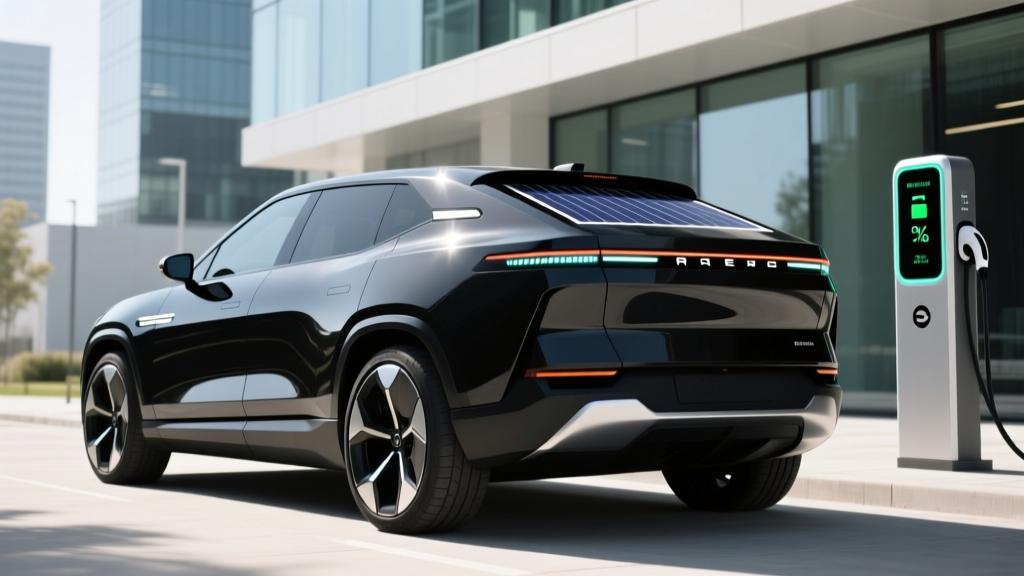
The Rivian R2 is the electric SUV that compact crossover shoppers have been waiting for — a smaller, more affordable sibling to the R1S that promises to bring Rivian's adventure-oriented engineering to the mass market. But with deliveries targeted for the first half of 2026, the most pressing question for prospective buyers is straightforward: how much will the Rivian R2 cost, and what do you actually get for the money?
Rivian has confirmed a starting price around $45,000 for the base Standard trim, with a mid-range and a performance-oriented trim rounding out the initial lineup. Below, we break down every confirmed and projected specification — from battery chemistry and EPA range estimates to DC fast-charging speeds and federal tax credit eligibility — so you can decide whether the R2 belongs on your shortlist before reservations convert to orders.
Rivian R2 Preliminary Spec Sheet (2026 Model Year)
| Specification | Standard (Base) | Mid Trim (Est.) | Performance (Est.) |
|---|---|---|---|
| Base MSRP | ~$45,000 | ~$50,000–$52,000 | ~$55,000–$58,000 |
| EPA Est. Range | ~300+ miles (target) | ~330 miles (target) | ~290–310 miles (target) |
| Battery Capacity (Usable) | ~75–80 kWh (projected) | ~85–90 kWh (projected) | ~85–90 kWh (projected) |
| Battery Chemistry | LFP (Standard); NMC (higher trims) | NMC | NMC |
| Drivetrain | RWD or Dual-Motor AWD | Dual-Motor AWD | Dual-Motor AWD (Perf tune) |
| 0–60 mph | ~6.0 sec (RWD); ~4.5 sec (AWD) | ~4.5 sec | ~3.5 sec |
| Horsepower | ~300 hp (RWD); ~450 hp (AWD) | ~450 hp | ~550+ hp |
| Max DC Fast Charge | ~175–200 kW (projected) | ~200 kW | ~200 kW |
| 10–80% DCFC Time | ~25–30 min (projected) | ~25 min | ~25 min |
| Level 2 Home Charge | 11.5 kW (~35 mi/hr) | 11.5 kW | 11.5 kW |
| Battery Warranty | 8 yr / 100,000 mi (expected) | 8 yr / 100,000 mi | 8 yr / 100,000 mi |
Note: Rivian has not published final EPA-certified figures as of early 2026. Specs above reflect announced targets, industry projections, and Rivian's historical powertrain architecture. Final numbers will be confirmed at launch.
Rivian R2 Pricing: What Each Trim Will Cost
Rivian CEO RJ Scaringe has repeatedly stated that the R2 will start at approximately $45,000 before destination fees and options. That base price positions the R2 squarely against the Tesla Model Y (starting ~$44,990 for the Long Range RWD in 2026), the Hyundai Ioniq 5, and the upcoming more affordable variants of the Ford Mustang Mach-E.
Here is how we expect the trim ladder to shake out based on Rivian's public statements and the pricing architecture used for the R1S refresh:
- Standard (~$45,000): Single-motor RWD or dual-motor AWD, smaller LFP battery pack, ~300-mile range target, cloth/vegan leather interior, full ADAS suite.
- Mid Trim (~$50,000–$52,000): Dual-motor AWD, larger NMC battery, ~330-mile range target, upgraded interior materials, premium audio, tow package availability.
- Performance (~$55,000–$58,000): Dual-motor AWD with performance tuning, ~550+ hp, ~3.5-second 0–60, sport suspension, larger wheels (range penalty applies).
Destination charges typically add $1,000–$1,800. Options like the Max Pack battery (if offered à la R1), 22-inch wheels, or a camp kitchen accessory package could push a fully loaded R2 past $65,000.
How Much Will the Rivian R2 Cost After the Federal Tax Credit?
The IRS §30D Clean Vehicle Credit offers up to $7,500 for qualifying new EVs — but eligibility hinges on three moving targets that buyers must verify before purchase:
§30D Eligibility Checklist for the Rivian R2
- MSRP Cap: SUVs/vans/pickups must have an MSRP ≤ $80,000. The R2, classified as an SUV, clears this easily — even a fully optioned Performance trim should stay under the cap.
- Buyer Income Cap: Adjusted gross income must not exceed $150,000 (single), $225,000 (head of household), or $300,000 (joint). If your AGI exceeds these thresholds in either the purchase year or the prior year, you are ineligible.
- Battery Sourcing Requirements: To receive the full $7,500, the battery must meet critical-minerals and battery-component sourcing thresholds set by the IRS. These thresholds tighten annually. As of 2026, 80% of critical minerals (by value) must be sourced from the U.S. or FTA partners, and 100% of battery components must be manufactured or assembled in North America (with restrictions on foreign entities of concern). Rivian has been actively re-shoring its supply chain for the R2's Georgia-built production, but final sourcing determinations are made per VIN at the time of sale.
- Point-of-Sale Transfer: Under current rules, you can transfer the credit to the dealer at purchase, reducing your out-of-pocket cost immediately rather than waiting for a tax refund.
Estimated Out-of-Pocket Cost After §30D Credit
| Trim | Est. MSRP | Max §30D Credit | Est. Net Cost |
|---|---|---|---|
| Standard (Base) | ~$45,000 | $7,500 | ~$37,500 |
| Mid Trim | ~$51,000 | $7,500 | ~$43,500 |
| Performance | ~$56,000 | $7,500 | ~$48,500 |
Credit eligibility is not guaranteed. Verify your personal eligibility at irs.gov and confirm the specific VIN's sourcing compliance with your Rivian advisor before finalizing your order.
Rivian R2 Range: EPA Estimates vs. Real-World Expectations
Rivian has targeted a 300+ mile EPA range for the base Standard trim and approximately 330 miles for the larger-battery mid trim. Those are competitive numbers that put the R2 in the same ballpark as the Tesla Model Y Long Range (320 miles EPA) and ahead of the base Hyundai Ioniq 5 (303 miles EPA).
Real-World Range Reality Check
EPA Target: ~300–330 miles depending on trim and battery.
Expect in practice:
- Highway driving (70–80 mph): ~250–280 miles. Aerodynamic drag hits all SUVs hard at sustained highway speeds. The R2's upright profile will cost it efficiency versus a sedan like the Hyundai Ioniq 6.
- Cold weather (below 32°F / 0°C): ~210–250 miles. LFP chemistry in the base trim may experience slightly steeper cold-weather range loss (15–25%) compared to NMC, though a heat pump (expected standard) will mitigate cabin-heating losses.
- City/commute driving (mild weather): ~300–340 miles. Regenerative braking in stop-and-go traffic recovers energy effectively. This is where you'll see your best numbers.
EPA range figures are not yet certified. These real-world projections are based on testing patterns observed across the R1S, Model Y, and Ioniq 5 fleets.
For daily commuters driving 30–50 miles round-trip, even the cold-weather floor of ~210 miles leaves substantial buffer. Road-trippers should plan charging stops around the 200-mile mark in winter and 250-mile mark in summer highway driving to maintain a comfortable state-of-charge buffer.
Rivian R2 Charging: DC Fast-Charging and Home Level 2 Speeds
Charging speed is where Rivian needs to prove the R2 can match its competitors. The R1S and R1T peaked at roughly 200 kW on DC fast chargers — adequate but not class-leading. Rivian has signaled that the R2 will adopt a similar or slightly improved charge curve, with a projected peak of 175–200 kW on DC fast charging.
Rivian R2 Charging Speed Breakdown
| Charging Level | Power / Rate | Estimated Speed |
|---|---|---|
| Level 1 (120V household) | ~1.4 kW | ~3–4 miles per hour |
| Level 2 (240V home, 48A) | 11.5 kW | ~35 miles per hour; full charge in ~7–8 hours |
| DC Fast Charge (peak) | ~175–200 kW | 10–80% in ~25–30 minutes |
Understanding the charge curve: Peak kW is not sustained kW. The R2 will likely hit its maximum charge rate between 10–40% state of charge, then taper progressively. Expect the 40–80% portion to take roughly as long as the 10–40% portion. This is normal lithium-ion behavior — the battery management system slows current as cells approach full charge to protect longevity.
Connector: The R2 will ship with the NACS (Tesla-style) connector natively, giving it direct access to Tesla's Supercharger network — now the largest and most reliable DC fast-charging network in North America. This is a significant advantage over CCS-equipped competitors that still rely on adapters for Supercharger access.
Home charging setup: At 11.5 kW on a 48-amp Level 2 circuit (requiring a 60-amp breaker), the R2 will recover roughly 35 miles of range per hour of charging. An overnight charge (8–10 hours) will fully replenish the battery. Budget $500–$2,000 for a quality Level 2 home charger and professional installation, depending on your electrical panel's capacity and the run length from panel to garage.
Performance, Powertrain, and Driving Dynamics
Rivian's dual-motor AWD architecture is a proven quantity in the R1S and R1T, and the R2 will inherit a scaled version of this system. The base single-motor RWD variant is a new addition aimed at maximizing range and minimizing cost for buyers who don't need all-wheel traction.
- Single-Motor RWD (Standard): ~300 hp, ~6.0-second 0–60 mph. Adequate for daily driving and commuting. Lighter front axle means slightly better efficiency.
- Dual-Motor AWD (Standard/Mid): ~450 hp, ~4.5-second 0–60 mph. Quick by any measure, with the traction benefits of AWD for snow, rain, and light off-road use.
- Dual-Motor AWD Performance: ~550+ hp, ~3.5-second 0–60 mph. Sports-car acceleration in a compact SUV, rivaling the Tesla Model Y Performance.
Rivian's quad-motor system from the R1 is not expected for the R2 — the compact platform and price point make a dual-motor setup the logical ceiling. Towing capacity is projected at ~4,000–5,000 lbs for AWD trims when properly equipped, sufficient for a small boat, camper trailer, or utility trailer but below the R1T's 11,000-lb rating.
Interior, Cargo, and Technology
The R2 is a compact SUV — think slightly smaller than the R1S, closer in footprint to a Tesla Model Y or Hyundai Ioniq 5. Rivian has showcased a clean, minimalist interior with a large central touchscreen (expected ~15.6 inches), a digital driver display, and the brand's signature adventure-oriented touches.
- Cargo Volume: Estimated ~25–30 cu ft behind the second row, ~60–65 cu ft with rear seats folded. A front trunk (frunk) is confirmed, adding ~5–8 cu ft of secure, weatherproof storage — ideal for charging cables or groceries.
- Seating: Five-passenger capacity. Rear legroom is expected at ~38–40 inches, competitive for the segment.
- Infotainment: Rivian's proprietary software with OTA updates, native navigation with charging integration, and expected wireless Apple CarPlay/Android Auto.
- Driver Assistance: Rivian's ADAS suite (branded as "Driver+" on current models) is expected to include adaptive cruise control, lane centering, automatic emergency braking, and blind-spot monitoring. This is an SAE Level 2 driver-assist system — it does not drive the vehicle autonomously. You must keep your hands on the wheel and eyes on the road at all times.
ADAS Limitation Notice
Rivian's driver-assist features are SAE Level 2. They provide steering and speed support simultaneously but require continuous driver supervision. They are not self-driving systems. You remain legally and operationally responsible for the vehicle at all times.
Battery Chemistry, Warranty, and Longevity
Rivian is expected to offer LFP (lithium iron phosphate) chemistry on the base Standard trim and NMC (nickel manganese cobalt) on higher trims. Here's why that matters:
| Factor | LFP (Base Trim) | NMC (Mid/Performance) |
|---|---|---|
| Energy Density | Lower — larger pack needed for equivalent range | Higher — more range per kg |
| Cycle Life | Superior — 3,000+ cycles to 80% capacity | Good — 1,500–2,000 cycles to 80% |
| Cold-Weather Performance | Moderately weaker in extreme cold | Better low-temp performance |
| Charging to 100% | Recommended periodically for BMS calibration | Avoid frequent 100% charges; 80% daily ideal |
| Cost | Lower — enables the $45K price point | Higher — justifies mid/performance premium |
Warranty: Based on Rivian's existing coverage for the R1 lineup, expect the R2 to carry an 8-year / 100,000-mile battery and powertrain warranty, with a minimum 70% capacity retention threshold over that period. The bumper-to-bumper warranty is expected at 5 years / 60,000 miles. Rivian's battery degradation data from the R1 fleet (now exceeding hundreds of millions of cumulative miles) suggests real-world degradation of roughly 5–8% over the first 100,000 miles — well within the warranty threshold.
Pros
- Starting at ~$45K — genuinely accessible pricing for a premium compact EV SUV
- Native NACS connector — first-class Tesla Supercharger access without adapters
- Adventure DNA: frunk, tow capability, available AWD, and roof-rail accessories
- LFP option for base trim means excellent long-term battery cycle life
- Rivian's OTA software and strong owner community
- Qualifies for up to $7,500 federal tax credit (MSRP under $80K cap)
Cons
- DC fast-charging at ~200 kW trails the Hyundai Ioniq 5's 240 kW and the Kia EV6's 239 kW (800V architectures)
- Unproven at scale — Rivian's Georgia production facility must ramp smoothly to avoid the delivery delays that plagued early R1 production
- Performance trim pricing (~$55K+) enters Tesla Model Y Performance and BMW iX territory
- Real-world highway and cold-weather range will fall notably below EPA sticker — plan accordingly
- No third-row seating (unlike the R1S) — families needing 7-passenger capacity must look elsewhere
Who Should Buy the Rivian R2?
The R2 is best suited for:
- Adventure-oriented commuters who want a compact SUV with AWD capability, a frunk for gear, and enough range for weekend trips to trailheads without a trailer.
- Tesla Model Y cross-shoppers who want Supercharger access (via native NACS) but prefer a less ubiquitous design and Rivian's outdoor brand ethos.
- Two-car households replacing a gas crossover with a daily-driver EV that can handle road trips with 25–30 minute charging stops.
- Buyers who prioritize long-term battery longevity — the LFP base model is ideal for high-mileage commuters who plan to own the vehicle 8–10+ years.
The R2 is not the right pick if you need three-row seating (consider the R1S, Kia EV9, or Hyundai Ioniq 9), require 350+ mile range for frequent 500-mile road trips, or prioritize the absolute fastest DC charging times available (Hyundai/Kia's 800V platforms still lead here).
Quick Decision Guide
Choose the R2 Standard ($45K) if: You want the lowest entry price, commute under 60 miles daily, and value long battery cycle life (LFP).
Choose the R2 Mid Trim (~$51K) if: You need AWD for snow/rain, want 330 miles of EPA range for road trips, and plan to tow occasionally.
Choose the R2 Performance (~$56K) if: Acceleration thrills matter, you want the full Rivian feature set, and you're cross-shopping the Model Y Performance.
Look elsewhere if: You need 350+ mi range (Lucid Gravity), 800V ultra-fast charging (Ioniq 5/EV6), or 3-row seating (EV9, Ioniq 9).
Frequently Asked Questions
What is the real-world range of the Rivian R2?
Rivian targets 300+ miles EPA for the base trim and ~330 miles for the mid trim. In real-world highway driving at 70–80 mph, expect roughly 250–280 miles. In cold weather (below freezing), plan for 210–250 miles. City commuting in mild weather may yield 300–340 miles thanks to regenerative braking. Final EPA numbers will be confirmed at launch.
How fast does the Rivian R2 charge?
On DC fast chargers, the R2 is projected to peak at ~175–200 kW, reaching 10–80% in approximately 25–30 minutes. At home on a 240V Level 2 charger (11.5 kW / 48A), it will add about 35 miles of range per hour, fully charging overnight in 7–8 hours. The native NACS connector provides direct access to Tesla Superchargers.
How much does the Rivian R2 cost after the federal tax credit?
If you qualify for the full $7,500 §30D credit (income under the cap, battery sourcing requirements met), the base R2 Standard drops from ~$45,000 to approximately $37,500. The mid trim would cost roughly $43,500 after credit, and the Performance trim around $48,500. Eligibility depends on your AGI, the vehicle's battery sourcing, and MSRP — verify at irs.gov before purchase.
Does the Rivian R2 qualify for the federal EV tax credit?
The R2 is expected to qualify, as its MSRP falls well under the $80,000 SUV cap. However, the full $7,500 credit requires that the battery meet critical-minerals and component-sourcing thresholds that tighten each year. Rivian is building the R2 in Georgia and has been re-shoring supply chains, but final per-VIN eligibility must be confirmed at point of sale. Your adjusted gross income must also fall below IRS thresholds ($150K single / $300K joint).
Is the Rivian R2 worth buying vs. the Tesla Model Y?
The R2 and Model Y will be closely matched on price and range. The Model Y benefits from Tesla's mature Supercharger network (though Rivian gets native NACS access), a proven production track record, and slightly faster DC charging potential. The R2 counters with a more distinctive design, adventure-oriented features (frunk, tow capability, roof rails), LFP battery longevity on the base trim, and a less ubiquitous presence. If you want the safest bet with the deepest charging network, the Model Y remains strong. If you want something different with outdoor utility, the R2 is compelling — provided Rivian's Georgia ramp avoids early production stumbles.
When can I buy the Rivian R2?
Rivian has targeted first deliveries for the first half of 2026 from its new production facility in Stanton, Georgia. Reservations opened in 2024 with a refundable deposit. If you haven't reserved, monitor Rivian's website for order-configurator availability, which typically opens a few months before deliveries begin.