Why Rivian Truck Weight Matters for Real-World Range and Performance
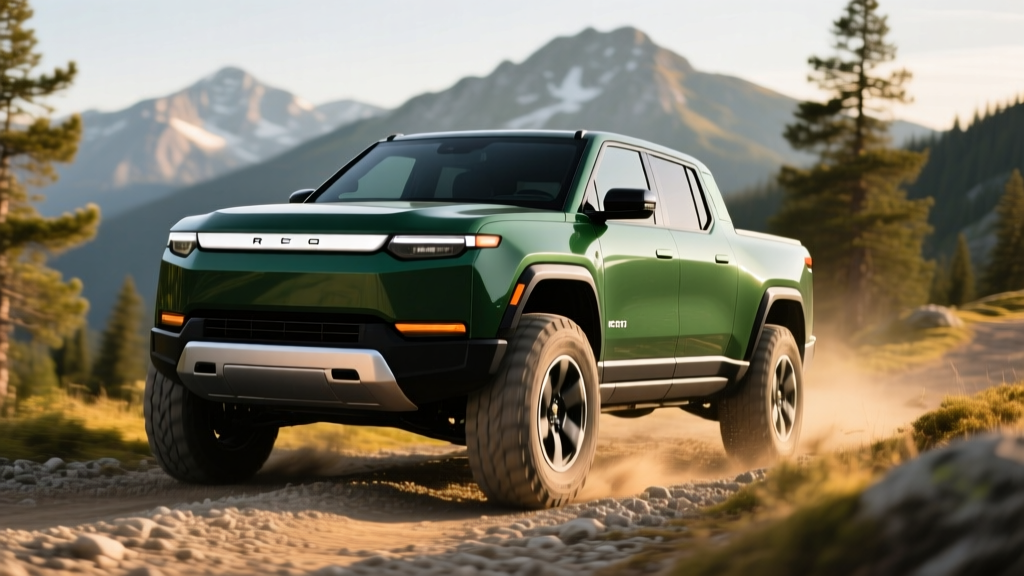
The Rivian R1T is one of the heaviest vehicles in its class — and that mass shapes everything from energy consumption to tire wear. If you've been searching for rivian truck weight data, you've likely noticed the numbers are substantial: the 2026 R1T Dual-Motor tips the scales at roughly 7,150 lbs (curb weight), while the Quad-Motor variant pushes closer to 7,400 lbs depending on configuration. For context, a body-on-frame Ford F-150 with a V6 weighs around 4,700 lbs, and even the electric F-150 Lightning sits near 6,200 lbs.
That extra weight comes from the R1T's skateboard platform housing a massive battery pack, four independent motors (on the Quad), and a reinforced unibody structure designed for off-road rigidity. The engineering payoff is immense torque, a low center of gravity, and class-leading ground clearance — but the physics of moving 3.5+ tons has direct consequences for range, charging energy costs, and long-term efficiency. Let's break down what the numbers actually mean for buyers.
2026 Rivian R1T Core Specifications
| Specification | Dual-Motor (Standard) | Tri-Motor | Quad-Motor |
|---|---|---|---|
| Curb Weight (est.) | ~7,150 lbs | ~7,250 lbs | ~7,400 lbs |
| Battery Capacity (usable) | 106 kWh (Standard) | 141 kWh (Max) | 141 kWh (Max) |
| Battery Chemistry | NMC (Nickel Manganese Cobalt) | NMC | NMC |
| EPA Estimated Range | 270 mi (Standard) / 352 mi (Max) | 420 mi | 328 mi |
| MPGe (Combined) | 70 MPGe | 73 MPGe | 65 MPGe |
| Efficiency (kWh/100 mi) | 48 kWh/100 mi | 46 kWh/100 mi | 52 kWh/100 mi |
| 0-60 mph | 4.5 sec | 3.0 sec | 2.5 sec |
| Horsepower | 533 hp | 850 hp | 1,025 hp |
| Torque | 610 lb-ft | 1,100 lb-ft | 1,200+ lb-ft |
| Drivetrain | AWD (2 motors) | AWD (3 motors) | AWD (4 motors, tank turns) |
| Max Towing Capacity | 11,000 lbs | 11,000 lbs | 11,000 lbs |
| Ground Clearance (max) | 14.9 in | 14.9 in | 14.9 in |
| Battery Warranty | 8 yr / 175,000 mi | 8 yr / 175,000 mi | 8 yr / 175,000 mi |
Source: fueleconomy.gov and Rivian official specifications. Tri-Motor and Quad-Motor figures reflect the 2025+ updated powertrain architecture carried into 2026.
Real-World Range: What the EPA Sticker Doesn't Tell You
Dual-Motor with Max Pack (352 mi EPA): Expect approximately 290-310 miles on a mixed highway trip at 70-75 mph. In cold weather (below 32°F), range drops 20-30%, yielding roughly 245-280 miles. City driving with regenerative braking recovers more energy, often matching or slightly exceeding the EPA figure.
Quad-Motor (328 mi EPA): The additional weight and four-motor parasitic losses bring real-world highway range to roughly 260-285 miles. Aggressive driving or off-road use reduces this further.
Tri-Motor (420 mi EPA): The efficiency sweet spot — real-world highway testing yields 350-380 miles in moderate temperatures. This is the configuration to choose if maximum range is your priority.
The R1T's weight directly impacts its efficiency profile. At 48-52 kWh per 100 miles, the R1T consumes significantly more energy per mile than lighter EVs like the Hyundai Ioniq 5 (28 kWh/100 mi) or even the Tesla Model X (~35 kWh/100 mi). That means you'll pay more per mile at public DC fast chargers and need more solar capacity or a higher-amperage home circuit to replenish the pack overnight.
For towing, the picture changes dramatically. Pulling a 7,000-lb trailer at highway speeds can cut range by 40-50%, meaning a Max Pack R1T might deliver only 180-210 miles before needing a charge. Rivian's software includes a tow-mode range estimator that accounts for trailer weight and terrain, which is genuinely useful for trip planning.
Charging Speed: DC Fast Charge and Home Level 2
| Charging Method | Power / Rate | Time or Miles Added | Notes |
|---|---|---|---|
| DC Fast Charge (Max Pack) | Peak ~220 kW | 10-80% in ~34 min | Charge curve tapers significantly above 80%; NMC chemistry limits sustained peak |
| DC Fast Charge (Standard Pack) | Peak ~190 kW | 10-80% in ~30 min | Smaller pack charges slightly faster as a percentage |
| Level 2 Home (48A / 11.5 kW) | 11.5 kW | ~25 mi/hr; full charge in 10-14 hr | Requires NEMA 14-50 or hardwired 60A circuit |
| Level 2 Home (32A / 7.7 kW) | 7.7 kW | ~17 mi/hr; full charge in 15-20 hr | Standard 240V outlet; slower but adequate for daily top-ups |
| Level 1 (120V) | ~1.4 kW | ~3 mi/hr | Emergency/trickle only — a full Max Pack charge takes 4+ days |
Rivian uses the NACS (North American Charging Standard) connector on 2025+ models, granting access to Tesla Supercharger stations with an included or integrated adapter. The Rivian Adventure Network — the company's own DC fast-charging corridor — continues to expand along major outdoor-recreation routes, though coverage remains far smaller than Tesla's or Electrify America's footprint.
A critical detail for heavy EVs like the R1T: the charge curve matters more than peak kW. The R1T holds close to its peak rate between 10-50% state of charge, then tapers progressively. Charging from 80-100% on DC fast charge is painfully slow — plan to charge to 80% on road trips and move on. At home, programming your Level 2 charger to stop at 85-90% daily preserves NMC battery longevity. Reserve 100% charges for road-trip departures.
Pricing, Trims, and Federal Tax Credit Eligibility
| Configuration | Base MSRP | As-Tested Range | §30D Credit Eligible? | Effective Price (with credit) |
|---|---|---|---|---|
| Dual-Motor Standard Pack | $69,900 | $69,900 - $78,000 | Yes (if under MSRP cap & sourcing rules met) | From ~$62,400 |
| Dual-Motor Max Pack | $81,900 | $81,900 - $92,000 | Yes (truck MSRP cap is $80,000 — Max Pack may exceed) | Varies |
| Tri-Motor Max Pack | $99,900 | $99,900 - $115,000 | No (exceeds $80K truck cap) | $99,900+ |
| Quad-Motor Max Pack | $105,900 | $105,900 - $120,000 | No (exceeds $80K truck cap) | $105,900+ |
The IRS §30D federal tax credit offers up to $7,500 for qualifying new EVs, but the rules are strict. For trucks (which the R1T is classified as), the MSRP cap is $80,000. This means the Dual-Motor Standard Pack qualifies, but adding the Max Pack or stepping up to Tri/Quad-Motor pushes the price beyond the threshold. Additionally, buyer income caps apply ($150K single / $300K joint AGI), and the vehicle must meet critical-mineral and battery-component sourcing requirements that shift annually. As of 2026, Rivian has worked to localize battery sourcing, but always verify current eligibility on IRS.gov before purchasing.
The point-of-sale transfer option allows you to apply the credit as an immediate discount at the dealer (or directly from Rivian), rather than waiting to claim it on your tax return. This effectively reduces your out-of-pocket cost at delivery.
Cargo, Passenger Space, and the Gear Tunnel Advantage
The R1T's 4-door, 5-seat crew-cab layout offers competitive interior volume for a midsize truck:
- Bed length: 4.5 ft (54 in) — shorter than a Tacoma or Colorado, but the bed is wide and flat
- Gear Tunnel: 11 cu ft lockable pass-through storage between the cab and bed — a Rivian-exclusive feature perfect for camping gear, skis, or groceries
- Frunk (front trunk): 11 cu ft, drainable — useful as a cooler or secure dry storage
- Rear-seat legroom: ~38.5 in — adequate for adults on longer trips
- Total cargo volume (bed + tunnel + frunk): ~43 cu ft combined enclosed/covered space
The tradeoff for the R1T's substantial weight and battery capacity is bed length. If you regularly haul 4x8 sheets of plywood or need a 6-foot bed for work, the R1T falls short of traditional pickups. But for lifestyle use — camping, biking, skiing, weekend home-improvement runs — the Gear Tunnel and frunk add versatility no conventional truck offers.
Standout Tech and Notable Drawbacks
- Quad-Motor delivers 1,025 hp and tank turns — genuine off-road capability with precision torque vectoring
- Gear Tunnel and frunk provide ~22 cu ft of secure, weatherproof storage beyond the bed
- Over-the-air updates continuously add features; Rivian's software stack is among the best in the industry
- Adjustable air suspension with up to 14.9 in of ground clearance and automatic ride-height adjustment
- 11,000-lb towing capacity with integrated trailer brake controller and tow-mode range estimation
- NACS connector standard on 2025+ models — Supercharger access without third-party adapters
- Weight drives high energy consumption: 48-52 kWh/100 mi means higher charging costs than lighter EVs
- 4.5-ft bed is short for traditional truck work; no 6-ft bed option
- Tri-Motor and Quad-Motor trims exceed the §30D MSRP cap — no federal tax credit
- DC fast charging peaks at ~220 kW — slower than Hyundai/Kia's 800V architecture (~350 kW peak)
- Service center network is still growing; some owners face long waits for collision or warranty repairs
- No Apple CarPlay or Android Auto — Rivian's native infotainment is capable but limits phone-mirroring preferences
On the driver-assistance front, the R1T ships with Rivian's Driver+ system — a Level 2 hands-on assistance suite combining adaptive cruise control, lane centering, and automatic lane changes on divided highways. Per NHTSA's SAE framework, this is not autonomous driving; the driver must remain attentive and keep hands on the wheel. It's competent for highway cruising but doesn't match the hands-free capability of GM's Super Cruise or Ford's BlueCruise on mapped roads.
Who Should Buy the Rivian R1T?
Choose the R1T if: You want a genuinely capable off-road electric truck with best-in-class storage versatility (Gear Tunnel + frunk), need 11,000-lb towing, and value over-the-air software improvements. The Dual-Motor Standard Pack is the value play with tax-credit eligibility; the Tri-Motor Max Pack is the range king for road trips.
Look elsewhere if: You need a full-size 6-foot bed for work, want the lowest cost-per-mile efficiency (consider the Tesla Cybertruck or a lighter crossover), require hands-free highway driving (Ford F-150 Lightning with BlueCruise), or need a sub-$55K price point (wait for the R2 or consider a used EV).
Frequently Asked Questions
What is the real-world range of the Rivian R1T?
Real-world range depends on configuration and conditions. The Dual-Motor Max Pack (352 mi EPA) delivers roughly 290-310 miles on highway trips in moderate weather, dropping to 245-280 miles in freezing temperatures. The Tri-Motor Max Pack is the efficiency leader at 350-380 real-world highway miles thanks to its optimized three-motor setup.
How much does the Rivian R1T weigh, and why does it matter?
The R1T weighs between approximately 7,150 and 7,400 lbs depending on the powertrain. This mass increases energy consumption (lower MPGe), extends braking distances, accelerates tire wear, and reduces range when towing. However, the weight also contributes to a low center of gravity (battery pack mounted in the skateboard chassis), improving stability and off-road traction.
How fast does the R1T charge at home and on the road?
On a DC fast charger, the Max Pack peaks at ~220 kW and charges from 10-80% in about 34 minutes. At home on a 48-amp Level 2 charger (11.5 kW), you'll add roughly 25 miles of range per hour, with a full charge taking 10-14 hours depending on pack size. A standard 32-amp Level 2 setup adds about 17 miles per hour.
Does the Rivian R1T qualify for the $7,500 federal tax credit?
The Dual-Motor Standard Pack (base MSRP $69,900) qualifies for the §30D credit if you meet income requirements and the vehicle satisfies battery-sourcing rules. The Max Pack and all Tri/Quad-Motor trims exceed the $80,000 MSRP cap for trucks and are ineligible. Always check IRS.gov for current eligibility before ordering.
Is the Rivian R1T worth buying versus the Ford F-150 Lightning or Tesla Cybertruck?
The R1T wins on off-road capability (14.9 in ground clearance, quad-motor torque vectoring, tank turns), storage versatility (Gear Tunnel), and software quality. The F-150 Lightning offers a larger bed, lower starting price, and BlueCruise hands-free driving. The Cybertruck undercuts on price and offers stainless-steel durability and 48-volt architecture. Your choice depends on whether you prioritize adventure capability (R1T), work utility (Lightning), or value and novelty (Cybertruck).
What is the R1T's battery warranty?
Rivian covers the battery pack and powertrain for 8 years or 175,000 miles, whichever comes first. The warranty guarantees the battery will retain a specified percentage of its original capacity (typically 70% or above) during the coverage period. This is competitive with industry standards and reflects confidence in the NMC cell chemistry and thermal management system.