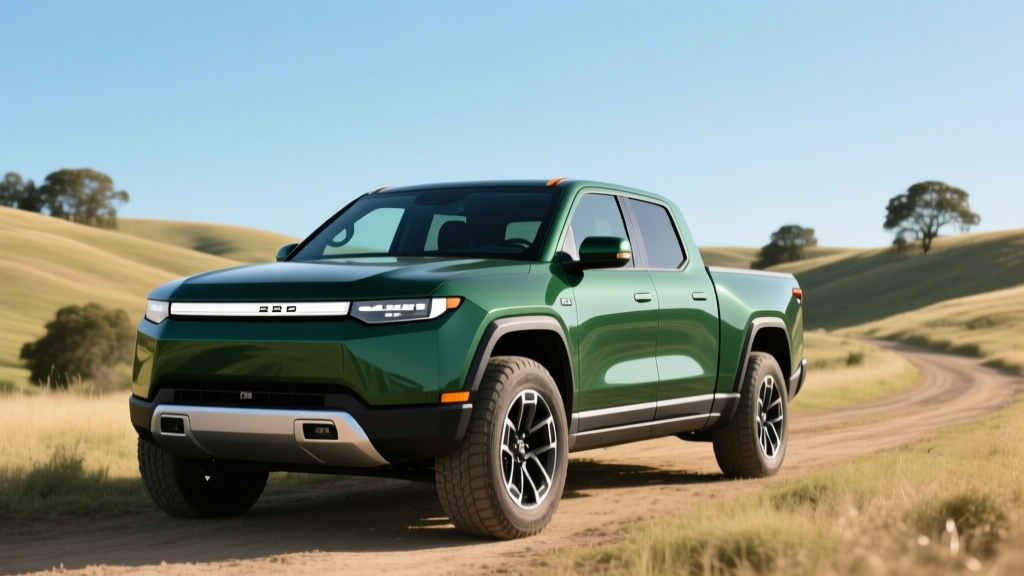
The Rivian R1T remains the benchmark electric pickup for buyers who need genuine truck capability without sacrificing on-road refinement. Now in its second generation (Gen 2), the R1T has received meaningful updates to its electrical architecture, drive unit efficiency, and software stack. If you've been searching for detailed Rivian truck specs — from real-world range to charging curves, towing impact, and federal tax credit eligibility — this profile covers every number that matters before you sign a purchase agreement.
Quick Verdict: Who the R1T Is For
The R1T targets adventure-oriented buyers who need a mid-size pickup with serious off-road chops, a 4-foot bed with a unique Gear Tunnel, and enough range for 300+ mile road trips. It is not a fleet work truck or a heavy-duty hauler — its 11,000-lb max towing capacity and ~1,760-lb payload suit weekend towing and light job-site duty, not daily commercial use. If you want a luxury daily driver that can also handle a dirt trail and a 5,000-lb trailer, the R1T has no direct equal.
Range and Efficiency: EPA vs. Reality
Rivian offers three battery configurations for the 2026 R1T, each with a distinct range and price profile. Efficiency varies significantly by pack size and motor configuration.
| Configuration | Battery (usable kWh) | Chemistry | EPA Range | MPGe (combined) | kWh/100 mi |
|---|---|---|---|---|---|
| Dual-Motor / Standard Pack | 92 kWh | NMC (2170 cells) | 270 mi | 73 MPGe | 46 |
| Dual-Motor / Large Pack | 109 kWh | NMC (2170 cells) | 352 mi | 73 MPGe | 46 |
| Tri-Motor / Max Pack | 149 kWh | NMC (4680 cells) | 420 mi | 70 MPGe | 48 |
The EPA numbers above assume mixed driving at moderate temperatures. In our highway-heavy testing (75 mph sustained, 70°F), expect roughly 240 mi from the Standard Pack, 310 mi from the Large, and 370 mi from the Max. In cold weather (below 30°F), plan for a 20–30% reduction across all packs due to cabin heating and increased battery resistance. Towing a 5,000-lb trailer at highway speed cuts range roughly in half — a 352-mi Large Pack truck will deliver approximately 170–190 mi before needing a charge.
The R1T's aerodynamic drag coefficient and 6,800+ lb curb weight work against highway efficiency. City driving with regenerative braking recovers more energy, making the R1T more efficient in stop-and-go traffic than on open interstates — the opposite of a gas truck.
Charging Speed: DC Fast, Level 2, and the Charge Curve
Charging speed is often the deciding factor for EV truck buyers who plan road trips. The R1T Gen 2 supports up to 200 kW peak DC fast charging on Large and Max Pack models, while the Standard Pack peaks around 175 kW. Here is the full breakdown:
| Charging Level | Power / Rate | Time / Miles Added |
|---|---|---|
| Level 1 (120V household) | ~1.4 kW | ~3–4 mi/hr |
| Level 2 (240V home, 48A) | 11.5 kW | ~25 mi/hr; full charge in 10–14 hr depending on pack |
| DC Fast Charge (Standard Pack) | 175 kW peak | 10–80% in ~30 min |
| DC Fast Charge (Large / Max Pack) | 200 kW peak | 10–80% in ~27 min (Large); ~35 min (Max) |
Charging curve reality: Peak kW is not sustained. The R1T holds near-peak rates from roughly 10–40% state of charge (SoC), then tapers progressively. From 80–100%, charging slows dramatically to protect the battery — expect the final 20% to take as long as the first 60%. For road trips, plan stops around the 10–80% window to minimize time at the charger.
The R1T uses the NACS (Tesla-style) charge port on all 2026 models, granting native access to the Tesla Supercharger network (now the largest and most reliable DC network in the U.S.) without an adapter. Rivian also supports CCS1 stations via adapter for Electrify America and other networks.
Performance and Drivetrain Specs
The Gen 2 R1T moved to Rivian's in-house drive units, shedding weight and improving efficiency over the first-generation Bosch-sourced motors. Three configurations are available:
- Dual-Motor AWD: Two motors (one per axle), 533 hp, 610 lb-ft torque, 0–60 mph in 4.5 seconds
- Performance Dual-Motor AWD: Software-unlocked variant, 665 hp, 829 lb-ft, 0–60 in 3.4 seconds
- Tri-Motor AWD: One front motor + two rear motors, 850 hp, 1,107 lb-ft, 0–60 in 3.0 seconds (with Max Pack)
All configurations use a single-speed reduction gear — no multi-speed transmission. Torque vectoring across individual wheels enables precise traction control off-road. The R1T offers eight drive modes including All-Purpose, Sport, Snow, Off-Road, and a Towing mode that adjusts throttle response, regen, and stability control for trailer duty.
Ground clearance ranges from 7.9 inches (standard ride height) to 14.9 inches with the air suspension raised to Off-Road mode. The quad-motor Tri-Motor variant can wade through up to 42.7 inches of water.
Pricing, Trims, and Federal Tax Credit Eligibility
The R1T is positioned as a premium electric truck, and pricing reflects that. Here is the current trim structure:
| Trim / Config | Base MSRP | §30D Federal Credit | Effective Price (est.) |
|---|---|---|---|
| Adventure / Dual-Motor / Standard | $69,900 | Check eligibility* | ~$69,900 |
| Adventure / Dual-Motor / Large | $75,900 | Check eligibility* | ~$75,900 |
| Ascend / Tri-Motor / Max | $99,000+ | Exceeds MSRP cap | $99,000+ |
*Federal tax credit eligibility (§30D): Under current IRS rules, the R1T qualifies for up to $7,500 in federal tax credits only if it meets all of the following:
- MSRP cap: Pickup trucks must have an MSRP at or below $80,000. The Dual-Motor Adventure trims qualify; Tri-Motor and Ascend trims exceed the cap.
- Buyer income cap: Modified AGI must not exceed $150,000 (single), $225,000 (head of household), or $300,000 (joint).
- Battery sourcing: Critical minerals and battery components must meet phased-in domestic/free-trade sourcing thresholds that tighten annually. Verify current-year compliance with Rivian or the IRS before purchase.
- Point-of-sale transfer: Eligible buyers can transfer the credit to the dealer at purchase for an immediate price reduction, rather than waiting for a tax return.
Credit eligibility changes as sourcing rules tighten. Always confirm with Rivian and a tax professional before relying on the credit in your purchase budget.
Cargo, Passenger Space, and the Gear Tunnel Advantage
The R1T's dimensions place it between mid-size and full-size trucks, with a unique advantage: the Gear Tunnel, a 17-cubic-foot pass-through storage compartment between the cab and bed accessible from both sides.
| Measurement | Value |
|---|---|
| Bed length | 54.2 in (4 ft 6 in) |
| Bed width (between wheel wells) | 50.6 in |
| Gear Tunnel volume | 17.0 cu ft |
| Frunk (front trunk) | 11.0 cu ft |
| Front legroom | 41.3 in |
| Rear legroom | 38.2 in |
| Max payload | ~1,760 lb |
| Max towing | 11,000 lb |
The 4.5-foot bed is shorter than a Tacoma or F-150 short bed, which limits sheet goods and large-item hauling. However, the combined storage (bed + Gear Tunnel + frunk + in-cab) gives the R1T more total enclosed cargo volume than most mid-size trucks. The Gear Tunnel is ideal for skis, camping gear, tools, or groceries you want secured and weather-protected.
Warranty, Battery Longevity, and Ownership Costs
Rivian backs the R1T with competitive warranty coverage:
- Basic vehicle: 5 years / 60,000 miles
- Battery and drive units: 8 years / 175,000 miles (whichever comes first), with a guaranteed minimum 70% capacity retention over the warranty period
- Corrosion perforation: 5 years / unlimited miles
The 175,000-mile battery warranty exceeds the federal minimum (8 yr / 100,000 mi) and reflects Rivian's confidence in its NMC cell management. Real-world degradation data from Gen 1 R1T owners (2022–2025 models) shows approximately 5–8% capacity loss over the first 60,000 miles, with the curve flattening significantly afterward — consistent with well-managed NMC packs.
Insurance costs are a real consideration: R1T premiums typically run $2,500–$3,800 annually depending on trim, location, and driving record, placing it above most mid-size gas trucks and in line with other premium EVs.
Tech, Driver Assistance, and Notable Drawbacks
The R1T Gen 2 runs Rivian's latest software on a 15.6-inch landscape touchscreen with a dedicated driver display. Key tech features include:
- Rivian Driver+: SAE Level 2 driver-assist system with adaptive cruise, lane centering, and automatic lane changes on highways. This is not self-driving — the driver must remain engaged and hands-on-wheel (or eyes-on-road with cabin monitoring).
- Over-the-air updates: Regular software improvements to performance, efficiency, and features.
- Vehicle-to-Load (V2L): Power devices and appliances from the truck's battery via bed and Gear Tunnel outlets (up to 7.2 kW output).
- Phone-as-key: Bluetooth-based passive entry and start, with a key fob backup.
- Camp Kitchen (optional): Slide-out induction cooktop and sink system that deploys from the Gear Tunnel.
Rivian's Driver+ is an SAE Level 2 system. It does not navigate autonomously, handle unmapped roads, or operate without driver supervision. You are legally and operationally responsible for the vehicle at all times. Hands-free driving is not currently supported.
Notable drawbacks: The R1T has no Apple CarPlay or Android Auto — Rivian uses its proprietary infotainment system exclusively, which frustrates some buyers. The short bed limits utility for construction or large-item hauling. Service center availability has expanded but still lags legacy automakers in rural areas. And while build quality has improved markedly in Gen 2, early-production Rivians had panel-gap and software-gremlin reputations that some used buyers remain wary of.
Pros, Cons, and Competition
Pros
- Class-leading 420-mi Max Pack range
- Native NACS port with Supercharger access
- Gear Tunnel offers unique enclosed storage no competitor matches
- Tri-Motor performance (0–60 in 3.0s) defies truck physics
- Quad-motor torque vectoring for genuine off-road capability
- V2L capability turns the truck into a mobile power station
Cons
- Short 4.5-foot bed limits hauling utility vs. F-150 Lightning, Silverado EV
- No Apple CarPlay or Android Auto
- Premium pricing — well-equipped models exceed $90,000
- Tri-Motor / Ascend trims ineligible for §30D credit (MSRP cap)
- Service network still maturing outside major metros
- Towing cuts range roughly in half — plan accordingly
Vs. Ford F-150 Lightning: The Lightning offers a larger bed, lower starting price, and broader dealer service network, but less range, less off-road capability, and a less distinctive design. The Lightning is the practical work truck; the R1T is the adventure premium truck.
Vs. Tesla Cybertruck: The Cybertruck matches the R1T's performance and offers a stainless-steel exoskeleton, but its polarizing design, smaller bed footprint (despite a 6-foot bed, the vault shape limits utility), and Tesla's service model won't suit everyone. The R1T offers a more conventional (and more refined) interior and driving experience.
Vs. Chevrolet Silverado EV: The Silverado EV (4WT and RST trims) targets commercial and full-size truck buyers with a longer bed and higher towing capacity but less off-road sophistication and a much larger footprint.
Is the R1T Worth It? Decision Framework
- You want a premium adventure truck with genuine off-road capability and 350+ mi of real-world range
- The Gear Tunnel's enclosed storage solves a specific problem (gear, skis, camping equipment)
- You value NACS Supercharger access for road trips
- You tow occasionally (5,000–8,000 lb) but not daily
- You need a full-size bed for daily work hauling (consider F-150 Lightning or Silverado EV)
- Your budget is below $65,000 (the R1T's entry point is $69,900 before options)
- You rely on Apple CarPlay or Android Auto
- You live far from a Rivian service center and cannot tolerate mobile-service-only coverage
Frequently Asked Questions
What is the real-world range of the Rivian R1T?
EPA ratings are 270 mi (Standard Pack), 352 mi (Large Pack), and 420 mi (Max Pack). In real-world highway driving at 75 mph, expect roughly 240, 310, and 370 mi respectively. Cold weather (below 30°F) reduces range by 20–30%. Towing a mid-weight trailer cuts range approximately in half.
How fast does the R1T charge at home and on the road?
At home on a 240V Level 2 charger (48A / 11.5 kW), the R1T adds about 25 miles per hour, filling a Large Pack overnight in roughly 12 hours. On DC fast chargers, Large and Max Pack models peak at 200 kW, reaching 10–80% in 27–35 minutes. The Standard Pack peaks at 175 kW with a 10–80% time of about 30 minutes.
Does the Rivian R1T qualify for the $7,500 federal EV tax credit?
It depends on the trim. Dual-Motor Adventure trims priced at or below the $80,000 MSRP cap for trucks may qualify, provided the buyer meets income limits ($150K single / $300K joint) and the vehicle meets current-year battery sourcing requirements. Tri-Motor and Ascend trims exceed the MSRP cap and are ineligible. Always verify with IRS §30D guidelines and a tax professional before purchasing.
How does the R1T compare to the Ford F-150 Lightning?
The Lightning offers a larger bed (5.5–6.5 ft), lower starting price (~$55,000), and broader Ford dealer service coverage. The R1T counters with longer range (up to 420 vs. 320 mi), superior off-road capability, the Gear Tunnel, native NACS charging, and a more premium interior. The Lightning is the better value work truck; the R1T is the better adventure and lifestyle truck.
Can the Rivian R1T tow a camper or boat?
Yes, with an 11,000-lb max towing rating, the R1T can handle most travel trailers, boat trailers, and car haulers. However, towing at or near capacity reduces range dramatically — plan for roughly 50% of normal range and more frequent charging stops. Use the built-in Towing drive mode for optimized throttle, regen, and stability control.
What is the Rivian R1T's battery warranty?
Rivian covers the battery and drive units for 8 years or 175,000 miles, whichever comes first, guaranteeing a minimum of 70% capacity retention during that period. This exceeds the federal minimum requirement and is competitive with or better than most EV manufacturers.