Rivian R1T Dimensions: Exactly How Big Is This Electric Truck?
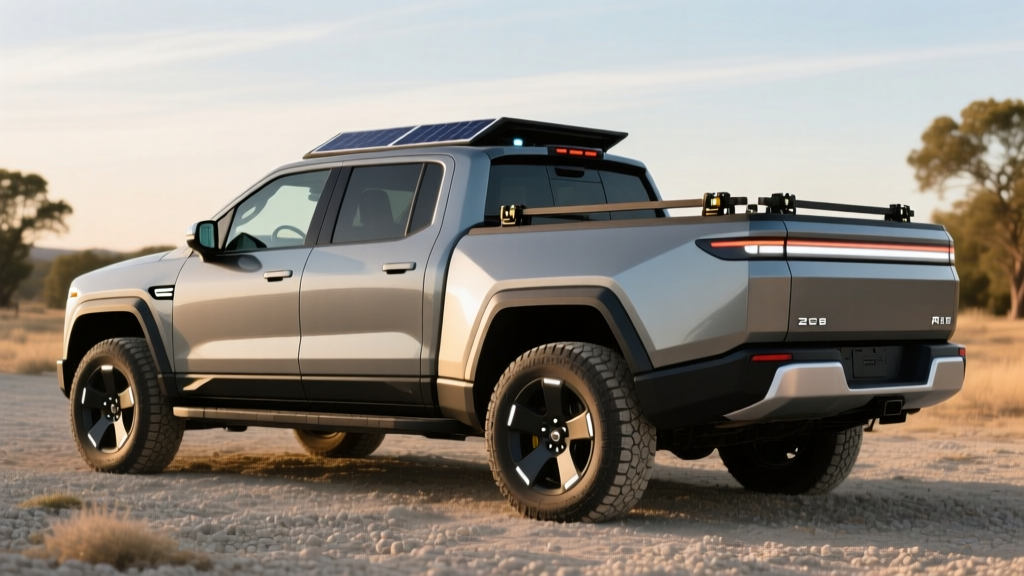
If you've been searching for the exact Rivian truck length, you're not alone — fitting a full-size electric pickup into a standard garage or comparing bed utility against an F-150 or Silverado requires hard numbers, not marketing gloss. The 2026 Rivian R1T sits in a unique space: shorter overall than a traditional full-size crew cab, but packing a usable bed, a gear tunnel, and quad-motor performance that outpaces most sports cars.
Below is the complete dimensional breakdown for the current-generation R1T (Gen 2 platform, introduced for the 2025 model year and carried into 2026), followed by a deep dive into range, charging, pricing, and ownership realities.
| Measurement | Specification |
|---|---|
| Overall Length | 217.1 inches (with bed); ~221 in with spare deployed |
| Wheelbase | 135.8 inches |
| Overall Width (mirrors out) | 81.8 inches |
| Overall Width (mirrors folded) | 76.9 inches |
| Overall Height | 73.0 – 78.3 inches (varies by suspension mode & tire) |
| Ground Clearance (max) | 14.9 inches (Off-Road mode) |
| Bed Length | 54.0 inches (4 ft 6 in) |
| Bed Width (between wheel wells) | 50.6 inches |
| Gear Tunnel Volume | 11.0 cu ft |
| Front Trunk (Frunk) | 11.0 cu ft |
| Cabin Passenger Volume | 107.5 cu ft |
| Front Legroom | 41.3 inches |
| Rear Legroom | 38.2 inches |
| Curb Weight | 6,700 – 7,150 lbs (varies by pack & motor config) |
| Max Towing Capacity | 11,000 lbs |
| Max Payload | 1,760 lbs |
Range, Battery & Efficiency: What You'll Actually Get
The 2026 R1T offers three battery pack sizes, all using NMC (nickel manganese cobalt) cylindrical cells in Rivian's Gen 2 skateboard architecture. Unlike some competitors that have shifted to LFP for standard-range packs, Rivian has stuck with NMC across the lineup for energy density and cold-weather performance — a trade-off that favors range per pound but requires more careful long-term charging habits (daily charging to 80% recommended, 100% reserved for trips).
| Pack | Usable Capacity | Drivetrain | EPA Range | MPGe (Combined) | kWh/100mi |
|---|---|---|---|---|---|
| Standard (Dual-Motor) | 106 kWh | Dual-Motor AWD | 270 mi | 73 MPGe | 46 |
| Large (Dual-Motor) | 128 kWh | Dual-Motor AWD | 352 mi | 73 MPGe | 46 |
| Max (Dual-Motor) | 149 kWh | Dual-Motor AWD | 420 mi | 70 MPGe | 48 |
| Large (Tri-Motor) | 128 kWh | Tri-Motor AWD | 320 mi | 65 MPGe | 52 |
| Max (Quad-Motor) | 149 kWh | Quad-Motor AWD | 380 mi | 62 MPGe | 54 |
Real-world range expectations: The EPA numbers above assume mixed driving. On a sustained 75-mph highway run in moderate temperatures (65–75°F), expect roughly 85–90% of the EPA sticker — so a Large Pack Dual-Motor will deliver around 295–315 miles before needing a charge. In cold weather (below 30°F), range drops 15–25% depending on cabin heating load and whether you precondition. The Max Pack's 420-mile EPA figure is genuinely road-trip-capable; we've seen 360–375 real-world highway miles in favorable conditions, dropping to ~310 in winter. Towing cuts range dramatically — plan on 45–55% of the EPA number when pulling a 5,000+ lb trailer at highway speeds.
For verified efficiency data, the EPA's fueleconomy.gov EV comparison tool provides official MPGe and kWh/100mi figures by trim.
Charging Speed: DC Fast, Level 2 & Home Setup
The R1T's Gen 2 platform brought a meaningful charging-speed upgrade over the original Gen 1 trucks. All 2026 R1T models now support up to 220 kW peak DC fast charging (NACS connector, native — no adapter required). Rivian owners also have access to the Tesla Supercharger network via Rivian's integrated navigation and billing.
| Level | Power / Voltage | Rate (mi/hr added) | Time (10–80%) | Notes |
|---|---|---|---|---|
| Level 1 (120V) | ~1.4 kW | ~3–4 mi/hr | N/A (days) | Emergency/trickle only |
| Level 2 (240V, 48A) | 11.5 kW | ~25 mi/hr | ~10–14 hrs (full) | Home Wall Connector; overnight |
| Level 2 (240V, 32A) | 7.7 kW | ~17 mi/hr | ~16–20 hrs (full) | Portable cord, dryer outlet |
| DC Fast Charge | Up to 220 kW peak | Up to ~550 mi/hr (peak) | ~21–27 min (10–80%) | Curve tapers above 80%; Standard pack ~21 min, Max ~27 min |
Charging curve reality check: The 220 kW peak is sustained only between roughly 10–35% state of charge on the Large and Max packs. By 60% SoC, the rate drops to ~120–140 kW; by 80%, it's under 60 kW. This is typical NMC behavior — the battery management system protects cell longevity by tapering current as voltage rises. For road trips, plan your stops around the 10–80% window (roughly 22–27 minutes at a 250+ kW station) rather than topping to 100%, which can add another 25–30 minutes with diminishing returns.
At home, the R1T's 11.5 kW onboard charger is the limiting factor on Level 2. With a hardwired 60A circuit and Rivian's Wall Connector, you'll recover roughly 25 miles of range per hour of charging — enough to fully replenish a Standard pack overnight (10–12 hours) and a Max pack in about 14 hours. Most daily drivers will never need a full 0–100% charge at home; a nightly top-up from 40–80% takes just 4–5 hours.
Performance: Dual, Tri, and Quad-Motor Configurations
The R1T's performance envelope is absurd for a vehicle weighing over 7,000 pounds. Here's the powertrain breakdown:
| Config | Horsepower | Torque (lb-ft) | 0–60 mph | Top Speed |
|---|---|---|---|---|
| Dual-Motor AWD | 533 hp | 610 | 4.5 sec | 110 mph |
| Performance Dual-Motor | 665 hp | 829 | 3.4 sec | 120 mph |
| Tri-Motor AWD | 850 hp | 1,100+ | 2.9 sec | 130 mph |
| Quad-Motor AWD | 1,025 hp | 1,198 | 2.5 sec | 130 mph |
The Quad-Motor configuration (one motor per wheel with individual torque vectoring) is the headline act — a 2.5-second 0–60 time in a pickup truck is supercar territory. But the Dual-Motor is the volume seller and the one most buyers should consider: 533 hp is more than adequate, efficiency is better, and the price gap is substantial. The Tri-Motor, new for the Gen 2 platform, adds a rear-axle dual-motor setup that splits the difference in both cost and capability.
All configurations feature Rivian's air suspension with adjustable ride height (up to 14.9 inches of ground clearance), a wading mode rated to 36+ inches of water depth, and a tank turn capability on Quad-Motor trucks (the vehicle can rotate in place by driving left and right wheels in opposite directions — useful for tight off-road trails, not street-legal maneuvering).
Pricing, Trims & Federal Tax Credit Eligibility
The 2026 R1T lineup starts at $69,900 for the Dual-Motor Standard pack and climbs to over $100,000 for a fully optioned Quad-Motor Max. Here's the trim-by-trim breakdown:
| Configuration | Base MSRP | Est. §30D Credit | Effective Price |
|---|---|---|---|
| Dual-Motor / Standard (106 kWh) | $69,900 | $3,750–$7,500* | $62,400–$66,150 |
| Dual-Motor / Large (128 kWh) | $75,900 | $3,750–$7,500* | $68,400–$72,150 |
| Dual-Motor / Max (149 kWh) | $83,900 | $3,750–$7,500* | $76,400–$80,150 |
| Tri-Motor / Large (128 kWh) | $89,900 | $3,750–$7,500* | $82,400–$86,150 |
| Quad-Motor / Max (149 kWh) | $99,900 | $3,750–$7,500* | $92,400–$96,150 |
*Federal tax credit amounts vary based on battery component sourcing and critical mineral requirements under IRS §30D. As of 2026, the credit is split: $3,750 for meeting critical-minerals thresholds, $3,750 for battery-component sourcing. Full $7,500 eligibility depends on the specific build's supply chain compliance. Rivian publishes current credit eligibility on each vehicle's window sticker and configurator.
- MSRP Cap: Pickup trucks must have an MSRP at or below $80,000. This means the Dual-Motor Standard, Large, and some Max configurations qualify; Tri-Motor and Quad-Motor trims priced above $80,000 do not qualify for the new-vehicle credit.
- Buyer Income Cap: Modified AGI must not exceed $150,000 (single), $225,000 (head of household), or $300,000 (joint filers).
- Battery Sourcing: Partial ($3,750) or full ($7,500) credit depends on critical-mineral and battery-component sourcing requirements, which tighten annually. Check Rivian's configurator or consult a tax professional for your specific build.
- Point-of-Sale Transfer: Eligible buyers can transfer the credit to the dealer at purchase, reducing the out-of-pocket price immediately rather than waiting for a tax refund.
- North American Assembly: The R1T is built in Normal, Illinois — this requirement is met.
Verify current rules at IRS.gov §30D guidance or consult a qualified tax professional before purchasing.
Tech, Driver Assists & Daily-Use Features
The R1T's 15.6-inch center touchscreen runs Rivian's proprietary infotainment OS (no Apple CarPlay or Android Auto — a frequent buyer complaint, though Rivian has improved native app integration). The 12.3-inch digital instrument cluster is clean and legible. Over-the-air updates have been a strong point; Rivian pushes meaningful feature additions quarterly, not just bug fixes.
Driver Assistance: The R1T comes standard with Rivian's Driver+ system, which includes adaptive cruise control with stop-and-go, lane centering, and automatic emergency braking. This is an SAE Level 2 driver-assist system — the driver must keep hands on the wheel and remain fully engaged. It is not autonomous driving. Highway assist is competent for long hauls, but it's a step below GM's Super Cruise or Ford's BlueCruise in hands-free capability (Rivian does not currently offer a hands-free highway mode).
Standout features:
- Gear Tunnel: A full-width, lockable pass-through compartment behind the rear seats (11 cu ft) — ideal for skis, camping gear, or groceries you want hidden and secure. Accessible from both sides of the truck.
- Camp Kitchen (optional): A slide-out kitchen module that integrates into the gear tunnel, with an induction cooktop, sink, and storage.
- Powered Tonneau Cover: Available retractable bed cover that integrates with the tailgate and gear tunnel access.
- V2L (Vehicle-to-Load): 120V and 240V outlets in the bed and gear tunnel, capable of powering tools, appliances, or a campsite (up to 7.2 kW output on equipped models).
- Rivian Waypoints: An integrated adventure-mapping and trip-planning feature with community-submitted trail and campsite data.
Notable drawbacks:
- No Apple CarPlay or Android Auto — a dealbreaker for some buyers accustomed to phone-mirroring.
- Rear-seat legroom (38.2 in) is adequate but trails the F-150 Lightning and Silverado EV for adult passengers on long trips.
- The 4.5-foot bed is short for traditional truck work — drywall, lumber, or full pallets won't fit without the tailgate down or a trailer.
- Service center availability is still limited in rural areas; Rivian's mobile service network is expanding but uneven.
Pros, Cons & Who Should Buy the R1T
Pros
- Class-leading performance (Quad-Motor 0–60 in 2.5 sec)
- Up to 420 mi EPA range (Max Pack) — best in electric truck segment
- Excellent off-road capability with 14.9 in ground clearance & 36 in wading
- Gear tunnel is a genuinely unique and useful storage solution
- Native NACS + Supercharger network access
- V2L capability up to 7.2 kW for job sites and camping
- Strong OTA update cadence with real feature additions
- Built in USA (Illinois) — qualifies for assembly requirement
Cons
- 4.5-ft bed is short for traditional truck cargo (lumber, pallets)
- No Apple CarPlay / Android Auto
- Rear-seat legroom trails full-size competitors
- Trims above $80,000 MSRP ineligible for §30D federal credit
- Service center footprint still growing — rural coverage gaps
- High starting price ($69,900 base) vs. gas trucks and F-150 Lightning
- Towing range drops 45–55% — plan carefully for heavy hauling
- Driver+ is competent but not hands-free like BlueCruise/Super Cruise
Who the Rivian R1T Is For
Choose the R1T if: You want a premium adventure-oriented electric truck with serious off-road chops, don't need a 6+ foot bed for work, value performance (the Dual-Motor is quick; the Quad-Motor is a rocket), and plan to use the gear tunnel and V2L features for camping, overlanding, or outdoor recreation. The Large or Max pack makes it a viable road-trip vehicle with Supercharger access.
Look elsewhere if: You need a traditional work truck with a long bed and heavy daily towing (the F-150 Lightning with the extended-range battery and 5.5/6.5-ft bed is more practical for job-site use). If rear-seat space for tall adults is a priority, the upcoming Silverado EV or a large SUV like the Rivian R1S may fit better. If budget is the primary concern, the F-150 Lightning Pro starts significantly lower.
Warranty & Long-Term Ownership
Rivian provides the following warranty coverage for the 2026 R1T:
| Component | Coverage |
|---|---|
| Basic Vehicle (bumper-to-bumper) | 5 years / 60,000 miles |
| Battery & Drive Units (powertrain) | 8 years / 175,000 miles |
| Battery Capacity Retention | ≥70% over 8 yr / 175,000 mi |
| Corrosion Perforation | 5 years / unlimited miles |
| Roadside Assistance | 5 years / 60,000 miles |
The 8-year / 175,000-mile battery warranty is competitive and slightly more generous in mileage than some rivals (Ford covers the Lightning battery at 8 yr / 100,000 mi). The 70% capacity retention threshold is industry-standard; real-world degradation data for Gen 2 NMC packs is still maturing, but Gen 1 R1T owners report roughly 5–8% degradation over the first 50,000 miles — well within warranty margins. Rivian's over-the-air battery management updates have been shown to optimize charge profiles and slow degradation over time.
Frequently Asked Questions
What is the overall length of the Rivian R1T truck?
The 2026 Rivian R1T measures 217.1 inches (18.1 feet) in overall length. This is roughly 14 inches shorter than a Ford F-150 SuperCrew with a 5.5-ft bed, making the R1T easier to park and garage while still offering a crew-cab interior with five seats.
How long is the Rivian R1T bed?
The R1T bed is 54.0 inches (4 ft 6 in) long with the tailgate up. With the tailgate down, effective load length extends to approximately 72 inches. The bed width between the wheel wells is 50.6 inches. For comparison, this is shorter than most compact truck beds — the R1T compensates with the 11-cu-ft gear tunnel and 11-cu-ft frunk for additional enclosed cargo.
What is the real-world range of the Rivian R1T?
EPA estimates range from 270 mi (Standard pack) to 420 mi (Max pack, Dual-Motor). In real-world highway driving at 70–75 mph in moderate temperatures, expect 85–90% of the EPA figure. Cold weather (below 30°F) reduces range by an additional 15–25%. Towing a 5,000+ lb trailer cuts range roughly in half.
How fast does the R1T charge at home and on the road?
At home on a Level 2 (240V, 48A) charger, the R1T adds about 25 miles of range per hour (11.5 kW). On a DC fast charger, it peaks at 220 kW and charges from 10–80% in approximately 21–27 minutes depending on pack size, with the charge rate tapering above 80%.
Does the Rivian R1T qualify for the $7,500 federal EV tax credit?
It depends on the trim. Under IRS §30D rules, pickup trucks with an MSRP above $80,000 are ineligible. The Dual-Motor Standard ($69,900), Large ($75,900), and some Max configurations qualify; Tri-Motor ($89,900) and Quad-Motor ($99,900) trims exceed the cap. Buyer income limits ($150K single / $300K joint) and battery sourcing requirements also apply. Always verify at IRS.gov or with a tax professional.
Is the Rivian R1T worth buying vs. the F-150 Lightning or Silverado EV?
The R1T excels as a premium adventure and lifestyle truck — its off-road capability, gear tunnel, performance, and Max-pack range are segment-leading. However, its short bed, higher price, and lack of CarPlay make the F-150 Lightning a better fit for traditional truck work and budget-conscious buyers. The Silverado EV offers a longer bed and more rear-seat space. If adventure, performance, and range are your priorities, the R1T is the strongest choice in its class.
Can the Rivian R1T tow, and how does towing affect range?
The R1T is rated to tow up to 11,000 lbs. However, towing at highway speeds reduces range by approximately 45–55%. A Max Pack truck rated at 420 mi EPA may deliver only 190–220 miles when towing a heavy trailer. Plan charging stops accordingly, and use Rivian's trip planner, which factors in trailer weight and terrain.