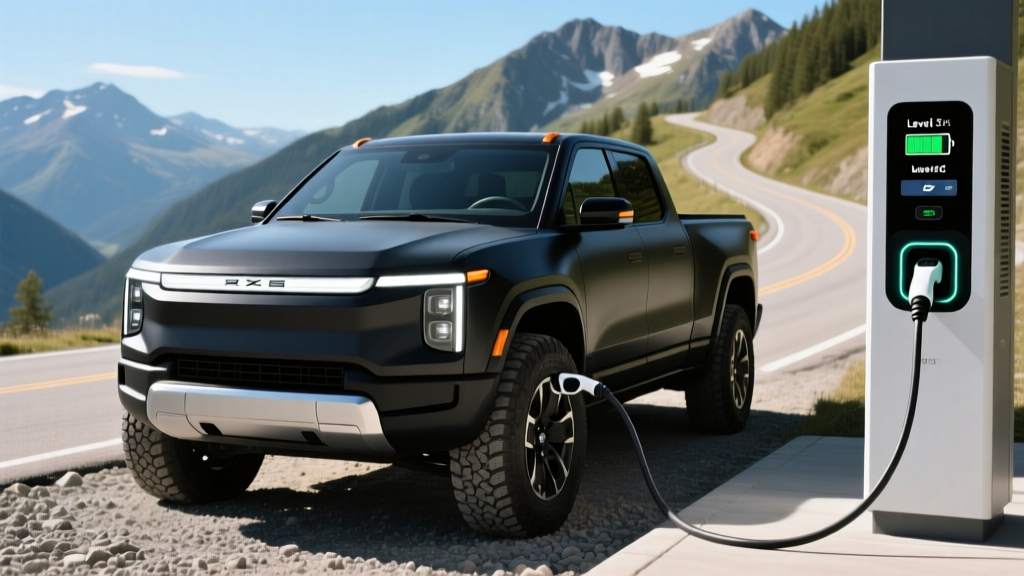
The Rivian R1T Tri-Motor sits at the intersection of extreme performance and genuine truck utility. With three motors producing 850 horsepower, a massive 149 kWh Max battery pack, and a body-on-frame design built for real work, it's the most capable variant in the R1T lineup. But capability comes at a cost — both in MSRP and in efficiency. This review breaks down the exact numbers you need to decide whether the Tri-Motor earns a spot in your driveway or whether the Dual-Motor is the smarter buy.
Quick Verdict: Who Should Buy the Tri-Motor
The Tri-Motor R1T is built for buyers who need maximum towing performance, want sub-3-second acceleration in a 7,000-pound truck, and plan to use the vehicle for off-road adventures where torque vectoring across three motors provides a genuine traction advantage. If your priority is range-per-dollar or daily commuting efficiency, the Dual-Motor with the Standard or Large pack is the more rational choice. The Tri-Motor is a performance and capability flagship — and it's priced accordingly.
Spec Table: 2026 Rivian R1T Tri-Motor at a Glance
| Specification | Value |
|---|---|
| EPA Range (Max Pack) | ~420 miles (Dual-Motor Large ~352 mi shown for reference) |
| Battery Capacity (Max Pack) | 149 kWh (NMC lithium-ion) |
| Drivetrain | Tri-Motor AWD (1 front, 2 rear) |
| Horsepower | 850 hp |
| Torque | 1,103 lb-ft |
| 0–60 mph | ~2.9 seconds |
| Max DC Fast Charge | ~220 kW peak |
| 10–80% DC Charge Time | ~42 minutes (Max Pack) |
| Level 2 Home Charging | 11.5 kW (~25 mi/hr) |
| Towing Capacity | 11,000 lbs |
| Payload Capacity | ~1,760 lbs |
| Bed Length | 4 ft 6 in (with Gear Tunnel: ~7 ft total enclosed) |
| Ground Clearance | Up to 14.9 inches (max air suspension) |
| Wading Depth | ~3 ft |
| Battery/Powertrain Warranty | 8 years / 175,000 miles |
| Base MSRP (Tri-Motor) | ~$100,000 (before options/destination) |
| Federal Tax Credit (§30D) | Up to $7,500 (subject to eligibility — see below) |
Range and Efficiency: EPA vs. Real-World
Rivian's Max Pack uses a 149 kWh NMC (nickel manganese cobalt) battery — one of the largest packs in any production consumer vehicle. NMC chemistry offers higher energy density than LFP (lithium iron phosphate), which is essential for fitting this much capacity into the R1T's skateboard platform. The trade-off: NMC cells degrade slightly faster over time and are more sensitive to sustained 100% state-of-charge storage. Rivian recommends daily charging to 85–90% for longevity and reserving 100% for road trips.
Efficiency is measured at approximately 48–52 kWh/100 mi in mixed driving, which translates to roughly 67–70 MPGe. That's thirstier than the Dual-Motor Large (~38–42 kWh/100 mi) and far less efficient than a sedan like the Lucid Air. But for a 7,000-lb truck with 850 hp, it's competitive within the electric truck segment — the Ford F-150 Lightning Extended Range posts similar numbers, and the GMC Hummer EV is considerably less efficient.
Source: fueleconomy.gov — check the latest EPA data for official R1T Tri-Motor figures, as the Tri-Motor configuration's EPA certification may differ from Dual-Motor listings.
Charging Speed: DC Fast, Level 2, and the Charge Curve
| Charging Level | Power | Speed (Approx.) |
|---|---|---|
| Level 1 (120V household) | ~1.4 kW | ~3 mi/hr — impractical for Max Pack |
| Level 2 (240V home, 48A) | 11.5 kW | ~25 mi/hr — full charge in ~13 hours |
| DC Fast Charge (peak) | ~220 kW | ~140 mi in 20 min (10–30% SoC) |
| DC Fast Charge (10–80%) | Avg ~150 kW sustained | ~42 minutes |
The R1T Max Pack peaks at approximately 220 kW on a capable DC fast charger (350 kW CCS stations from Electrify America or EVgo). However, peak rate is not sustained rate. The charge curve tapers meaningfully above 60% state-of-charge, and the final 80–100% can take as long as the 10–80% session. This is normal for large NMC packs — the battery management system protects cell health by reducing current as voltage climbs.
For home charging, Rivian's Wall Connector (or any quality Level 2 EVSE on a 60A circuit delivering 48A continuous) replenishes roughly 25 miles of range per hour. A full 0–100% charge on Level 2 takes about 13 hours with the Max Pack. Most owners charge overnight and rarely need a full cycle — plug in at 40%, wake up at 85%.
Important note on NACS: Rivian transitioned to the North American Charging Standard (NACS) port for new vehicles starting in 2025. If you're ordering a 2026 R1T, it will ship with a NACS port, granting native access to Tesla Supercharger stations (now open to non-Tesla EVs via the NACS standard). CCS adapters are available for legacy charging infrastructure. Confirm connector type with your dealer at time of delivery.
Performance: 850 HP and Sub-3-Second Sprints
The Tri-Motor powertrain uses one motor on the front axle and two on the rear axle, enabling true torque vectoring across the rear wheels. The result: 850 horsepower, 1,103 lb-ft of torque, and a 0–60 mph time of approximately 2.9 seconds — making it one of the quickest production trucks ever built, rivaling the Tesla Cybertruck Cyberbeast and GMC Hummer EV in straight-line acceleration.
But the Tri-Motor's advantage extends beyond drag-strip numbers. Off-road, the dual rear motors allow independent torque delivery to each rear wheel, improving traction on loose surfaces without relying solely on brake-based torque vectoring. The air suspension provides up to 14.9 inches of ground clearance in Off-Road mode, and the R1T's ~3 feet of wading depth exceeds most competitors.
The trade-off is weight. The Tri-Motor with the Max Pack pushes curb weight near 7,100–7,200 lbs. That mass is felt during cornering and braking, though the low center of gravity (battery pack under the floor) keeps body roll surprisingly controlled for a truck this tall.
Interior, Cargo, and Utility
The R1T is a crew cab with seating for five. Rear-seat legroom measures approximately 38 inches — adequate for adults on longer trips, though not class-leading versus a full-size Ford F-150 SuperCrew. Interior materials are premium but durable, with available vegan leather and real wood trim.
The 4-foot-6-inch bed is shorter than a traditional full-size truck, which limits sheet goods and long-lumber hauling. However, the R1T's signature Gear Tunnel — a full-width, lockable pass-through compartment between the cab and bed — adds roughly 11 cubic feet of enclosed storage, ideal for camping gear, tools, or skis. Combined enclosed storage (bed + tunnel + frunk) is genuinely versatile.
The front trunk (frunk) offers approximately 11 cu ft of lockable, weatherproof storage — useful for groceries or charging cables. Towing capacity is rated at 11,000 lbs, matching or exceeding most half-ton gas trucks, though towing at max capacity will cut range roughly in half.
Tech, Driver Assistance, and Software
The R1T runs Rivian's proprietary software stack, updated via over-the-air (OTA) updates. The 15.6-inch center touchscreen handles navigation, media, vehicle settings, and drive-mode selection. Apple CarPlay and Android Auto are supported wirelessly. The digital driver display is clear and customizable.
Rivian's driver-assistance suite, branded Rivian Driver+, includes adaptive cruise control, lane-centering, automatic emergency braking, blind-spot monitoring, and rear cross-traffic alert. This is a SAE Level 2 system — it assists with steering and speed but requires the driver to remain fully engaged with hands on or near the wheel and eyes on the road. It is not autonomous driving.
Unique tech features include Camp Mode (maintains climate control and powers accessories while parked), a built-in air compressor (available with certain packages), and integrated tie-down points and bed accessories. The R1T also supports Vehicle-to-Load (V2L) capability via bed-mounted outlets, allowing you to power tools, appliances, or campsite equipment directly from the battery.
Pricing, Tax Credit Eligibility, and Total Cost
| Trim / Configuration | Est. Base MSRP |
|---|---|
| R1T Dual-Motor (Standard Pack) | ~$71,700 |
| R1T Dual-Motor (Large Pack) | ~$78,200 |
| R1T Tri-Motor (Max Pack) | ~$100,000+ |
| As-Tested (Tri-Motor, fully optioned) | ~$108,000–$115,000 |
Federal Tax Credit (§30D): The R1T may qualify for up to $7,500 under the IRS §30D Clean Vehicle Credit, but eligibility depends on several factors that change periodically:
- MSRP Cap: Pickup trucks must have an MSRP at or below $80,000 to qualify. The Tri-Motor Max Pack exceeds this cap, meaning it likely does not qualify for the new-vehicle §30D credit. The Dual-Motor Standard and Large Pack configurations may qualify if MSRP stays under the threshold.
- Buyer Income Cap: Modified adjusted gross income must not exceed $150,000 (single), $225,000 (head of household), or $300,000 (joint filers).
- Battery Sourcing: A percentage of critical minerals and battery components must be sourced from the US or free-trade-agreement countries. Rivian's sourcing compliance changes yearly — verify current-year status at irs.gov.
- Point-of-Sale Transfer: Eligible buyers can transfer the credit to the dealer at purchase, reducing the upfront price rather than waiting for a tax refund.
Bottom line on the Tri-Motor credit: At ~$100,000+ MSRP, the Tri-Motor almost certainly exceeds the $80,000 truck cap and will not qualify for the new-vehicle §30D credit. Buyers should budget accordingly. Consult a tax professional and check the latest IRS guidance before relying on credit eligibility.
Pros and Cons
- Sub-3-second 0–60 mph — supercar acceleration in a truck
- 420-mile EPA range (Max Pack) — among the longest of any EV truck
- 11,000-lb towing capacity
- Gear Tunnel adds unique enclosed storage
- Genuine off-road capability (14.9" clearance, 3 ft wading)
- OTA software updates continuously improve the vehicle
- V2L capability for camping and job-site power
- 8-year/175,000-mile battery warranty
- MSRP well over $100k — does not qualify for §30D credit (MSRP cap)
- Heavy: ~7,200 lbs affects efficiency and tire wear
- 4.5-ft bed is short for traditional truck work
- Efficiency lags Dual-Motor (~48–52 kWh/100 mi)
- 42-minute 10–80% charge on Max Pack is lengthy on road trips
- Service center network still expanding — rural owners may face long tow distances
- Rear-seat space is adequate, not generous for a crew cab
R1T Tri-Motor vs. Key Competitors
| Attribute | Rivian R1T Tri-Motor | Tesla Cybertruck Cyberbeast | Ford F-150 Lightning (Platinum) |
|---|---|---|---|
| 0–60 mph | ~2.9 sec | ~2.6 sec | ~3.8 sec |
| EPA Range | ~420 mi | ~320 mi (est.) | ~320 mi (Ext. Range) |
| Towing | 11,000 lbs | 11,000 lbs | 10,000 lbs |
| Bed Length | 4 ft 6 in | 6 ft | 5 ft 5 in |
| Base MSRP (top perf.) | ~$100,000 | ~$100,000 | ~$96,000 |
| Off-Road Clearance | 14.9 in | ~16 in | ~8.9 in |
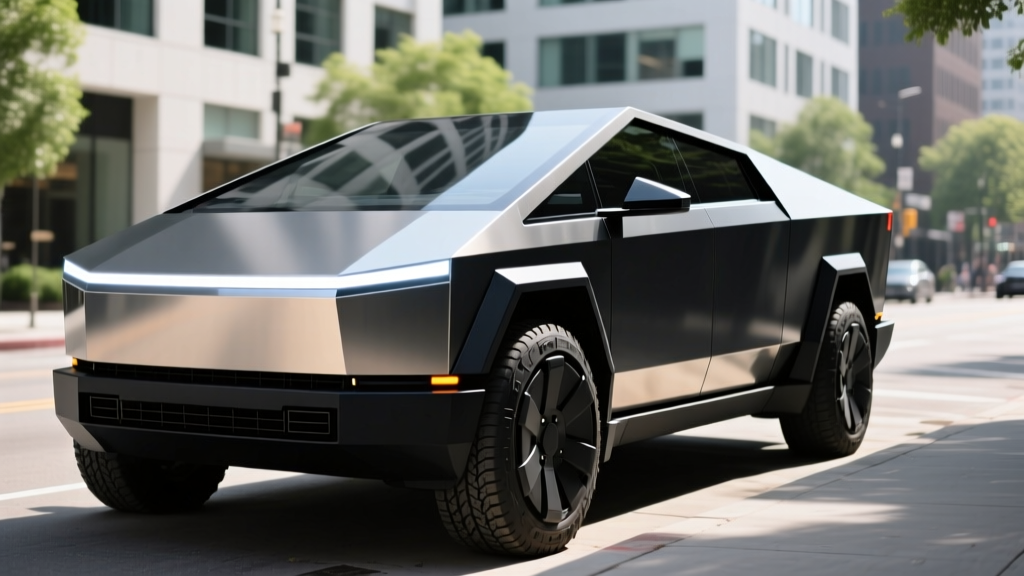
The Cybertruck Cyberbeast is marginally quicker and has a longer bed, but its polarizing design, stainless-steel exoskeleton, and limited service infrastructure won't suit every buyer. The F-150 Lightning is the most conventional truck experience with a dealer network advantage, but it can't match the R1T's acceleration, range, or off-road clearance. The R1T Tri-Motor occupies a unique niche: it's the most well-rounded adventure-performance truck if you can accept the short bed and premium price.
Decision Framework: Should You Buy the Tri-Motor?
- You need max towing and off-road capability and want it in an EV
- Sub-3-second acceleration matters to you in a truck
- You frequently drive in conditions where rear-axle torque vectoring provides a real traction benefit (snow, sand, rock crawling)
- Budget is flexible above $100k and you don't need the §30D credit
- You want to stay under the $80k MSRP cap for potential §30D eligibility
- Daily commuting efficiency and lower cost-per-mile are priorities
- You don't need 850 hp or sub-3-second sprints
- You want a faster 10–80% charge time (smaller pack charges quicker)
Frequently Asked Questions
What is the real-world range of the R1T Tri-Motor?
The EPA-estimated range for the Tri-Motor with the 149 kWh Max Pack is approximately 420 miles. In real-world highway driving at 70+ mph, expect 320–360 miles. Towing a heavy trailer can drop range to 200–250 miles. Cold weather (below freezing) typically reduces range by 20–30%.
How fast does the R1T Tri-Motor charge?
On a 350 kW-capable DC fast charger, the Max Pack peaks at ~220 kW and charges from 10–80% in approximately 42 minutes. At home on a Level 2 charger (11.5 kW), it adds about 25 miles of range per hour, with a full charge taking roughly 13 hours.
Does the R1T Tri-Motor qualify for the federal EV tax credit?
Likely not. The §30D credit has an $80,000 MSRP cap for pickup trucks. The Tri-Motor Max Pack starts around $100,000, exceeding this limit. Dual-Motor configurations under $80,000 may qualify if buyer income and battery-sourcing requirements are met. Always verify current rules at irs.gov and consult a tax professional.
Is the R1T Tri-Motor worth buying over the Dual-Motor?
For most buyers, the Dual-Motor Large Pack offers the best balance of range, price, and capability. The Tri-Motor justifies its premium only if you regularly need maximum towing performance, want the quickest acceleration available, or drive in off-road conditions where torque vectoring provides a tangible benefit.
What is the battery warranty on the R1T?
Rivian covers the battery pack and powertrain for 8 years or 175,000 miles, whichever comes first. The warranty guarantees a minimum capacity retention threshold (typically 70% of original capacity). This is competitive with or exceeds most EV manufacturers' battery warranties.
Can the R1T Tri-Motor tow a camper or boat?
Yes. With an 11,000-lb towing capacity, the R1T handles most travel trailers, boat trailers, and car-hauler loads. However, expect range to drop by 40–50% when towing near max capacity. Plan charging stops accordingly on long towing trips.
Does Rivian have enough service centers?
Rivian's service network is growing but remains less extensive than legacy automakers. Major metro areas are well-covered, but rural owners may face 100+ mile drives to the nearest service center. Rivian offers mobile service for many repairs and roadside assistance. Check coverage in your area before purchasing.