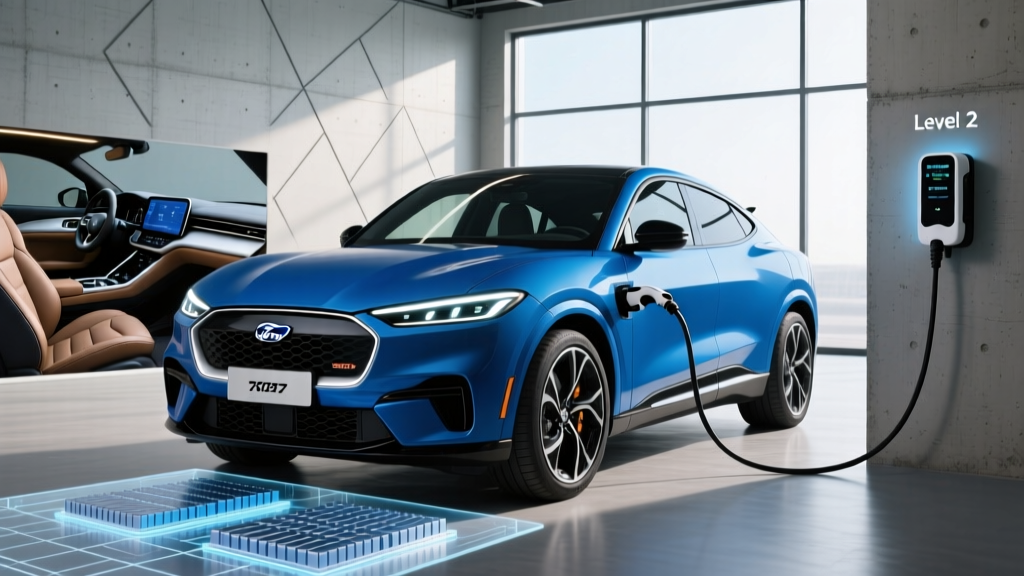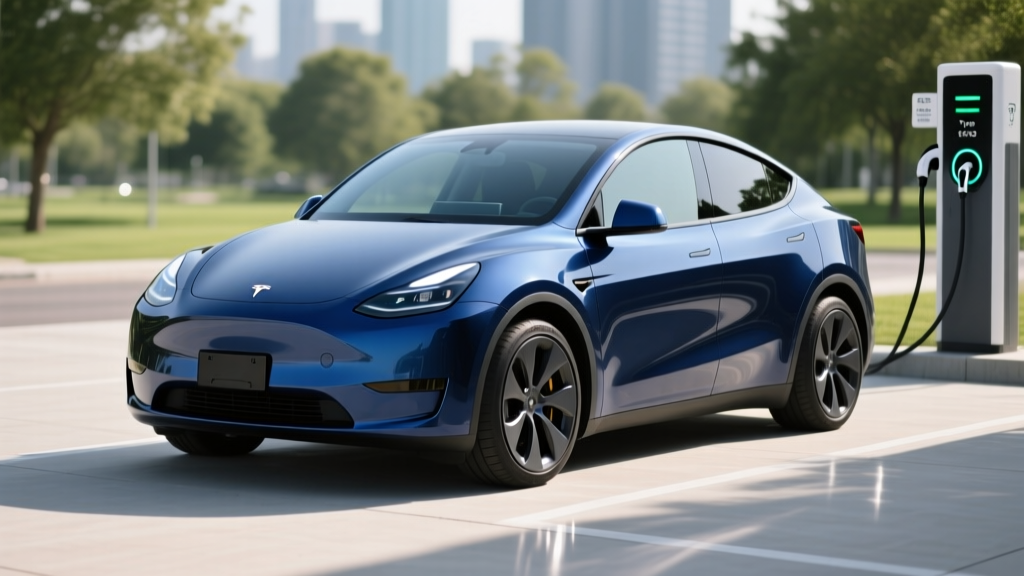
The 2026 Tesla Model Y arrives with its long-awaited "Juniper" refresh, bringing updated styling, a quieter cabin, and a revised battery pack. But with Hyundai's Ioniq 5, Ford's Mustang Mach-E, and the Kia EV6 all pushing hard in the midsize electric SUV segment, buyers need more than brand loyalty to make the call. This review breaks down every dimension, range figure, charging metric, and ownership cost you need to decide whether the 2026 Model Y still earns its best-seller status.
2026 Tesla Model Y Exterior and Interior Dimensions
For buyers cross-shopping against the Ioniq 5 or Mach-E, physical footprint matters — especially for garage fitment and cargo needs. Here is how the 2026 Model Y measures up:
| Measurement | Specification |
|---|---|
| Wheelbase | 113.8 in (2,890 mm) |
| Overall Length | 188.6 in (4,790 mm) |
| Overall Width (mirrors folded) | 77.3 in (1,963 mm) |
| Overall Width (mirrors out) | 83.8 in (2,129 mm) |
| Overall Height | 63.9 in (1,624 mm) |
| Ground Clearance | 6.6 in (167 mm) |
| Curb Weight (Long Range AWD) | 4,398 lbs (1,995 kg) |
| Cargo (behind 2nd row) | 30.2 cu ft |
| Cargo (2nd row folded) | 72.1 cu ft |
| Front Trunk (Frunk) | 4.1 cu ft |
| Front Headroom | 41.0 in |
| Rear Headroom | 39.4 in |
| Front Legroom | 41.8 in |
| Rear Legroom | 37.7 in |
The 2026 Juniper update adds roughly 0.4 inches to overall length due to revised front and rear fascias, but the wheelbase remains unchanged. Garage owners should budget for at least 19 feet of depth including clearance to open the hatch comfortably. Rear legroom at 37.7 inches remains tighter than the Hyundai Ioniq 5's 39.4 inches — a meaningful gap if you regularly carry adults in the back seat.
EPA Range and Real-World Efficiency
Efficiency remains a Tesla strong point. The Long Range AWD achieves 122 MPGe combined (28 kWh/100 mi) on the EPA cycle, edging out the Ford Mustang Mach-E Extended Range AWD at 101 MPGe and matching the Ioniq 5 AWD's efficiency class. Tesla's heat pump, now standard across all trims, reduces cold-weather energy consumption by an estimated 10-15% versus resistive heating systems, based on Tesla's engineering disclosures and third-party cold-weather testing by fueleconomy.gov.
| Trim | EPA Range | MPGe (Combined) | kWh/100 mi |
|---|---|---|---|
| RWD | 300 mi | 125 MPGe | 27 kWh |
| Long Range AWD | 320 mi | 122 MPGe | 28 kWh |
| Performance AWD | 295 mi | 111 MPGe | 30 kWh |
Battery Chemistry, Capacity, and Longevity
The 2026 Model Y Long Range and Performance variants use an 80 kWh (usable) nickel-manganese-cobalt (NMC) lithium-ion battery pack with structural cell integration. The RWD base model uses a 62 kWh (usable) lithium iron phosphate (LFP) pack — a critical distinction for long-term ownership.
| Factor | LFP (RWD Trim) | NMC (Long Range / Performance) |
|---|---|---|
| Energy Density | Lower — smaller pack, less range | Higher — enables 320-mi EPA rating |
| Cycle Life | 3,000+ cycles (superior longevity) | 1,500-2,000 cycles |
| Recommended Daily Charge | 100% OK (Tesla recommends weekly full charge) | 80-90% daily; 100% for trips only |
| Cold-Weather Performance | Weaker in extreme cold | Better low-temperature discharge |
| Cobalt Content | Zero cobalt | Contains cobalt |
| Cost Impact | Lower — enables RWD price point | Higher — reflected in LR pricing |
Tesla's battery warranty covers 8 years or 100,000 miles (Long Range/Performance) and 8 years or 120,000 miles (RWD), whichever comes first, with a guaranteed minimum 70% capacity retention over the warranty period. Real-world degradation data from fleet analytics firm Recurrent Auto shows Tesla packs averaging roughly 8-10% capacity loss at 100,000 miles — well within the warranty threshold.
Charging Speed: DC Fast, Level 2, and Level 1
Charging remains where Tesla maintains a tangible advantage over competitors, both in peak hardware capability and network access.
| Charging Level | Power / Rate | Speed |
|---|---|---|
| DC Fast Charge (Peak) | 250 kW (NACS connector) | 10-80% in ~22 minutes (Long Range); ~18 minutes (RWD/LFP) |
| DC Fast Charge (Sustained Avg) | ~150-170 kW average to 80% | Charge curve tapers significantly above 60% SoC |
| Level 2 (Home Wall Connector) | 11.5 kW (48A) | ~44 mi/hr added; full charge in ~7-8 hours |
| Level 2 (Public/32A) | 7.7 kW | ~30 mi/hr added |
| Level 1 (120V household) | 1.4 kW (12A) | ~5 mi/hr added; not practical for daily use |
The 2026 Model Y comes equipped with the NACS (North American Charging Standard) connector natively. Tesla Supercharger access is included, with the network now exceeding 6,000 stations and 30,000+ stalls across North America. For non-Tesla public charging, a NACS-to-CCS adapter is available but rarely needed given Supercharger coverage.
Performance and Drivetrain
| Spec | RWD | Long Range AWD | Performance AWD |
|---|---|---|---|
| Drivetrain | Rear-Wheel Drive | Dual-Motor AWD | Dual-Motor AWD |
| Horsepower | 315 hp | 384 hp | 456 hp |
| Torque | 317 lb-ft | 376 lb-ft | 420 lb-ft |
| 0-60 mph | 5.8 sec | 4.8 sec | 3.5 sec |
| Top Speed | 135 mph | 135 mph | 155 mph |
| Towing Capacity | 3,500 lbs | 3,500 lbs | 3,500 lbs |
The Performance trim's 3.5-second 0-60 time puts it in sports-car territory, though the trade-off is 25 fewer miles of EPA range versus the Long Range. For most buyers, the Long Range AWD at 4.8 seconds offers the best balance of acceleration, range, and all-weather capability. The dual-motor setup provides torque-vectoring traction in snow and rain without the mechanical complexity of a traditional AWD system.
Pricing, Trims, and Federal Tax Credit Eligibility
| Trim | Base MSRP | Est. After §30D Credit |
|---|---|---|
| RWD | $44,990 | $37,490* |
| Long Range AWD | $48,990 | $41,490* |
| Performance AWD | $53,990 | $46,490* |
*After-tax-credit pricing assumes full $7,500 federal credit eligibility. Actual credit depends on multiple IRS requirements.
- MSRP Cap: SUVs/vans must have an MSRP at or below $80,000 — all Model Y trims qualify.
- Buyer Income Cap: Modified AGI must not exceed $150,000 (single), $225,000 (head of household), or $300,000 (joint filing).
- Battery Sourcing: Critical minerals and battery components must meet phased-in domestic/free-trade sourcing thresholds. Tesla has worked to qualify the Model Y, but rules tighten annually. Check the latest VIN-eligible list at fueleconomy.gov.
- Point-of-Sale Transfer: The 2026 Model Y credit can be transferred to the dealer at purchase for an immediate price reduction, rather than claimed on your tax return.
- Tax Liability: The credit is non-refundable if claimed on your return — you must owe at least $7,500 in federal tax. The point-of-sale transfer option bypasses this limitation.
Verify current eligibility at IRS.gov before purchasing, as battery-sourcing compliance can change mid-year.
Technology, Driver Assistance, and Interior
The Juniper refresh brings the Model Y's interior closer to the Model 3 Highland standard: ambient lighting, ventilated front seats, a rear-seat touchscreen, and substantially improved sound insulation. The 15.4-inch center display runs Tesla's latest UI with faster response times. However, the absence of physical stalks (turn signals are now steering-wheel-mounted buttons) and the lack of Apple CarPlay/Android Auto remain polarizing.
Autopilot and FSD (Supervised): Every Model Y includes basic Autopilot — adaptive cruise control and lane centering. Tesla's Full Self-Driving (Supervised) package remains a $8,000 add-on (or $99/month subscription as of 2026).
Despite the "Full Self-Driving" name, FSD (Supervised) is an SAE Level 2 driver-assistance system. The driver must remain fully engaged, monitor the road at all times, and be prepared to take over immediately. This is not autonomous driving. Level 4 robotaxi services (like Waymo) operate without any driver involvement in geofenced areas — a fundamentally different capability.
Notable tech features include Sentry Mode (360° parking surveillance), Dog Mode (climate control for pets), Tesla Profiles (driver-specific settings), over-the-air software updates that add features post-purchase, and the Tesla app ecosystem for remote preconditioning and charging management.
Who Should Buy the 2026 Model Y?
- Commuters wanting Supercharger network reliability
- Families needing 72 cu ft of cargo with seats folded
- Tech-forward buyers who value OTA updates
- Cold-climate owners (heat pump + AWD efficiency)
- Buyers prioritizing charging speed on road trips
- You frequently carry tall adults in the rear (37.7 in legroom is tight)
- You want Apple CarPlay or Android Auto
- You prefer physical buttons, stalks, and gauges
- Garage width is under 8 feet (mirrors-out width: 83.8 in)
- You want the longest range in class (Ioniq 5 and EV6 are competitive)
Pros, Cons, and Competitive Verdict
- Best-in-class Supercharger network access
- 250 kW DC fast charging with preconditioning
- Class-leading efficiency (122 MPGe LR AWD)
- OTA updates continuously improve the vehicle
- LFP battery option on RWD for max cycle life
- Juniper refresh fixes prior cabin noise complaints
- Rear legroom trails Ioniq 5 and Mach-E
- No Apple CarPlay or Android Auto
- Button-style turn signals take adjustment
- FSD (Supervised) costs $8,000 extra, still Level 2
- Insurance premiums run 15-25% above segment average
- Ground clearance (6.6 in) limits rough-road use
Verdict vs. Competitors: The 2026 Model Y Long Range AWD at $48,990 (approximately $41,490 after credit) remains the default choice for buyers who prioritize charging infrastructure and efficiency above all else. The Hyundai Ioniq 5 offers more rear-seat space and 800V charging architecture at a comparable price. The Ford Mustang Mach-E delivers a more engaging drive and CarPlay support but trails on efficiency and charging network access. If Supercharger reliability is your top priority — and it should be if you road-trip regularly — the Model Y still holds the crown.
Frequently Asked Questions
What is the real-world range of the 2026 Tesla Model Y?
The EPA rates the Long Range AWD at 320 miles, but real-world highway driving at 70-75 mph typically yields 275-290 miles. In sub-freezing temperatures, expect 230-260 miles. The RWD model's 300-mile EPA rating translates to roughly 260-275 miles on the highway.
How fast does the 2026 Model Y charge at home and on the road?
On a DC fast charger, the Model Y peaks at 250 kW and charges from 10-80% in approximately 22 minutes (Long Range) or 18 minutes (RWD/LFP). At home on a Tesla Wall Connector (11.5 kW / 48A), you'll add about 44 miles of range per hour, fully recharging overnight in 7-8 hours.
Does the 2026 Model Y qualify for the $7,500 federal tax credit?
All trims fall under the $80,000 SUV MSRP cap. Eligibility depends on your income (under $150K single / $300K joint), battery-sourcing compliance (verify at fueleconomy.gov), and point-of-sale transfer availability. Check the current IRS qualifying vehicle list before purchase, as sourcing rules tighten annually.
Is the 2026 Model Y worth buying over the Ioniq 5 or Mach-E?
If charging infrastructure and road-trip convenience are your top priorities, yes — the Supercharger network remains unmatched. If rear-seat space (Ioniq 5) or CarPlay integration (Mach-E) matter more, those alternatives deserve serious consideration. Test-drive all three with your family in the back seat before deciding.
What are the biggest pros and cons of the 2026 Model Y?
Top advantages: Supercharger access, 250 kW charging, best-in-class efficiency, continuous OTA improvements, and LFP battery longevity on the RWD trim. Top drawbacks: tight rear legroom, no smartphone integration, $8,000 FSD that remains Level 2, and above-average insurance costs.
How does the Model Y's cargo space compare to competitors?
With 30.2 cu ft behind the second row and 72.1 cu ft with seats folded, the Model Y offers more total cargo volume than the Ioniq 5 (56.2 cu ft max) and is competitive with the Mach-E (59.7 cu ft max). The 4.1 cu ft frunk adds useful space for charging cables or groceries.