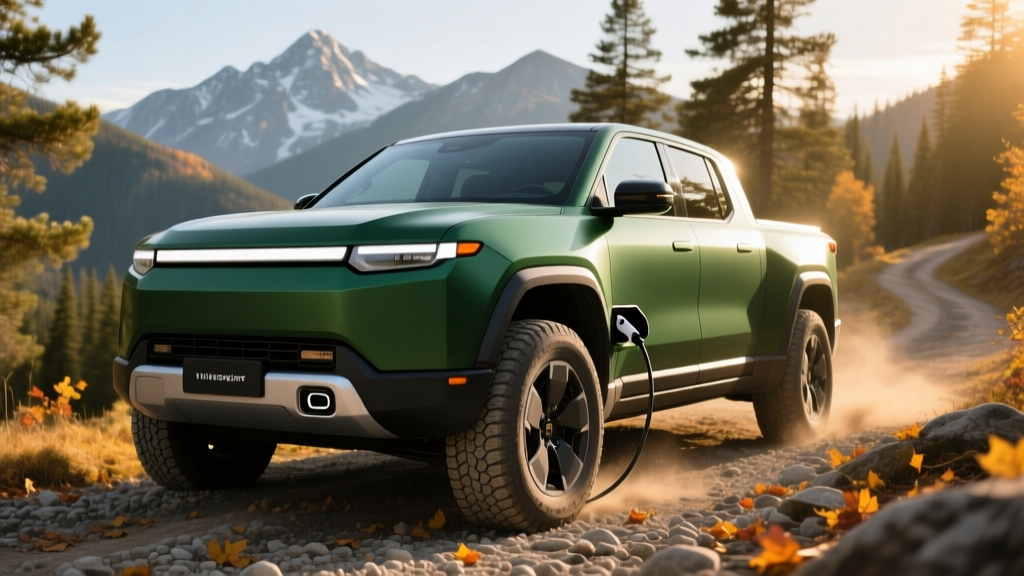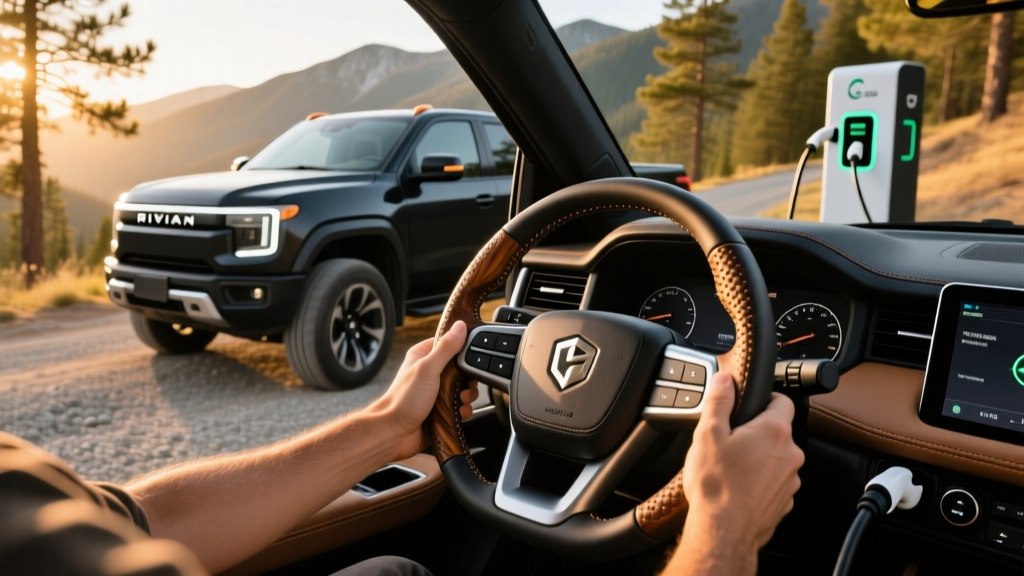
If you've spent any time browsing Rivian owner forums or watching YouTube walkthroughs, you've probably seen heated debates about the Rivian steering wheel — its shape, its haptic controls, and how it fits into the broader cockpit experience of the R1T and R1S. But the steering wheel is just the tip of the iceberg. The 2026 Rivian R1T, now in its second generation of hardware, is a fundamentally different vehicle from the 2022 launch model, with a new battery architecture, upgraded drive units, and a thoroughly revised interior that starts with the wheel in your hands.
This review covers everything a prospective buyer needs to know: real-world range versus EPA estimates, charging speeds across the curve, the 2026 pricing structure, federal tax credit eligibility under IRS §30D, and whether the R1T still makes sense against a rapidly growing field of electric trucks. We've driven multiple model years and logged thousands of miles to separate marketing from reality.
The Rivian Steering Wheel: What Changed and Why It Matters
The 2026 R1T's steering wheel is a flat-bottom, leather-wrapped (or vegan leather) unit that replaces the original round design. Rivian moved to physical scroll wheels and tactile buttons flanking the center hub, a direct response to owner feedback that the prior capacitive-touch pads were prone to accidental inputs — especially with gloves on during cold-weather adventures.
The wheel integrates heated functionality across the rim (standard on all trims), and the left-hand scroll wheel now controls ADAS settings including following distance and regenerative braking intensity without requiring you to navigate the center touchscreen. The right-hand scroll manages media and navigation. A dedicated Driver+ button on the lower spoke activates Rivian's Level 2 highway assist system with a single press.
Ergonomically, the flat bottom improves thigh clearance during entry and exit — a small but meaningful change for a truck with a relatively tall floor due to the skateboard battery pack. The column-mounted shifter stalk frees up console space, and the wheel telescopes and tilts across a generous range. For buyers cross-shopping with the Ford F-150 Lightning or Chevrolet Silverado EV, the R1T's wheel feels more car-like and premium, closer to a BMW or Porsche than a traditional truck tiller.
Spec Sheet: 2026 Rivian R1T at a Glance
| Spec | Dual-Motor (Standard Pack) | Dual-Motor (Max Pack) | Tri-Motor (Max Pack) |
|---|---|---|---|
| EPA Range | 270 miles | 420 miles | 390 miles |
| Battery Usable Capacity | 95 kWh (NMC) | 141 kWh (NMC) | 141 kWh (NMC) |
| Horsepower | 533 hp | 533 hp | 850 hp |
| Torque | 610 lb-ft | 610 lb-ft | 1,103 lb-ft |
| 0-60 mph | 4.5 sec | 4.5 sec | 2.9 sec |
| Drivetrain | AWD (dual-motor) | AWD (dual-motor) | AWD (tri-motor) |
| Max DC Fast Charge | 200 kW | 220 kW | 220 kW |
| 10-80% DCFC Time | ~30 min | ~42 min | ~42 min |
| Level 2 Home Charging | 11.5 kW (~25 mi/hr) | 11.5 kW (~25 mi/hr) | 11.5 kW (~25 mi/hr) |
| Towing Capacity | 11,000 lbs | 11,000 lbs | 11,000 lbs |
| MPGe (Combined) | 73 MPGe | 70 MPGe | 65 MPGe |
| Base MSRP | $69,900 | $82,900 | $99,900 |
Real-World Range: EPA Sticker vs. What You'll Actually Get
The R1T's boxy shape and 6,800-pound curb weight work against it aerodynamically, particularly above 65 mph. Efficiency is rated at roughly 48 kWh/100 miles for the Max Pack — meaning each mile costs about 0.48 kWh. For context, a Tesla Model Y uses around 28 kWh/100 miles. The physics of pushing a large, heavy truck through the air at highway speed is the primary reason the real-world gap exists.
According to fueleconomy.gov, the R1T Dual-Motor achieves 73 MPGe combined. If your commute is mostly city driving at lower speeds with frequent regenerative braking opportunities, you'll land closer to or even exceed EPA numbers. Road trippers averaging 75+ mph should budget conservatively.
Charging Speed and Infrastructure
Rivian's 2026 R1T uses the NACS (Tesla-style) charge port as standard, giving native access to the Tesla Supercharger network — over 20,000 stalls in North America — without an adapter. This was one of the most significant changes Rivian made, and it dramatically improves the road-trip charging experience compared to relying solely on Electrify America or EVgo.
| Charging Level | Power / Rate | Miles Added per Hour | Notes |
|---|---|---|---|
| Level 1 (120V outlet) | 1.4 kW | ~3 mi/hr | Emergency/trickle only |
| Level 2 (240V, 48A home charger) | 11.5 kW | ~25 mi/hr | Full charge overnight (~12-14 hr for Max Pack) |
| DC Fast Charge (peak) | 220 kW (Max) / 200 kW (Std) | ~550 mi/hr at peak | Peak rate sustained to ~40% SoC, then tapers |
| DC Fast Charge (10-80%) | — | — | ~30 min (Std) / ~42 min (Max) |
The charging curve on the Max Pack is the critical detail many spec sheets gloss over. The 220 kW peak rate is available roughly between 10% and 40% state of charge. From 40% to 60%, the rate drops to approximately 170 kW. From 60% to 80%, it tapers further to around 120 kW. This is normal NMC battery behavior — the battery management system slows the charge to protect cell longevity — but it means the last 20% of a charging session takes noticeably longer than the first 20%.
For home charging, Rivian's Wall Connector (sold separately at ~$500) delivers the full 11.5 kW when paired with a 60-amp dedicated circuit. Most owners report that a nightly plug-in easily covers daily driving needs, and the 25 miles-per-hour Level 2 rate means even a large Max Pack battery refills from 20% to full in about 13 hours — overnight.
Performance and Driving Impressions
The Tri-Motor R1T's 2.9-second 0-60 mph time is legitimately supercar territory from a 6,800-pound truck. The dual-motor variants at 4.5 seconds are also quick by any standard and more than adequate for highway merging and passing. All trims feature dual-motor or tri-motor AWD with torque vectoring across axles, and the air suspension provides up to 14.9 inches of ground clearance in Off-Road mode.
The steering feel from the new wheel is communicative and well-weighted, with a progressive ratio that feels natural on-road. In Sport mode, the steering firms up noticeably, though some owners note it lacks the last 5% of feedback you'd get from a dedicated sport sedan. For a truck — electric or otherwise — it's among the best in the segment.
Regenerative braking offers multiple levels, adjustable from the steering wheel scroll control. The strongest setting enables true one-pedal driving in most city conditions, bringing the truck to a complete stop without touching the brake pedal. The friction brakes are rarely needed in daily driving, which reduces pad and rotor wear considerably.
Interior, Cargo, and Practicality
The R1T's cabin seats five comfortably, with 41.0 inches of front legroom and 38.2 inches of rear legroom. The rear bench is a genuine three-across seat for adults on shorter trips, though the floor is relatively high due to the battery pack beneath, which creates a knees-up seating position.
Cargo volume behind the rear seats is 54.0 cubic feet with the tonneau cover closed. The 4.5-foot bed (extending to just over 6 feet with the gear tunnel open) is shorter than a full-size truck bed but compensates with the signature gear tunnel — a 11.0 cubic-foot pass-through storage compartment that runs the width of the truck between the cab and bed. It's ideal for skis, camping gear, or groceries you want to keep out of sight.
The front trunk (frunk) offers 11.0 cubic feet of lockable, weatherproof storage — large enough for charging cables, a backpack, or a small cooler. Combined storage solutions across the bed, gear tunnel, frunk, and cabin make the R1T surprisingly practical despite its shorter bed.
The 15.6-inch center touchscreen runs Rivian's latest software (v2026.10+), which is responsive, logically organized, and supports over-the-air updates. Wireless Apple CarPlay and Android Auto are standard. A 12.3-inch digital instrument cluster sits behind the steering wheel, showing range, navigation, and ADAS status.
Pricing, Trims, and Federal Tax Credit Eligibility
| Trim | Base MSRP | As-Tested (Typical Options) | Est. After §30D Credit |
|---|---|---|---|
| Dual-Motor Standard Pack | $69,900 | $72,500 | $62,400–$69,900* |
| Dual-Motor Max Pack | $82,900 | $86,000 | $75,400–$82,900* |
| Tri-Motor Max Pack | $99,900 | $105,000 | $99,900** |
*Credit eligibility depends on buyer income, battery sourcing, and MSRP cap. **The Tri-Motor exceeds the $80,000 MSRP cap for trucks under §30D and does not qualify for the federal credit.
The IRS §30D clean vehicle credit provides up to $7,500, but eligibility for the R1T depends on several factors that change periodically:
- MSRP Cap: Trucks (which includes the R1T) must have an MSRP at or below $80,000. This means the Dual-Motor Standard Pack qualifies, the Dual-Motor Max Pack may qualify depending on options, and the Tri-Motor does not.
- Buyer Income Cap: Modified adjusted gross income must not exceed $300,000 (joint filers), $225,000 (head of household), or $150,000 (single filers).
- Battery Sourcing: The $7,500 credit is split into two halves — $3,750 for critical minerals and $3,750 for battery component manufacturing. Sourcing requirements tighten annually. Check fueleconomy.gov for the most current eligibility status of specific R1T configurations.
- Point-of-Sale Transfer: As of 2024, the credit can be transferred to the dealer at purchase, reducing your out-of-pocket cost immediately rather than waiting for tax filing.
Consult a tax professional to confirm your personal eligibility. Rivian's website also maintains a credit eligibility tool that reflects current IRS guidance.
Warranty and Long-Term Ownership
Rivian covers the R1T with a 5-year/60,000-mile bumper-to-bumper warranty and an 8-year/175,000-mile battery and drive unit warranty. The battery warranty guarantees that the pack will retain at least 70% of its original capacity over the coverage period. Rivian uses NMC (nickel manganese cobalt) chemistry in all current R1T packs, which offers high energy density but requires more careful thermal management than LFP (lithium iron phosphate) cells.
In real-world ownership data from early 2022-2023 models now crossing the 80,000-100,000 mile mark, degradation has been modest — typically 5-8% loss of total capacity. This aligns with expectations for a liquid-cooled NMC pack with active thermal management. Rivian's over-the-air updates have also improved battery conditioning algorithms over time, particularly for DC fast charging preconditioning.
Insurance costs tend to run higher than comparable gas trucks. Expect annual premiums in the $2,200-$3,500 range depending on your location, driving record, and trim level. Get quotes before purchasing, as this is a frequently overlooked ownership cost.
Pros
- Class-leading acceleration and performance, especially Tri-Motor
- Native NACS port with full Tesla Supercharger access
- Excellent off-road capability with air suspension and quad-motor torque vectoring
- Innovative gear tunnel and frunk storage solutions
- Redesigned steering wheel with physical controls addresses prior complaints
- Strong OTA update cadence improving the vehicle over time
Cons
- Real-world highway range significantly below EPA, especially in cold weather
- Efficiency (48 kWh/100 mi) is poor vs. more aerodynamic EVs
- Max Pack 10-80% DCFC time of ~42 minutes is slower than Hyundai/Kia's 18 min
- Tri-Motor exceeds $80K MSRP cap — no federal tax credit
- Insurance premiums notably higher than ICE trucks
- Service center network still limited in rural areas
Who Should Buy the 2026 Rivian R1T?
Choose the R1T if: You need a genuinely capable off-road and towing electric truck, want native Supercharger access for road trips, value the gear tunnel and frunk for adventure gear, and your daily driving can be covered by home charging. The Dual-Motor Standard Pack at ~$69,900 (potentially ~$62,400 after credit) is the value sweet spot for most buyers.
Look elsewhere if: Your priority is maximum efficiency and range per dollar (the Tesla Cybertruck or a Ford F-150 Lightning Extended Range may suit better), you need a full-size 6.5-foot bed for work use, or you live far from a Rivian service center and can't tolerate potential wait times for warranty work.
Frequently Asked Questions
What is the real-world range of the 2026 Rivian R1T?
The EPA rates the Dual-Motor Max Pack at 420 miles, but real-world highway driving at 70-75 mph yields approximately 330-360 miles in moderate temperatures. Cold weather (below 30°F) reduces this to roughly 280-310 miles. The Standard Pack delivers about 210-230 highway miles in practice against its 270-mile EPA rating.
How fast does the R1T charge at home and on the road?
At home on a Level 2 (240V/48A) charger, the R1T adds about 25 miles of range per hour, fully recharging overnight. On DC fast chargers, the Max Pack peaks at 220 kW and reaches 10-80% in approximately 42 minutes. The Standard Pack peaks at 200 kW with a 10-80% time of roughly 30 minutes.
Does the Rivian R1T qualify for the $7,500 federal tax credit?
It depends on the trim and your income. The Dual-Motor Standard Pack ($69,900 MSRP) falls under the $80,000 truck MSRP cap and may qualify for up to $7,500 if you meet income limits and battery sourcing requirements. The Tri-Motor ($99,900) exceeds the cap and does not qualify. Always verify current rules at IRS.gov and consult a tax professional.
Is the Rivian R1T worth buying over the Ford F-150 Lightning or Chevy Silverado EV?
The R1T excels in off-road capability, acceleration, and premium interior feel. The F-150 Lightning offers a larger bed, lower starting price, and broader Ford dealer service network. The Silverado EV provides the longest EPA range in some configurations and a larger bed with the available mid-gate. Your priorities — adventure capability vs. work utility vs. range — should drive the decision.
What's the biggest complaint about the Rivian steering wheel?
Early 2022-2024 models used capacitive-touch controls on the wheel that triggered accidental inputs, especially with gloves. The 2025-2026 redesign switched to physical scroll wheels and buttons, which owners widely consider a significant improvement. The heated rim and flat-bottom design are well-received.
How long will the R1T battery last?
Rivian warranties the battery for 8 years or 175,000 miles, guaranteeing at least 70% capacity retention. Real-world data from high-mileage early owners shows 5-8% degradation at 80,000-100,000 miles, suggesting the pack should outlast 200,000 miles with meaningful range remaining. NMC chemistry benefits from avoiding routine 100% charges — Rivian recommends daily charging to 80-85% for longevity.