Rivian's Stock Story vs. the Trucks Themselves
If you've searched "why is Rivian stock dropping" lately, you've likely seen headlines about margin pressure, production pacing at the Normal, Illinois plant, and intensifying competition from the Ford F-150 Lightning, Chevrolet Silverado EV, and Tesla Cybertruck. Stock price, however, is a lagging indicator of investor sentiment — not a reliable measure of whether the R1T pickup or R1S SUV is the right vehicle for your driveway. This review separates Wall Street noise from the engineering, range, charging, and ownership reality of Rivian's 2026 lineup, so you can decide on the product rather than the ticker symbol.
2026 Rivian R1T & R1S: Core Spec Snapshot
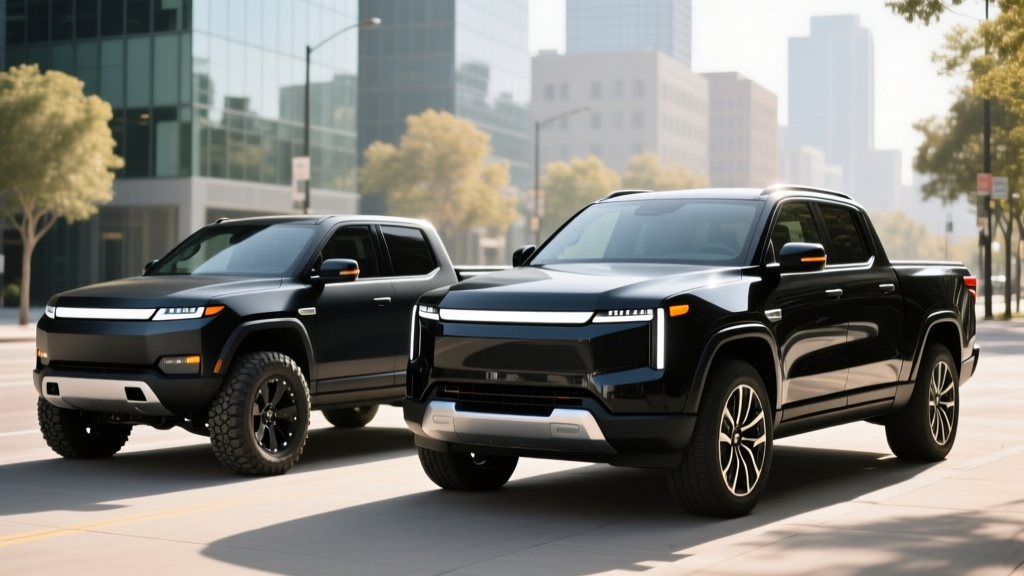
Rivian currently sells two consumer vehicles on its second-generation (Gen 2) skateboard platform: the R1T crew-cab pickup and the three-row R1S SUV. Both share battery packs, powertrain options, and most of the interior architecture. Below is the consolidated spec table for the most common dual-motor configurations buyers actually order.
| Spec | R1T Dual-Motor (Standard) | R1T Tri-Motor | R1S Dual-Motor (Standard) |
|---|---|---|---|
| EPA Range | ~270 mi (Standard); ~352 mi (Max) | ~328 mi (Max Pack) | ~270 mi (Standard); ~340 mi (Max) |
| Battery (usable) | ~95 kWh (Standard); ~128 kWh (Max) | ~128 kWh (Max) | ~95 kWh (Standard); ~128 kWh (Max) |
| Chemistry | NMC (large); LFP (Standard base) | NMC | NMC (large); LFP (Standard base) |
| Peak DC Fast Charge | 200–220 kW | ~220 kW | 200–220 kW |
| 10–80% DCFC Time | ~28–32 min | ~30 min | ~28–32 min |
| Level 2 Home Rate | 11.5 kW (~25 mi/hr) | 11.5 kW (~25 mi/hr) | 11.5 kW (~25 mi/hr) |
| 0–60 mph | 4.5 sec (Dual); 3.0 sec (Performance) | ~2.9 sec (Tri) | 4.5 sec (Dual) |
| Horsepower | 533 hp (Dual); 665 hp (Perf) | 850 hp | 533 hp (Dual) |
| Drivetrain | AWD (dual-motor) | AWD (tri-motor) | AWD (dual-motor) |
| MPGe (combined) | ~70–73 MPGe | ~65 MPGe | ~69–73 MPGe |
| Towing (max) | 11,000 lb | 11,000 lb | 7,700 lb |
| Base MSRP | ~$69,900 | ~$99,900 | ~$74,900 |
| Battery Warranty | 8 yr / 175,000 mi | 8 yr / 175,000 mi | 8 yr / 175,000 mi |
Source: fueleconomy.gov and Rivian's official spec pages. Figures vary by wheel size, pack option, and model year — confirm on your build sheet.
Real-World Range: What the EPA Sticker Doesn't Tell You
The R1T Max Pack's 352-mile EPA rating is best achieved at city speeds in mild weather with regen set high. On a 75-mph highway run in 40°F weather with the heat on, expect ~250–280 miles of usable range before you're hunting for a charger. The Standard pack's ~270-mile EPA figure compresses to roughly 190–220 miles highway in winter. Rivian's boxy aero profile and 6,000+ lb curb weight punish efficiency at sustained speed more than a sedan-shaped EV would.
Cold-weather range loss of 20–30% is typical across the industry, but the R1T's large frontal area amplifies it. Rivian's heat pump and battery preconditioning (activated automatically when a charger is set as your navigation destination) help mitigate this — preconditioning warms the pack so it can accept peak DC charge rates even in freezing temps. Skip preconditioning and your 10–80% stop may stretch from 30 minutes to 45+.
Charging: DC Fast, Level 2, and the Rivian Adventure Network
Rivian's charging story has three layers: public DC fast charging, home Level 2, and the proprietary Rivian Adventure Network (RAN), which prioritizes trailheads, national parks, and outdoor destinations over highway corridors.
| Level | Power | Miles Added per Hour | Typical Use Case |
|---|---|---|---|
| Level 1 (120V) | ~1.4 kW | ~3–4 mi/hr | Emergency / trickle |
| Level 2 (240V, 48A) | 11.5 kW | ~25 mi/hr | Overnight home charging |
| DC Fast (CCS/NACS) | Up to 220 kW peak | ~140 mi in 15 min (peak) | Road trips |
The DC fast-charge curve is the detail most spec sheets hide. The R1T peaks near 220 kW only between roughly 10% and 35% state of charge, then tapers to ~150 kW through 60%, and drops below 80 kW past 80%. That's why Rivian quotes 10–80% in ~30 minutes rather than a peak kW figure — sustained rate matters more than the headline number. For 2026, Rivian has adopted the Tesla NACS connector on new production, with a CCS adapter available for legacy vehicles; this unlocks access to Tesla's Supercharger network, a meaningful practical upgrade for road-trip buyers.
Interior, Tech, and the Quirks Owners Actually Live With
The R1T's cabin is clean and minimalist, with a 15.6-inch center touchscreen running Rivian's in-house OS, a 12.3-inch digital cluster, and a secondary display for climate. The gear tunnel — a full-width pass-through between cab and bed — is a signature feature, offering ~11 cu ft of lockable, weather-sealed storage that no competitor matches. Bed volume is ~54 cu ft (short bed), and the R1S offers up to ~105 cu ft behind the first row with seats folded.
Driver assistance is branded Rivian Driver+, a Level 2 (SAE) system combining adaptive cruise and lane centering. It is not self-driving; hands must stay on the wheel and eyes on the road. It's competent for highway cruising but not class-leading versus Ford's BlueCruise or GM's Super Cruise, both of which allow hands-off operation on mapped highways.
- Best-in-class gear tunnel and front trunk (frunk, ~11 cu ft)
- Tri-motor performance (850 hp, sub-3-sec 0–60) is supercar-quick
- Over-the-air updates have materially improved the truck since launch
- Adventure Network chargers at trailheads are a genuine differentiator
- 11,000-lb towing capacity (R1T) leads the electric pickup segment
- Highway range drops sharply — aero and weight work against it
- Base MSRP above $69,900 puts most trims outside the IRS §30D MSRP cap for trucks
- Service center footprint is still thin outside major metros
- Driver+ is functional but lags BlueCruise/Super Cruise in hands-off capability
- Insurance premiums run 20–35% above comparable gas trucks (per IIHS data trends)
Pricing, Tax Credits, and the MSRP-Cap Problem
Here's where the stock-drop question meets buyer reality. The federal EV tax credit under IRS §30D offers up to $7,500, but eligibility hinges on three gates: buyer income caps ($300k joint / $150k single AGI), an MSRP cap ($80,000 for vans, SUVs, and pickups), and battery critical-mineral + component sourcing requirements that tighten each year.
| Trim / Pack | MSRP (approx.) | §30D MSRP Cap | Qualifies? |
|---|---|---|---|
| R1T Dual-Motor Standard | ~$69,900 | $80,000 (truck) | Yes — if sourcing + income met |
| R1T Dual-Motor Max Pack | ~$82,000+ | $80,000 | No (exceeds cap) |
| R1T Tri-Motor | ~$99,900 | $80,000 | No |
| R1S Dual-Motor Standard | ~$74,900 | $80,000 (SUV) | Yes — if sourcing + income met |
| R1S Max Pack / Tri | $88,000+ | $80,000 | No |
The takeaway: only the base Standard-pack Dual-Motor builds consistently clear the MSRP cap. Add the Max battery, premium paint, 22-inch wheels, or the Tri-motor powertrain and you're priced out of the credit — a factor that compresses Rivian's addressable market versus a Ford F-150 Lightning XLT that slots under the cap more easily. This MSRP-cap friction is one concrete reason analysts cite when explaining Rivian's gross-margin and demand headwinds — and, by extension, why the stock has faced pressure.
Who the R1T and R1S Actually Fit
The R1T is ideal for outdoor-active buyers who tow, haul gear, and want a daily-driver pickup that doesn't feel like a work truck. The gear tunnel, frunk, and camp-kitchen accessory ecosystem are unmatched. The R1S fits families needing three rows plus electric range, though third-row legroom (~30 in.) is tight for adults on long trips. Neither is the right choice if your priority is maximum highway range per dollar — a Hyundai Ioniq 5 or Tesla Model Y will travel farther on less energy and cost significantly less.
Is Rivian Worth Buying in 2026 — Regardless of the Stock?
Stock performance reflects investor concerns about production scale, margin compression, the upcoming R2 SUV launch timeline, and competitive pressure. None of those change the fact that the R1T is the most thoughtfully engineered electric pickup on the market for adventure use cases, and the R1S is one of very few three-row electric SUVs available. If you can charge at home (a Level 2 install typically runs $800–$2,000 with a 48A hardwired unit), accept the highway range trade-off, and configure within the §30D MSRP cap, the product holds up. If you need 350+ real-world highway miles, low insurance premiums, or ubiquitous dealer service, look at Ford, Hyundai, or Tesla instead.
What is the real-world range of the Rivian R1T?
EPA rates the Max Pack R1T at ~352 miles, but highway driving at 75 mph in cold weather yields roughly 250–280 miles. Standard Pack drops to ~190–220 miles under the same conditions.
How fast does the R1T charge at home and on the road?
Home Level 2 at 11.5 kW adds ~25 miles per hour (full overnight charge). DC fast charging peaks at ~220 kW, with 10–80% in about 30 minutes when the battery is preconditioned.
Does the Rivian R1T qualify for the $7,500 federal tax credit?
Only the base Standard-pack Dual-Motor trims (MSRP under $80,000) qualify, and only if your AGI is within IRS limits and the battery meets 2026 critical-mineral sourcing rules. Max Pack and Tri-Motor trims exceed the cap. Always verify current rules at irs.gov or with a tax professional.
Why is Rivian stock dropping — does it affect buyers?
Stock declines reflect margin pressure, production scaling costs, and competitive intensity — not vehicle quality. For buyers, the relevant risks are service-center availability in your region and the long-term financial health supporting warranty and OTA updates, both of which Rivian has maintained through 2026.
R1T vs. F-150 Lightning: which should I buy?
Lightning wins on price, interior space, and dealer service footprint. R1T wins on performance, gear-tunnel utility, off-road capability, and adventure-focused charging. Choose Lightning for value and practicality; choose R1T for capability and design.