Quick Verdict: Should You Lease the 2026 Rivian R1T?
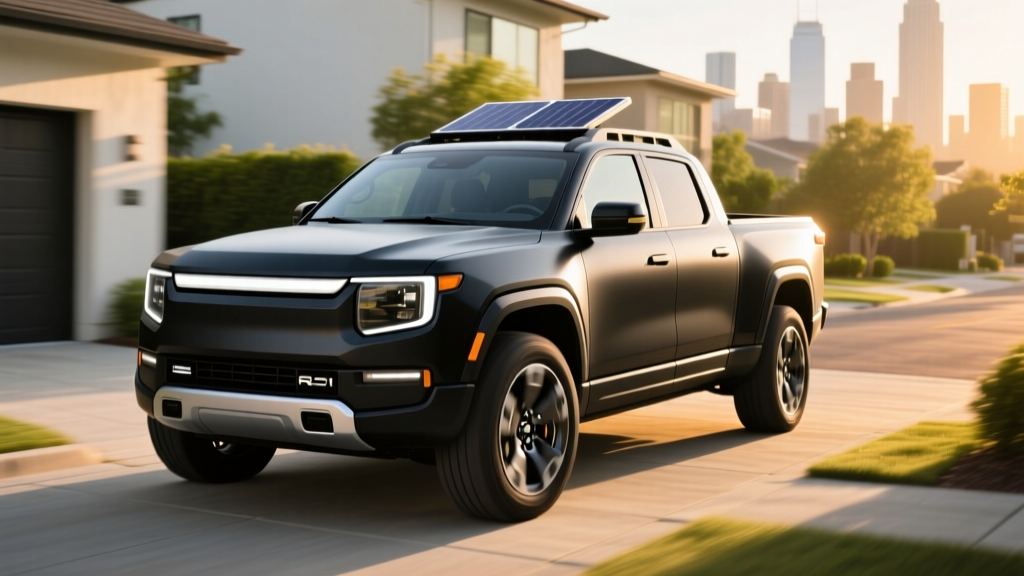
The Rivian R1T remains the only true battery-electric pickup built for both trail capability and daily driving. For 2026, the R1T lineup spans the Dual-Motor Standard battery at roughly $69,900 up to the Tri-Motor Max at over $99,000 before options. Lease deals have become an increasingly popular path into the R1T — not just because monthly payments can undercut financing, but because leasing sidesteps the long-term battery-degradation gamble that still worries truck buyers.
But lease math on an EV is different from a gas truck. Residual values, money factors, mileage caps, and the federal tax credit all interact in ways that can either save you thousands or leave money on the table. Below, we dissect the R1T's specs, real-world efficiency, charging behavior, and the financials of leasing versus buying in 2026.
2026 Rivian R1T Specifications at a Glance
| Spec | Dual-Motor Standard | Dual-Motor Large | Tri-Motor Max |
|---|---|---|---|
| EPA Range | ~270 mi | ~352 mi | ~420 mi |
| Battery (usable) | ~95 kWh (LFP) | ~128 kWh (NMC) | ~149 kWh (NMC) |
| Horsepower | 533 hp | 533 hp | 850 hp |
| 0-60 mph | 4.5 sec | 4.5 sec | ~3.0 sec |
| Drivetrain | AWD (dual-motor) | AWD (dual-motor) | AWD (tri-motor) |
| Max Tow Capacity | 11,000 lb | 11,000 lb | 11,000 lb |
| Max DC Fast Charge | ~200 kW | ~220 kW | ~220 kW |
| 10-80% DCFC Time | ~28 min | ~30 min | ~35 min |
| Level 2 Home Charge | 11.5 kW (~25 mi/hr) | 11.5 kW (~25 mi/hr) | 11.5 kW (~25 mi/hr) |
| MPGe (combined) | ~73 MPGe | ~70 MPGe | ~65 MPGe |
| Base MSRP | $69,900 | $75,900 | $99,900 |
Sources: fueleconomy.gov, Rivian official specs. Figures are for the 2026 model year and may vary by configuration.
Real-World Range: What the EPA Number Doesn't Tell You
Dual-Motor Standard (EPA 270 mi): Expect ~230-245 mi on highway-heavy trips at 70+ mph. In winter (below 32°F), plan for 190-210 mi.
Dual-Motor Large (EPA 352 mi): Highway driving yields ~290-310 mi. Cold weather drops this to ~250-270 mi.
Tri-Motor Max (EPA 420 mi): Real highway range is ~340-370 mi in moderate temps, ~280-310 mi in freezing conditions.
The R1T is a heavy vehicle — curb weight exceeds 7,000 lb on the Large pack — and that mass shows up in highway efficiency. The Dual-Motor Standard's LFP battery is lighter but smaller, so its efficiency advantage is modest. Where the R1T shines is regenerative braking in stop-and-go or mountain driving, where one-pedal mode recovers energy that a gas truck simply wastes as heat.
If you tow, plan ruthlessly. Towing a 5,000-lb trailer at highway speed can cut range by 35-50%. That means the Max pack's 420-mi EPA sticker becomes roughly 220-270 mi under tow — still usable for regional trips with planned charging stops, but not the cross-country haul some buyers imagine.
Charging Speed and Infrastructure
| Charging Level | Power | Miles Added per Hour | Use Case |
|---|---|---|---|
| Level 1 (120V) | ~1.4 kW | ~3 mi/hr | Emergency / trickle top-up |
| Level 2 (240V, 48A) | 11.5 kW | ~25 mi/hr | Overnight home charging |
| DC Fast Charge | 200-220 kW peak | ~500-600 mi/hr (peak) | Road trips, quick stops |
Rivian's DC fast-charging curve is front-loaded. On a 350-kW-capable Electrify America or Rivian Adventure Network station, the Large pack pulls peak power (around 220 kW) from roughly 10% to 40% state of charge, then tapers progressively. The 10-80% time of approximately 30 minutes assumes you arrive at a low SoC and the battery is preconditioned — which the R1T does automatically when you navigate to a charger.
Home charging at 11.5 kW means a full charge from empty takes roughly 11 hours on the Large pack. Most owners who plug in nightly at home never need a full 0-100% cycle; a typical 50-mile daily commute uses about 15-18 kWh, replenished in under two hours on Level 2.
Important kW vs. kWh note: kW (kilowatts) measures the rate of energy flow — think of it as the "speed" of charging. kWh (kilowatt-hours) measures total energy stored in the battery — the "tank size." A 128 kWh battery charged at 11.5 kW takes about 11 hours from empty.
Performance and Capability
Even the base Dual-Motor R1T produces 533 horsepower and 610 lb-ft of torque, reaching 60 mph in 4.5 seconds. That's sports-sedan acceleration in a body-on-frame truck. The Tri-Motor variant adds a rear axle motor for 850 hp and a 3.0-second sprint that defies its mass.
Off-road, the R1T offers up to 14.9 inches of ground clearance (with the Max pack and air suspension), approach/departure angles rivaling dedicated off-roaders, and a wading depth of over 3 feet. The quad-motor configuration (available on certain trims) enables tank turns — a party trick that's genuinely useful on tight trails.
On pavement, the air suspension delivers a compliant ride that outclasses the Ford F-150 Lightning in refinement, though the R1T's steering lacks the communicative feel you'd want on a canyon road. It's a capable grand tourer, not a sports truck, despite the acceleration numbers.
Pricing, Lease Deals, and Federal Tax Credit
| Trim | Base MSRP | Est. Monthly Lease (36 mo, 10k mi/yr) | §30D Tax Credit Eligible? |
|---|---|---|---|
| Dual-Motor Standard | $69,900 | $750-$950 | Yes — up to $7,500 (see rules below) |
| Dual-Motor Large | $75,900 | $850-$1,100 | Yes — up to $7,500 |
| Tri-Motor Max | $99,900 | $1,200-$1,500 | Yes — up to $7,500 |
How the §30D credit works on a lease: Under current IRS rules, the federal EV tax credit on a leased vehicle is technically claimed by the lessor (the financing company), not you. However, most major lessors pass this savings through as a capitalized-cost reduction — effectively lowering your monthly payment by the equivalent of $7,500 amortized over the lease term. This is often called the "lease loophole" and it bypasses the MSRP cap and buyer income cap that apply to purchases.
- Vehicle MSRP must not exceed $80,000 for trucks/vans (R1T Standard and Large qualify; Tri-Motor Max exceeds the cap for purchase, but the lease pathway may still pass savings through)
- Buyer AGI limits for purchase: $300k joint / $225k head of household / $150k single (lease bypasses this)
- Battery components and critical minerals must meet phased-in domestic-sourcing thresholds per IRS §30D rules
- Point-of-sale transfer available for purchases; lease credit handled by lessor
- Always confirm eligibility with a tax professional and check the latest IRS guidance before signing
For buyers who earn above the income cap or want the Tri-Motor Max (MSRP over $80k), leasing is often the only practical way to capture the credit's value. This is a primary reason Rivian R1T lease deals have surged in popularity — the math simply works better for high-trim configurations.
Cargo, Passenger Space, and Daily Practicality
The R1T's 4-foot-6-inch bed is shorter than a traditional half-ton truck, but the Gear Tunnel — a lockable, pass-through storage compartment between the cab and bed — adds roughly 11 cubic feet of enclosed space. The front trunk (frunk) offers another 11 cu ft, giving you secure, weatherproof storage that a gas truck can't match.
Interior passenger volume accommodates four adults comfortably, with 41.5 inches of front legroom and 38.2 inches in the rear. Headroom is generous thanks to the flat floor (no transmission tunnel). Rear seat comfort is competitive with midsize trucks like the Toyota Tacoma, though not quite full-size like the Ford F-150.
The R1T's camp kitchen option (a slide-out induction cooktop and sink in the Gear Tunnel) remains a standout feature for overlanders, though it adds weight and cost. For daily use, the R1T functions as a comfortable, tech-forward commuter vehicle with truck capability on weekends.
Tech, Driver Assistance, and Software
Rivian's infotainment runs on a custom 15.6-inch landscape touchscreen with Google Built-In (Maps, Assistant, Play Store). Wireless Apple CarPlay and Android Auto are supported. Over-the-air updates have been a strong point — Rivian has shipped meaningful feature additions (including enhanced regenerative braking profiles and improved route planning) regularly since launch.
The Driver+ system is a Level 2 driver-assistance suite per SAE classification. It includes adaptive cruise control, lane-centering, and automatic lane changes on divided highways. It is not self-driving — the driver must remain engaged and keep hands on the wheel at all times. In testing, Driver+ is competent but not class-leading; GM's Super Cruise and Ford's BlueCruise offer more hands-free highway coverage on compatible roads.
Warranty and Battery Longevity
Rivian provides a 5-year/60,000-mile bumper-to-bumper warranty and an 8-year/175,000-mile battery and drive-unit warranty. The battery warranty guarantees at least 70% capacity retention over the coverage period — a competitive threshold that matches or exceeds most EV makers.
The Standard pack's LFP (lithium iron phosphate) chemistry offers a longevity advantage: LFP cells tolerate frequent 100% charging and typically degrade more slowly than NMC cells over thousands of cycles. Rivian recommends charging LFP packs to 100% at least once weekly for accurate state-of-charge calibration. The Large and Max packs use NMC chemistry, which benefits from daily charging limits of 80-90% for optimal lifespan.
Replacement cost for an R1T battery pack is not publicly listed by Rivian but industry estimates for packs of this size range from $15,000 to $25,000 out of warranty. This is a key reason some buyers prefer leasing — the lessor absorbs long-term battery risk.
Pros and Cons
- Class-leading off-road capability with air suspension and 14.9" ground clearance
- LFP option on Standard pack for longevity and lower cost
- Gear Tunnel and frunk provide versatile, secure storage
- Strong OTA update track record with meaningful feature additions
- Lease pathway bypasses MSRP and income caps for §30D credit
- 11,000-lb towing capacity competitive with gas half-tons
- Highway efficiency suffers at 70+ mph — real-world range gap is noticeable
- 4.5-ft bed is shorter than most gas trucks; limits sheet goods and long cargo
- Towing cuts range by 35-50% — requires careful route planning
- Driver+ is competent but behind Super Cruise/BlueCruise in hands-free coverage
- Service center network still expanding — rural owners may face long tow distances
- Insurance premiums run 15-25% higher than comparable gas trucks
Who the R1T Suits Best — and Who Should Look Elsewhere
Choose the R1T if:
- You need genuine off-road and towing capability in an EV
- You want truck utility with sports-car acceleration
- You have home Level 2 charging and a typical commute under 80 miles
- You value overlanding features (Gear Tunnel, camp kitchen, air suspension)
- Leasing lets you access the tax credit your income or the MSRP cap would otherwise block
- You regularly tow heavy loads over 300+ miles between stops (consider a diesel or the upcoming larger EV platforms)
- You need a full 6+ foot bed for construction or farm work
- Your budget is under $60,000 (the Ford F-150 Lightning base or Chevy Silverado EV may fit better)
- You want hands-free highway driving as a priority (GM Super Cruise vehicles lead here)
Frequently Asked Questions
What is the real-world range of the 2026 Rivian R1T?
The EPA rates the R1T between 270 and 420 miles depending on battery and motor configuration. In real-world highway driving at 70-75 mph, expect to lose 10-15% from the EPA figure. In freezing temperatures, plan for 25-30% reduction. The Dual-Motor Large at ~300 real-world highway miles is the sweet spot for most owners.
How fast does the R1T charge at home and on the road?
On a DC fast charger, the R1T peaks at 200-220 kW and charges from 10-80% in roughly 28-35 minutes depending on pack size. At home on a Level 2 (240V, 48A) charger, it adds about 25 miles of range per hour, or a full overnight charge in 9-13 hours.
Does the Rivian R1T qualify for the $7,500 federal tax credit?
The Dual-Motor Standard and Large trims fall under the $80,000 MSRP cap for trucks and are eligible for up to $7,500 under §30D, subject to battery-sourcing rules. The Tri-Motor Max exceeds the cap for purchase but may still benefit from the credit when leased, as the lessor claims it and typically passes savings through. Consult IRS guidance and a tax professional before committing.
Is leasing the R1T better than buying?
Leasing makes sense if you want to bypass the income and MSRP caps on the tax credit, avoid long-term battery-degradation risk, or plan to upgrade in 3 years. Buying makes sense if you drive high annual miles (lease penalties apply over 10-12k mi/yr), want to build equity, or plan to keep the truck 7+ years. Run the numbers both ways with your dealer — the money factor and residual percentage determine which path wins.
How does the R1T compare to the Ford F-150 Lightning?
The F-150 Lightning is larger, has a longer bed (5.5-6.5 ft), and starts at a lower price. The R1T is more off-road capable, has more innovative storage (Gear Tunnel, frunk), and offers more powertrain configurations. If you need a work truck, the Lightning may fit better. If you want an adventure vehicle with truck capability, the R1T is the stronger choice. See our EPA comparison tool for side-by-side efficiency data.
What are typical Rivian R1T lease deal terms in 2026?
Most R1T leases run 36 months with 10,000 or 12,000 miles per year. Expect money factors in the 0.00200-0.00275 range (equivalent to roughly 4.8-6.6% APR). Residual values on the Dual-Motor Large typically land around 55-60% of MSRP. With the $7,500 credit applied as a cap-cost reduction, monthly payments on a Dual-Motor Large often fall between $850 and $1,100 depending on options and negotiated selling price. Always confirm whether the lessor passes the credit through — not all do automatically.