2026 Rivian R1T at a Glance: Dimensions, Range, and Real-World Capability
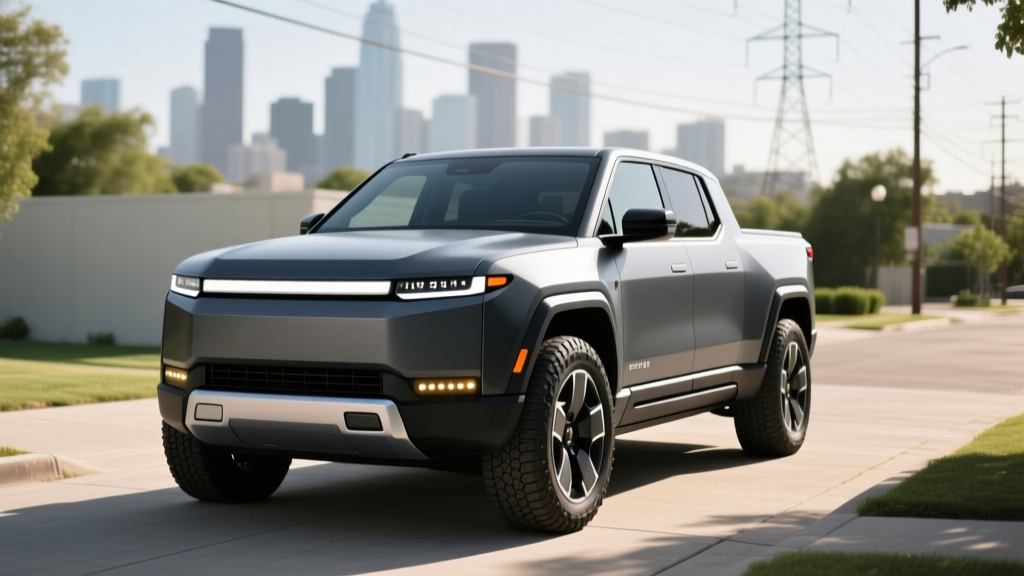
The Rivian R1T occupies a unique space in the EV market: a four-door electric pickup that blends the footprint of a midsize truck with the performance envelope of a luxury SUV and the utility of a genuine work-capable bed. For buyers researching Rivian R1T dimensions — whether to confirm garage fit, bed capacity, or passenger room — the second-generation R1T (introduced for the 2025 model year and continuing into 2026) delivers meaningful refinements over the original platform, including a new electrical architecture, faster charging, and expanded battery options.
This profile covers every dimension, range figure, charging spec, and pricing tier you need to evaluate the R1T as a daily driver, adventure rig, or towing platform. All data reflects the current 2026 model year with Dual-Motor, Performance Dual-Motor, and Tri-Motor configurations across Standard, Large, and Max battery packs.
| Spec | Dual-Motor (Standard) | Dual-Motor (Max Pack) | Tri-Motor (Max Pack) |
|---|---|---|---|
| EPA Range | 270 mi | 420 mi | 390 mi |
| Battery (usable) | 95 kWh (LFP) | 149 kWh (NMC) | 149 kWh (NMC) |
| Horsepower | 533 hp | 533 hp | 850 hp |
| 0–60 mph | 4.5 sec | 4.5 sec | 2.9 sec |
| Max DC Fast Charge | 200 kW | 220 kW | 220 kW |
| 10–80% DC Time | ~28 min | ~42 min | ~42 min |
| Level 2 (11.5 kW) | ~16 mi/hr | ~25 mi/hr | ~25 mi/hr |
| MPGe (combined) | 73 MPGe | 70 MPGe | 65 MPGe |
| Towing Capacity | 11,000 lb | 11,000 lb | 11,000 lb |
| Base MSRP | $69,900 | $84,900 | $99,900 |
Exterior Dimensions: Will the R1T Fit Your Garage?
The R1T is classified as a midsize pickup, but its dimensions sit at the upper boundary of that segment — closer to a body-on-frame Toyota Tacoma or Ford Ranger than a compact truck. Here is the full exterior measurement breakdown:
- Overall Length: 217.1 inches (with bed, no accessories)
- Wheelbase: 135.8 inches
- Overall Width (mirrors out): 81.8 inches
- Overall Width (mirrors folded): 76.9 inches
- Overall Height: 73.0–78.3 inches (varies by suspension mode and tire package)
- Ground Clearance: 7.9 in (Standard) / 14.9 in (Max Off-Road mode with air suspension)
- Curb Weight: 6,886–7,150 lb depending on pack and motors
Bed, Gear Tunnel, and Cargo Dimensions
The R1T's party trick is its 4-foot-6-inch bed — shorter than the 5- or 6-foot beds on most midsize trucks, but compensated for by the lockable Gear Tunnel and the front trunk (frunk). Here are the exact cargo measurements:
- Bed Length: 54.0 inches (4 ft 6 in) with tailgate closed; 82.0 inches with tailgate down
- Bed Width (between wheel wells): 50.6 inches
- Bed Volume: ~33.9 cu ft
- Gear Tunnel Volume: 11.0 cu ft (cross-vehicle pass-through behind rear seats)
- Frunk Volume: 11.0 cu ft (front trunk, lockable, drainable)
- Total Lockable Cargo: ~55.9 cu ft
- Bed Payload Capacity: 1,760 lb
The Gear Tunnel is the R1T's defining utility feature — a 65-inch-wide pass-through compartment accessible from both sides of the truck, ideal for skis, camping gear, or tools you want secured and out of the elements. It's a solution no competitor currently replicates, and it partially offsets the short bed for adventure-oriented buyers.
Interior Dimensions and Passenger Space
The R1T seats five adults, though the middle rear seat is best for short trips. Interior dimensions are generous and comparable to a midsize SUV:
- Front Headroom: 41.1 inches
- Front Legroom: 41.3 inches
- Rear Headroom: 38.2 inches
- Rear Legroom: 35.9 inches
- Front Shoulder Room: 60.2 inches
- Rear Shoulder Room: 58.7 inches
- Cabin Storage: Center console bin, door pockets, under-seat rear storage
Rear legroom at 35.9 inches is adequate but not class-leading — the Ford F-150 Lightning offers roughly 4 inches more rear legroom. For families with rear-facing child seats, the R1T fits them, but front passengers may need to slide forward slightly on longer drives.
Range, Battery Chemistry, and Real-World Expectations
Rivian offers three battery configurations for 2026:
- Standard Pack: ~95 kWh usable, LFP (lithium iron phosphate) chemistry. LFP cells are heavier and lower in energy density but offer longer cycle life, better thermal stability, and no degradation concerns from regular 100% charging. Rivian recommends daily charging to 100% on LFP packs.
- Large Pack: ~128 kWh usable, NMC (nickel manganese cobalt) chemistry. Higher energy density; best charged to 80% daily with 100% reserved for trips.
- Max Pack: ~149 kWh usable, NMC chemistry. The same high-density cells as the Large Pack but with more modules. Also best held at 80% for daily use.
Efficiency varies noticeably by configuration. The Standard Pack Dual-Motor achieves 73 MPGe combined (approximately 46 kWh/100 mi), while the Max Pack Tri-Motor drops to 65 MPGe (~52 kWh/100 mi) due to the third motor's mass and drag. These figures are typical for a 7,000-pound electric truck and trail lighter EVs like the Hyundai Ioniq 5 or Tesla Model Y significantly.
Charging Speed: DC Fast Charging and Home Level 2
The 2026 R1T uses Rivian's updated electrical architecture with a native NACS (North American Charging Standard) port — meaning direct access to Tesla Supercharger stalls without an adapter, alongside the growing network of NACS-equipped Electrify America, EVgo, and ChargePoint stations.
| Charging Level | Power / Rate | Miles Added per Hour | Notes |
|---|---|---|---|
| Level 1 (120V, 12A) | ~1.4 kW | ~2–3 mi/hr | Emergency/trickle only; overnight adds ~30 mi |
| Level 2 (240V, 48A) | 11.5 kW | ~16–25 mi/hr | Full charge in 8–13 hrs depending on pack; ideal home setup |
| DC Fast (Standard Pack) | Peak 200 kW | ~140 mi in 20 min | 10–80% in ~28 min; LFP accepts high SoC without taper penalty |
| DC Fast (Large/Max Pack) | Peak 220 kW | ~150 mi in 20 min | 10–80% in ~42 min (Max); charge curve tapers sharply above 80% |
Charging curve reality check: The 220 kW peak on Large and Max packs is sustained only between roughly 10–35% State of Charge (SoC). By 60%, the rate drops to ~150 kW; by 80%, it falls below 60 kW. This is normal NMC behavior driven by cell-protection protocols. On a road trip, plan your stops around 10–80% increments — charging from 80–100% at a DC fast charger can take as long as the 10–80% session, so it's rarely worth the wait unless you're at your destination overnight.
For home charging, Rivian's Wall Connector (or any J1772/NACS Level 2 unit) at 48 amps / 11.5 kW will replenish the Max Pack from 10–80% in approximately 9 hours — easily handled by an overnight session. Installation typically requires a 60-amp dedicated circuit; expect $500–$2,000 for a professional install depending on panel proximity, with a potential $2,000–$5,000 panel upgrade if your home has a 100-amp service. Always consult a licensed electrician for final specs.
Performance, Drivetrain, and Towing
Every R1T comes with standard all-wheel drive. The Dual-Motor configuration uses one motor per axle for a combined 533 horsepower and a 4.5-second 0–60 mph time — brisk for a truck this size. The Tri-Motor adds a second rear motor, pushing output to 850 hp and dropping the 0–60 to an astonishing 2.9 seconds, putting it in supercar territory despite its 7,100-pound curb weight.
Towing capacity is rated at 11,000 pounds across all configurations — competitive with the Ford F-150 Lightning (10,000 lb) and well ahead of the Chevrolet Silverado EV's standard rating. However, towing at or near capacity will cut range roughly in half. Expect 180–210 miles from the Max Pack when pulling a 10,000-pound trailer at highway speeds; plan charging stops accordingly.
The R1T's quad-motor variant was discontinued after the 2024 model year. The current Tri-Motor configuration is the performance flagship, and the Dual-Motor remains the volume seller — offering more than enough capability for virtually all non-track use cases.
Pricing, Trims, and Federal Tax Credit Eligibility
The 2026 R1T is offered in three equipment trims — Adventure, Ascend, and Ascend Ultra — layered across the three battery/motor configurations. Here is the current MSRP structure (destination included):
- Dual-Motor Standard Pack (Adventure): $69,900
- Dual-Motor Large Pack (Adventure): $75,900
- Dual-Motor Max Pack (Ascend): $84,900
- Performance Dual-Motor Max Pack (Ascend Ultra): $89,900
- Tri-Motor Max Pack (Ascend Ultra): $99,900
- MSRP Cap: Pickup trucks must be under $80,000 MSRP to qualify. This excludes the Max Pack, Tri-Motor, and Ascend Ultra trims from the new-vehicle credit.
- Dual-Motor Standard Pack ($69,900) and Large Pack ($75,900) fall under the cap and may qualify for up to $7,500 — pending battery-sourcing and critical-mineral requirements that shift annually.
- Buyer Income Caps: AGI must not exceed $150,000 (single), $225,000 (head of household), or $300,000 (joint filers).
- Point-of-Sale Transfer: Eligible buyers can apply the credit as an immediate price reduction at delivery rather than waiting for tax filing.
Warranty and Long-Term Ownership
Rivian provides competitive warranty coverage for the R1T's core systems:
- Battery Pack: 8 years / 175,000 miles (retains ≥70% capacity)
- Drive Unit(s): 8 years / 175,000 miles
- Bumper-to-Bumper: 5 years / 60,000 miles
- Corrosion Perforation: 12 years, unlimited miles
- Roadside Assistance: 5 years / 60,000 miles
The 175,000-mile battery warranty is notably generous — exceeding the federal minimum of 8 years/100,000 miles and matching or beating most competitors. Rivian's 70% capacity retention threshold is standard for the industry. Real-world degradation data from 2022–2024 R1T owners suggests NMC packs lose approximately 5–8% capacity in the first 50,000 miles before stabilizing, though long-term data on the 2025+ electrical architecture is still accumulating.
Technology, Driver Assistance, and Standout Features
The 2026 R1T runs Rivian's latest software stack on a 15.6-inch center touchscreen and a 12.3-inch driver display. Key technology highlights include:
- Rivian Driver+: A Level 2 (SAE) driver-assistance system with adaptive cruise control, lane centering, and automatic lane changes on divided highways. This is not self-driving — the driver must maintain hands-on-wheel awareness at all times.
- Over-the-Air Updates: Regular software deployments adding features, improving efficiency, and refining ride dynamics.
- Powered Gear Guard: Lockable, motorized tonneau cover for the bed (standard on Ascend trims).
- Air Suspension: Standard adaptive air suspension with 7 ride-height presets, including an Entry mode that drops the truck 2 inches for easier loading.
- Vehicle-to-Load (V2L): The R1T can output up to 6.6 kW of AC power from its bed outlets — enough to run power tools, a campsite, or essential home circuits during an outage.
- Camp Kitchen (optional): A slide-out kitchen module that integrates into the Gear Tunnel with an induction cooktop and sink — a Rivian-exclusive accessory.
Notable drawbacks include the absence of Apple CarPlay/Android Auto (Rivian uses a proprietary infotainment system with native app integration), limited rear-seat storage compared to full-size trucks, and the short bed's inability to carry 4×8 plywood sheets flat without the tailgate down and a bed extender.
Pros and Cons
Pros
- Class-leading 420-mile Max Pack range
- Native NACS port — direct Supercharger access
- Gear Tunnel is a unique, practical utility feature
- Tri-Motor performance is supercar-fast (2.9s 0–60)
- 11,000-lb towing with integrated trailer software
- Excellent off-road capability (14.9 in clearance, tank turn)
- 8-yr/175,000-mi battery warranty exceeds industry norm
- V2L output for worksite and campsite power
Cons
- Short 4.5-ft bed limits traditional truck utility
- No Apple CarPlay or Android Auto
- Higher trims exceed $80K tax credit cap
- Rear legroom (35.9 in) trails full-size electric trucks
- Efficiency drops sharply when towing (expect ~50% range loss)
- Max Pack 10–80% DC charge takes ~42 min (large battery)
- Proprietary infotainment learning curve
- Service center network still expanding in rural areas
Who the Rivian R1T Is For
The R1T is ideal for buyers who need a daily-drivable truck with genuine off-road and towing capability, prioritize range and charging convenience, and value creative storage solutions over a traditional long bed. It excels as:
- Adventure and overland rig: Gear Tunnel, air suspension, and 420-mile range make it the best EV for backcountry access.
- Commuter truck: Quiet, quick, and efficient enough for daily driving with home Level 2 charging.
- Weekend towing platform: 11,000-lb rating handles boats, horse trailers, and mid-size campers — just plan charging stops carefully.
- Tech-forward families: Five seats, strong safety ratings, and V2L capability for tailgating and emergencies.
It is not the right choice if you regularly haul 8-foot lumber, need a 6-passenger crew cab, or operate primarily in areas with sparse DC fast-charging infrastructure. For those needs, the Ford F-150 Lightning or Chevrolet Silverado EV may be more practical.
Frequently Asked Questions
What is the real-world range of the Rivian R1T?
The EPA-estimated range is 270 miles (Standard Pack), 340 miles (Large Pack), and 420 miles (Max Pack). Real-world highway driving in fair weather typically yields 85–90% of the EPA figure — so approximately 230, 290, and 370 miles respectively. In cold weather below 30°F, expect an additional 15–20% reduction, bringing the Max Pack down to roughly 280–310 miles on a full charge.
How fast does the R1T charge at home and on the road?
At home on a 240V Level 2 charger (48A / 11.5 kW), the R1T adds 16–25 miles of range per hour depending on pack size, fully replenishing overnight. On DC fast chargers, the Standard Pack peaks at 200 kW (10–80% in ~28 minutes), while the Large and Max Packs peak at 220 kW (10–80% in ~35–42 minutes). Charging slows significantly above 80% SoC — plan road-trip stops around the 10–80% window.
Does the Rivian R1T qualify for the federal EV tax credit?
The Dual-Motor Standard Pack ($69,900) and Large Pack ($75,900) fall under the $80,000 MSRP cap for pickup trucks and may qualify for up to $7,500 under IRS §30D — subject to buyer income limits ($150K single / $300K joint) and battery-sourcing requirements that change periodically. Max Pack and Tri-Motor trims exceed the MSRP cap and are not eligible for the new-vehicle credit. Always verify current eligibility on irs.gov or with a tax professional.
Is the Rivian R1T worth buying over the Ford F-150 Lightning or Tesla Cybertruck?
The R1T wins on range (420 mi vs. Lightning's 320 mi), off-road capability, and creative storage (Gear Tunnel). The F-150 Lightning offers a larger bed (5.5 ft), more rear legroom, a lower starting price (~$55K), and broader service infrastructure. The Cybertruck undercuts on price and offers stainless-steel durability but has polarizing styling, limited towing, and a smaller service network. For adventure-oriented buyers who don't need a long bed, the R1T remains the strongest all-around package.
What are the biggest pros and cons of the R1T?
Top strengths: class-leading range, native Supercharger access, Gear Tunnel storage, Tri-Motor performance, air suspension, and strong battery warranty. Top weaknesses: short bed limits traditional truck use, no CarPlay/Android Auto, high trims exceed the tax credit cap, and efficiency suffers significantly when towing. See the pros/cons breakdown above for the full list.
How long will the R1T battery last?
Rivian warranties the battery for 8 years or 175,000 miles (whichever comes first) against capacity loss below 70%. Based on industry data for NMC and LFP chemistries, the packs should retain 80–85% capacity at 150,000 miles under normal use. LFP Standard Packs may last longer due to the chemistry's superior cycle life. Battery replacement cost, if needed out of warranty, is estimated at $15,000–$25,000 depending on pack size — though this figure is expected to decline as cell costs fall.