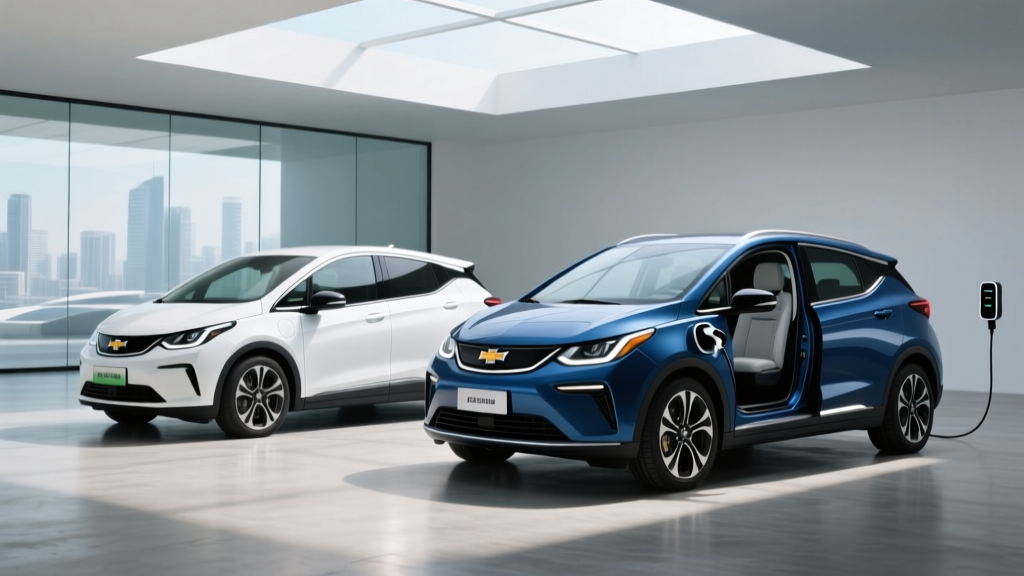
The Chevrolet Bolt EV and its stretched EUV sibling remain the most affordable long-range electric vehicles on the new-car market in 2026. With the second-generation Bolt built on GM's Ultium-derived platform now entering production, the outgoing models have become lease-deal darlings — heavily discounted by dealers eager to clear inventory before the next-gen arrives. If you've been searching for lease deals on Chevy Bolt models, the timing has rarely been better, but understanding what you're actually signing up for — from real-world range to DC fast-charging limitations — is critical before you commit.
This profile covers the current-generation Bolt EV and Bolt EUV as they're sold and leased in the 2026 model year. We'll break down exact specs, real-world efficiency data, charging behavior, pricing after federal incentives, and whether leasing makes more sense than buying outright.
2026 Chevy Bolt EV & EUV: At-a-Glance Specs
| Spec | Bolt EV (2LT) | Bolt EUV (Premier) |
|---|---|---|
| EPA Range | 259 miles | 247 miles |
| Battery (usable) | 65 kWh, NMC lithium-ion | 65 kWh, NMC lithium-ion |
| Motor / Drivetrain | 200 hp / 266 lb-ft, FWD | 200 hp / 266 lb-ft, FWD |
| 0–60 mph | ~6.5 seconds | ~7.0 seconds |
| Max DC Fast Charge | 55 kW (CCS) | 55 kW (CCS) |
| 10–80% DC Time | ~52 minutes | ~52 minutes |
| Level 2 Home Charge | 11.5 kW (~39 mi/hr) | 11.5 kW (~37 mi/hr) |
| MPGe (city/hwy/combined) | 131 / 109 / 120 | 125 / 104 / 115 |
| Energy Consumption | 28 kWh/100 mi | 29 kWh/100 mi |
| Cargo Volume (rear seats up) | 16.6 cu ft | 25.4 cu ft |
| Rear Legroom | 36.0 in | 39.1 in |
| Base MSRP | $26,500 | $28,700 |
| Battery Warranty | 8 yr / 100,000 mi | 8 yr / 100,000 mi |
Real-World Range: What the EPA Sticker Doesn't Tell You
Real-World Expectation: Plan on 220–240 miles in mixed city/highway driving at moderate temperatures. Sustained highway speeds above 70 mph will pull range down to roughly 200–215 miles. In freezing weather (below 30°F), expect a 20–30% reduction — meaning 175–200 usable miles from a full charge in winter conditions.
The Bolt's 65 kWh NMC (nickel-manganese-cobalt) battery pack is proven technology. According to EPA data at fueleconomy.gov, the Bolt EV achieves 120 MPGe combined, which translates to roughly 28 kWh per 100 miles — among the most efficient in its class. That efficiency is what allows a relatively modest battery to deliver 259 miles of rated range.
However, the Bolt lacks a heat pump. Instead, it uses resistive cabin heating, which is a significant energy drain in cold weather. Owners in northern climates consistently report winter range drops of 25% or more. If your commute is under 60 miles round-trip, this won't matter much. If you're planning 200-mile highway runs in January, you'll need to charge en route.
On the positive side, the Bolt's regenerative braking system — with its one-pedal driving mode — recovers meaningful energy in stop-and-go city traffic. Many owners find their city range actually exceeds the EPA estimate in mild weather.
Charging Speed: The Bolt's Biggest Limitation
Here's where honest assessment matters most. The Bolt's DC fast-charging capability peaks at just 55 kW on a CCS connector. For context, competitors like the Hyundai Kona Electric accept up to 100+ kW, and the Tesla Model 3 charges at up to 250 kW on NACS/Superchargers.
| Charging Level | Power | Charge Time | Range Added |
|---|---|---|---|
| Level 1 (120V outlet) | ~1.4 kW | ~48 hours (0–100%) | ~4 miles/hour |
| Level 2 (240V home) | 11.5 kW | ~7 hours (0–100%) | ~39 miles/hour |
| DC Fast Charge (CCS) | 55 kW peak | ~52 min (10–80%) | ~150 miles in 30 min |
The 55 kW peak rate isn't sustained. The Bolt's charge curve tapers noticeably above 60% state of charge (SoC). Between 10–50%, you'll see close to the 55 kW peak. From 50–80%, the rate drops to roughly 35–40 kW. Above 80%, it slows further to protect battery longevity — a common trait across all lithium-ion EVs.
What this means practically: on a road trip, plan for 30–35 minute stops to add roughly 120–150 miles of range. For a 400-mile trip, you'll need at least two charging stops. If your driving is primarily local and you charge at home overnight on Level 2, the DC fast-charge limitation becomes a minor inconvenience rather than a dealbreaker.
At home on a Level 2 charger (240V, 48-amp circuit recommended), the Bolt replenishes at 11.5 kW — adding roughly 39 miles of range per hour. A full charge from near-empty takes about 7 hours, easily completed overnight. A standard 120V Level 1 trickle charge adds only about 4 miles per hour, useful for topping off but not practical as a primary charging strategy.
Pricing, Lease Deals, and Federal Tax Credit Eligibility
The 2026 Bolt EV starts at $26,500 MSRP for the 1LT trim, with the 2LT at approximately $29,200. The larger Bolt EUV begins at $28,700 for the LT and reaches around $33,300 for the Premier. These are among the lowest MSRPs of any EV sold in the United States.
| Trim | MSRP | After §30D Credit* | Est. Monthly Lease† |
|---|---|---|---|
| Bolt EV 1LT | $26,500 | $19,000 | $179–$229 |
| Bolt EV 2LT | $29,200 | $21,700 | $199–$259 |
| Bolt EUV LT | $28,700 | $21,200 | $199–$249 |
| Bolt EUV Premier | $33,300 | $25,800 | $249–$309 |
*Federal §30D credit of up to $7,500 requires meeting IRS income caps, MSRP caps (under $55,000 for cars), and battery critical-mineral/sourcing requirements. Point-of-sale transfer is available through registered dealers. Verify current eligibility at irs.gov.
†Lease estimates based on 36-month terms, typical dealer incentives, and varying money factors. Actual lease payments depend on credit tier, down payment, regional incentives, and dealer markup.
Understanding the §30D Federal Tax Credit
- MSRP cap: The Bolt EV and EUV are classified as passenger cars, subject to the $55,000 MSRP cap. All trims qualify.
- Income cap: Modified adjusted gross income must not exceed $150,000 (single), $225,000 (head of household), or $300,000 (joint filers).
- Battery sourcing: The credit is split into two $3,750 halves — one for critical minerals sourcing and one for battery component assembly. Sourcing requirements tighten annually. Confirm current-year compliance with your dealer or a tax professional.
- Point-of-sale transfer: Eligible buyers can transfer the credit to the dealer at purchase, effectively reducing the vehicle price by up to $7,500 on the spot. This also applies to many lease structures where the credit is passed through as a capitalized cost reduction.
Why Leasing May Be the Smartest Play
Dealer incentives on outgoing Bolts are aggressive in 2026. GM and Chevrolet have been stacking lease cash (often $2,000–$5,000 in addition to federal credits) to move inventory. Some regional deals push the effective monthly payment below $200 with modest money down — making the Bolt one of the cheapest vehicles to lease in America, electric or gas.
Leasing also sidesteps a key concern with the current-gen Bolt: depreciation. As the next-generation Ultium-based Bolt arrives, residual values on the outgoing model may soften. A 36-month lease lets you drive a bargain-priced EV now and upgrade to the next-gen model when your term ends.
Performance, Efficiency, and Daily Driving
The Bolt's single front-mounted permanent-magnet motor produces 200 horsepower and 266 lb-ft of torque. That's enough for a 0–60 mph time of approximately 6.5 seconds in the lighter EV and 7.0 seconds in the EUV. For a compact commuter car, this is genuinely quick — electric torque delivery makes the Bolt feel faster than its numbers suggest in city driving.
The front-wheel-drive layout means the Bolt doesn't offer all-wheel drive, which may deter buyers in heavy-snow regions. However, the low center of gravity (battery pack under the floor) gives it composed handling, and traction control is effective on wet roads.
Efficiency is a genuine strength. At 28 kWh/100 mi (Bolt EV) and 29 kWh/100 mi (Bolt EUV), these are some of the most energy-efficient EVs available. This translates directly into lower electricity costs: at the national average residential rate of ~$0.16/kWh, driving 100 miles costs roughly $4.48 — compared to about $12–$14 for a 30 MPG gas car at $3.50/gallon.
Interior, Cargo, and Technology
The Bolt EV offers 16.6 cubic feet of cargo space behind the rear seats (expanding to 56.5 cu ft with seats folded). The EUV's stretched wheelbase delivers 25.4 cu ft behind the rear row and 63.0 cu ft total — approaching small-crossover territory.
Rear-seat legroom is where the EUV justifies its premium: 39.1 inches vs. the EV's 36.0 inches. Adults can sit comfortably in the EUV's back seat on longer trips, while the EV's rear is better suited for children or shorter adults.
Standard tech includes an 11-inch diagonal touchscreen with wireless Apple CarPlay and Android Auto, a 10.2-inch digital instrument cluster, and available Wi-Fi hotspot. The infotainment system is responsive and well-organized, though the interior materials are decidedly budget-grade — hard plastics dominate the door panels and lower dash.
Driver-Assistance Features
Chevy Safety Assist is standard and includes automatic emergency braking, forward collision alert, lane keep assist, following distance indicator, and IntelliBeam automatic high beams. The available Super Cruise system (on EUV Premier) provides hands-free driving on over 750,000 miles of mapped highways in North America.
Warranty and Long-Term Battery Outlook
Chevrolet covers the Bolt's battery pack and electric powertrain for 8 years or 100,000 miles, whichever comes first. The battery warranty guarantees that the pack will retain at least 60% of its original capacity during that period. The basic vehicle warranty is 3 years / 36,000 miles.
The NMC chemistry in the Bolt's pack has a long track record. GM's battery management system includes active liquid cooling and heating, which helps manage thermal stress. Real-world data from earlier Bolt model years (2017–2022) shows typical degradation of 5–8% over 100,000 miles when properly maintained — meaning a Bolt with 100K miles should still deliver roughly 240+ miles of range in the EV variant.
One note: the 2017–2019 Bolt EV was subject to a major battery recall due to manufacturing defects that could cause fires. GM replaced affected packs with updated units. Any used or CPO Bolt from those years should have documentation confirming the recall repair was completed.
Pros, Cons, and Who Should Lease the Bolt
Pros
- Lowest MSRP of any 250+ mile EV on the market
- Excellent energy efficiency (120 MPGe combined)
- Spacious EUV variant with adult-friendly rear seats
- Strong lease incentives stacking with §30D credit
- Responsive 200 hp motor for city and suburban driving
- Wireless CarPlay/Android Auto standard
- Proven 8-yr/100,000-mi battery warranty
Cons
- Slow 55 kW DC fast charging (52 min to 80%)
- No heat pump — significant winter range loss
- Front-wheel drive only; no AWD option
- CCS connector only — requires NACS adapter for Tesla Superchargers
- Budget interior materials
- Outgoing generation; next-gen Bolt arriving soon
- Modest cargo space in the standard EV hatchback
Who This EV Suits Best
Ideal for: Budget-conscious commuters, apartment dwellers with workplace charging, second-car households, and drivers whose daily travel stays under 150 miles. The Bolt EUV is especially well-suited for small families who need rear-seat space without paying crossover premiums.
Think twice if: You frequently take 300+ mile road trips (the slow DC charging will add significant time), you live in a region with extreme winters and no garage parking, or you need AWD for mountain driving.
How the Bolt Compares to Key Competitors
| Metric | Bolt EV | Hyundai Kona Electric | Nissan Leaf SV+ | Tesla Model 3 RWD |
|---|---|---|---|---|
| EPA Range | 259 mi | 261 mi | 212 mi | 272 mi |
| Base MSRP | $26,500 | $32,975 | $36,190 | $38,990 |
| Max DC Charge | 55 kW | 100+ kW | 100 kW (CHAdeMO) | 250 kW (NACS) |
| 10–80% Time | ~52 min | ~40 min | ~45 min | ~25 min |
| §30D Credit Eligible | Yes (verify) | Partial (verify) | No (MSRP/sourcing) | Yes (verify) |
The Bolt wins on price — by a wide margin. After stacking the federal credit with lease incentives, nothing else in the EV market approaches its effective cost. The trade-offs are charging speed and interior refinement. If road-trip charging speed is a priority, the Kona Electric or Model 3 are meaningfully better. If budget is paramount, the Bolt is the clear answer.
Frequently Asked Questions
What is the real-world range of the Chevy Bolt EV?
Expect 220–240 miles in mixed driving at moderate temperatures. Highway-only driving at 75+ mph drops this to roughly 200–215 miles. In freezing weather, plan on 175–200 miles due to the resistive heating system. The EPA rates it at 259 miles, but real-world conditions rarely match the laboratory test cycle.
How fast does the Bolt charge at home and on the road?
At home on a Level 2 (240V) charger, the Bolt adds about 39 miles of range per hour, reaching a full charge in roughly 7 hours. On DC fast chargers, it peaks at 55 kW and takes approximately 52 minutes to go from 10% to 80% — significantly slower than most modern competitors.
Does the Chevy Bolt qualify for the $7,500 federal EV tax credit?
The Bolt EV and EUV meet the MSRP cap (under $55,000) and have historically qualified for the full $7,500 under IRS §30D. However, eligibility depends on your income, the battery's critical-mineral and component sourcing for the specific model year, and whether you purchase or lease. Verify current-year details at irs.gov and confirm with your dealer or tax professional.
Is leasing a Chevy Bolt better than buying in 2026?
Leasing often makes more sense for the current-generation Bolt. Aggressive lease cash from GM, combined with the federal credit passed through as a capitalized cost reduction, can push monthly payments below $200. Leasing also protects you from depreciation risk as the next-generation Bolt enters the market. If you plan to keep the car 7+ years and drive it into the ground, buying may still be worthwhile.
Can I charge the Bolt at Tesla Superchargers?
The Bolt uses the CCS1 connector. Tesla has opened select Supercharger stations to non-Tesla EVs via the Magic Dock adapter (built into some stalls) or through a GM-approved NACS adapter. Check Chevrolet's charging resources for current adapter availability and Supercharger compatibility.
What are the biggest drawbacks of the Chevy Bolt?
The two primary limitations are slow DC fast charging (55 kW peak, 52 minutes to 80%) and the lack of a heat pump, which causes significant range loss in cold weather. The interior materials are also budget-grade, and there is no all-wheel-drive option.