Introduction: The Rivian R1T in an Evolving EV Landscape
The electric vehicle truck segment has rapidly evolved from a niche experiment into a fiercely contested battleground. When the Rivian R1T first launched, it was a pioneer, proving that a battery-electric pickup could be both a luxury lifestyle vehicle and a rugged off-roader. Today, with the Ford F-150 Lightning, Chevrolet Silverado EV, and Tesla Cybertruck all vying for market share, the R1T faces stiff competition. However, as we look toward the future of the automotive industry, the R1T remains a benchmark for innovation. This comprehensive review explores how the Rivian R1T performs as a daily driver and an adventure vehicle, while analyzing the future trends, software updates, and battery technologies that will define its longevity in the EV truck market.
Daily Driver Dynamics: Commuting in a 7,000-Pound EV
Using a full-size, body-on-frame-equivalent pickup truck for the daily school run and grocery trips might seem excessive, but the R1T makes it remarkably effortless. The secret lies in Rivian’s adaptive air suspension and sophisticated chassis tuning. Despite a curb weight that hovers around 7,148 pounds, the R1T exhibits minimal body roll and delivers a ride quality that rivals luxury SUVs like the Porsche Cayenne or BMW X5.
Cabin Comfort and Technology
Inside, the R1T embraces a minimalist, Scandinavian-inspired aesthetic. The 15.6-inch center touchscreen is the nerve center of the vehicle, running Rivian’s proprietary operating system. Recent over-the-air (OTA) updates have dramatically improved the user interface, introducing customizable app docks, enhanced voice recognition, and native integration for mapping and media. While early adopters lamented the lack of Apple CarPlay and Android Auto, Rivian’s commitment to building a robust, native software ecosystem aligns with future industry trends where automakers seek deeper control over the user experience and data monetization.
Practicality is where the R1T shines for daily use. The 11-cubic-foot front trunk (frunk) is weather-sealed and features a drain plug, making it perfect for storing wet gear or groceries. Meanwhile, the signature Gear Tunnel—an illuminated, climate-controlled storage space spanning the width of the vehicle behind the rear seats—offers 11.7 cubic feet of secure storage, completely outclassing the traditional truck bed for secure, out-of-sight daily cargo.
Adventure Capabilities: Off-Grid and Beyond
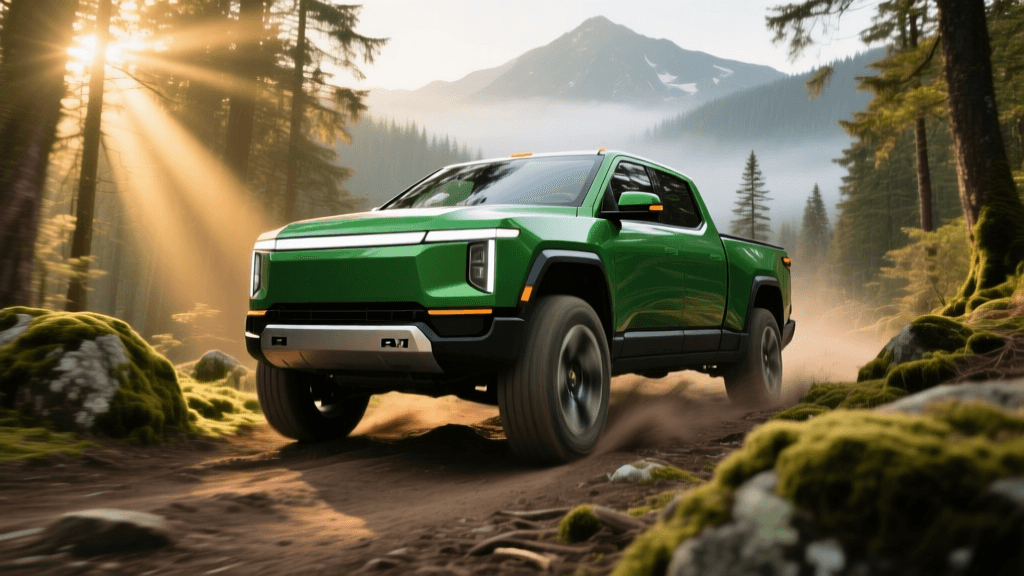
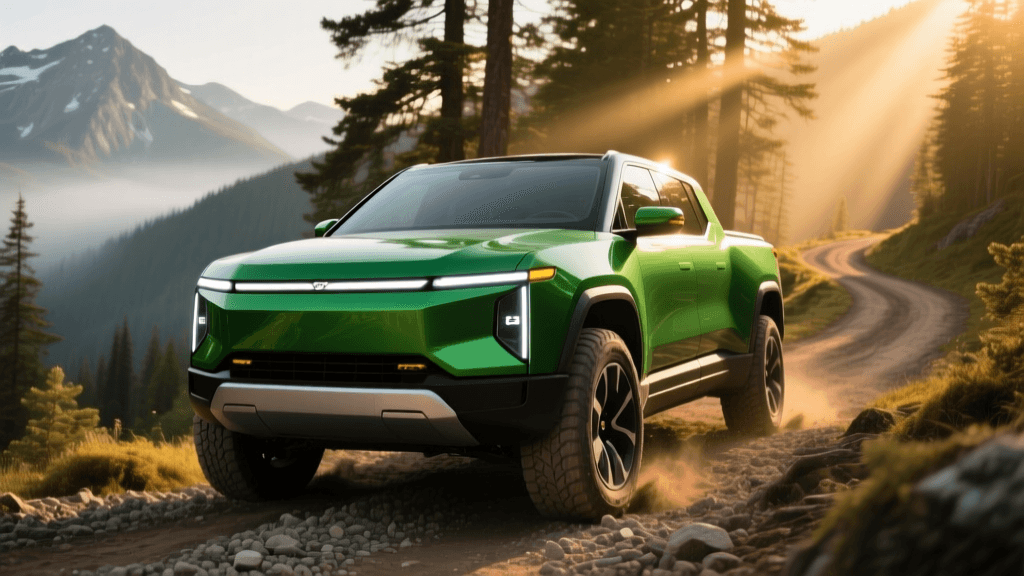
While it excels on pavement, the R1T was engineered with the backcountry in mind. According to Car and Driver's extensive testing, the R1T’s quad-motor configuration provides unparalleled torque vectoring, allowing for independent wheel control that makes rock crawling and sand duning remarkably precise. Even the more accessible dual-motor variants offer impressive off-road credentials.
Ground Clearance and Water Fording
The air suspension system allows drivers to adjust the ride height on the fly. In its highest 'Max' setting, the R1T boasts an impressive 14.9 inches of ground clearance, surpassing many dedicated off-road internal combustion trucks. Furthermore, the R1T can ford up to 3.3 feet of water, a critical metric for trail riders crossing streams. The approach, departure, and breakover angles are optimized for steep inclines, ensuring the underbody battery pack remains protected by a heavy-duty titanium and steel skid plate.
The Camp Kitchen and Power Integration
Rivian’s optional Camp Kitchen, which slides out from the Gear Tunnel, is a masterclass in adventure integration. It includes an induction cooktop, a sink with a pressurized water system, and custom cookware. More importantly, the R1T acts as a massive mobile power bank. With multiple 120V and 240V outlets in the bed and Gear Tunnel, owners can power everything from portable refrigerators to heavy-duty power tools, making it an invaluable asset for both remote camping and emergency home backup power.
Future Trends: Software, Batteries, and the Gen 2 Platform
To understand the R1T’s place in the future EV landscape, we must look at Rivian’s roadmap. The automotive industry is shifting toward software-defined vehicles, and Rivian is at the forefront. The upcoming 'Gen 2' architecture promises to reduce the number of electronic control units (ECUs), simplify wiring harnesses, and lower manufacturing costs. For current owners, this means future OTA updates will continue to unlock new features, refine regenerative braking algorithms, and improve highway driver-assist systems.
Battery Chemistry and the Max Pack
Battery technology is the most critical frontier for EV trucks. Rivian currently offers multiple battery configurations, and the introduction of the 'Max Pack' (featuring high-nickel NMC chemistry) pushes the R1T’s range past 400 miles. Looking ahead, the industry is trending toward Lithium Iron Phosphate (LFP) batteries for standard-range models to reduce costs and reliance on scarce minerals, while reserving advanced chemistries for performance and towing applications.
| Configuration | Estimated EPA Range | Horsepower | Future Industry Outlook |
|---|---|---|---|
| Dual-Motor Standard | 270 miles | 533 hp | Transition to LFP chemistry for cost reduction |
| Dual-Motor Large | 352 miles | 533 hp | Sweet spot for daily commuting and light towing |
| Quad-Motor Large | 328 miles | 1,025 hp | Niche performance; software-locked torque updates |
| Dual-Motor Max | 410 miles | 665 hp | Future-proofs against charging infrastructure gaps |
As noted by the Alternative Fuels Data Center, the expansion of fast-charging infrastructure is heavily tied to vehicle range capabilities. The R1T Max Pack positions owners to comfortably tackle long-haul road trips today, while future solid-state battery breakthroughs may eventually render current range anxieties obsolete.
Charging Infrastructure and the NACS Transition
One of the most significant future trends impacting R1T ownership is the industry-wide adoption of the North American Charging Standard (NACS). Rivian has secured access to the Tesla Supercharger network, a massive advantage for adventure travelers venturing into remote national parks where the Rivian Adventure Network (RAN) is still expanding. Current R1T owners can utilize a Rivian-provided adapter to access Superchargers, while future Gen 2 R1T models will feature the native NACS port. This interoperability drastically improves the long-term viability of the R1T as a cross-country tourer.
At home, charging a 135 kWh Large Pack requires a robust Level 2 setup. Installing a 60-amp hardwired Wall Connector or Rivian Wall Charger on a 240V circuit will replenish roughly 25 miles of range per hour, meaning a full overnight charge is easily achievable. For buyers planning their home infrastructure, factoring in the $500 to $1,500 cost of a professional electrical panel upgrade is a necessary step in the EV ownership journey.
Ownership Costs and Final Verdict
When evaluating the R1T against internal combustion trucks like the Ford F-150 Raptor or Ram 1500 TRX, the total cost of ownership tells a compelling story. While the initial purchase price of the R1T (ranging from roughly $73,000 to over $99,000 depending on trims and battery packs) is steep, the elimination of fuel costs, reduced maintenance (no oil changes, fewer moving parts), and potential federal or state EV tax incentives significantly offset the premium. Furthermore, Rivian’s direct-to-consumer sales model and transparent pricing protect buyers from the traditional dealership markups that have plagued the truck market.
Is the R1T Future-Proof?
The Rivian R1T is more than just a capable truck; it is a rolling testament to the future of electric mobility. As a daily driver, it offers unmatched refinement, clever storage solutions, and a tech-forward cabin. As an adventure vehicle, its quad-motor torque vectoring, air suspension, and integrated power solutions set a new standard for the outdoors. While the EV truck market will only grow more crowded, Rivian’s dedication to continuous software improvement, the upcoming Gen 2 manufacturing efficiencies, and the strategic NACS charging alliance ensure that the R1T will remain a highly relevant, deeply capable, and thoroughly modern pickup for years to come. For those willing to embrace the electric frontier, the R1T is not just a purchase for today—it is an investment in the future of adventure.
For the latest specifications and configuration options, buyers can explore Rivian's official R1T portal to tailor their ideal electric truck.