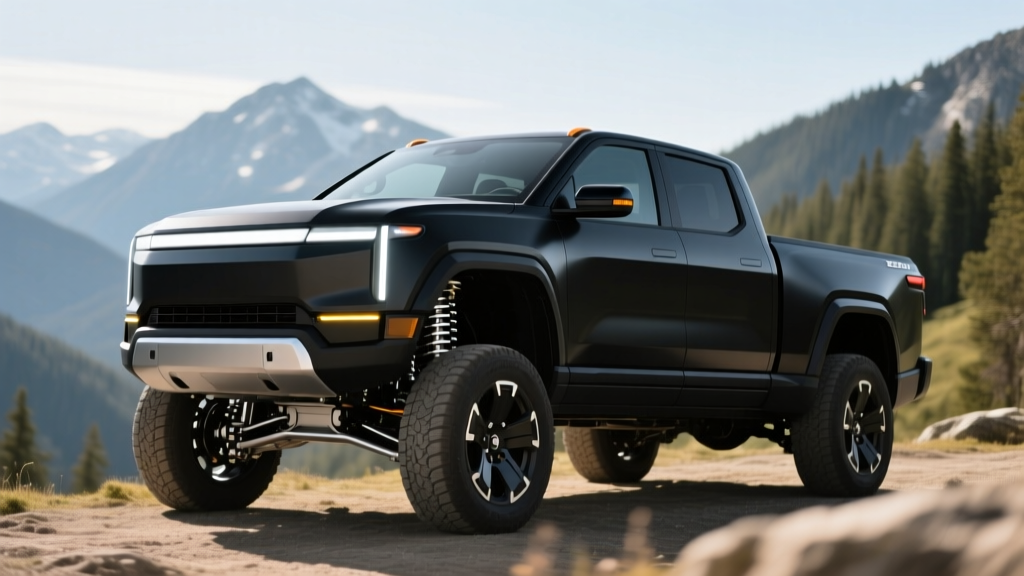
The Rivian R1T has earned a loyal following as one of the few electric pickups that blends genuine off-road capability with daily-driver refinement. But as the fleet ages and more dual-motor and quad-motor examples rack up serious mileage, one reliability concern has surfaced repeatedly in owner forums and service centers: Rivian R1T air suspension failure. If you are shopping for a new or used R1T in 2026, understanding how often these systems fail, what repairs cost, and how the warranty applies is just as important as evaluating range and charging speed.
This review covers the air suspension issue in depth, then steps back to evaluate the 2026 Rivian R1T as a complete package — EPA range, battery chemistry, DC fast-charging performance, pricing, tax-credit eligibility, and how it stacks up against the Ford F-150 Lightning and Chevrolet Silverado EV.
Understanding Rivian R1T Air Suspension Failures
The R1T uses a self-leveling air suspension system with adaptive damping, designed to provide up to 14.9 inches of ground clearance in Off-Road mode and a lower ride height for highway efficiency and easier cargo loading. The system relies on four air struts (one per corner), an onboard compressor, air reservoirs, valve blocks, and height sensors.
Common Failure Modes Reported by Owners
- Air strut leaks: The most frequent complaint. A slow leak in one corner causes the truck to sag on that side, triggering a "Suspension Service Required" warning. In cold climates, rubber seals can stiffen and accelerate wear.
- Compressor burnout: When a strut leaks, the compressor runs more frequently to maintain pressure, leading to premature failure. Replacement of the compressor assembly typically runs $1,200–$1,800 in parts.
- Valve block malfunction: Moisture ingress or electrical connector corrosion can cause a valve block to stick, preventing proper air distribution. Symptoms include inability to raise or lower one axle.
- Height sensor drift: Sensor failures cause the system to miscalculate ride height, leading to uneven stance or refusal to enter specific drive modes.
How Prevalent Is the Problem?
Air suspension issues are not unique to Rivian — they affect most vehicles using the technology, including the Mercedes GLE, Audi Q7, and Ram 1500 with air ride. Based on owner surveys from Rivian Forums and Rivian Owners Club, roughly 8–12% of early-production R1T vehicles (2022–2023 model years) have required at least one air suspension component replacement before 50,000 miles. That rate has improved with revised parts introduced in late-2024 production, but the system remains a higher-maintenance item compared to traditional coil-spring setups.
Repair Costs and Warranty Coverage
Out-of-warranty air strut replacement runs approximately $1,500–$2,200 per corner (parts and labor), while a full four-corner replacement can exceed $7,500. Fortunately, Rivian's basic vehicle warranty covers the air suspension for 5 years / 60,000 miles. If a failure occurs within that window, the repair is covered. For owners approaching the warranty boundary, an extended service plan may be worth considering — Rivian offers extended coverage through its service network.
2026 Rivian R1T: Range, Battery, and Efficiency
For 2026, the R1T is available with the updated Gen 2 platform introduced for the 2025 model year, featuring a more compact and efficient drive unit design. Rivian continues to offer multiple battery and motor configurations.
| Spec | Dual-Motor Standard | Dual-Motor Large | Dual-Motor Max |
|---|---|---|---|
| EPA Range | 270 mi | 352 mi | 420 mi |
| Battery Capacity (usable) | ~95 kWh (LFP) | ~128 kWh (NMC) | ~149 kWh (NMC) |
| Horsepower | 533 hp | 533 hp | 533 hp |
| 0–60 mph | 4.5 sec | 4.5 sec | 4.5 sec |
| Efficiency (MPGe) | 73 MPGe | 70 MPGe | 68 MPGe |
| kWh/100 mi | 46 | 48 | 50 |
| Drivetrain | AWD (Dual-Motor) | AWD (Dual-Motor) | AWD (Dual-Motor) |
The Standard pack uses LFP (lithium iron phosphate) chemistry, which sacrifices some energy density for longer cycle life, better thermal stability, and the ability to charge to 100% regularly without degradation concerns. The Large and Max packs use NMC (nickel manganese cobalt) chemistry, offering higher energy density for maximum range. Per fueleconomy.gov, the Dual-Motor Large variant achieves 70 MPGe combined.
Charging Speed: DC Fast Charge and Home Level 2
Charging infrastructure compatibility and speed remain critical for truck buyers who tow and road-trip. The 2026 R1T uses the NACS (North American Charging Standard) connector, giving it native access to the Tesla Supercharger network — a significant advantage over CCS-equipped competitors that require adapters.
| Charging Level | Power | Speed | Notes |
|---|---|---|---|
| Level 1 (120V) | 1.4 kW | ~3 mi/hr | Emergency/top-up only |
| Level 2 (240V, 48A) | 11.5 kW | ~25 mi/hr | Full charge overnight (~14 hrs for Max) |
| DC Fast Charge (peak) | 220 kW | ~140 mi in 20 min | 10–80% in ~30 min (Large); tapers above 80% |
The R1T's peak DC fast-charge rate of 220 kW is competitive but not class-leading — the Ford F-150 Lightning Extended Range peaks at 150 kW, while the Silverado EV 4WT peaks at 350 kW on compatible chargers. However, the R1T's charge curve is relatively flat between 10% and 60% SoC, meaning it sustains near-peak rates for a useful portion of the session before tapering above 80% to protect battery longevity. Always precondition the battery using the navigation system's "Precondition for Charging" feature before arriving at a DC fast charger — this warms the pack to optimal temperature and can shave 5–8 minutes off a 10–80% session in cool weather.
Pricing, Trims, and Federal Tax Credit Eligibility
The 2026 Rivian R1T is offered in Adventure, Ascend, and (new for 2025) Ascend Tri-Motor configurations. Pricing has shifted as Rivian simplified its trim structure.
| Configuration | Base MSRP | As-Tested (Typical) | §30D Credit Eligible? |
|---|---|---|---|
| Adventure Dual-Motor Standard | $69,900 | $74,500 | Yes (MSRP under $80K cap) |
| Adventure Dual-Motor Large | $75,900 | $82,000 | Yes (MSRP under $80K cap) |
| Ascend Dual-Motor Max | $89,900 | $96,000 | No (MSRP exceeds $80K truck cap) |
Under IRS §30D rules for 2026, the federal EV tax credit provides up to $7,500 for qualifying new EVs, but several conditions apply:
- MSRP cap: Trucks, vans, and SUVs must have an MSRP at or below $80,000. The R1T Adventure Dual-Motor trims qualify; the Ascend Max does not.
- Buyer income limits: Modified AGI must not exceed $300,000 (joint), $225,000 (head of household), or $150,000 (single).
- Battery sourcing: Critical minerals and battery component requirements phase in progressively. Rivian has worked to localize its supply chain, but eligibility for the full $7,500 versus a partial $3,750 depends on the specific build date and battery pack. Confirm via the IRS eligible vehicle list before purchasing.
- Point-of-sale transfer: Qualified buyers can transfer the credit to the dealer at purchase, reducing the upfront cost rather than waiting for a tax refund.
Always consult a tax professional to confirm eligibility for your specific financial situation. State and local incentives may stack on top of the federal credit but vary by jurisdiction.
Performance, Cargo, and Everyday Usability
Every 2026 R1T Dual-Motor configuration delivers 533 horsepower and a 4.5-second 0–60 mph time, placing it firmly among the quickest pickups on the market. The quad-motor Tri-Motor Ascend variant (starting at $99,900) produces 850 hp and hits 60 mph in approximately 3.0 seconds, though it falls well above the tax-credit MSRP cap.
Cargo and Passenger Dimensions
- Bed length: 4.5 feet (54.2 inches) — shorter than a full-size truck bed but compensated by the Gear Tunnel
- Gear Tunnel: 11.0 cu ft of lockable, pass-through storage between the cab and bed (unique to Rivian)
- Frunk (front trunk): 11.0 cu ft, drainable for use as a cooler
- Total cargo volume: ~26.0 cu ft combined enclosed storage
- Rear-seat legroom: 38.2 inches — adequate for adults on longer trips
- Towing capacity: 11,000 lbs (Dual-Motor); note that towing at max capacity can reduce range by 40–50%
Standout Technology
The R1T runs Rivian's in-house software on a 15.6-inch center display with an integrated navigation system that includes real-time charger availability and route-based battery preconditioning. The Driver+ assistance suite provides adaptive cruise control, lane centering, and automatic emergency braking. This is an SAE Level 2 driver-assistance system — the driver must remain attentive and keep hands on the wheel at all times. It is not a self-driving system.
Other notable features include a built-in air compressor (useful for tire inflation on trails), a camp kitchen option that slides into the Gear Tunnel, vehicle-to-load (V2L) capability providing up to 3.5 kW of 120V/240V power output, and over-the-air software updates that continue to add features post-purchase.
Notable Drawbacks
- Air suspension remains a long-term reliability risk (detailed above)
- 4.5-foot bed is shorter than competitors — limiting for construction or large-item hauling
- No Apple CarPlay or Android Auto — Rivian uses its own native infotainment
- Service center network is still expanding; some owners face 2–4 week waits for major repairs in rural areas
- Insurance premiums tend to run 15–25% higher than comparable gas trucks, per owner reports
Warranty Coverage
Rivian provides the following warranty coverage for the 2026 R1T:
- Basic vehicle warranty: 5 years / 60,000 miles (covers air suspension, electronics, interior)
- Battery and drive unit warranty: 8 years / 120,000 miles (covers battery capacity retention above 70% and drive unit defects)
- Corrosion warranty: 5 years / unlimited miles
The 8-year/120,000-mile battery warranty is competitive and provides meaningful peace of mind. Rivian defines a warranty claim as the battery dropping below 70% State of Health (SoH) within the coverage period. Based on current fleet data from Recurrent Auto, most R1T batteries show 4–6% degradation at 50,000 miles, well within the threshold.
Rivian R1T vs. Key Competitors
| Spec | Rivian R1T Dual-Motor Large | Ford F-150 Lightning Ext. Range | Chevy Silverado EV 4WT |
|---|---|---|---|
| EPA Range | 352 mi | 320 mi | 440 mi |
| Peak DC Charge | 220 kW | 150 kW | 350 kW |
| 0–60 mph | 4.5 sec | 3.8 sec | 4.5 sec |
| Max Towing | 11,000 lbs | 10,000 lbs | 10,000 lbs |
| Bed Length | 4.5 ft | 5.5 ft | 5.5 ft |
| Base MSRP | $75,900 | $72,990 | $79,900 |
| Charging Standard | NACS (native) | CCS1 (NACS adapter avail.) | CCS1 (NACS adapter avail.) |
Choose the F-150 Lightning if: You need a larger bed, a more established dealer/service network, Pro Power Onboard for job-site power, and a lower starting price.
Choose the Silverado EV if: Maximum range and the fastest DC charging speed are your top priorities, and you can accept a higher starting price.
Pros, Cons, and Final Verdict
- Class-leading off-road capability with air suspension height adjustment
- Innovative Gear Tunnel and frunk storage
- Native NACS / Supercharger access
- Strong acceleration (533 hp, 4.5s 0–60)
- 11,000-lb towing capacity
- V2L power output for camping and job-site use
- LFP Standard battery option for longevity-focused buyers
- Air suspension failure risk and potential out-of-warranty cost
- Short 4.5-foot bed limits utility hauling
- No Apple CarPlay or Android Auto
- Expanding but still limited service center network
- Higher trims exceed $80K tax-credit MSRP cap
- Insurance costs run above segment average
The 2026 Rivian R1T remains a compelling electric truck for buyers who value adventure capability and clever design over traditional truck-bed dimensions. The air suspension failure concern is real but manageable within the warranty period, and Rivian's revised components have reduced failure rates in newer production. If you plan to keep the truck beyond 60,000 miles, budget for potential suspension maintenance or invest in an extended service plan.
Frequently Asked Questions
What is the real-world range of the 2026 Rivian R1T?
The EPA rates the Dual-Motor Large at 352 miles. In real-world highway driving at 70 mph, expect approximately 290–315 miles. In cold weather (below 30°F), that can drop to 240–270 miles due to increased battery resistance and cabin heating loads.
How fast does the R1T charge at home and on the road?
At home on a Level 2 (240V, 48A) charger, the R1T adds about 25 miles of range per hour — a full overnight charge takes roughly 14 hours for the Max battery. On a DC fast charger, it peaks at 220 kW and can add approximately 140 miles in 20 minutes, with a 10–80% session taking around 30 minutes for the Large battery.
How much does the R1T cost after the federal tax credit?
The Adventure Dual-Motor Standard starts at $69,900. If you qualify for the full $7,500 §30D credit (meeting income, MSRP, and sourcing requirements), the effective price drops to approximately $62,400. The Dual-Motor Large at $75,900 would drop to about $68,400. Higher trims exceeding the $80,000 MSRP cap do not qualify.
Is the Rivian R1T worth buying over the F-150 Lightning?
It depends on your priorities. The R1T excels at off-road use, has more enclosed storage via the Gear Tunnel and frunk, and offers native NACS/Supercharger access. The F-150 Lightning has a larger bed, broader dealer support, and a lower entry price. For adventure-oriented buyers, the R1T justifies its premium. For fleet and job-site use, the Lightning often makes more sense.
Does the 2026 R1T qualify for the federal EV tax credit?
The Adventure Dual-Motor Standard ($69,900 MSRP) and Adventure Dual-Motor Large ($75,900 MSRP) fall under the $80,000 truck MSRP cap and are potentially eligible. The Ascend Dual-Motor Max ($89,900) exceeds the cap and does not qualify. Buyer income limits and battery-sourcing requirements also apply — verify on the IRS website before purchase.
How much does it cost to repair an R1T air suspension failure?
Out-of-warranty, expect $1,500–$2,200 per air strut corner and $1,200–$1,800 for a compressor replacement. A full four-corner replacement can exceed $7,500. Within the 5-year/60,000-mile basic warranty, these repairs are covered at no cost to the owner.