Quick Verdict: The R1T Gets Smarter for 2026
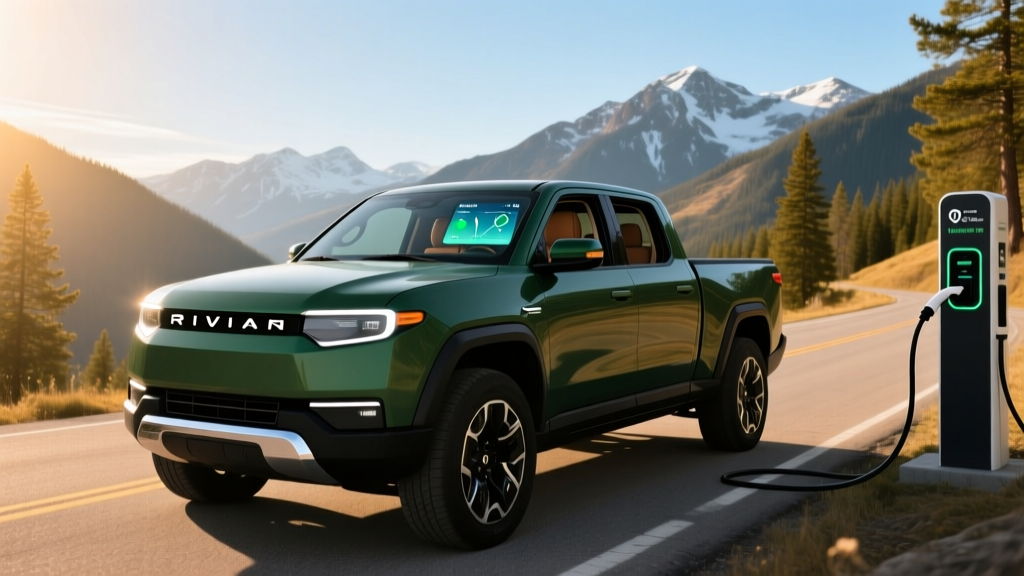
The 2026 Rivian R1T enters its third full model year with a significant software overhaul headlined by the Rivian AI Assistant — a context-aware voice and predictive system that manages cabin climate, battery preconditioning, and route optimization through natural conversation. Beneath the software upgrades, the R1T retains the Gen 2 drivetrain architecture introduced for 2025, with refined efficiency maps and a slightly larger usable battery buffer on the Max Pack. For buyers cross-shopping the Tesla Cybertruck, Ford F-150 Lightning, and Chevrolet Silverado EV, the R1T occupies a distinct niche: a premium adventure truck with genuine off-road chops and a tech stack that now rivals anything from the legacy luxury brands.
| Spec | Dual-Motor (Standard) | Dual-Motor (Max Pack) | Quad-Motor |
|---|---|---|---|
| EPA Range | 270 mi | 420 mi | 352 mi |
| Battery (usable) | 92 kWh (NMC) | 141 kWh (NMC) | 121 kWh (NMC) |
| Horsepower | 533 hp | 533 hp | 1,025 hp |
| 0–60 mph | 4.5 sec | 4.7 sec | 3.0 sec |
| Max DC Charge Rate | 200 kW | 220 kW | 220 kW |
| 10–80% DCFC Time | ~28 min | ~38 min | ~32 min |
| Level 2 Home Rate | 11.5 kW (~25 mi/hr) | 11.5 kW (~25 mi/hr) | 11.5 kW (~25 mi/hr) |
| MPGe (combined) | 73 MPGe | 70 MPGe | 68 MPGe |
| Towing Capacity | 11,000 lbs | 11,000 lbs | 11,000 lbs |
| Base MSRP | $69,900 | $83,900 | $99,900 |
EPA Range vs. Real-World: What You'll Actually Get
EPA Estimated Range: 270 mi (Standard) / 420 mi (Max Pack) / 352 mi (Quad-Motor)
Real-World Expectation: Highway driving at 70–75 mph typically yields 230–250 mi on the Standard Pack and 350–380 mi on the Max Pack. In cold weather (below 32°F), expect a 15–25% reduction depending on cabin heat usage and whether you precondition the battery. The R1T's heat pump helps mitigate winter losses compared to resistive heating systems, but the boxy aerodynamic profile means highway efficiency drops noticeably above 70 mph.
Rivian publishes EPA figures conservatively, and independent testing by outlets like fueleconomy.gov generally confirms the sticker numbers for mixed driving. However, the R1T's 5,000+ lb curb weight and truck-shaped body mean that sustained highway speeds and headwinds eat range faster than a sedan-based EV. Owners who primarily commute at lower speeds in mild climates often report matching or slightly exceeding EPA estimates, while those towing trailers should plan for 40–50% range reduction depending on load and terrain.
Charging Speed: DC Fast, Level 2, and the Charge Curve Reality
Rivian uses the NACS (Tesla-style) connector natively on all 2026 R1T models, granting access to Tesla Supercharger stalls alongside the Rivian Adventure Network. The Gen 2 architecture supports peak DC fast-charge rates up to 220 kW on Max and Quad-Motor packs, though — as with all EVs — that peak is sustained only briefly before the charge curve tapers.
| Charging Level | Power / Rate | Typical Speed | Notes |
|---|---|---|---|
| Level 1 (120V) | 1.4 kW | ~3 mi/hr | Emergency/trickle only |
| Level 2 (240V, 48A) | 11.5 kW | ~25 mi/hr | Full overnight charge in 8–14 hrs depending on pack |
| DC Fast (Standard Pack) | Peak 200 kW | 10–80% in ~28 min | Tapers significantly above 80% SoC |
| DC Fast (Max/Quad Pack) | Peak 220 kW | 10–80% in ~32–38 min | Larger packs take longer due to total kWh; curve tapers above 75% |
The charge curve is the detail most spec sheets obscure. On the Max Pack, you'll see 220 kW from roughly 10–30% SoC, then a gradual step-down to ~150 kW through 60%, and a further taper to under 80 kW past 75%. This means a 10–80% session takes about 38 minutes, but pushing from 80–100% can add another 30+ minutes. For road trips, the practical strategy is to charge to 80% and drive on — the Rivian AI Assistant now automatically suggests optimal charge-stop durations based on your destination, traffic, and elevation profile.
For home charging, a 48-amp Level 2 wall connector on a 60-amp circuit delivers the full 11.5 kW, refilling the Standard Pack in roughly 8 hours and the Max Pack in about 14 hours. Most owners find overnight charging more than adequate, though those with very long commutes or frequent towing may want to ensure they start each day at 100% SoC (safe to do regularly on the R1T's NMC chemistry with the built-in charge-limit settings).
The Rivian AI Assistant: What It Actually Does
The headline software feature for 2026 is the Rivian AI Assistant, which replaces the previous voice-command system with a context-aware, locally processed language model running on the R1T's upgraded NVIDIA DRIVE Orin platform. Unlike basic voice assistants that require rigid command syntax, the Rivian AI Assistant handles natural, conversational queries and can chain multiple actions together.
Practical capabilities include:
- Predictive preconditioning: The AI learns your departure schedule and preheats or precools both the cabin and battery pack, optimizing range and enabling peak DC charge rates when you arrive at a fast charger.
- Route-energy optimization: When you enter a destination, the AI factors in elevation changes, ambient temperature, wind direction, and your recent driving efficiency to provide a range forecast at arrival — often more accurate than the built-in navigation's default estimate.
- Natural-language vehicle control: Commands like "I'm cold, and can you find a charger near a coffee shop on the way to Denver" trigger simultaneous cabin temperature adjustment and route recalculation with a filtered POI stop.
- Maintenance and diagnostics narration: Instead of cryptic warning lights, the AI explains issues in plain language — e.g., "Your tire pressure on the rear left is 3 PSI below optimal, which may reduce range by about 2%. Would you like directions to the nearest service center?"
- Off-road coaching: In Gear Guard mode, the AI provides real-time guidance on approach/departure angles, water fording depth, and terrain-appropriate drive mode selection.
The system processes most queries on-device for latency and privacy, with cloud connectivity used only for real-time traffic and charger availability data. In practice, the AI Assistant is genuinely useful for trip planning and cabin management, though it occasionally misinterprets complex multi-clause requests — a limitation Rivian addresses through ongoing OTA updates.
Driver Assistance: Level 2, Not Self-Driving
SAE Automation Level: 2 — The Rivian Driver+ system combines adaptive cruise control and lane-centering into a hands-on-wheel highway assist. The driver must remain attentive and is monitored via a cabin camera. This is not autonomous driving. Rivian does not currently offer a hands-off or eyes-off system.
The Driver+ suite performs competently on well-marked highways, with smooth lane-keeping and natural-feeling adaptive cruise behavior. However, it struggles with faded lane markings, construction zones, and aggressive cut-ins — limitations common to all Level 2 systems on the market. The 2026 update adds slightly improved merge-assist logic and better recognition of temporary speed-limit signs, but buyers expecting Tesla FSD-style autonomy will be disappointed. For the R1T's adventure-oriented buyer base, this matters less than it would for a daily commuter sedan.
Interior, Cargo, and Practicality
The R1T's cabin seats five with generous rear legroom (38.2 inches) and a flat floor thanks to the skateboard platform. Front seats are heated and ventilated across all trims, with a panoramic glass roof standard. The 15.6-inch center touchscreen runs Rivian's custom OS, which is responsive and logically organized, though it lacks Apple CarPlay and Android Auto — a deliberate choice that frustrates some buyers.
Cargo versatility is where the R1T distinguishes itself from SUV-based EVs:
- Bed: 4.5 feet (54 inches) long, with a powered tonneau cover and integrated tie-downs.
- Gear Tunnel: 11 cu ft of enclosed, lockable storage running laterally behind the rear seats — accessible from both sides and the bed. This is the R1T's signature feature and ideal for skis, camping gear, or groceries.
- Frunk: 11 cu ft, drainable and lockable, with a 120V outlet for powering accessories.
- Total enclosed cargo: ~26 cu ft (frunk + gear tunnel) plus the open bed.
The camp kitchen accessory (a slide-out induction cooktop and sink combo that mounts in the gear tunnel) remains available and is a popular option for overlanding-oriented buyers. Towing capacity is rated at 11,000 lbs across all trims, though real-world towing range — as noted above — drops sharply with heavy loads.
Pricing, Trims, and Federal Tax Credit Eligibility
| Trim / Configuration | Base MSRP | As-Tested (Typical Options) | Est. After §30D Credit* |
|---|---|---|---|
| Dual-Motor Standard Pack | $69,900 | $74,500 | $62,400 – $74,500 |
| Dual-Motor Max Pack | $83,900 | $89,000 | $81,500 – $89,000 |
| Quad-Motor | $99,900 | $106,000 | $99,900 – $106,000 (no credit) |
*Federal tax credit eligibility depends on MSRP caps, buyer income limits, and battery component/critical mineral sourcing requirements under IRS §30D. The Dual-Motor Standard Pack qualifies for up to $7,500 if all sourcing and income thresholds are met; the Max Pack may qualify for a partial credit ($3,750) depending on the model-year sourcing determination. The Quad-Motor and higher-MSRP configurations exceed the §30D MSRP cap for trucks ($80,000), rendering them ineligible. The point-of-sale transfer option allows eligible buyers to apply the credit as a down-payment reduction at the dealer. Always verify current eligibility at IRS.gov and consult a tax professional.
The R1T's pricing positions it firmly in the premium truck segment. The Dual-Motor Standard Pack at $69,900 is the most accessible entry point and the trim most likely to qualify for the full federal credit, making it competitive with a well-optioned Ford F-150 Lightning Lariat. The Max Pack at $83,900 pushes past the MSRP cap for the tax credit, so buyers choosing maximum range should factor in the full sticker price. The Quad-Motor at $99,900 is a performance halo — 1,025 hp and a 3.0-second 0–60 time are supercar territory in a 7,000-lb truck, but the price and credit ineligibility limit its audience.
Battery Chemistry, Warranty, and Long-Term Ownership
All 2026 R1T packs use NMC (nickel manganese cobalt) lithium-ion chemistry supplied primarily by Samsung SDI. NMC offers higher energy density than LFP (lithium iron phosphate), which is why Rivian can pack 141 kWh usable into the Max Pack without making the vehicle unmanageably heavy. The trade-off is that NMC degrades slightly faster than LFP over thousands of cycles and is more sensitive to sustained high-SoC storage — though Rivian's thermal management system and software buffers mitigate this in practice.
Rivian's warranty coverage:
- Battery: 8 years / 175,000 miles (retains at least 70% of original capacity)
- Powertrain: 8 years / 175,000 miles
- Bumper-to-bumper: 5 years / 60,000 miles
The 175,000-mile battery warranty is among the most generous in the segment, exceeding the federal minimum of 8 years/100,000 miles. Rivian also includes 24/7 roadside assistance for the duration of the bumper-to-bumper warranty. Long-term degradation data from 2022–2024 R1T owners suggests approximately 5–7% capacity loss over the first 60,000 miles, which is within expectations for NMC packs with active thermal management. Replacement cost for a Max Pack battery, should it be needed out of warranty, is estimated at $18,000–$24,000 based on current cell pricing — though this figure is expected to decline as battery costs continue to fall.
Who Should Buy the 2026 Rivian R1T?
Choose the R1T if:
- You want a genuine multi-use truck that can tow, off-road, and serve as a daily driver without compromise.
- You value the gear tunnel and frunk for adventure gear, tools, or secure storage.
- You want access to the Rivian Adventure Network and NACS Supercharger compatibility.
- You appreciate OTA software updates that add meaningful features (like the AI Assistant) post-purchase.
Look elsewhere if:
- Your budget is under $65,000 — consider the Ford F-150 Lightning or Chevrolet Silverado EV at lower trims.
- You need a full-size 6.5-foot bed for large cargo — the R1T's 4.5-foot bed is midsize.
- You rely on Apple CarPlay or Android Auto for infotainment.
- You want a hands-off autonomous driving system — no Level 3+ system is available on the R1T.
Pros
- Class-leading cargo versatility (gear tunnel, frunk, integrated bed features)
- Strong real-world range, especially on the Max Pack (350+ mi achievable)
- NACS native + Supercharger access for road-trip charging confidence
- Excellent off-road capability with quad-motor torque vectoring
- Generous 8-year/175,000-mile battery warranty
- Rivian AI Assistant adds genuine daily utility, not gimmick
Cons
- Premium pricing — Max Pack and Quad-Motor exceed $80k, losing tax credit eligibility
- No Apple CarPlay / Android Auto
- 4.5-foot bed is shorter than full-size truck competitors
- Driver+ is competent but unremarkable vs. GM Super Cruise or Ford BlueCruise
- Towing range drops sharply — plan carefully with heavy loads
- Service center network still expanding in rural areas
Frequently Asked Questions
What is the real-world range of the 2026 Rivian R1T?
On the Standard Pack (EPA 270 mi), expect 230–250 mi on the highway and up to 280 mi in city/suburban driving. The Max Pack (EPA 420 mi) delivers 350–380 mi on the highway in mild weather. Cold temperatures below freezing reduce these figures by 15–25%, and towing can cut range nearly in half.
How fast does the R1T charge at home and on the road?
At home on a 240V Level 2 charger (11.5 kW), you'll add about 25 miles of range per hour — a full charge takes 8–14 hours depending on pack size. On DC fast chargers, the Standard Pack peaks at 200 kW (10–80% in ~28 minutes), while Max and Quad-Motor packs peak at 220 kW (10–80% in ~32–38 minutes). Charging slows significantly above 80% SoC.
Does the 2026 Rivian R1T qualify for the $7,500 federal EV tax credit?
It depends on the trim and your tax situation. The Dual-Motor Standard Pack ($69,900 MSRP) is below the $80,000 truck MSRP cap and may qualify for the full $7,500 credit if you meet IRS income limits (AGI under $150k single / $300k joint) and the battery meets critical-mineral and component sourcing requirements. The Max Pack and Quad-Motor exceed the MSRP cap and are ineligible. Always verify at IRS.gov and consult a tax professional.
Is the Rivian AI Assistant a subscription service?
As of the 2026 model year, the Rivian AI Assistant is included as a standard feature with no separate subscription fee. Rivian has indicated that core vehicle-control and trip-planning AI features will remain part of the base software, though future premium AI services (such as advanced route concierge or off-road trail guides) may be offered as optional subscriptions.
How does the R1T compare to the Tesla Cybertruck and Ford F-150 Lightning?
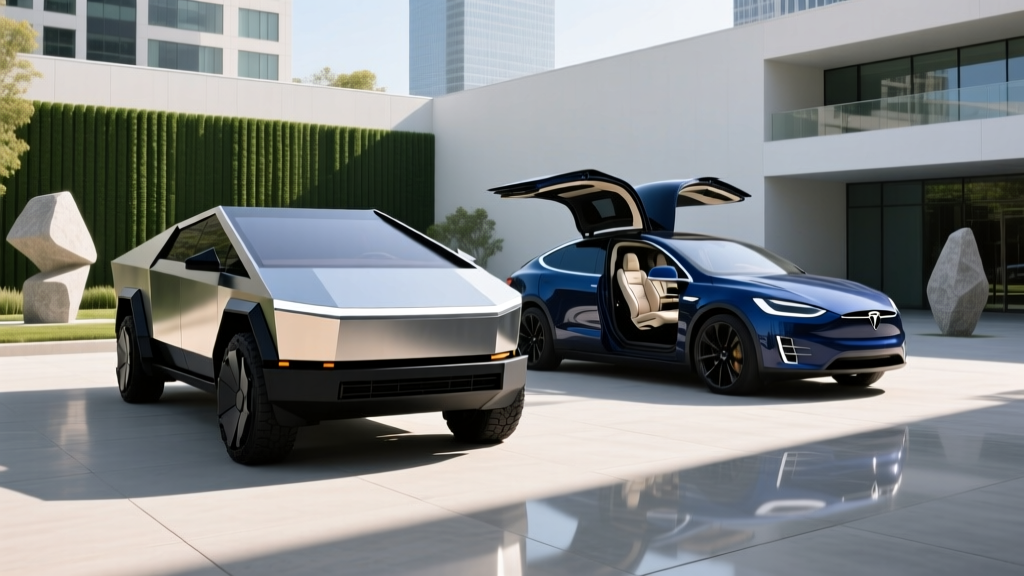
The R1T is more premium and adventure-oriented than the F-150 Lightning, with superior off-road capability and cargo versatility (gear tunnel), but at a higher base price. Compared to the Cybertruck, the R1T offers a more conventional (and some would say more practical) truck bed, better interior materials, and a more mature service network — though the Cybertruck undercuts it on price for comparable range. The Lightning remains the value leader for buyers who need a full-size bed and don't prioritize off-road performance.
Can the R1T tow a travel trailer or boat?
Yes — the R1T is rated to tow up to 11,000 lbs across all trims. However, towing a 5,000–7,000 lb trailer will reduce range by approximately 40–50%. Plan charging stops accordingly, and use the Rivian AI Assistant's towing mode, which adjusts range estimates and suggests charger stops based on trailer weight and route elevation.
What battery chemistry does the R1T use, and how long will it last?
The R1T uses NMC (nickel manganese cobalt) lithium-ion cells, chosen for their high energy density. Early 2022–2024 R1T data shows approximately 5–7% capacity loss over the first 60,000 miles. Rivian warranties the battery for 8 years or 175,000 miles (whichever comes first) with a minimum 70% capacity retention guarantee. With proper care (avoiding prolonged storage at 100% SoC, using preconditioning for fast charging), most owners should see well over 150,000 miles before approaching the warranty threshold.
Sources: EPA / fueleconomy.gov, IRS §30D Clean Vehicle Credit, Rivian official specifications.