Why Rivian R1S Weight Matters for Buyers
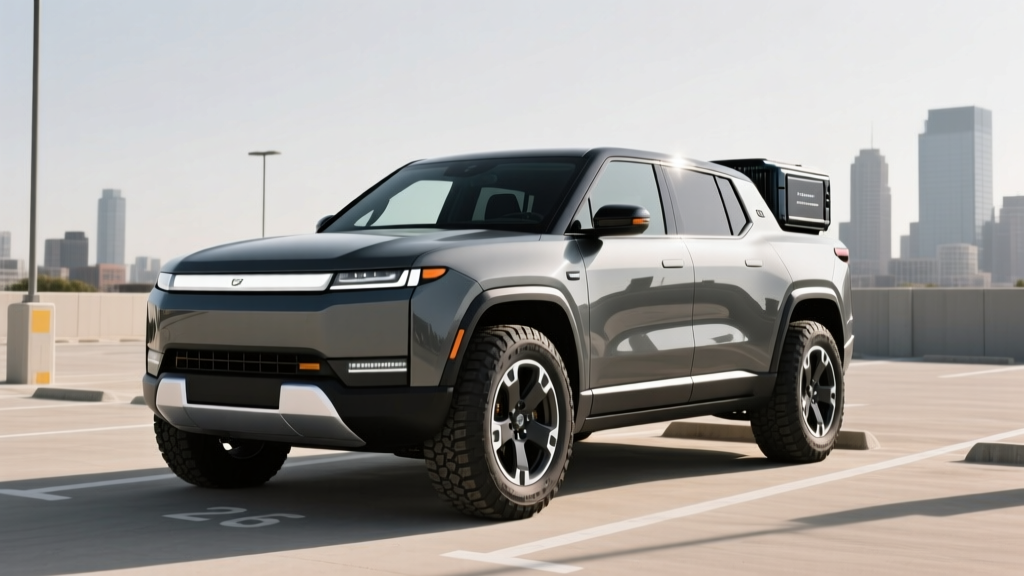
The Rivian R1S is a three-row electric SUV built on a skateboard platform that houses a massive battery pack low in the chassis. That architecture gives it a low center of gravity, but it also pushes the curb weight well past conventional gas SUVs. Understanding the Rivian R1S weight — and how it affects range, efficiency, tire wear, and towing — is critical before signing a purchase agreement for a vehicle that starts near $80,000.
For 2026, Rivian offers the R1S in Dual-Motor, Performance Dual-Motor, and Tri-Motor configurations, each with different battery pack options. The lightest R1S tips the scales at roughly 6,890 pounds, while the top-tier Tri-Motor with the Max Pack climbs to approximately 7,150 pounds. That's 1,500–2,000 pounds heavier than a similarly sized gasoline SUV like the Toyota Grand Highlander, and it has direct consequences for energy consumption, braking distances, and tire replacement costs.
2026 Rivian R1S: Full Spec Sheet
| Specification | Dual-Motor (Standard) | Dual-Motor (Max Pack) | Tri-Motor (Max Pack) |
|---|---|---|---|
| Curb Weight | ~6,890 lbs | ~7,100 lbs | ~7,150 lbs |
| Battery Capacity (Usable) | 92 kWh (Standard) | 141 kWh (Max) | 141 kWh (Max) |
| Battery Chemistry | NMC (nickel manganese cobalt) | NMC | NMC |
| EPA Range | 270 mi | 410 mi | 390 mi |
| Efficiency (kWh/100 mi) | ~48 | ~49 | ~52 |
| MPGe (Combined) | 70 MPGe | 69 MPGe | 65 MPGe |
| Horsepower | 533 hp | 533 hp | 850 hp |
| 0–60 mph | 4.5 sec | 4.5 sec | 2.9 sec |
| Drivetrain | AWD (dual-motor) | AWD (dual-motor) | AWD (tri-motor) |
| Max DC Fast Charge | 200 kW | 200 kW | 220 kW |
| 10–80% DC Charge Time | ~28 min | ~42 min | ~40 min |
| Level 2 Home Charge Rate | 11.5 kW (~25 mi/hr) | 11.5 kW (~25 mi/hr) | 11.5 kW (~25 mi/hr) |
| Towing Capacity | 7,700 lbs | 7,700 lbs | 7,700 lbs |
| Base MSRP | $79,900 | $89,900 | $105,900 |
Source: Rivian official specifications and EPA fueleconomy.gov. Figures reflect 2026 model-year data and may vary by configuration.
Real-World Range vs. EPA Sticker
The R1S's weight is a primary reason its efficiency lags behind lighter EVs. At roughly 48–52 kWh per 100 miles, the R1S consumes more energy per mile than a Tesla Model X (around 40 kWh/100 mi) or a Hyundai Ioniq 5 (around 30 kWh/100 mi). Heavier vehicles require more energy to accelerate and maintain speed, and the R1S's boxy SUV profile adds aerodynamic drag at highway speeds — a factor that compounds with weight on long road trips.
For daily commuting under 60 miles round-trip, even the Standard Pack provides ample buffer. But buyers planning regular 300+ mile road trips should strongly consider the Max Pack, despite the added weight and cost, to reduce charging stops.
Charging Speed: DC Fast and Home Level 2
Rivian upgraded the R1S's charging architecture for the 2025+ generation, moving to a more efficient drive unit design. However, peak DC fast-charge rates still trail competitors like the Hyundai Ioniq 5 or Kia EV9, which can sustain 230–240 kW peaks.
| Charging Method | Rate / Speed | Notes |
|---|---|---|
| DC Fast Charge (Peak) | 200–220 kW | Tri-Motor peaks at 220 kW; Dual-Motor at 200 kW |
| DC 10–80% Time | 28–42 minutes | Max Pack takes longer due to larger battery |
| Level 2 (Home, 48A) | 11.5 kW (~25 mi/hr) | Full Standard Pack overnight; Max Pack ~12 hours |
| Level 1 (120V) | ~1.4 kW (~3 mi/hr) | Emergency/trickle only |
One practical note on charging curves: the R1S sustains strong charge rates up to roughly 60% state of charge, then tapers progressively. On a road trip, charging from 10–60% may take only 18–20 minutes, while 60–80% adds another 10–15 minutes. Plan stops to charge to 80% and move on rather than waiting for a full battery.
At home, the R1S accepts up to 11.5 kW on a Level 2 wall connector (48 amps on a 60-amp circuit). The Standard Pack replenishes fully in about 9 hours, while the Max Pack requires roughly 12–13 hours from near-empty. Most owners charge overnight and rarely deplete the full pack, so this is manageable for daily use. Rivian's Rivian Waypoints charging network is expanding, and the vehicle also supports Tesla Supercharger access via the NACS adapter included with newer models.
How Weight Impacts Efficiency, Tires, and Towing
The Rivian R1S weight of 6,890–7,150 pounds isn't just a number on a spec sheet — it has tangible ownership consequences:
- Tire wear: Heavier EVs wear through tires faster than gas vehicles. Expect 25,000–35,000 miles from the factory all-season tires, compared to 45,000–60,000 on a lighter crossover. Replacement sets of 275/50R21 or 275/65R20 tires run $1,200–$1,800.
- Brake life: Regenerative braking offsets some wear, but the R1S's mass means friction brakes still work harder during emergency stops or mountain descents. Brake pad life is generally good (60,000+ miles) thanks to regen, but rotor replacement is costlier on a vehicle this heavy.
- Towing range loss: The R1S is rated to tow 7,700 pounds — impressive for an EV. But towing a 5,000-pound trailer can cut range by 40–50%, dropping the Max Pack from 410 to roughly 200–240 miles. Plan charging stops accordingly and use the built-in tow mode for optimized thermal management.
- Efficiency penalty: The Tri-Motor's additional weight and third motor reduce efficiency to around 52 kWh/100 mi, costing roughly $0.50–$0.65 more per 100 miles to charge compared to the Dual-Motor at national average electricity rates.
Pricing, Trims, and Federal Tax Credit Eligibility
The 2026 Rivian R1S starts at $79,900 for the Dual-Motor Standard Pack and climbs to $105,900 for the Tri-Motor Max Pack. Adventure and Ascend trims add premium interior materials, advanced driver-assist features, and unique wheel options, pushing as-tested prices to $95,000–$115,000.
| Trim / Config | Base MSRP | §30D Credit Eligibility | Effective Price (est.) |
|---|---|---|---|
| Dual-Motor Standard | $79,900 | Eligible (under $80K SUV cap) | ~$72,400 |
| Dual-Motor Max Pack | $89,900 | Not eligible (exceeds $80K SUV cap) | $89,900 |
| Tri-Motor Max Pack | $105,900 | Not eligible (exceeds $80K SUV cap) | $105,900 |
Key §30D tax credit rules for 2026 (per IRS.gov):
- The new clean vehicle credit offers up to $7,500, split into $3,750 for critical-mineral sourcing and $3,750 for battery-component sourcing.
- SUVs must have an MSRP at or below $80,000 to qualify. Only the base Dual-Motor Standard Pack R1S clears this threshold.
- Buyer income caps apply: $300,000 (joint), $225,000 (head of household), $150,000 (single) based on modified AGI.
- The credit can be transferred to the dealer at point of sale, reducing the purchase price directly — but only if the vehicle meets all sourcing and assembly requirements.
- Battery sourcing requirements continue to tighten annually. Always verify current-year eligibility with your tax professional before relying on the credit.
Interior, Cargo, and Technology
The R1S seats up to seven passengers across three rows, though the third row is best suited for children or occasional adult use on short trips. Cargo volume measures approximately 10.6 cubic feet behind the third row, expanding to 46.7 cubic feet with the third row folded, and up to 92.2 cubic feet with both rear rows down. The front trunk (frunk) adds 11.1 cubic feet of sealed, weatherproof storage — a significant advantage over gas SUVs.
Legroom is generous in the first two rows: 41.4 inches up front and 38.9 inches in the second row. Third-row legroom is tighter at 30.4 inches, which is typical for the segment.
The 15.6-inch center touchscreen runs Rivian's proprietary infotainment system, which has improved substantially through over-the-air updates since launch. Wireless Apple CarPlay and Android Auto are standard. The digital driver display, head-up display, and Rivian's Driver+ system (a Level 2 SAE driver-assist with hands-on-wheel monitoring) round out the tech suite.
Warranty, Ownership Costs, and Reliability
Rivian backs the R1S with a competitive warranty package:
- Vehicle limited warranty: 5 years / 60,000 miles
- Battery and drive unit warranty: 8 years / 175,000 miles (retains at least 70% capacity)
- Corrosion warranty: 12 years / unlimited miles
The battery warranty threshold of 70% capacity retention at 175,000 miles is generous compared to the industry-standard 8-year/100,000-mile coverage. For the NMC chemistry used in the R1S, real-world degradation data from early 2022–2024 models shows approximately 5–8% capacity loss over the first 60,000 miles, which is within normal parameters for liquid-cooled NMC packs.
Insurance costs tend to run higher than average for the R1S, typically $2,500–$3,800 annually depending on state, driving record, and coverage level. This reflects the vehicle's high repair costs (aluminum and carbon-fiber body panels, sensor recalibration) and premium MSRP.
Pros, Cons, and Who Should Buy
Pros
- Up to 410 miles EPA range (Max Pack)
- Genuine off-road capability with air suspension
- 7,700-lb towing capacity
- Spacious frunk + flexible three-row interior
- Strong OTA update cadence improving the vehicle over time
- 8-yr/175,000-mi battery warranty
Cons
- Heavy: 6,890–7,150 lbs impacts efficiency and tire wear
- Only base trim qualifies for §30D tax credit
- DC fast charge peaks at 200–220 kW (trails Hyundai/Kia 800V architecture)
- Max Pack requires 12+ hours on Level 2 home charging
- Third-row space tight for adults on long trips
- Insurance premiums above segment average
Decision Framework
Choose the R1S if: You need a three-row electric SUV with genuine off-road and towing capability, you can charge at home, and your budget supports an $80K–$110K vehicle. It's ideal for active families who tow boats or trailers on weekends and take road trips to national parks.
Look elsewhere if: Maximum efficiency and low operating cost are your priorities (consider the Tesla Model X or a lighter two-row EV), you cannot install a Level 2 home charger, or you need a usable third row for daily adult passengers (the Kia EV9 offers more third-row space at a lower price).
Frequently Asked Questions
What is the real-world range of the Rivian R1S?
The EPA rates the R1S Dual-Motor Max Pack at 410 miles and the Standard Pack at 270 miles. In real-world highway driving at 70–75 mph, expect roughly 330–350 miles from the Max Pack and 220–240 miles from the Standard Pack. Cold weather (below 30°F) reduces range by an additional 15–20%.
How fast does the R1S charge at home and on the road?
On a DC fast charger, the R1S peaks at 200–220 kW and charges from 10–80% in approximately 28–42 minutes depending on battery size. At home on Level 2 (11.5 kW), the Standard Pack fills overnight in about 9 hours, while the Max Pack takes 12–13 hours.
How much does the R1S cost after tax credits?
Only the base Dual-Motor Standard Pack at $79,900 qualifies for the up-to-$7,500 federal §30D credit, potentially bringing the effective price to around $72,400 — subject to income caps, battery-sourcing rules, and MSRP limits. All other trims exceed the $80,000 SUV MSRP cap and do not qualify for the new-vehicle credit.
Is the Rivian R1S worth buying vs. the Tesla Model X or Kia EV9?
The R1S wins on off-road capability, towing capacity (7,700 lbs vs. the EV9's 5,000 lbs), and adventure-oriented features. The Tesla Model X offers faster charging and access to the Supercharger network natively. The Kia EV9 is significantly less expensive ($54,900–$73,900), has a more usable third row, and charges faster, but can't match the R1S on range or towing.
Does the Rivian R1S qualify for the federal EV tax credit?
Only the base Dual-Motor Standard configuration at $79,900 MSRP is potentially eligible, as it falls under the $80,000 SUV cap. Buyers must also meet IRS income limits and the vehicle must satisfy battery critical-mineral and component sourcing requirements, which tighten annually. Consult a tax professional and verify on IRS.gov before purchasing.
How does the R1S weight affect long-term ownership?
At 6,890–7,150 pounds, the R1S wears tires faster than lighter vehicles (expect 25,000–35,000 miles per set), consumes more energy per mile (48–52 kWh/100 mi), and sees significant range reduction when towing. However, regenerative braking extends brake pad life, and the low center of gravity from the skateboard battery pack contributes to confident handling despite the mass.