Rivian R1S South Coast Theater Edition: The Verdict
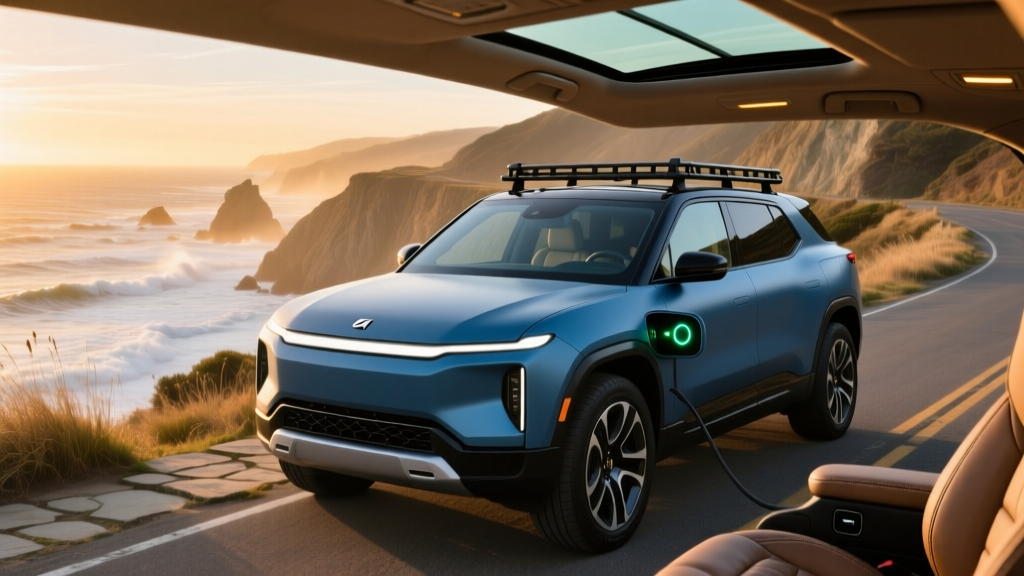
The 2026 Rivian R1S South Coast Edition with the available theater-style second-row captain's chairs represents the brand's push toward premium family hauling. Built on Rivian's Gen 2 platform, this three-row electric SUV pairs a 149 kWh NMC lithium-ion battery with a quad-motor or dual-motor powertrain, delivering up to 410 miles of EPA-estimated range in Max Pack configuration. The "South Coast" trim borrows its name from California's scenic coastline, bundling coastal-inspired interior materials, a premium audio system, and the theater seating package that prioritizes second-row comfort over maximum passenger capacity.
But with a starting price pushing past $100,000 in most configurations, the real question is whether the R1S South Coast Theater Edition justifies its premium over the already-excellent standard R1S — and over competitors like the Tesla Model X, BMW iX, and the Kia EV9 three-row. Here's the data-driven breakdown.
Range, Battery, and Real-World Efficiency
The R1S is available with three battery pack sizes for 2026. The South Coast Edition is typically paired with either the Large Pack or Max Pack:
| Specification | Large Pack | Max Pack |
|---|---|---|
| Usable Battery Capacity | 128 kWh (NMC) | 149 kWh (NMC) |
| EPA Estimated Range | 352 miles | 410 miles |
| MPGe (Combined) | 73 MPGe | 70 MPGe |
| kWh per 100 Miles | 46 kWh | 48 kWh |
| Chemistry | NMC (Nickel Manganese Cobalt) | NMC |
Rivian uses NMC chemistry across its packs rather than LFP (lithium iron phosphate). NMC offers higher energy density — essential for achieving 400+ miles in a heavy SUV — but comes with a lower cycle-life ceiling than LFP. Rivian recommends daily charging to 85–90% for NMC longevity, reserving 100% for road trips.
Charging Speed: DC Fast Charge and Home Level 2
Charging a 149 kWh battery is a time commitment. Here's what the R1S South Coast supports:
| Charging Level | Power / Rate | Time / Miles Added |
|---|---|---|
| Level 1 (120V household) | ~1.4 kW | ~3–4 miles per hour |
| Level 2 (240V home, 48A) | 11.5 kW | ~25 miles per hour; full charge ~13 hrs |
| Level 2 (240V home, 60A circuit) | ~14 kW (vehicle-limited) | ~30 miles per hour |
| DC Fast Charge (peak) | 220 kW peak (CCS/NACS adapter) | 10–80% in ~34 minutes (Max Pack) |
| DC Fast Charge (sustained avg) | ~150 kW average 10–80% | Adds ~180 miles in 30 min |
The R1S Gen 2 architecture supports up to 220 kW peak DC fast charging, but like all large-battery EVs, the charging curve tapers significantly above 80% state of charge. The Max Pack's 149 kWh capacity means even at a sustained 150 kW average, you're adding roughly 3 miles of range per minute during the bulk-charging phase. For context, charging from 10–80% on the Large Pack (128 kWh) takes approximately 28 minutes due to the smaller battery volume.
Home charging reality: A 60-amp dedicated circuit with a 48-amp Level 2 charger (such as the Rivian Wall Charger or ChargePoint Home Flex) will add roughly 25–30 miles per hour. Overnight (10 hours) gets you 250–300 miles — sufficient for most daily use. Budget $800–$2,200 for professional Level 2 installation depending on panel proximity and whether a 200-amp service upgrade is needed.
Performance and Drivetrain
The South Coast Edition is available with Rivian's Dual-Motor AWD or Quad-Motor AWD powertrain:
| Metric | Dual-Motor AWD | Quad-Motor AWD |
|---|---|---|
| Horsepower | 533 hp | 1,025 hp |
| Torque | 610 lb-ft | 1,198 lb-ft |
| 0–60 mph | 4.5 seconds | 3.0 seconds |
| Top Speed | 125 mph | 130 mph |
| Drivetrain | Dual-motor AWD | Quad-motor (independent per wheel) |
| Max Towing Capacity | 7,700 lbs | 7,700 lbs |
The Quad-Motor variant delivers supercar-rivaling acceleration in a 7,100-lb three-row SUV. Each wheel gets its own motor and torque-vectoring control, enabling Rivian's Tank Turn feature (360-degree rotation in place, off-road only) and precise traction management. The Dual-Motor is the pragmatic pick: still quick, slightly lighter, and marginally more efficient.
Ride quality benefits from Rivian's adaptive air suspension, which offers 6.5 inches of adjustability — from a low "Park" mode for easier entry to 14.9 inches of ground clearance in Off-Road mode. The South Coast Edition tunes the suspension for comfort-first compliance, trading some of the R1T's sportier edge for family-friendly isolation.
Interior, Cargo, and the Theater Seating Package
The South Coast Theater Edition's headline feature is its second-row configuration. Instead of a three-across bench, you get two individual captain's chairs with powered recline, heating, ventilation, and fold-out tray tables. A rear-seat entertainment system with dual 12.8-inch screens and wireless headphone support transforms the second row into what Rivian calls a "theater experience."
Passenger and cargo dimensions:
| Measurement | Value |
|---|---|
| First-Row Legroom | 41.3 inches |
| Second-Row Legroom (Theater Chairs) | 38.2 inches |
| Third-Row Legroom | 30.4 inches |
| Cargo Behind Third Row | 10.6 cu ft |
| Cargo Behind Second Row (3rd row folded) | 46.7 cu ft |
| Max Cargo (2nd & 3rd rows folded) | 88.2 cu ft |
| Front Trunk (Frunk) | 11.1 cu ft |
The third row is best suited for children or short trips — the 30.4 inches of legroom is tight for adults on long drives. Cargo space behind the third row (10.6 cu ft) handles groceries but not much luggage. Fold the third row and the 46.7 cu ft cargo area becomes genuinely practical for family road trips. The 11.1 cu ft frunk adds secure, weatherproof storage for charging cables or a soft cooler.
The South Coast interior uses a blend of vegan leather and sustainably sourced wood trim, with a color palette inspired by Pacific coastal tones (driftwood gray, ocean mist). The 15.6-inch central touchscreen runs Rivian's proprietary OS, which supports over-the-air updates, integrated trip planning with charging stops, and a built-in Wi-Fi hotspot. Apple CarPlay and Android Auto are not natively supported — Rivian uses its own interface, which is polished but a dealbreaker for some buyers.
Pricing, Trims, and Federal Tax Credit Eligibility
The R1S South Coast Theater Edition sits near the top of Rivian's lineup:
| Configuration | Starting MSRP | Estimated After §30D Credit |
|---|---|---|
| R1S Dual-Motor, Large Pack, South Coast | $99,900 | $92,400 (if eligible) |
| R1S Dual-Motor, Max Pack, South Coast | $108,900 | $101,400 (if eligible) |
| R1S Quad-Motor, Max Pack, South Coast Theater | $118,500 | $111,000 (if eligible) |
Federal tax credit (§30D) eligibility — critical caveats: The R1S qualifies as an SUV under IRS vehicle-classification rules, meaning the MSRP cap is $80,000 for the base credit. However, most South Coast configurations exceed this cap. Buyers must also meet adjusted gross income limits ($300,000 joint / $150,000 single) and the vehicle must satisfy battery critical-mineral and component sourcing thresholds that tighten annually. As of 2026, the point-of-sale transfer option allows eligible buyers to apply the credit as a down-payment reduction at the dealer. Always verify current eligibility at IRS.gov before committing — sourcing rules change and can disqualify a previously eligible model mid-year.
Driver Assistance and Safety Technology
The R1S comes standard with Rivian's Driver+ system, which includes adaptive cruise control, lane-centering assist, automatic emergency braking, blind-spot monitoring, and rear cross-traffic alert. This is an SAE Level 2 driver-assistance system — meaning the driver must remain fully engaged with hands on the wheel and eyes on the road at all times.
Rivian has announced a next-generation Driver+ with enhanced highway lane-change capability and improved merge-assist, available via OTA update on Gen 2 hardware. The system uses 11 cameras, 5 radar units, and ultrasonic sensors. In our experience, it's competent for highway cruising but not at the level of GM's Super Cruise or Ford's BlueCruise for hands-off-capable highway driving — Rivian's system currently requires hands-on-wheel verification.
Safety ratings: The R1S earned a 5-Star Overall rating from NHTSA and was named an IIHS Top Safety Pick+ for the prior model year, with updated testing expected for the 2026 refresh.
Warranty and Ownership Costs
| Coverage | Term |
|---|---|
| Basic Vehicle Warranty | 5 years / 60,000 miles |
| Battery & Powertrain | 8 years / 175,000 miles |
| Battery Capacity Retention | ≥70% over 8 yr / 175,000 mi |
| Roadside Assistance | 5 years / 60,000 miles |
| OTA Updates | Included for vehicle lifetime |
Rivian's 8-year/175,000-mile battery warranty is competitive with the industry standard (most competitors offer 8/100,000). The 70% capacity-retention threshold means Rivian will repair or replace the battery if it degrades below 70% of original capacity within the warranty period. For NMC chemistry, real-world degradation data from early R1T/R1S owners suggests approximately 5–8% capacity loss over the first 100,000 miles — well within the warranty buffer.
5-Year Estimated Cost of Ownership (Dual-Motor, Large Pack):
| Category | Estimated 5-Year Cost |
|---|---|
| Purchase Price (after credit) | $92,400–$99,900 |
| Electricity (home charging, 15k mi/yr) | $4,500–$6,000 |
| Insurance (national avg for R1S) | $14,000–$18,000 |
| Maintenance (tires, cabin filter, wipers) | $2,000–$3,500 |
| Depreciation (est. 45–55% over 5 yr) | $45,000–$55,000 |
Insurance is a notable pain point: the R1S's high repair costs, aluminum body panels, and sensor-dense exterior push premiums 30–50% above comparable ICE SUVs. Get quotes before ordering.
Pros, Cons, and Who Should Buy
Pros
- Class-leading 410-mile Max Pack range
- Quad-Motor performance (3.0-sec 0–60) is extraordinary for a 3-row SUV
- Theater seating package offers genuine premium second-row experience
- Air suspension with 14.9" ground clearance enables real off-road capability
- 8-yr/175,000-mi battery warranty exceeds most competitors
- 11.1 cu ft frunk adds practical storage
- 7,700-lb towing capacity
Cons
- Most South Coast trims exceed $80k MSRP cap — may not qualify for §30D credit
- No Apple CarPlay or Android Auto
- Third row is cramped for adults (30.4" legroom)
- 220 kW peak DC charge rate trails Hyundai/Kia's 350 kW capability
- Insurance premiums are steep ($2,800–$3,600/yr)
- Heavy: 7,100+ lbs impacts tire wear and efficiency
- Driver+ requires hands-on — no hands-off highway mode yet
Who This EV Suits Best
Buy the R1S South Coast Theater Edition if: You need a three-row family SUV with genuine off-road chops, want the longest possible electric range for road trips, value second-row passenger comfort, and can absorb the $100K+ price tag without relying on the federal tax credit.
Look elsewhere if: You need affordable daily transportation (consider the Kia EV9 at $60K), you require hands-off highway driving (GM Super Cruise), or you want Apple CarPlay integration.
FAQ: Rivian R1S South Coast Theater Edition
What is the real-world range of the Rivian R1S South Coast?
The EPA rates the Max Pack at 410 miles and the Large Pack at 352 miles. Real-world highway driving at 75 mph yields approximately 330–360 miles (Max) and 280–310 miles (Large). In sub-freezing temperatures, expect a 20–30% reduction, bringing the Max Pack to roughly 280–320 miles in winter conditions.
How fast does the R1S charge at home and on DC fast chargers?
On a home Level 2 charger (240V, 48A), the R1S adds about 25 miles per hour, fully charging overnight in 12–14 hours. On DC fast chargers, it peaks at 220 kW, with a 10–80% charge taking approximately 34 minutes for the Max Pack and 28 minutes for the Large Pack. Expect the charge rate to taper significantly above 80% SoC.
Does the Rivian R1S South Coast qualify for the $7,500 federal EV tax credit?
It depends. The §30D credit has an $80,000 MSRP cap for SUVs. Most South Coast configurations exceed this threshold. Income limits ($300K joint / $150K single) and battery-sourcing requirements also apply. Check current eligibility at IRS.gov and confirm with your Rivian advisor before ordering.
Is the R1S South Coast Theater Edition worth it vs. the Kia EV9 or Tesla Model X?
The Kia EV9 starts around $60,000 and offers competitive three-row space but only 304 miles of range and no off-road capability. The Tesla Model X offers more range (348 mi) and access to Superchargers natively, but its interior quality and third-row comfort lag behind the R1S. If budget allows and you value range, build quality, and adventure capability, the R1S is the stronger vehicle — but at nearly double the EV9's price.
What are the biggest drawbacks of the R1S South Coast Theater?
Price is the primary barrier — most configurations exceed $100K and may not qualify for federal incentives. The lack of Apple CarPlay/Android Auto frustrates some users. The third row is cramped for adults. Insurance costs are high. And the 220 kW peak charge rate, while adequate, isn't class-leading.
Can the R1S South Coast tow, and how does towing affect range?
Yes — the R1S is rated for 7,700 lbs of towing capacity. However, towing a trailer near max capacity can reduce range by 40–50%, meaning a 410-mile Max Pack drops to roughly 200–250 miles while towing. Plan charging stops accordingly and use Rivian's built-in trip planner, which factors in towing load.