Quick Verdict: Rivian's Dual-Motor SUV and Truck in 2026
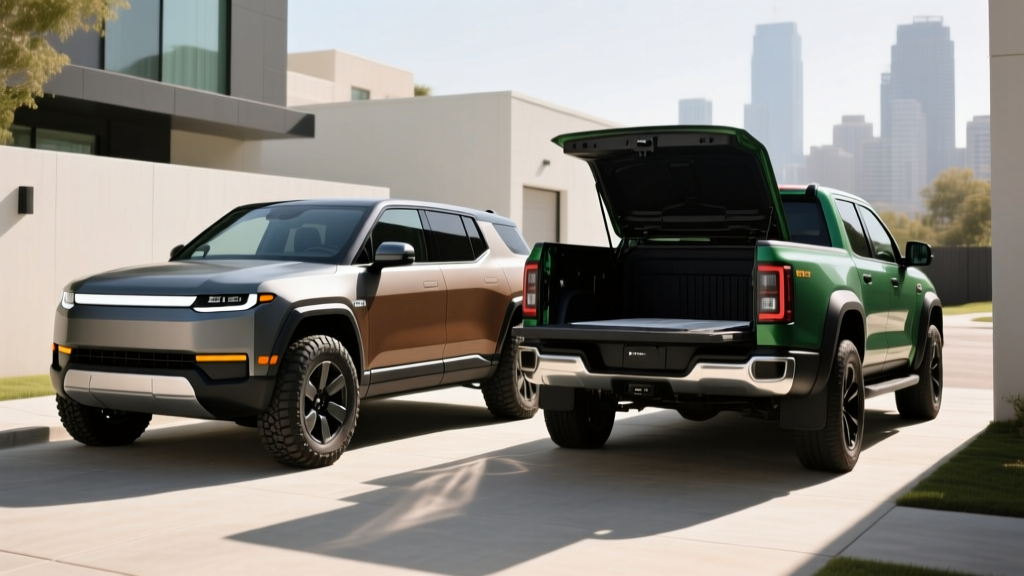
Rivian's second-generation R1S (SUV) and R1T (truck) remain the benchmark for buyers who want genuine off-road capability, three-row utility, and fast DC charging in a single electric package. For 2026, the Dual-Motor Large battery configuration delivers up to an EPA-estimated 391 miles in the R1S and 352 miles in the R1T, while the Tri-Motor performance variants push 850 horsepower and sub-3-second 0-60 times. Pricing starts at $75,900 for the R1S Dual-Motor Standard and $69,900 for the R1T Dual-Motor Standard before any incentives.
If you've been plugging numbers into a Rivian lease calculator, you'll find that leasing can meaningfully reduce monthly payments compared to financing — especially because leased EVs may qualify for a $7,500 lease credit passed through the dealer under IRS §30D commercial clean vehicle provisions, even when the buyer's income or battery-sourcing rules would disqualify a purchase. Below, we break down every spec, real-world range figure, and cost variable you need before configuring your own Rivian.
Rivian R1S and R1T: Full Spec Breakdown
| Spec | R1S Dual-Motor Large | R1T Dual-Motor Large | R1S Tri-Motor Max | R1T Tri-Motor Max |
|---|---|---|---|---|
| EPA Range | 391 mi | 352 mi | 321 mi | 328 mi |
| Battery (usable) | ~106 kWh (NMC) | ~106 kWh (NMC) | ~141 kWh (NMC) | ~141 kWh (NMC) |
| Horsepower | 533 hp | 533 hp | 850 hp | 850 hp |
| 0-60 mph | 4.5 sec | 4.5 sec | 2.9 sec | 3.0 sec |
| Drivetrain | AWD (dual-motor) | AWD (dual-motor) | AWD (tri-motor) | AWD (tri-motor) |
| Max DC Charge | 220 kW | 220 kW | 220 kW | 220 kW |
| 10-80% DC Time | ~27 min | ~27 min | ~38 min | ~38 min |
| Level 2 Rate | 11.5 kW (~30 mi/hr) | 11.5 kW (~30 mi/hr) | 11.5 kW (~30 mi/hr) | 11.5 kW (~30 mi/hr) |
| Efficiency (MPGe) | 74 MPGe combined | 73 MPGe combined | 69 MPGe combined | 70 MPGe combined |
| Towing Capacity | 7,700 lbs | 11,000 lbs | 7,700 lbs | 11,000 lbs |
| Base MSRP | $83,900 | $79,900 | $99,900 | $94,900 |
Source: fueleconomy.gov and Rivian official specifications. MSRP reflects 2026 model-year pricing before destination or incentives.
Real-World Range: What to Actually Expect
EPA Sticker: 391 miles (R1S Dual-Motor Large) / 352 miles (R1T Dual-Motor Large)
Real-World Highway (70-75 mph): Expect ~310-330 miles in the R1S and ~280-300 miles in the R1T under normal conditions. Aerodynamic drag hits these tall, boxy vehicles harder at sustained highway speeds.
Cold Weather (below 32°F): Plan for a 20-30% reduction. The R1S Large pack may deliver ~260-280 miles in freezing temperatures without preconditioning. Rivian's heat pump and battery preconditioning mitigate some loss, but physics is physics.
Towing: With a loaded trailer near max capacity, cut the EPA number roughly in half. A 5,000-lb trailer on the R1T yields ~170-190 real miles between charges.
Rivian's NMC (nickel manganese cobalt) chemistry provides strong energy density, which is why the Large and Max packs fit so many usable kWh into the skateboard platform. However, NMC batteries degrade slightly faster than LFP (lithium iron phosphate) over thousands of cycles — a trade-off Rivian mitigates with an 8-year/175,000-mile battery warranty that guarantees at least 70% capacity retention.
Charging Speed: DC Fast Charge and Home Level 2
Rivian uses the NACS (North American Charging Standard) connector on all 2026 models, granting direct access to Tesla Supercharger stalls via Rivian's integrated navigation — no adapter required on newer vehicles. The DC fast-charging curve peaks at 220 kW on both the Large and Max packs, but sustained rates matter more than peak numbers.
| Charging Level | Power (kW) | R1S Large (mi/hr added) | Notes |
|---|---|---|---|
| Level 1 (120V outlet) | ~1.4 kW | ~3-4 mi/hr | Emergency/top-up only |
| Level 2 (240V, 48A home) | 11.5 kW | ~30 mi/hr | Full charge overnight (~10 hrs for Large pack) |
| DC Fast (peak) | 220 kW | ~550 mi/hr (burst) | 10-80% in ~27 min; tapers sharply above 80% |
| DC Fast (Tesla Supercharger V3) | ~150-170 kW sustained | ~400 mi/hr | Typical real-world rate on 250 kW stalls |
The 10-80% time of roughly 27 minutes for the Large pack is competitive but not class-leading — Hyundai's E-GMP platform can do it in 18 minutes at 350 kW chargers. However, Rivian's advantage is the sheer size of the battery: even at a slower C-rate, 220 kW into a 106 kWh pack adds substantial range per minute. The Max pack's 141 kWh takes longer (~38 minutes 10-80%) simply because there's more energy to fill.
Home charging tip: A 48-amp Level 2 wall connector on a 60-amp circuit delivers the full 11.5 kW. Expect installation costs of $800-$2,500 depending on panel proximity and whether your home needs a 200-amp service upgrade.
Interior, Cargo, and Technology
The R1S seats up to seven passengers across three rows, with 38.9 inches of second-row legroom and a usable 20.2 cu ft of cargo space behind the third row. Fold the third row and you get 57.1 cu ft; fold both rear rows for 104.7 cu ft. The R1T offers a 4.5-foot bed with a unique Gear Tunnel (11.7 cu ft of lockable cross-vehicle storage) and an 11.0 cu ft front trunk (frunk).
On the tech front, Rivian runs its proprietary infotainment stack on a 15.6-inch center display. The system includes native trip planning with charger routing, over-the-air updates, a built-in camp kitchen accessory ecosystem, and a pet mode that maintains cabin climate. Driver assistance comes via Rivian's Driver+ system — a SAE Level 2 feature combining adaptive cruise and lane centering on divided highways. This is not self-driving; hands-on-wheel supervision is required at all times.
Notable drawbacks: The R1S third row is tight for adults on long trips. The R1T bed is shorter than full-size truck competitors. And while the infotainment is responsive, it lacks Apple CarPlay and Android Auto — a deliberate choice by Rivian that frustrates some buyers accustomed to phone projection.
Pricing, Tax Credits, and the Rivian Lease Calculator
Here's where the math gets interesting for 2026 buyers. Rivian's MSRP lineup starts well above the IRS §30D purchase credit cap for SUVs ($80,000) and trucks/vans ($80,000). The R1S Dual-Motor Standard at $75,900 technically qualifies on MSRP, but the buyer must also meet income caps ($150,000 single / $300,000 joint) and the vehicle must satisfy critical-mineral and battery-component sourcing requirements that have tightened significantly under current IRS §30D rules.
| Configuration | Base MSRP | Purchase Credit Eligible? | Lease Credit (§45W) | Effective Lease Starting Price |
|---|---|---|---|---|
| R1S Dual-Motor Standard | $75,900 | Possibly — depends on sourcing | $7,500 passed via dealer | ~$68,400 equivalent |
| R1S Dual-Motor Large | $83,900 | No (exceeds $80K SUV cap) | $7,500 passed via dealer | ~$76,400 equivalent |
| R1T Dual-Motor Standard | $69,900 | Possibly — depends on sourcing | $7,500 passed via dealer | ~$62,400 equivalent |
| R1T Dual-Motor Large | $79,900 | Possibly (at $80K truck cap) | $7,500 passed via dealer | ~$72,400 equivalent |
The lease loophole: Under the commercial clean vehicle credit (§45W), leasing companies can claim a $7,500 credit on any EV regardless of MSRP caps, buyer income, or battery sourcing — and many pass this savings to the lessee as a capitalized-cost reduction. This is why a Rivian lease calculator often shows dramatically lower monthly payments than financing the same vehicle. On a 36-month lease with $7,500 applied, an R1T Dual-Motor Large might lease for approximately $899-$999/month with $5,000 down, versus financing at $1,150-$1,250/month at current rates.
Important caveats: Lease credit pass-through is not guaranteed — it depends on the leasing company and dealer. Always confirm the $7,500 is reflected in the lease quote's cap-cost reduction. Consult a tax professional for your specific situation, as individual eligibility for purchase credits involves sourcing documentation that changes quarterly.
Warranty, Ownership Costs, and Longevity
Rivian provides a 5-year/60,000-mile bumper-to-bumper warranty and an 8-year/175,000-mile battery and drive unit warranty with a 70% capacity retention threshold. This is above the industry-standard 8-year/100,000-mile battery warranty, giving long-term owners added confidence.
Ownership costs to budget for:
- Insurance: Expect $2,400-$3,600/year depending on state, driving record, and trim. Rivians are expensive to insure due to repair costs and aluminum-intensive construction.
- Home charging electricity: At $0.14/kWh national average, a full Large-pack charge costs ~$14.84 — roughly equivalent to 1.5 gallons of gas for 300+ miles of range.
- Maintenance: No oil changes, minimal brake wear (regen does most braking). Budget ~$200-$400/year for cabin filters, wiper fluid, and tire rotation. Tires are the big consumable — expect $1,200-$1,800 per set of all-terrain 275/55R21s every 30,000-40,000 miles.
- Depreciation: Rivians have held value better than most luxury EVs, with 3-year residual values around 55-60% for well-equipped models.
Pros and Cons
Pros
- Class-leading off-road capability with quad-motor option and tank turns
- 391-mile EPA range (R1S Large) is among the best for 3-row SUVs
- NACS native — direct Supercharger access without adapters
- Unique Gear Tunnel and camp kitchen accessories (R1T)
- 8-year/175,000-mile battery warranty exceeds most competitors
- $7,500 lease credit available on all trims via §45W commercial provision
Cons
- No Apple CarPlay or Android Auto
- R1S third row is cramped for adults on long drives
- Insurance premiums run 20-40% higher than comparable ICE vehicles
- DC fast charging peaks at 220 kW — slower than 800V competitors
- High starting price; most trims exceed $80K purchase credit cap
- Service center network still expanding in rural areas
Is Rivian Worth It vs. the Competition?
The R1S competes most directly with the Tesla Model X (EPA 348 mi, starting ~$79,990), the BMW iX (EPA 324 mi, ~$87,250), and the Kia EV9 (EPA 304 mi, ~$54,900). The R1T's only real electric truck rival is the Ford F-150 Lightning (EPA 320 mi extended range, ~$59,990).
Choose the R1S if: You need three rows, genuine off-road chops, and want NACS Supercharger access without an adapter. The Rivian's build quality and adventure-focused design outshine the Model X's aging interior, and it offers far more ground clearance (14.9 inches max) than the iX or EV9.
Choose the R1T if: You want an electric truck that's more than a compliance vehicle. The 11,000-lb tow rating and Gear Tunnel make it a legitimate work-and-play truck, and the 352-mile range beats the F-150 Lightning's extended-range pack by over 30 miles EPA.
Choose a competitor if: Budget is the primary driver (Kia EV9 is $20,000+ cheaper), you need Apple CarPlay, or you want the fastest possible DC charging (Hyundai Ioniq 5 or Kia EV6 at 350 kW).
Frequently Asked Questions
What is the real-world range of the 2026 Rivian R1S and R1T?
The R1S Dual-Motor Large achieves an EPA-estimated 391 miles, but expect 310-330 miles at highway speeds and 260-280 miles in freezing weather. The R1T Dual-Motor Large delivers an EPA 352 miles, with real-world highway driving yielding approximately 280-300 miles. Towing cuts range roughly in half.
How fast does the Rivian charge at home and on the road?
At home on a 240V Level 2 charger (48A), Rivians add about 30 miles of range per hour, with a full Large-pack charge taking roughly 10 hours. On DC fast chargers, the peak rate is 220 kW, achieving a 10-80% charge in about 27 minutes for the Large pack and 38 minutes for the Max pack. Charging tapers significantly above 80% SoC.
How much does a Rivian cost after tax credits?
When purchasing, the R1S Dual-Motor Standard ($75,900) and R1T Dual-Motor Standard ($69,900) may qualify for the $7,500 federal §30D credit if the buyer meets income caps and battery-sourcing requirements. Higher trims exceed the $80,000 MSRP cap and are ineligible for the purchase credit. However, leasing any Rivian trim can yield a $7,500 credit via the §45W commercial provision, passed through the leasing company as a cap-cost reduction.
Does the Rivian R1S or R1T qualify for the federal EV tax credit?
It depends on configuration and purchase method. Standard-pack models priced at or below $80,000 may qualify for the §30D purchase credit subject to income limits ($150K single/$300K joint), critical-mineral sourcing, and battery-component manufacturing requirements. These rules change periodically — verify current eligibility on IRS.gov. All trims qualify for the $7,500 lease credit under §45W regardless of MSRP or buyer income.
Is the Rivian worth buying over the Tesla Model X or Ford F-150 Lightning?
The R1S beats the Model X on off-road capability, ground clearance, and interior material quality, though the Model X charges faster on the Supercharger network. The R1T offers more range and a more innovative bed design than the F-150 Lightning, but the Lightning starts roughly $10,000-$15,000 lower and has a larger service network. Use a Rivian lease calculator to compare monthly payments — the lease credit often makes Rivian surprisingly competitive on a cost-per-month basis.
What battery chemistry does Rivian use?
Rivian uses NMC (nickel manganese cobalt) lithium-ion cells in both the Large (~106 kWh usable) and Max (~141 kWh usable) packs. NMC provides higher energy density than LFP, enabling longer range in a given physical package. The trade-off is slightly faster long-term degradation compared to LFP, which Rivian addresses with its 8-year/175,000-mile warranty at 70% capacity retention.
Can I use Tesla Superchargers with a Rivian?
Yes. All 2026 Rivian vehicles are equipped with the NACS connector natively, allowing direct access to Tesla Supercharger stalls without an adapter. Rivian's navigation system routes trips through Supercharger locations and can precondition the battery for optimal charging speed upon arrival.