If you've spent any time browsing EV forums or searching for the next big thing in electric transportation, you've likely encountered the persistent question: Is Tesla making a motorcycle? The idea of a Tesla motorcycle has circulated for years, fueled by concept renders, Elon Musk's occasional comments, and the brand's dominance in electric cars. But as of 2026, the reality is straightforward — and it's critical for prospective electric vehicle buyers to understand exactly where things stand before making purchasing decisions based on speculation.
This article cuts through the hype with data, addresses what Tesla has actually said about two-wheelers, and points you toward the electric motorcycles and scooters you can actually buy and ride today.
Does a Tesla Motorcycle Actually Exist?
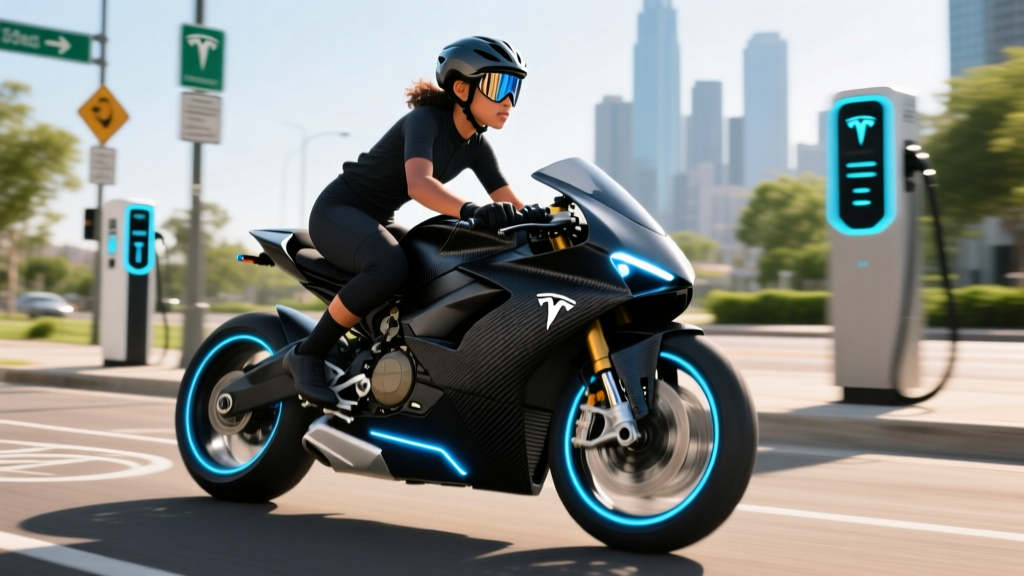
No. As of early 2026, Tesla does not manufacture, sell, or have an officially announced production timeline for a motorcycle, scooter, or any electric two-wheeler. Every image you've seen of a "Tesla Model M" or "Tesla Motorcycle" online is a fan-made render or concept — none are real products from Tesla, Inc.
This isn't a matter of missing a quiet launch. Tesla's product roadmap has been publicly documented through investor presentations, earnings calls, and Tesla's official blog. The company's current vehicle lineup includes the Model S, Model 3, Model X, Model Y, Cybertruck, and the Semi (in limited fleet production). A motorcycle is not on that list, nor is it referenced in Tesla's most recent master plan updates.
⚠️ Buyer Warning
Do not place deposits, pre-orders, or reservations with any third-party website claiming to sell a "Tesla motorcycle." These are scams. Tesla only sells vehicles through its own website and stores. Any site taking money for a Tesla two-wheeler is fraudulent.
What Has Elon Musk Said About Electric Motorcycles?
Elon Musk has addressed the motorcycle question directly on multiple occasions, and his position has been consistent: Tesla is not pursuing electric motorcycles, and he has expressed personal safety concerns about two-wheeled vehicles.
In a 2018 interview and in subsequent social media posts, Musk stated that Tesla would not make a motorcycle because the safety risk is too high relative to cars. He noted that Tesla's mission is to accelerate sustainable transport, but that mission focuses on vehicles where the company can achieve meaningful safety outcomes. Motorcycles, by their nature, expose riders to far greater injury risk in collisions — a reality confirmed by NHTSA data, which shows motorcyclists are roughly 28 times more likely to die in a traffic crash per mile traveled than passenger car occupants.
Musk has also pointed out that Tesla's resources are directed toward higher-volume, higher-impact products: mass-market cars, trucks, energy storage, and eventually the Robotaxi platform. A niche two-wheeler doesn't align with Tesla's manufacturing scale or capital allocation strategy.
Why the Tesla Motorcycle Rumor Won't Die
Several factors keep the Tesla motorcycle search alive (this keyword draws roughly 90 searches per month despite no product existing):
- Tesla's brand halo: Tesla has conditioned consumers to expect it to enter and disrupt adjacent categories — solar panels, home batteries, humanoid robots. A motorcycle feels plausible even without evidence.
- Concept renders go viral: Industrial designers and EV enthusiasts regularly publish high-quality Tesla motorcycle concepts on platforms like Behance and YouTube. These are clearly labeled as concepts but get reshared without attribution, creating false impressions of official products.
- Tesla's electric bike adjacent moves: Tesla has sold branded electric bicycles (the limited-edition Tesla Cyberquad for kids, and previously a collaboration electric bike). These blur the line in consumers' minds between "Tesla makes wheeled electric things" and "Tesla makes motorcycles."
- Search engine autocomplete: Because people keep searching for it, search engines keep surfacing the query, reinforcing the idea that a product must exist or be imminent.
The Real Electric Motorcycles You Can Buy in 2026
If you're searching for a Tesla motorcycle because you want a high-performance, tech-forward electric two-wheeler, the good news is that several legitimate manufacturers produce exactly that. Here's how the leading options stack up on the metrics that matter:
| Spec | Zero SR/S | Energica Ego+ | LiveWire ONE | Damon HyperSport |
|---|---|---|---|---|
| Base MSRP | $21,495 | $23,990 | $21,999 | $25,000 (est.) |
| Usable Battery (kWh) | 14.4 kWh (Z-Force Li-Ion) | 21.5 kWh (NMC) | 15.4 kWh (NMC) | 20.0 kWh (NMC) |
| City Range (mi) | ~161 | ~160 | ~146 | ~200 (claimed) |
| Highway Range (mi, 70 mph) | ~82 | ~100 | ~70 | ~100 (claimed) |
| Peak Power (HP) | 110 hp | 169 hp | 105 hp | 200 hp (claimed) |
| 0-60 mph (sec) | ~3.0 | ~2.6 | ~3.0 | ~2.5 (claimed) |
| DC Fast Charge (peak kW) | 6 kW (Level 2 max) | 24 kW (CCS) | N/A (Level 2 only) | ~20 kW (claimed) |
| Charge 0-80% (Level 2) | ~2.5 hrs | ~1.5 hrs (DC) | ~1.0 hr | ~1.5 hrs (est.) |
| Drivetrain | Belt-drive, single-speed | Chain-drive, single-speed | Belt-drive, single-speed | Chain-drive, single-speed |
| Warranty (battery) | 5 years, unlimited miles | 3 years / 30,000 mi | 2 years, unlimited miles | 3 years (est.) |
Note: Range figures for electric motorcycles vary dramatically with speed, temperature, and riding style. Unlike EPA car testing, motorcycle range claims often cite city-only figures. Highway range at sustained 70+ mph is typically 40-55% lower than city range.
Why Tesla Won't Enter Motorcycles (The Business Case)
Beyond Musk's stated safety concerns, there are hard business reasons Tesla is unlikely to produce a motorcycle — and understanding these helps set realistic expectations:
Market size mismatch. The U.S. motorcycle market sells roughly 500,000-600,000 units per year across all brands and types. Tesla's Fremont factory alone has capacity for ~650,000 vehicles annually. Even capturing 10% of the entire U.S. motorcycle market would represent a rounding error in Tesla's revenue. The company needs products that can sell in the hundreds of thousands per year to justify tooling investment.
Safety and liability exposure. Tesla already faces intense scrutiny over its Autopilot and FSD (Supervised) driver-assistance systems — which are SAE Level 2 features requiring constant driver engagement. Putting Tesla branding on a vehicle category with inherently higher fatality rates would magnify regulatory and legal risk. IIHS motorcycle safety data consistently shows that rider protection is a systemic challenge, not something software can easily solve.
Charging infrastructure incompatibility. Tesla's Supercharger network is designed for cars and trucks. Motorcycles can't safely use a stall designed for a 4,500-lb vehicle — the cable weight, connector height, parking geometry, and charging profile are all wrong. Tesla would need an entirely separate charging ecosystem or adapters that still wouldn't address the physical mismatch.
No autonomous upside. Tesla's long-term valuation thesis rests heavily on the Robotaxi opportunity — removing the driver from the car to create a revenue-generating asset. A motorcycle, by definition, requires a human rider. There's no autonomy revenue multiplier to justify the R&D spend.
What About a Tesla Electric Scooter or E-Bike?
Tesla has dipped into the micromobility space, but only as brand merchandise — not as a strategic product line:
- Tesla Cyberquad for Kids: A battery-powered ATV sold through Tesla's shop, aimed at children. It was recalled in 2022 by the CPSC due to safety concerns and later re-released with modifications. It's a toy, not a transportation product.
- Tesla-branded electric bikes: Tesla has occasionally offered limited-run electric bicycles through its online store, typically manufactured by third-party partners with Tesla branding. These are not designed or engineered by Tesla's vehicle team.
Neither of these represents a Tesla commitment to the two-wheeler market. They're merchandise plays, similar to Tesla selling branded tequila or shorts.
Electric Motorcycle Ownership: What to Actually Expect
If you're pivoting from the Tesla motorcycle search to an actual electric motorcycle purchase, here's the ownership reality that spec sheets don't always convey:
Real-World Range Reality
Sticker claim: 146-200 miles (city)
Actual highway riding (70 mph, 75°F): 60-100 miles
Cold weather (40°F, mixed riding): Expect 30-40% range loss vs. city claims — roughly 50-80 miles on most models.
Electric motorcycle batteries are small (14-21 kWh vs. 60-100 kWh in cars), so there's less buffer to absorb real-world losses from speed, wind, temperature, and elevation.
Charging logistics are harder. Most electric motorcycles charge on Level 2 (240V) at 1-6 kW. That means a full charge takes 2-8 hours depending on battery size. DC fast charging is available on some models (Energica, select Damon configurations) but at 20-24 kW — far below the 150-350 kW you'd see at a car Supercharger or Electrify America station. Public charging infrastructure is also not designed for motorcycles: you'll need to find a station where you can safely park a bike and reach the connector.
Federal tax credit eligibility is limited. Under IRS §30D rules, the federal EV tax credit applies to new qualified plug-in electric vehicles with four wheels — motorcycles are excluded. However, the 25E credit for previously-owned clean vehicles and certain state-level incentives may apply to electric motorcycles in some jurisdictions. Check your state's energy office and the IRS clean vehicle credit page for current eligibility.
Should You Wait for a Tesla Motorcycle?
No. There is no credible evidence — from Tesla's investor communications, regulatory filings, supply-chain reporting, or Musk's own statements — that a Tesla motorcycle is in development. Waiting for one means waiting indefinitely for a product the company has explicitly said it won't build.
If your goal is electric two-wheeled transportation, the market already offers capable options across price points. If your goal is Tesla ownership specifically, the Model 3 starts at approximately $38,990 (before any applicable federal tax credit) and delivers 341 miles of EPA range in Long Range trim — a proven, purchasable product today.
Frequently Asked Questions
Has Tesla ever officially announced a motorcycle?
No. Tesla has never announced, previewed, or teased a production motorcycle. All "Tesla motorcycle" images online are fan-made renders or concepts from independent designers.
Does Elon Musk ride motorcycles?
Musk has stated publicly that he has ridden motorcycles in the past but considers them too dangerous and has said Tesla will not produce one. He cited rider safety as the primary reason.
What's the best electric motorcycle for highway commuting?
The Energica Ego+ and Zero SR/S are the strongest options for highway-capable electric commuting, with real-world highway ranges of 80-100 miles at sustained speeds. For shorter urban commutes, the LiveWire ONE offers strong acceleration and a lower price point.
Do electric motorcycles qualify for the $7,500 federal tax credit?
No. The IRS §30D new clean vehicle credit requires four wheels. Electric motorcycles with two or three wheels do not qualify. Some state incentives and the used-vehicle 25E credit may apply — consult a tax professional and check IRS.gov for current rules.
Will Tesla ever make an electric dirt bike or ATV?
Tesla sold the Cyberquad (a small electric ATV) as a merchandise item, but it was a children's product, not a serious off-road vehicle. There is no indication Tesla plans to enter the recreational off-road vehicle market.
How do electric motorcycle charging times compare to Tesla cars?
Dramatically slower in absolute terms, but the batteries are much smaller. A Tesla Model Y (75 kWh battery) charging at 250 kW adds ~200 miles in 15 minutes. A Zero SR/S (14.4 kWh battery) charging at 6 kW takes ~2.5 hours for a full charge — but that's only ~80 highway miles of range. The smaller battery means you need less total energy, but the lower charge rate means you still wait longer per mile added.