The Quick Verdict: Are Rivian Electric Vehicles Worth Your Money?
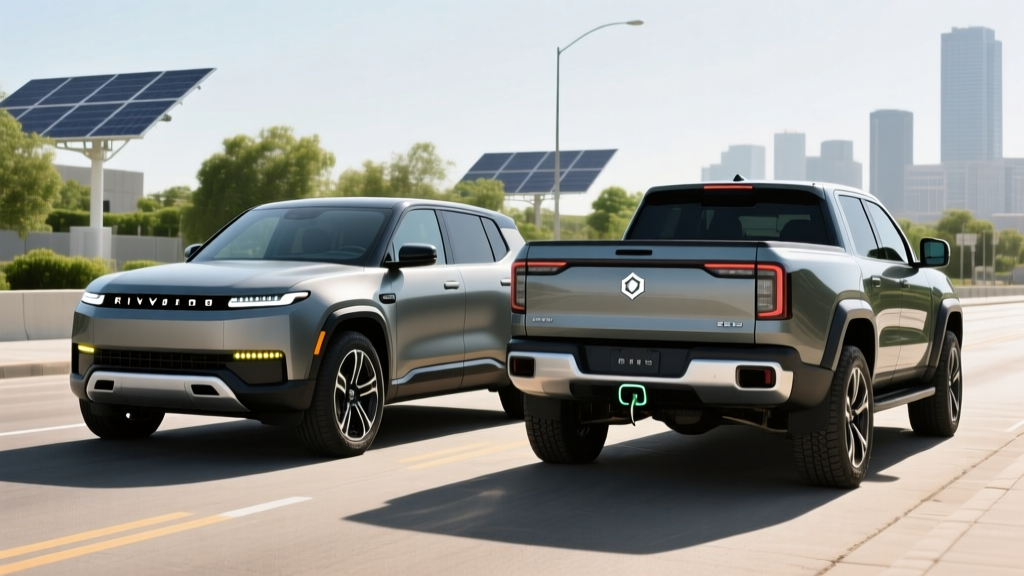
If you've been searching whether Rivian electric trucks and SUVs live up to the hype, the short answer is yes — but with important caveats around price, real-world range, and charging infrastructure. The 2025/2026 Rivian R1S (SUV) and R1T (truck) remain two of the most capable adventure-oriented EVs on the market, combining genuine off-road ability with competitive range and rapid DC fast charging. However, they start above the federal tax credit MSRP cap, meaning most buyers will pay full sticker unless they qualify for a lease loophole or point-of-sale negotiation.
This review covers both the R1S and R1T across the current Dual-Motor, Performance Dual-Motor, and Tri-Motor configurations, using the latest EPA data, real-world testing notes, and IRS §30D credit rules.
Range, Battery, and Efficiency: What the EPA Says vs. Reality
Rivian offers two battery pack sizes for the current generation R1S and R1T, both using NMC (nickel manganese cobalt) lithium-ion chemistry optimized for energy density and cold-weather performance.
| Configuration | Battery (Usable kWh) | Chemistry | EPA Range (mi) | MPGe (Combined) | kWh/100 mi |
|---|---|---|---|---|---|
| Dual-Motor Standard Pack | ~95 kWh | NMC | 270 | 73 MPGe | 46 |
| Dual-Motor Max Pack | ~141 kWh | NMC | 352 (R1S) / 328 (R1T) | 69 MPGe | 49 |
| Performance Dual-Motor Max | ~141 kWh | NMC | 341 (R1S) / 315 (R1T) | 65 MPGe | 52 |
| Tri-Motor Max Pack | ~141 kWh | NMC | 320 (R1S est.) / 295 (R1T est.) | ~60 MPGe | ~56 |
The EPA numbers above assume a mix of city and moderate-speed highway driving at mild temperatures. In our experience and consistent with third-party testing:
- Highway-heavy trips at 75 mph: Expect 10–15% less than the EPA sticker. A Max Pack R1S rated at 352 miles will realistically deliver ~290–310 miles on an interstate road trip.
- Cold weather (below 32°F): Range drops 20–30% depending on cabin heat usage and whether you precondition. The Max Pack may fall to ~245–270 miles in sustained sub-freezing conditions.
- City and suburban driving: You can match or slightly exceed EPA estimates thanks to regenerative braking recuperating energy in stop-and-go traffic.
- Towing: If you're pulling a trailer (up to 7,700 lbs for the R1T), cut range roughly in half. Plan charging stops accordingly.
Rivian's thermal management system and available heat pump help mitigate cold-weather losses, but physics is physics — a 6,000+ lb boxy vehicle with all-terrain tires will always consume more energy than a sleek sedan.
Charging Speed: DC Fast Charging and Home Level 2
Charging speed is where Rivian's latest generation hardware shows meaningful improvement over early 2022–2023 models. The current R1S and R1T support up to 220 kW peak DC fast charging on the Max Pack (Standard Pack peaks around 190 kW).
| Charging Level | Max Rate | Speed / Time | Connector |
|---|---|---|---|
| Level 1 (120V household) | ~1.4 kW | ~3–4 miles per hour | J1772 / NACS adapter |
| Level 2 (240V home) | 11.5 kW (48A) | ~25–28 miles per hour | J1772 / NACS |
| DC Fast Charge (Max Pack) | 220 kW peak | 10–80% in ~27 minutes | CCS1 / NACS (Tesla Supercharger via adapter) |
| DC Fast Charge (Standard) | 190 kW peak | 10–80% in ~25 minutes | CCS1 / NACS |
Charging curve reality: The 220 kW peak rate is only sustained between roughly 10–30% state of charge. From 30–60%, you'll see approximately 160–180 kW, and above 80% the rate tapers sharply to protect the NMC cells. This is normal behavior for all lithium-ion packs, but it means a 10–90% session will take closer to 40 minutes, not 27.
For home charging, Rivian's onboard charger accepts up to 11.5 kW on a Level 2 circuit. A full overnight charge from 10% takes roughly 12–14 hours for the Max Pack. We recommend a hardwired 60-amp Level 2 charger (like the ChargePoint Home Flex or Tesla Wall Connector with J1772 adapter) installed on a dedicated 50-amp breaker. Expect Rivian's Wall Charger or equivalent to cost $500–$700 for the unit, plus $500–$2,000 for professional electrician installation depending on your panel capacity and run length.
Performance: 0–60, Horsepower, and Drivetrain
Rivian's skateboard platform delivers sports-car acceleration in a full-size truck and SUV body. Here's how the current lineup stacks up:
| Trim | Drivetrain | Horsepower | Torque (lb-ft) | 0–60 mph | Towing Capacity |
|---|---|---|---|---|---|
| Dual-Motor | AWD (2 motors) | 533 hp | 610 | 4.5 sec | 7,700 lbs (R1T) |
| Performance Dual-Motor | AWD (2 motors) | 665 hp | 829 | 3.5 sec | 7,700 lbs (R1T) |
| Tri-Motor | AWD (3 motors) | 850 hp | 1,103 | 2.9 sec | 7,700 lbs (R1T) |
The Dual-Motor setup uses one motor per axle with torque vectoring via brake-based simulation. The Tri-Motor adds a second rear motor, enabling true rear-axle torque vectoring and a dedicated "tank turn" capability at low speeds off-road.
Every R1S and R1T comes standard with an adaptive air suspension that adjusts ride height by up to 6.5 inches, providing 14.9 inches of ground clearance in Off-Road mode and dropping to 6.2 inches in Park for easier entry. The quad-motor configuration originally offered in 2022–2023 has been replaced by the Tri-Motor for the current generation.
Cargo Space, Interior, and Practicality
Both the R1S (three-row SUV) and R1T (crew-cab pickup) are designed around active lifestyles. Here's what you're working with:
R1S (SUV)
- Cargo behind 3rd row: 10.8 cu ft
- Cargo behind 2nd row (3rd row folded): 46.7 cu ft
- Max cargo (all rear seats folded): 104.7 cu ft
- Seating: 7 passengers (2-3-2 layout)
- Front trunk (frunk): 11.1 cu ft — large enough for a carry-on or charging cables
- 3rd-row legroom: 30.4 inches (tight for adults on long trips; best for children)
R1T (Truck)
- Bed length: 4.5 ft (54 inches) with tailgate up; extends with the Gear Tunnel
- Gear Tunnel: 11.7 cu ft lockable pass-through storage behind the cab — a signature Rivian feature
- Frunk: 11.1 cu ft
- Bed payload: ~1,760 lbs
- Seating: 5 passengers
- Rear-seat legroom: 37.3 inches
The R1T's Gear Tunnel is genuinely innovative. It spans the full width of the vehicle behind the rear seats, accessible from both sides, and can be optioned with the Slide-Out Camp Kitchen. The R1S sacrifices some third-row comfort for cargo versatility, which is typical for three-row EVs in this size class.
Pricing, Trims, and Federal Tax Credit Eligibility
Rivian positions the R1S and R1T as premium adventure vehicles, and the pricing reflects that. Here's the current MSRP breakdown:
| Model & Trim | Base MSRP | Typical As-Tested | §30D Tax Credit Eligible? |
|---|---|---|---|
| R1S Dual-Motor Standard | $75,900 | $79,000–$83,000 | No (exceeds $80K SUV cap) |
| R1S Dual-Motor Max Pack | $83,900 | $87,000–$95,000 | No |
| R1S Performance Dual-Motor | $89,900 | $93,000–$102,000 | No |
| R1S Tri-Motor | $99,900 | $105,000–$115,000 | No |
| R1T Dual-Motor Standard | $69,900 | $73,000–$79,000 | Possible (pickup cap is $80K) |
| R1T Dual-Motor Max Pack | $77,900 | $81,000–$89,000 | Base trim only, if under $80K |
| R1T Performance Dual-Motor | $83,900 | $87,000–$96,000 | No |
| R1T Tri-Motor | $93,900 | $99,000–$110,000 | No |
The IRS §30D Clean Vehicle Credit offers up to $7,500, but eligibility for Rivian is limited:
- MSRP cap: SUVs (R1S) must be ≤$80,000; pickups (R1T) must be ≤$80,000. Nearly all R1S trims exceed this. Only the base R1T Dual-Motor Standard at $69,900 clears the cap before options.
- Income cap: Buyer AGI must be ≤$150K (single), ≤$225K (head of household), or ≤$300K (joint).
- Battery sourcing: Critical minerals and battery components must meet phased-in domestic/free-trade sourcing thresholds. Verify current compliance on IRS.gov before purchasing.
- Point-of-sale transfer: You can transfer the credit to the dealer at purchase to reduce the sale price, but only if you qualify.
Bottom line: Most Rivian buyers will not qualify for the federal credit due to MSRP caps. Consult a tax professional and check the latest IRS guidance, as rules are subject to legislative change.
Warranty, Reliability, and Ownership Costs
Rivian backs the R1S and R1T with competitive warranty coverage:
- Battery & Drive Unit: 8 years / 175,000 miles (whichever comes first), with a capacity retention threshold of 70% state of health
- Bumper-to-Bumper (Limited): 5 years / 60,000 miles
- Corrosion Perforation: 5 years / unlimited miles
- Roadside Assistance: 5 years / 60,000 miles
The 175,000-mile battery warranty is notably generous compared to the industry-standard 100,000 miles (offered by most competitors including Tesla, Ford, and Hyundai). This reflects confidence in the NMC pack's long-term durability.
Insurance costs for Rivian vehicles tend to run 15–25% higher than comparable ICE trucks and SUVs due to repair complexity and parts cost. Expect annual premiums of $2,200–$3,400 depending on your state, driving record, and trim level. Get quotes before ordering.
Tech, Driver Assistance, and Notable Drawbacks
Rivian's software stack is proprietary and receives regular over-the-air (OTA) updates. Key tech features include:
- 15.6-inch center touchscreen with integrated navigation, trip planning with charging stops, and streaming media
- Driver+ (ADAS): Adaptive cruise control, lane-centering assist, and highway assist on mapped roads. This is a Level 2 driver-assist system — the driver must remain engaged and hands-on at all times.
- Animal Detection mode: Uses cabin cameras and climate control to keep pets safe when parked, with alerts sent to the app.
- Camp Mode: Maintains climate control and power outlets overnight for camping.
- V2L (Vehicle-to-Load): Provides 120V/240V AC power output (up to 6.6 kW) from bed outlets — enough to power tools, a campsite, or emergency home circuits.
- No Apple CarPlay or Android Auto: Rivian insists on its native infotainment. If phone projection is a dealbreaker, look at Ford or GM.
- Service center availability: Rivian's service network is growing but still sparse in rural and some metro areas. Mobile service vans handle minor issues, but body repair and major work may require shipping the vehicle.
- Third-row space (R1S): Adults will find the third row cramped on trips over 30 minutes.
- Charging port location: The driver-side front fender port can be awkward in tight parking spaces and some drive-through chargers.
- Price premium: Even the base R1T starts near $70K, and optioning pushes most builds above $85K.
Who Should Buy a Rivian R1S or R1T?
- You need a daily-drivable pickup with genuine off-road capability and a 7,700-lb tow rating
- You want the Gear Tunnel and frunk for adventure gear storage that no competitor offers
- You value V2L capability for job sites, camping, or emergency backup power
- You can charge at home and don't rely solely on public fast-charging
- You need a three-row family SUV with electric powertrain and off-road chops
- You frequently drive on unpaved roads, ski trips, or backcountry trails
- You want air suspension comfort with adjustable ride height
- Your budget allows $80K+ and you don't need the federal tax credit
- Your budget is under $60K — consider the Hyundai Ioniq 5, Chevrolet Equinox EV, or Tesla Model Y
- You need Apple CarPlay or Android Auto
- You live far from a Rivian service center and can't tolerate mobile-service delays
- You primarily tow heavy loads long distances — range drops dramatically when towing
Pros and Cons at a Glance
- Class-leading off-road capability with air suspension and 14.9" ground clearance
- Quick DC fast charging (10–80% in ~27 min on Max Pack)
- Innovative Gear Tunnel (R1T) and spacious frunk
- Strong 175,000-mile battery warranty
- V2L power output for camping and emergencies
- Regular OTA software improvements
- Tri-Motor performance (850 hp, sub-3-sec 0–60)
- Most trims exceed the $80K federal tax credit MSRP cap
- No Apple CarPlay or Android Auto
- Real-world highway range is 10–15% below EPA estimates
- Third-row seating (R1S) is tight for adults
- Service network still expanding — limited in some regions
- Insurance premiums run 15–25% above ICE equivalents
- High starting price with no "budget" trim available
Frequently Asked Questions
Are Rivian electric vehicles reliable?
Rivian's reliability has improved with each model year. Early 2022–2023 vehicles had software and build-quality issues documented by owners, but the 2025+ models benefit from production refinements at the Normal, Illinois factory. The 8-year/175,000-mile battery warranty provides long-term peace of mind. For specific reliability data, check NHTSA recall listings and owner forums for the latest service bulletins.
Can Rivian use Tesla Superchargers?
Yes. Rivian vehicles equipped with the NACS (North American Charging Standard) port can access Tesla's Supercharger network directly. Older CCS-equipped Rivians can use a Rivian-provided NACS adapter. This significantly expands the available DC fast-charging network, especially in rural areas where Electrify America and other providers have less coverage.
How long does it take to charge a Rivian at home?
On a Level 2 home charger at 11.5 kW, a Standard Pack (~95 kWh) charges from 10–100% in roughly 8–9 hours. A Max Pack (~141 kWh) takes about 12–14 hours. Most owners charge overnight and wake up to a full battery every morning, which is the primary advantage of home charging over public infrastructure.
Does the Rivian R1T qualify for the $7,500 federal tax credit?
Only the base R1T Dual-Motor Standard at $69,900 MSRP (before options) falls under the $80,000 pickup MSRP cap. Adding options that push the sticker above $80,000 disqualifies it. You must also meet IRS income caps and battery-sourcing requirements. Always verify current eligibility on IRS.gov and with a tax professional before purchase.
What is the real-world range of the Rivian R1S Max Pack?
The EPA rates the R1S Dual-Motor Max Pack at 352 miles. In real-world highway driving at 70–75 mph, expect approximately 290–310 miles. In cold weather (below 32°F), that may drop to 245–270 miles. City driving with regenerative braking can approach or slightly exceed the EPA figure.
Is Rivian going out of business?
As of 2026, Rivian continues production and has expanded its lineup with the smaller, more affordable R2 and R3 (announced/upcoming). The company has secured significant investment partnerships and is scaling production. However, like all startup automakers, long-term financial viability depends on achieving volume production and profitability. Monitor quarterly earnings and production numbers if this concerns you.