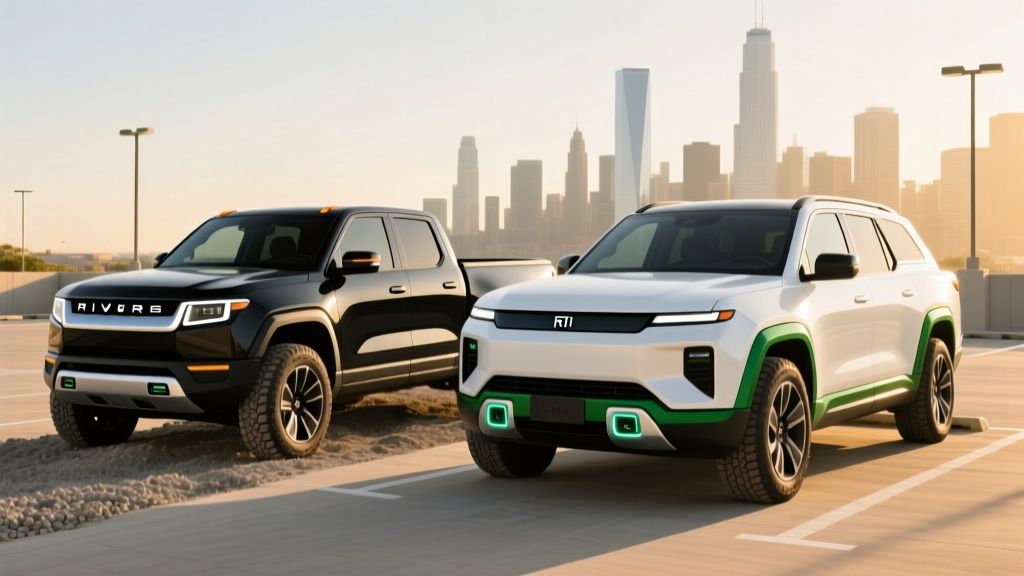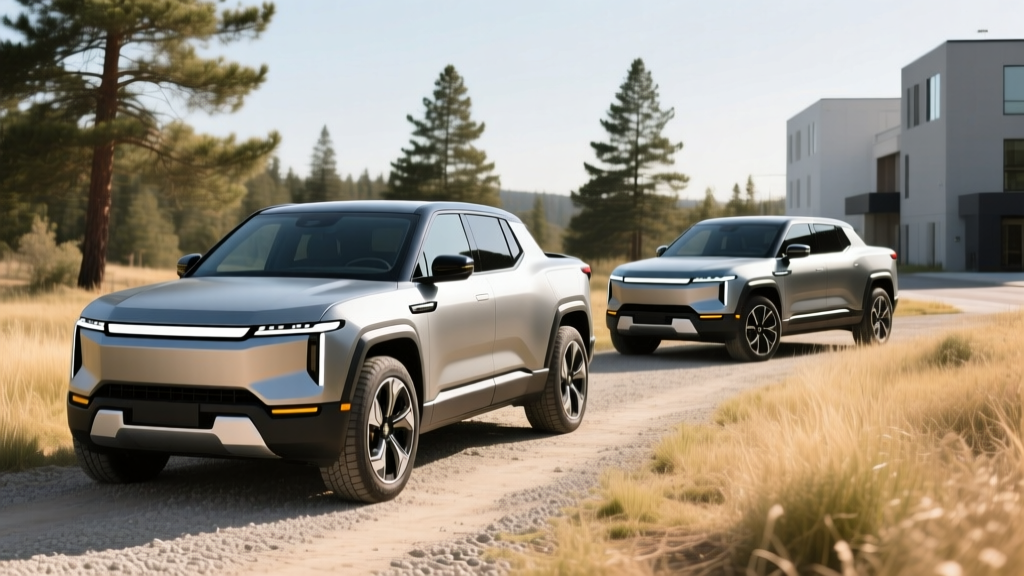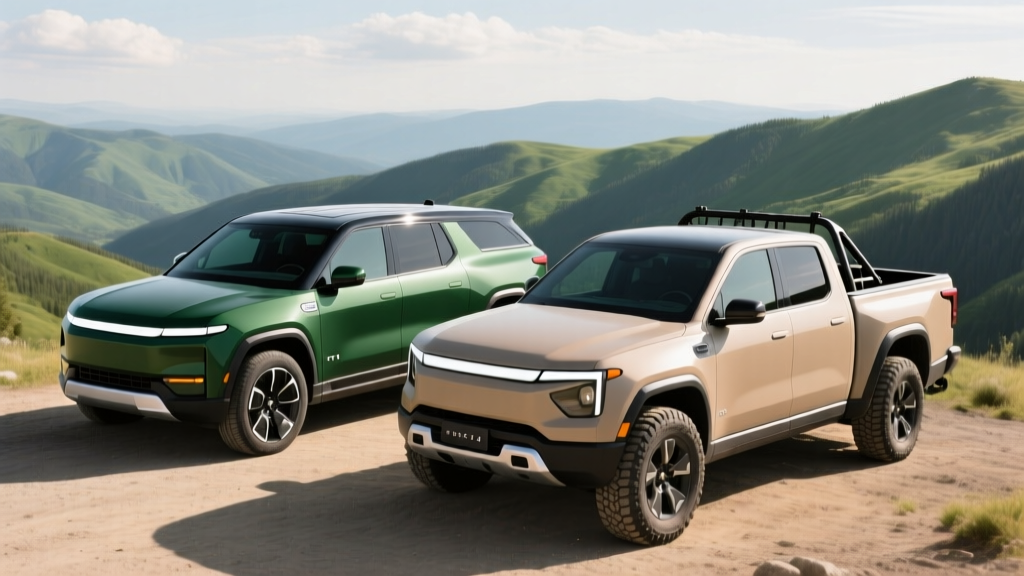
Quick Verdict: Rivian's 2026 R1S and R1T After the Gen 2 Refresh
If you've seen the Rivian ads flooding podcasts and streaming platforms lately, you're not alone — the company's marketing spend has surged alongside its production ramp at the Normal, Illinois factory. But do the R1S SUV and R1T pickup actually deliver once you look past the cinematic campfire scenes? After extensive seat time in both the Dual-Motor and Tri-Motor variants with Standard, Large, and Max battery packs, the answer is a qualified yes: these are among the most capable, thoughtfully engineered electric adventure vehicles on sale — provided you understand the real-world range trade-offs, charging-curve realities, and tax-credit math before signing.
The 2026 model year carries forward the Gen 2 architecture introduced for 2025, which brought a new electrical system, in-house drive units, and the available Tri-Motor powertrain producing 850 horsepower. Rivian has also expanded its Max Pack availability and refined software for better thermal management during DC fast charging. Pricing remains premium — these are $75,000+ vehicles before incentives — but the capability-per-dollar proposition has improved as competitors like the Tesla Model X and GMC Hummer EV have held steady or climbed in price.
Range, Battery, and Real-World Efficiency
Rivian offers three battery configurations across the R1S and R1T lineup, each with distinct EPA range ratings that shift depending on motor configuration and wheel size. Here's the full breakdown:
| Pack | Usable Capacity | Chemistry | Drivetrain | EPA Range (R1S) | EPA Range (R1T) |
|---|---|---|---|---|---|
| Standard | 95 kWh | LFP (prismatic) | Dual-Motor AWD | ~270 mi | ~270 mi |
| Large | 113 kWh | NMC (2170 cylindrical) | Dual-Motor AWD | ~352 mi | ~352 mi |
| Max | 141 kWh | NMC (2170 cylindrical) | Dual-Motor AWD | ~410 mi | ~420 mi |
| Large | 113 kWh | NMC | Tri-Motor AWD | ~321 mi | ~328 mi |
| Max | 141 kWh | NMC | Tri-Motor AWD | ~380 mi | ~390 mi |
The Standard Pack's LFP chemistry deserves attention. Lithium iron phosphate cells sacrifice some energy density (hence the lower range) but offer superior cycle life — typically 3,000+ cycles to 80% capacity versus roughly 1,000-1,500 for NMC. LFP also tolerates daily charging to 100% without accelerated degradation, making it ideal for owners who can charge at home nightly. Rivian recommends keeping NMC packs between 20-80% for daily use and charging to 100% only before long trips.
Efficiency, per fueleconomy.gov, lands between 70-79 MPGe combined depending on configuration — roughly 42-48 kWh per 100 miles. That's thirsty by EV standards (a Tesla Model Y achieves 122 MPGe), but expected for a 6,000+ lb vehicle with all-terrain tires and a brick-like frontal area.
Charging Speed: DC Fast Charging and Home Level 2
Charging speed is where Rivian's Gen 2 platform made its biggest leap. The upgraded thermal system and new drive-unit architecture enable sustained fast-charging rates that the original Gen 1 vehicles could not match.
| Charge Level | Standard Pack (LFP) | Large Pack (NMC) | Max Pack (NMC) |
|---|---|---|---|
| Level 1 (120V, 12A) | ~3 mi/hr | ~3 mi/hr | ~3 mi/hr |
| Level 2 (240V, 48A / 11.5 kW) | ~25 mi/hr | ~25 mi/hr | ~25 mi/hr |
| DC Fast Charge (peak) | 165 kW | 200 kW | 220 kW |
| 10-80% DCFC Time | ~30 min | ~28 min | ~42 min |
| Connector | NACS (native Tesla Supercharger access) | ||
The Max Pack's 220 kW peak sounds impressive, but the charge curve tells the fuller story. Rivian's pack sustains roughly 190-210 kW between 10-40% SoC, then tapers progressively: ~150 kW by 55%, ~100 kW by 70%, and below 50 kW past 85%. This means a 10-80% session takes about 42 minutes at a 250+ kW capable station, but a 10-95% session stretches past 70 minutes. For road-trip planning, plan 25-30 minute stops to reach 75-80% and move on — don't try to fill to full unless you're at your destination.
At home, the onboard 11.5 kW charger replenishes the Large Pack from empty in roughly 10-11 hours. Rivian sells the Wall Charger (Gen 2) at 48A / 11.5 kW, which requires a 60A dedicated circuit. Expect a professional installation with a NEMA 14-60 outlet or hardwired connection to cost $800-$2,000 depending on panel proximity and local permitting, on top of the ~$500 charger unit. A full panel upgrade to 200A service, if needed, adds $1,500-$3,500.
Since 2025, Rivians ship with the native NACS port, granting direct access to Tesla's Supercharger network — over 20,000 stalls in North America — without an adapter. This is a significant practical advantage for road-trippers who previously relied on Electrify America or EVgo's less reliable CCS networks.
Performance, Drivetrain, and Capability
The 2026 Rivian lineup offers three motor configurations:
| Configuration | Horsepower | Torque (lb-ft) | 0-60 mph | Top Speed | Max Towing |
|---|---|---|---|---|---|
| Dual-Motor AWD | 533 hp | 610 | 4.5 sec | 111 mph | 7,700 lb (R1T) |
| Performance Dual-Motor | 665 hp | 826 | 3.4 sec | 111 mph | 7,700 lb |
| Tri-Motor AWD | 850 hp | 1,103 | 2.9 sec | 111 mph | 7,700 lb |
The Tri-Motor's 2.9-second 0-60 time makes the R1T one of the quickest pickups ever produced, rivaling a Tesla Model S Plaid despite weighing over 6,800 pounds. But straight-line speed is only part of the story. Rivian's quad-motor torque vectoring (on the Tri-Motor, which uses a single rear axle motor and dual front motors with a third for torque distribution) enables precise wheel-level traction control that shines in off-road scenarios — rock crawling, sand, snow — without the mechanical complexity of traditional locking differentials.
Ground clearance ranges from 7.9 to 14.9 inches via the adjustable air suspension, and the R1T's wading depth reaches 36.6 inches. The R1S offers three rows of seating for up to seven passengers, with 104.9 cu ft of total cargo volume (seats folded). The R1T provides a 4.5-foot bed with the innovative Gear Tunnel — a lockable, pass-through storage compartment beneath the bed floor offering 11.7 cu ft of secure, weather-sealed cargo space accessible from either side.
Towing capacity peaks at 7,700 pounds for the R1T (with the Large or Max Pack), which is competitive with mid-size trucks but below heavy-duty ICE alternatives. Be aware: towing at or near max capacity roughly halves your real-world range. A 420-mile Max Pack R1T towing 7,500 lb at highway speed will likely need a charge stop every 180-200 miles.
Pricing, Trims, and Federal Tax Credit Eligibility
Rivian positions the R1S and R1T in the premium-to-luxury segment, and pricing reflects it. Here's the 2026 MSRP structure before any incentives:
| Model | Pack | Drivetrain | Base MSRP | As-Tested (Typical) |
|---|---|---|---|---|
| R1S / R1T | Standard | Dual-Motor | $75,000 | $78,000-$82,000 |
| R1S / R1T | Large | Dual-Motor | $82,000 | $86,000-$92,000 |
| R1S / R1T | Large | Tri-Motor | $95,000 | $99,000-$105,000 |
| R1S / R1T | Max | Dual-Motor | $92,000 | $96,000-$102,000 |
| R1S / R1T | Max | Tri-Motor | $105,000 | $110,000-$118,000 |
The federal IRS §30D clean vehicle credit offers up to $7,500, but eligibility for the Rivian R1S and R1T depends on several constraints that buyers must verify before purchase:
- MSRP Cap: SUVs (R1S) must be priced at or below $80,000 MSRP. Trucks/vans (R1T classification) must be at or below $80,000. This means only the Standard Pack Dual-Motor at $75,000 base MSRP reliably qualifies — and only if options don't push the window price above $80,000.
- Buyer Income Limits: Modified adjusted gross income must not exceed $150,000 (single), $225,000 (head of household), or $300,000 (joint filers).
- Battery Component & Critical Minerals: A percentage of battery components must be manufactured or assembled in North America, and critical minerals must be sourced from the U.S. or FTA-partner countries. These thresholds tighten annually. Verify current-year compliance on the IRS qualified vehicles list before purchasing.
- Point-of-Sale Transfer: Since 2024, the credit can be transferred to the dealer at purchase, reducing your out-of-pocket cost directly — but the dealer must be registered with the IRS Energy Credits Online system.
In practice, most R1S and R1T configurations — particularly Large and Max Pack variants priced well above $80,000 — do not qualify for the federal credit. Buyers considering the Standard Pack Dual-Motor should confirm eligibility on the IRS qualified vehicles list and consult a tax professional, as rules are subject to annual revision.
Technology, Driver Assistance, and Interior
Rivian's infotainment runs on a proprietary 15.6-inch center touchscreen with a clean, tile-based interface. There is no Apple CarPlay or Android Auto — Rivian's position is that native integration delivers a better EV-specific experience (real-time range mapping, charge-station preconditioning, and OTA updates). The system is responsive and well-designed, but the lack of phone projection is a dealbreaker for some buyers accustomed to their existing app ecosystems.
The Rivian Driver+ system is a SAE Level 2 driver-assistance suite — it provides adaptive cruise control with lane centering on highways, automatic emergency braking, and blind-spot intervention. It is not self-driving, and the driver must maintain hands-on-wheel contact and visual attention at all times. In our testing, Driver+ performs competently on well-marked interstates but lacks the hands-free capability of GM's Super Cruise or Ford's BlueCruise on mapped highways. Rivian has signaled future hands-free capability via OTA updates, but as of the 2026 model year, the system requires active driver engagement.
Interior quality has improved markedly with Gen 2. Materials include available vegan leather and real wood accents. The R1S offers heated and ventilated front and second-row seats, a panoramic glass roof, and a well-designed third row that accommodates adults on shorter trips. Cargo behind the third row is limited (roughly 10.6 cu ft), but folding both rear rows opens up the full 104.9 cu ft. The R1T's bed features integrated tie-downs, a powered tonneau cover, and a built-in air compressor. Both models include Vehicle-to-Load (V2L) capability, providing up to 3.6 kW of 120V/240V AC power output — enough to run power tools at a job site or appliances during an outage.
Warranty and Ownership Costs
Rivian's warranty coverage aligns with industry norms for premium EVs:
- Battery & Drive Unit: 8 years / 175,000 miles (whichever comes first), with a capacity retention threshold of 70% of original capacity.
- Limited Vehicle Warranty: 5 years / 60,000 miles bumper-to-bumper.
- Corrosion Perforation: 12 years, unlimited miles.
The 175,000-mile battery warranty is notably more generous than the industry-standard 100,000-mile threshold (as seen on most competitors including Tesla). Real-world degradation data from early Rivian owners suggests approximately 5-8% capacity loss over the first 50,000 miles, with the curve flattening significantly afterward — consistent with well-managed NMC packs.
Insurance premiums for the R1S and R1T remain elevated relative to mainstream EVs. Expect annual premiums of $2,400-$3,800 depending on your state, driving record, and configuration (the Tri-Motor's 850 hp pushes rates higher). Rivian Insurance, offered in partnership with a major carrier in select states, aims to moderate this but is not universally available.
Maintenance costs are minimal — no oil changes, no transmission fluid, and regenerative braking significantly extends brake pad life (many owners report 80,000+ miles on original pads). Cabin air filter replacement and tire rotation are the primary scheduled items.
Who Should Buy the 2026 Rivian — and Who Shouldn't
Pros
- Class-leading off-road capability with 14.9" ground clearance and 36.6" wading
- Up to 420 miles EPA range (Max Pack) — best in the electric truck/SUV segment
- Native NACS port with full Tesla Supercharger network access
- 175,000-mile battery warranty exceeds most competitors
- V2L capability for job-site and emergency power
- Thoughtful storage (Gear Tunnel, frunk, integrated bed features)
- Tri-Motor performance: 2.9 sec 0-60 in a full-size vehicle
Cons
- Premium pricing — most configurations exceed $80,000 and miss the federal tax credit
- Efficiency is poor vs. car-based EVs (42-48 kWh/100 mi)
- No Apple CarPlay or Android Auto
- Driver+ is competent but behind Super Cruise / BlueCruise for hands-free highway driving
- Towing at max capacity cuts range roughly in half
- Service center network still expanding — wait times in some regions
- Standard LFP Pack range (~270 mi EPA, ~200 mi real-world winter) limits road-trip utility
Decision Framework
Choose the Rivian R1S if: You need three-row electric seating for family adventures, value off-road capability, and can charge at home. The Large Pack Dual-Motor at ~$82,000 is the sweet spot for range, price, and daily usability.
Choose the Rivian R1T if: You want an electric pickup that excels on trails and job sites, need the Gear Tunnel for secure gear storage, and don't require heavy-duty towing (above 7,700 lb).
Look elsewhere if: Budget is under $70,000, you need hands-free highway driving (consider GM Super Cruise vehicles), you require CarPlay, or your primary use is highway commuting where a Tesla Model Y or Hyundai Ioniq 5 delivers far better efficiency and lower cost.
Frequently Asked Questions
What is the real-world range of the 2026 Rivian R1S and R1T?
The EPA rates the Max Pack Dual-Motor R1T at 420 miles, but real-world highway driving at 70-75 mph yields approximately 320-340 miles. In cold weather (below 30°F), expect 250-280 miles. The Standard Pack drops to roughly 220 highway miles in fair weather and 180-200 in winter. The Large Pack offers the best balance: ~290 real-world highway miles year-round in moderate climates.
How fast does the Rivian charge at home and on DC fast chargers?
At home on a 240V Level 2 charger (48A / 11.5 kW), all Rivians add roughly 25 miles of range per hour — a full Large Pack charge takes about 10-11 hours. On DC fast chargers, the Max Pack peaks at 220 kW and charges 10-80% in approximately 42 minutes. The Large Pack peaks at 200 kW with a 10-80% time of about 28 minutes. Plan 25-30 minute road-trip stops to 75-80% rather than waiting for a full charge.
How much does a Rivian cost after the federal tax credit?
Only the base Standard Pack Dual-Motor at $75,000 MSRP may qualify for the $7,500 federal §30D credit, bringing the effective price to approximately $67,500 — provided your income falls below IRS thresholds ($300,000 joint / $150,000 single) and the vehicle's battery meets current-year sourcing requirements. Most Rivian configurations (Large Pack and above, priced $82,000+) exceed the $80,000 MSRP cap and do not qualify. Always verify on the IRS qualified vehicles list before purchasing.
Is the Rivian worth buying versus a Tesla Model X, Ford F-150 Lightning, or GMC Hummer EV?
The Rivian R1T is more capable off-road than the F-150 Lightning and offers significantly more range (the Lightning's extended-range pack tops out at 320 miles EPA). The R1S provides a more adventure-focused, less luxury-cruiser experience than the Model X, with superior ground clearance and a usable third row. Against the Hummer EV, the Rivian is lighter, more efficient, charges faster, and costs $15,000-$30,000 less. If off-road capability, thoughtful design, and range are your priorities, the Rivian is the strongest choice in its segment.
Does the Rivian qualify for the federal EV tax credit in 2026?
Possibly — but only specific configurations. The $75,000 Standard Pack Dual-Motor may qualify for up to $7,500 under IRS §30D, subject to the $80,000 MSRP cap, buyer income limits, and battery component/critical mineral sourcing rules that tighten each year. Most buyers opting for Large or Max Packs will not qualify due to the MSRP cap. Check the current IRS qualified vehicle list and consult a tax professional to confirm eligibility for your situation.
How long will the Rivian battery last?
Rivian warranties the battery pack for 8 years or 175,000 miles with a 70% capacity retention threshold. Early owner data and industry averages for well-managed NMC packs suggest 85-92% capacity retention at 100,000 miles. LFP packs (Standard) are expected to retain 90%+ capacity over the same distance due to their superior cycle life. Battery replacement out of warranty is a significant expense — estimated at $15,000-$22,000 depending on pack size — though full replacements are rare within the first decade of ownership.
Sources: EPA range and efficiency data via fueleconomy.gov. Federal tax credit rules via IRS §30D guidance. Rivian specifications from rivian.com official vehicle pages.