Quick Verdict: Is the Rivian R1S Worth the Lease?
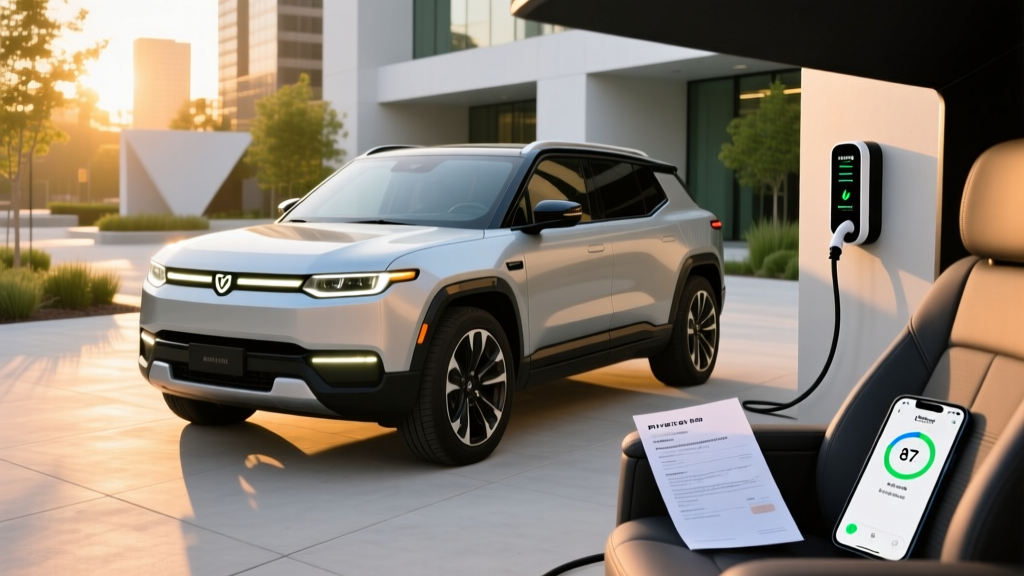
The 2026 Rivian R1S remains one of the most capable three-row electric SUVs on the market, blending genuine off-road chops with a 0-60 mph time as quick as 3.5 seconds and an EPA-estimated range reaching 410 miles on the Max Pack. For families shopping for a full-size electric SUV, R1S leasing offers a way into the vehicle without committing to the full MSRP — which starts at $79,900 for the Dual-Motor Standard and climbs past $105,000 for the Quad-Motor Max. This review breaks down every number that matters before you sign.
| Spec | Dual-Motor Standard | Dual-Motor Large | Tri-Motor Max | Quad-Motor Max |
|---|---|---|---|---|
| EPA Range | 270 mi | 352 mi | 410 mi | 390 mi |
| Battery (usable) | 92 kWh (NMC) | 121 kWh (NMC) | 141 kWh (NMC) | 141 kWh (NMC) |
| 0-60 mph | 5.0 sec | 5.0 sec | 3.6 sec | 3.5 sec |
| Horsepower | 533 hp | 533 hp | 850 hp | 1,025 hp |
| Drivetrain | AWD (dual) | AWD (dual) | AWD (tri) | AWD (quad) |
| Max DC Charge | 200 kW | 220 kW | 220 kW | 220 kW |
| 10-80% Time | ~30 min | ~27 min | ~32 min | ~32 min |
| Base MSRP | $79,900 | $85,900 | $99,900 | $105,900 |
| EPA MPGe (combined) | 72 MPGe | 70 MPGe | 68 MPGe | 65 MPGe |
Source: fueleconomy.gov and Rivian official specifications. Real-world results vary by driving style, temperature, and terrain.
Real-World Range vs. the EPA Sticker
- Dual-Motor Standard (270 mi EPA): Expect ~230-245 mi mixed driving; ~200-215 mi sustained highway at 75 mph.
- Dual-Motor Large (352 mi EPA): Expect ~300-320 mi mixed; ~260-280 mi highway.
- Tri-Motor Max (410 mi EPA): Expect ~350-370 mi mixed; ~300-320 mi highway.
- Cold-weather penalty: At 20°F or below, plan for a 25-35% range reduction across all packs due to cabin heating and battery thermal management demands.
The R1S is a 6,800+ lb vehicle with the aerodynamic profile of a traditional SUV, so highway efficiency suffers more than a sedan-shaped EV. At 70-75 mph, energy consumption climbs to roughly 42-48 kWh/100 mi depending on the pack. City driving with frequent regenerative braking opportunities returns significantly better results — often beating the EPA combined estimate. For a commuter doing mostly suburban and city miles, the Large Pack's 352-mile EPA rating translates into a comfortable weekly charge cycle. Road-trippers targeting 300+ mile legs between stops should seriously consider the Max Pack, even with its real-world taper.
Charging Speed: DC Fast Charge and Home Level 2
Rivian equips the R1S with the North American Charging Standard (NACS) port natively, granting access to the Tesla Supercharger network alongside Rivian's own Adventure Network and third-party CCS stations via adapter. Here's what charging actually looks like:
| Charging Level | Power / Rate | Miles of Range Per Hour | Notes |
|---|---|---|---|
| Level 1 (120V household) | 1.4 kW | ~3-4 mi/hr | Emergency/trickle only |
| Level 2 (240V, 48A home charger) | 11.5 kW | ~25-28 mi/hr | Full overnight charge in 8-12 hrs |
| Level 2 (240V, 60A circuit) | Up to 11.5 kW (vehicle-limited) | ~25-28 mi/hr | R1S onboard charger caps at 11.5 kW |
| DC Fast Charge (peak) | Up to 220 kW | ~550+ mi/hr at peak | Sustained rate tapers significantly above 80% |
The charge curve matters more than the peak number. The Large and Max packs sustain their peak rate between roughly 15-60% State of Charge (SoC), then taper progressively. A 10-80% session on a 350 kW-capable station takes approximately 27-32 minutes depending on pack size and battery temperature. Preconditioning — warming the battery before arrival at a charger using the R1S's built-in navigation routing — is essential for hitting peak speeds. Without it, expect 20-30% slower charge rates, especially in cold weather.
At home, the R1S's 11.5 kW onboard charger means a full charge from 10% takes about 10 hours on the Large Pack and 12+ hours on the Max Pack. Most owners charging nightly from 30-80% will have more than enough by morning. A dedicated 240V/60A circuit with a quality Level 2 EVSE (Wall Connector, ChargePoint Home Flex, or Rivian Wall Charger) runs $800-$1,500 for equipment plus $500-$2,000 for professional electrician installation, depending on panel proximity.
Performance and Drivetrain
Every R1S comes with all-wheel drive. The dual-motor variants produce 533 hp and 610 lb-ft of torque, delivering a 5.0-second 0-60 mph time that feels effortless for a three-row SUV. The Tri-Motor steps up to 850 hp, and the Quad-Motor — with one independently controlled motor per wheel — produces a staggering 1,025 hp and a 3.5-second 0-60 mph time. That's supercar acceleration in a vehicle with 89.5 cu ft of total cargo volume.
Beyond straight-line speed, the R1S earns its adventure credentials: 14.4 inches of ground clearance (adjustable via air suspension), up to 34.2 inches of water fording, and a maximum towing capacity of 7,700 lbs. The quad-motor's tank turns and gear guard modes are genuinely useful off-road, not just marketing features. However, towing at maximum capacity cuts range by 40-50% — plan for 150-180 miles between charges when pulling a loaded trailer.
Interior Space, Tech, and Daily Usability
The R1S seats up to seven across three rows. Legroom measures 41.1 inches in the front, 38.7 inches in the second row, and 32.5 inches in the third — adequate for children and shorter adults on trips under an hour. Cargo volume breaks down as:
- Behind third row: 10.6 cu ft
- Behind second row (third row folded): 46.7 cu ft
- Maximum (all rear seats folded): 89.5 cu ft
- Front trunk (frunk): 11.1 cu ft — lockable, drainable, ideal for muddy gear
The 15.6-inch center touchscreen runs Rivian's proprietary OS, which has improved substantially through over-the-air updates. Wireless Apple CarPlay and Android Auto are not offered — Rivian insists on its native software. The digital driver display, head-up display, and 8-zone climate control are strong. The camp kitchen accessory and integrated gear tunnel (on R1T, limited on R1S) reflect the adventure-oriented design philosophy.
Driver Assistance: The R1S ships with Rivian's Driver+ system, a Level 2 (SAE) driver-assist suite featuring adaptive cruise control, lane centering, and automatic lane changes on supported highways. This is not autonomous driving — the driver must keep hands on the wheel and remain attentive at all times. It's competitive with systems like Ford BlueCruise but has fewer mapped highway miles than GM's Super Cruise network.
Pricing, Lease Costs, and Federal Tax Credit
R1S leasing typically routes through Rivian's financing partners or third-party lessors. Monthly lease payments in early 2026 generally range from $950-$1,600/month depending on the trim, pack, term (usually 36 months), and annual mileage allowance (10,000-15,000 mi). A key advantage: when a leasing company claims the federal tax credit and passes the savings through as a capitalized cost reduction, the lessee effectively benefits even if they wouldn't qualify as an individual buyer.
| Trim | Base MSRP | As-Tested Typical | §30D Credit Eligible? |
|---|---|---|---|
| Dual-Motor Standard | $79,900 | $83,000-$88,000 | Exceeds MSRP cap — not eligible as purchase* |
| Dual-Motor Large | $85,900 | $90,000-$97,000 | Exceeds MSRP cap — not eligible as purchase* |
| Tri-Motor Max | $99,900 | $103,000-$112,000 | Exceeds MSRP cap — not eligible as purchase* |
| Quad-Motor Max | $105,900 | $110,000-$120,000 | Exceeds MSRP cap — not eligible as purchase* |
*Critical tax credit detail: Under IRS §30D rules, the federal EV tax credit for SUVs caps vehicle MSRP at $80,000. The base Dual-Motor Standard at $79,900 technically sits at the threshold, but adding any options or destination fees pushes it over — making direct purchase credit eligibility extremely narrow. Buyer income caps also apply ($300,000 joint / $225,000 head of household / $150,000 single MAGI). Battery component and critical mineral sourcing requirements add further complexity. Leasing loophole: Under §45W (commercial clean vehicle credit), the lessor — not the buyer — claims the credit. Many leasing companies pass a $7,500 cap cost reduction to the lessee regardless of the buyer's income or the vehicle's MSRP. Confirm with your lessor and a tax professional before signing.
Warranty, Reliability, and Long-Term Ownership
Rivian provides the following coverage on the 2026 R1S:
- Battery warranty: 8 years / 175,000 miles (retaining at least 70% capacity)
- Powertrain warranty: 8 years / 175,000 miles
- Bumper-to-bumper: 5 years / 60,000 miles
- Roadside assistance: 5 years / 60,000 miles
The 175,000-mile battery warranty exceeds the industry-standard 100,000 miles and signals confidence in the NMC cells. Rivian's battery management system includes a substantial buffer (roughly 5-7 kWh hidden above and below the usable window) to slow apparent degradation. Real-world data from 2022-2024 R1S owners suggests approximately 3-5% degradation over the first 30,000 miles before leveling off — consistent with well-managed NMC packs.
Reliability has improved as Rivian scaled production at its Normal, Illinois facility, but owners should budget for potential service-center wait times in regions without a nearby Rivian Service Center. Mobile service handles many software and minor hardware issues, but suspension or battery-related work requires a physical center.
Pros
- Class-leading combination of off-road capability and EV efficiency
- 410-mile Max Pack range is among the highest of any production three-row SUV
- Quad-Motor performance (1,025 hp) is unmatched in the segment
- 8-year/175,000-mile battery warranty exceeds most competitors
- NACS native — full Tesla Supercharger network access without adapter
- Frunk + gear storage solutions are genuinely practical for outdoor use
- Lease structure can bypass §30D MSRP/income caps via §45W commercial credit
Cons
- Starting MSRP of $79,900 makes direct-purchase tax credit eligibility nearly impossible
- No Apple CarPlay or Android Auto — Rivian-only infotainment
- Third-row legroom (32.5 in) is tight for adults
- Towing at max capacity (7,700 lbs) cuts range roughly in half
- Highway efficiency (42-48 kWh/100 mi) lags behind more aerodynamic EVs
- Service center footprint still limited in many US regions
- Insurance premiums run 15-30% higher than comparable ICE SUVs
Who Should Lease the Rivian R1S — and Who Shouldn't?
Lease the R1S if:
- You need three rows and genuine off-road or towing capability in an EV
- You have home Level 2 charging and drive 200+ miles per week mixed city/highway
- You want access to the $7,500 lease credit without hitting personal §30D income or MSRP caps
- You value over-the-air feature updates and adventure-oriented design
Look elsewhere if:
- You need maximum third-row comfort — consider the Kia EV9 or a PHEV minivan
- You tow frequently over long distances — range loss makes this impractical without careful route planning
- You depend on Apple CarPlay/Android Auto for daily navigation
- You live far from a Rivian Service Center and cannot tolerate mobile-service-only coverage
Key competitors at this price point include the Tesla Model X (longer Supercharger history, falcon-wing doors, similar range), the Kia EV9 (lower price, less performance), and the BMW iX (two rows only, but more refined). The R1S occupies a unique niche: adventure-oriented, body-on-frame-style capability in a fully electric package.
Frequently Asked Questions
What is the real-world range of the Rivian R1S?
The EPA rates the R1S from 270 miles (Dual-Motor Standard) to 410 miles (Tri-Motor Max). In real-world mixed driving, expect 85-90% of EPA for the Standard and Large packs, and 85-88% for the Max. Sustained 75-mph highway driving drops this to roughly 75-80% of sticker. Cold weather at or below 20°F can reduce range by 25-35%.
How fast does the R1S charge at home and on the road?
On a Level 2 home charger (240V/48A), the R1S adds approximately 25-28 miles of range per hour, limited by its 11.5 kW onboard charger. On DC fast charging, the Large and Max packs peak at 220 kW, achieving 10-80% in roughly 27-32 minutes when the battery is preconditioned. Charge speed tapers significantly above 80% SoC.
Does the Rivian R1S qualify for the federal EV tax credit?
For direct purchase, virtually no. The §30D credit caps SUV MSRP at $80,000, and the base R1S at $79,900 exceeds this once any options or destination charges are added. However, leasing the R1S can unlock a $7,500 benefit because the lessor claims the commercial clean vehicle credit (§45W) and typically passes savings through as a capitalized cost reduction. Always confirm with your lessor and consult a tax professional. See IRS clean vehicle credit guidance.
How much does it cost to lease a Rivian R1S in 2026?
Typical R1S lease payments range from approximately $950/month (Dual-Motor Standard, 36 months, 10K mi/yr) to $1,600+/month (Quad-Motor Max). Exact pricing depends on money factor, residual value, cap cost reduction (including any passed-through tax credit), and mileage terms. Rivian's own financing arm and third-party lessors both offer programs.
Is the R1S worth leasing over competitors?
The R1S is the best choice in its class if you need three rows, off-road capability, and towing in a BEV. If your priority is maximum highway range efficiency or a luxury-brand badge, the Tesla Model X or BMW iX may fit better. If budget is the primary concern, the Kia EV9 offers three rows starting under $55,000 — though with less range, less power, and no off-road pretensions.
What's the biggest drawback of the R1S?
The price is the most obvious barrier — even before options, the R1S starts near $80,000. Beyond cost, the lack of Apple CarPlay/Android Auto frustrates some buyers, the third row is best suited for children, and highway efficiency suffers due to the vehicle's size and shape. Service center availability remains a concern in rural and some metro areas.
Specifications and pricing reflect 2026 model-year data available at time of publication. Tax credit rules under IRS §30D and §45W are subject to legislative change. Verify eligibility with a qualified tax professional before making a purchase or lease decision. Safety ratings and crash-test data can be reviewed at NHTSA.gov and IIHS.org.