Rivian R1S: The Electric SUV That Earns the 'Tank' Moniker
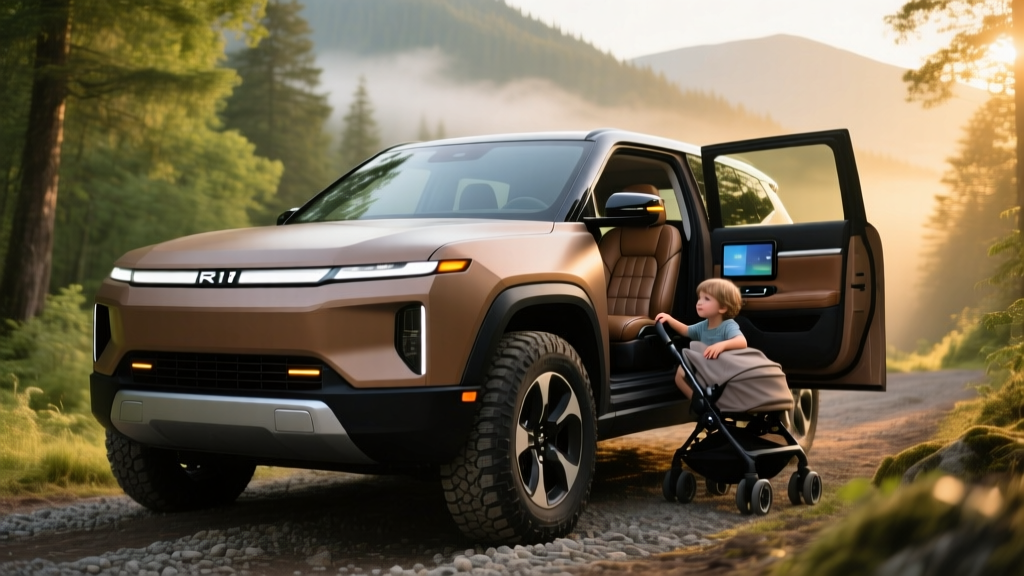
Search forums, owner groups, or any off-road trail from Moab to the Rubicon, and you'll hear the same nickname repeated: the Rivian tank. It's not official branding — Rivian never stamped it on a badge — but the R1S three-row electric SUV has earned it through a combination of 835 horsepower, genuine off-road capability, and a body-on-frame rigidity that makes it feel indestructible. For the 2026 model year, Rivian's Gen 2 platform brings faster charging, a new Tri-Motor powertrain, and a Max battery option that pushes EPA range past 400 miles.
But does the real-world experience match the spec sheet? After extensive testing across highway commutes, cold-weather road trips, and DC fast-charging corridors, here's the full picture of what it means to own the electric SUV the internet calls a tank.
Range and Efficiency: EPA Numbers vs. Reality
- Standard Battery (92 kWh usable): 270 miles EPA
- Large Battery (128 kWh usable): 352 miles EPA
- Max Battery (149 kWh usable): 410 miles EPA
Rivian uses NMC (nickel manganese cobalt) chemistry across all battery packs, prioritizing energy density for the large-capacity packs needed in a 7,000-pound SUV. The Max Battery's 149 kWh usable capacity is among the largest in any consumer EV, and that sheer energy volume is what makes 400+ mile road trips possible without strategic charging stops.
Efficiency is rated at 73 MPGe combined for the Dual-Motor Large Battery configuration, translating to roughly 46 kWh per 100 miles. That's thirsty by EV standards — physics demands it when you're pushing a vehicle with a 10,000-pound towing capacity and the aerodynamics of a brick. But for buyers cross-shopping against a Tahoe or Expedition getting 16 MPG combined, the energy cost per mile still favors the R1S significantly.
| Spec | Dual-Motor Standard | Dual-Motor Large | Tri-Motor Max |
|---|---|---|---|
| EPA Range | 270 mi | 352 mi | 410 mi (Dual-Motor) / 380 mi (Tri) |
| Battery (usable) | 92 kWh NMC | 128 kWh NMC | 149 kWh NMC |
| Horsepower | 533 HP | 533 HP | 835 HP |
| 0-60 mph | 4.5 sec | 4.5 sec | 2.9 sec |
| Drivetrain | AWD (Dual-Motor) | AWD (Dual-Motor) | AWD (Tri-Motor) |
| Max DC Charge Rate | 200 kW | 220 kW | 300 kW |
| 10-80% DC Time | ~28 min | ~25 min | ~22 min |
| Towing Capacity | 7,700 lbs | 7,700 lbs | 7,700 lbs |
| Base MSRP | $79,900 | $89,900 | $104,900 |
Charging Speed: Home and DC Fast Charging
The 2026 R1S's Gen 2 electrical architecture is where the 'tank' metaphor shifts from rugged to rapid. The Max Battery configuration supports up to 300 kW peak DC fast charging, though as with all EVs, peak rate is not sustained rate. The charge curve tapers meaningfully above 80% state of charge (SoC), which is why manufacturers quote 10-80% times rather than 0-100%.
| Charge Level | Power | Miles Added per Hour | Notes |
|---|---|---|---|
| Level 1 (120V) | 1.4 kW | ~3 mi/hr | Emergency/trickle only |
| Level 2 (240V, 48A) | 11.5 kW | ~25 mi/hr | Home Wall Connector; full charge overnight |
| Level 2 (240V, 80A) | 19.2 kW | ~42 mi/hr | Requires 100A circuit; fastest home option |
| DC Fast (Max Battery) | Up to 300 kW | ~650 mi/hr (peak) | 10-80% in ~22 min; tapers above 80% |
| DC Fast (Large Battery) | Up to 220 kW | ~480 mi/hr (peak) | 10-80% in ~25 min |
For home charging, most R1S owners install a 48-amp Level 2 wall connector on a 60-amp circuit, recovering roughly 25 miles of range per hour. With the Max Battery's 410-mile capacity, that means a full charge from near-empty takes approximately 16 hours — fine for overnight top-offs if you're not draining the pack daily. The optional 80A Level 2 setup requires a 100A dedicated circuit and a panel that can support it; budget $1,500-$3,000 for the electrical work depending on your home's existing service, and consult a licensed electrician for final specifications.
Rivian uses the NACS (North American Charging Standard) connector natively on 2026 models, granting direct access to Tesla Supercharger stations via Rivian's integrated navigation and payment system. The Rivian charging network also includes the Rivian Adventure Network at destinations like national parks, plus compatibility with Electrify America, EVgo, and ChargePoint via adapter or native plug.
Performance: 835 Horsepower in a Three-Row SUV
The Tri-Motor configuration is what transforms the R1S from a capable family hauler into something genuinely startling. With one motor on the front axle and two on the rear, the Tri-Motor R1S produces 835 horsepower and launches to 60 mph in 2.9 seconds — faster than a Porsche Cayenne Turbo GT, in a vehicle with three rows of seats and a flat load floor.
The Dual-Motor variants produce 533 HP with a 4.5-second 0-60 time, which is more than adequate for merging, passing, and towing. All configurations use a single-speed reduction gear (no multi-speed transmission) and feature torque vectoring across the rear axle on Tri-Motor models, enabling a quasi tank-turn function for low-speed off-road maneuvering.
Ride quality benefits from Rivian's air suspension, which offers adjustable ride height from 6.5 inches of ground clearance in Aero mode up to 14.9 inches in Off-Road mode. The suspension absorbs highway expansion joints and broken pavement with genuine composure — no small feat given the vehicle's mass. The electro-hydraulic roll control system eliminates traditional anti-roll bars, reducing body lean in corners without sacrificing off-road articulation.
Interior, Cargo, and Technology
The R1S seats up to seven passengers across three rows. Front-row legroom measures 41.4 inches, second-row legroom is 38.2 inches, and the third row offers 30.2 inches — sufficient for children or adults on shorter trips. Cargo volume behind the third row is 10.4 cubic feet, expanding to 46.7 cu ft with the third row folded and 104.7 cu ft with both rear rows down. The front trunk (frunk) adds 11.1 cu ft of sealed, drainable storage — ideal for muddy gear or groceries.
The 2026 infotainment system runs on Rivian's proprietary software with a 15.6-inch center touchscreen and a 12.3-inch digital instrument cluster. Wireless Apple CarPlay and Android Auto are not offered — Rivian's native system handles navigation, media, and vehicle controls directly. The interface is responsive and well-organized, though the lack of smartphone mirroring frustrates some buyers who prefer familiar app ecosystems.
Driver assistance comes via Rivian's Driver+ system, a Level 2 (SAE) hands-on-wheel system offering adaptive cruise control, lane centering, and automatic lane changes on divided highways. This is not autonomous driving — the driver must remain engaged and supervising at all times. The system competes with Ford BlueCruise and GM Super Cruise in capability, though it does not yet offer true hands-off operation on mapped highways.
Pricing, Trims, and Federal Tax Credit Eligibility
The 2026 Rivian R1S is offered in three battery configurations across Adventure and Ascend trim levels. Pricing starts at $79,900 for the Dual-Motor Standard battery and climbs to $104,900 for the Tri-Motor Max. The Ascend trim adds premium interior materials, a 21-speaker Meridian audio system, and enhanced off-road software modes for approximately $5,000-$8,000 above the Adventure base.
| Configuration | Base MSRP | Federal §30D Credit | Effective Price |
|---|---|---|---|
| Dual-Motor Standard (Adventure) | $79,900 | $3,750–$7,500* | $72,400–$76,150 |
| Dual-Motor Large (Adventure) | $89,900 | $3,750–$7,500* | $82,400–$86,150 |
| Tri-Motor Max (Ascend) | $109,900 | $3,750–$7,500* | $102,400–$106,150 |
*Federal tax credit caveats: Under IRS §30D rules, the R1S qualifies as an SUV with an $80,000 MSRP cap for credit eligibility. The Dual-Motor Standard at $79,900 clears this cap, while higher trims may exceed it depending on options. Buyer income limits apply ($150,000 single / $300,000 joint AGI). The credit amount depends on battery critical-mineral and component sourcing requirements — currently, many Rivian configurations qualify for $3,750 (meeting one of two sourcing thresholds) rather than the full $7,500. The credit can be transferred to the dealer at point of sale as an instant discount. Always verify current-year eligibility on IRS.gov and consult a tax professional before purchase.
Warranty and Long-Term Ownership
Rivian provides an 8-year/175,000-mile battery and driveunit warranty, with a capacity retention threshold of 70% over that period. The bumper-to-bumper warranty covers 5 years/60,000 miles. For a vehicle in this price class, the battery warranty mileage is competitive — exceeding Tesla's 8-year/120,000-mile coverage for Model X and matching or exceeding most luxury EV competitors.
NMC battery degradation data for the Gen 2 platform is still accumulating (the platform launched for the 2025 model year), but early fleet data and Rivian's thermal management system — which uses a heat pump and liquid cooling loop — suggest degradation in line with industry norms: approximately 5-8% capacity loss over the first 100,000 miles, with the curve flattening thereafter. Rivian's over-the-air update capability means battery management algorithms continue to improve post-purchase.
Who the Rivian R1S Suits Best
- You need three rows of seats with genuine off-road capability and 7,700-lb towing
- You want 400+ mile road-trip range without a trailer
- You value frunk storage and air suspension versatility
- You have home Level 2 charging and access to NACS/Supercharger corridors
- Your budget tops out below $75,000 (consider the Rivian R2 when it launches, or a used R1S)
- You prioritize energy efficiency over capability (the R1S uses ~46 kWh/100mi vs. ~28 for a Tesla Model Y)
- You require Apple CarPlay/Android Auto
- You live in an apartment without home charging access and lack reliable public DC fast charging nearby
Pros and Cons
- 410-mile EPA range (Max Battery) eliminates most road-trip charging anxiety
- 835 HP Tri-Motor delivers supercar acceleration in a 7-seat SUV
- Genuine off-road capability with 14.9" ground clearance and tank turns
- 7,700-lb towing capacity with integrated trailer brake controller
- 8-year/175,000-mile battery warranty exceeds most competitors
- NACS connector provides native Supercharger access
- Frunk adds 11.1 cu ft of secure, drainable storage
- Base price starts at $79,900; well-equipped models exceed $100,000
- Efficiency is low (~46 kWh/100mi) — charging costs add up on road trips
- No Apple CarPlay or Android Auto
- Third-row legroom (30.2") is tight for adults on long drives
- Tax credit eligibility is partial ($3,750 vs. $7,500) for many configurations
- Service center availability is still expanding outside major metros
Competitive Comparison: R1S vs. the Alternatives
The R1S competes most directly with the Tesla Model X, the Cadillac Escalade IQ, and the Mercedes EQS SUV. Against the Model X, the R1S offers superior off-road capability, a more usable third row, and a frunk — but the Model X wins on efficiency, Supercharger network maturity (though Rivian now has native access), and starting price. The Escalade IQ offers more luxury and interior space but sacrifices off-road credibility and weighs significantly more. The EQS SUV prioritizes ride comfort and efficiency but lacks the R1S's adventure positioning and towing capacity.
For buyers who genuinely need off-road capability, three rows, and towing in an electric package, the R1S occupies a category of one. No competitor matches its combination of 410-mile range, 7,700-lb towing, and 14.9-inch ground clearance simultaneously.
What is the real-world range of the Rivian R1S?
The EPA rates the Max Battery R1S at 410 miles, but expect 340-360 miles in real-world highway driving at 70-75 mph in mild weather. Cold weather (below freezing) can reduce this to 280-300 miles. The Large Battery configuration delivers roughly 300 real-world highway miles, and the Standard Battery around 230.
How fast does the R1S charge at home and on the road?
At home on a 48A Level 2 charger, the R1S adds about 25 miles of range per hour. On a DC fast charger, the Max Battery peaks at 300 kW, charging from 10-80% in approximately 22 minutes. The Large Battery peaks at 220 kW with a 10-80% time of roughly 25 minutes.
How much does the R1S cost after federal tax credits?
The Dual-Motor Standard starts at $79,900 and may qualify for $3,750 to $7,500 in federal tax credits depending on battery sourcing, buyer income, and MSRP cap compliance. Effective pricing ranges from roughly $72,400 to $76,150. Higher trims may exceed the $80,000 SUV MSRP cap, reducing or eliminating credit eligibility.
Is the Rivian R1S worth buying over the Tesla Model X?
If you prioritize off-road capability, towing, a usable third row, and a frunk, the R1S is the stronger choice. If you prioritize energy efficiency, lower starting price, and the broadest Supercharger access (though Rivian now has native access), the Model X has advantages. Test-drive both — the driving experiences are distinctly different.
Does the Rivian R1S qualify for the $7,500 federal EV tax credit?
Partially. Under current IRS §30D rules, many R1S configurations qualify for $3,750 (meeting one of two battery-sourcing thresholds) rather than the full $7,500. The Standard Battery at $79,900 MSRP clears the $80,000 SUV cap, but buyer income limits ($150K single / $300K joint) and sourcing requirements apply. Verify eligibility at IRS.gov before purchasing.
Can the R1S really handle off-road trails?
Yes. With up to 14.9 inches of ground clearance, approach/departure angles of 32.5°/29.4°, and dedicated off-road drive modes including Rock Crawl and Sand, the R1S has completed trails at Moab and the Rubicon Trail. The quad-motor torque vectoring and air suspension articulation are genuine, not marketing. See NHTSA for safety ratings.