Quick Verdict: The Adventure Trim Is the Sweet Spot
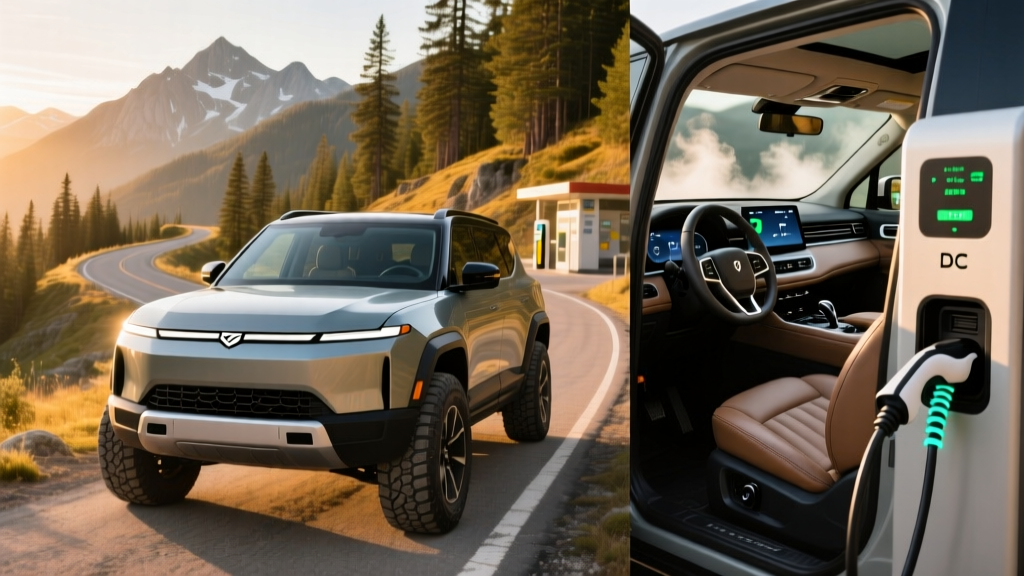
The Rivian R1S Adventure sits between the base Pure and the range-topping Ascend, and it's where most buyers should land. You get the full 106 kWh Max battery, 352 miles of EPA range in the Dual-Motor configuration, air suspension, and the adventure-ready hardware that defines the brand — all without paying Ascend-level premiums. After spending time with the 2026 model year update, which brought a refreshed electrical architecture and the addition of a heat pump across all trims, the R1S Adventure has matured into one of the most capable three-row electric SUVs on the market. But its size, price, and charging curve realities demand an honest look before you sign.
Range, Efficiency, and the Real-World Reality Check
The 2026 R1S Adventure is available with two battery configurations. The Standard pack (92 kWh usable, LFP chemistry) nets an EPA-estimated 270 miles. The Max pack (106 kWh usable, NMC chemistry) delivers the headline number: EPA 352 miles for the Dual-Motor AWD, or up to 410 miles in the single-motor Standard+ configuration (not available on Adventure trim for 2026).
- EPA sticker: 352 miles
- Mixed highway/city (70 mph): ~300–320 miles
- Highway-only at 75+ mph: ~270–290 miles
- Cold weather (below 32°F): ~240–270 miles (25–30% reduction without preconditioning)
- Towing (5,000-lb trailer): ~170–200 miles
The 2026 addition of a standard heat pump significantly reduces cold-weather HVAC energy draw, but battery chemistry still loses efficiency in freezing temps. Always precondition via the app before winter fast-charging stops.
Efficiency lands at 69 MPGe combined (Dual-Motor Max), which translates to roughly 49 kWh per 100 miles — competitive with the Tesla Model X but thirstier than the Hyundai Ioniq 9. The boxy shape and 6,800-lb curb weight are the culprits. For context, expect to spend roughly $0.14–$0.16 per mile on electricity at national-average residential rates ($0.17/kWh), or $0.35–$0.45 per mile at public DC fast chargers.
Charging Speed: Peak vs. Sustained, and What That Means at the Plug
Rivian upgraded the R1S's electrical architecture for 2026, improving charge acceptance. Here's what you need to know:
| Charging Level | Connector | Peak Power | Rate / Time | Notes |
|---|---|---|---|---|
| Level 1 (120V) | J1772 / NACS | 1.4 kW | ~3–4 mi/hr | Emergency/trickle only |
| Level 2 (240V, 48A) | J1772 / NACS | 11.5 kW | ~25 mi/hr; 10–100% in ~11 hrs | Home Wall Connector recommended |
| DC Fast Charge | NACS (native) | 220 kW peak | 10–80% in ~28 min (Max pack) | Sustains ~180 kW to 50%, tapers to 80 kW above 70% |
The charging curve is the critical detail spec sheets bury. The R1S Max pack peaks at 220 kW between roughly 15–40% state of charge, then gradually steps down. By 70% SoC, you're pulling around 80–90 kW. Plan your road-trip stops for 10–80% sessions (about 28 minutes at a 350 kW Electrify America or Tesla Supercharger V4 stall) rather than topping to 100%, which adds another 25+ minutes of diminishing returns.
The R1S uses the NACS connector natively as of the 2025 model year refresh, meaning direct access to Tesla's Supercharger network (17,000+ stalls in North America) without an adapter. For non-Tesla CCS stations, Rivian still includes a NACS-to-CCS adapter in the box.
Performance: Dual-Motor vs. Quad-Motor, and Who Needs What
| Specification | Dual-Motor AWD | Performance Dual-Motor |
|---|---|---|
| Horsepower | 533 hp | 665 hp |
| Torque | 610 lb-ft | 829 lb-ft |
| 0–60 mph | 4.5 seconds | 3.4 seconds |
| Top Speed | 120 mph | 130 mph |
| Drivetrain | AWD (2 motors) | AWD (2 motors, enhanced inverters) |
| Towing Capacity | 7,700 lbs | 7,700 lbs |
The standard Dual-Motor's 4.5-second 0–60 time is already quicker than a BMW X5 xDrive40i and thoroughly adequate for merging, passing, and general exuberance. The Performance Dual-Motor shaves that to 3.4 seconds — thrilling for a three-row SUV, but it costs you about 15–20 miles of EPA range due to more aggressive inverter tuning and standard 22-inch wheels.
Off-road, the Adventure trim includes Rivian's reinforced underbody shield, 14.9 inches of ground clearance (max ride height via air suspension), and a wading depth of 36 inches. The quad-motor configuration was discontinued after the 2024 model year as part of Rivian's cost-reduction strategy; the Performance Dual-Motor effectively replaces it with comparable real-world capability.
Interior, Cargo, and Three-Row Livability
The R1S is a body-on-frame SUV with genuine three-row usability, a rarity among electric vehicles. Key dimensions:
- Cargo volume (behind 3rd row): 20.5 cu ft
- Cargo volume (3rd row folded): 59.8 cu ft
- Cargo volume (all rear rows folded): 104.7 cu ft
- Front legroom: 41.3 inches
- Second-row legroom: 38.6 inches
- Third-row legroom: 32.5 inches (best for children or short trips)
- Front trunk (frunk): 11.1 cu ft — fits a carry-on and backpack, sealed and drainable for gear
The 2026 interior refresh added a revised center console with wireless phone charging positioned vertically (no more sliding off), improved second-row captain's chair option with ventilation, and a new 15.6-inch center display running Rivian OS 5.0 with faster response times and native Apple CarPlay/Android Auto wireless projection.
The camp kitchen accessory (a slide-out induction cooktop and sink from the gear tunnel) remains available but is now sold as a standalone accessory rather than bundled, reducing the base price by $2,500.
Pricing, Trims, and Federal Tax Credit Eligibility
| Trim / Config | Base MSRP | Est. After §30D Credit* |
|---|---|---|
| R1S Adventure Dual-Motor (Standard, 92 kWh) | $81,800 | $74,300 |
| R1S Adventure Dual-Motor (Max, 106 kWh) | $89,300 | $81,800 |
| R1S Adventure Perf. Dual-Motor (Max, 106 kWh) | $96,300 | $88,800 |
*Destination charge ($1,800) not included. Tax credit eligibility subject to IRS §30D rules.
- Maximum credit: $7,500 (if battery sourcing and critical mineral requirements are both met)
- SUV MSRP cap: $80,000 (the R1S qualifies as an SUV per IRS classification)
- Buyer income caps (MAGI): $300,000 joint / $225,000 head of household / $150,000 single
- Battery sourcing: Must meet escalating domestic content and critical mineral thresholds — verify current-year compliance on irs.gov
- Point-of-sale transfer: Eligible buyers can transfer the credit to the dealer at purchase, reducing the out-of-pocket price immediately (effective since Jan 1, 2024)
Important caveat: The R1S Adventure with the Standard 92 kWh pack at $81,800 exceeds the $80,000 SUV MSRP cap by $1,800 as priced. However, destination charges are excluded from the cap calculation per IRS guidance, meaning the Adventure Dual-Motor Standard does qualify. The Max pack and Performance trims exceed the cap and do not qualify for the federal credit. Always confirm eligibility with your tax professional and check the latest fueleconomy.gov listings before purchasing.
Warranty, Ownership Costs, and Long-Term Outlook
Rivian's warranty package for the 2026 R1S:
- Battery & drivetrain: 8 years / 175,000 miles (whichever comes first), with a capacity retention threshold of 70%
- Bumper-to-bumper: 5 years / 60,000 miles
- Corrosion: 5 years / unlimited miles
- Roadside assistance: 5 years / unlimited miles
The 175,000-mile battery warranty is among the most generous in the segment — Tesla covers 8 years / 150,000 miles on the Model X. Rivian's 70% capacity retention threshold is standard; if your Max pack degrades below ~74 kWh usable within the warranty period, Rivian replaces or repairs it.
Insurance costs remain a pain point. Expect $2,800–$3,600 annually for a clean-record driver, 30% higher than a comparable ICE SUV, driven by repair-cost data on aluminum body panels and integrated battery structure. Get quotes before ordering.
Tech, Driver Assistance, and What the R1S Can't Do
The R1S Adventure ships with Rivian's Driver+ system, a Level 2 ADAS suite per SAE classification. It includes:
- Adaptive cruise control with stop-and-go
- Lane centering on divided highways
- Automatic lane change (with driver confirmation)
- Highway assist (hands-on-wheel, eyes-on-road required)
Rivian Driver+ is a Level 2 driver-assistance system. You must keep your hands on the wheel and eyes on the road at all times. It does not navigate city streets, handle construction zones autonomously, or replace an attentive driver. Rivian has not announced a Level 3 or Level 4 system for consumer vehicles. For context, only Waymo and Zoox operate Level 4 robotaxis in limited metro areas.
Infotainment highlights include the 15.6-inch center touchscreen, a 12.3-inch digital driver display, a 7-channel Meridian audio system (upgradeable to 18-channel on Ascend), and over-the-air software updates that have meaningfully improved the vehicle since launch — including the addition of dog mode, camp mode, and improved regenerative braking profiles.
Notable drawbacks: there is no traditional instrument cluster hood, so glare on the driver display can be an issue in direct sunlight. The gear selector is a column-mounted stalk that takes a week of muscle-memory adjustment. And while the R1S supports vehicle-to-load (V2L) via the frunk outlet (up to 2.4 kW), it does not currently support vehicle-to-home (V2H) bidirectional charging.
- Genuine three-row seating with 104.7 cu ft max cargo
- 352-mile EPA range (Max pack) is best-in-class for body-on-frame EV SUVVs
- Native NACS with direct Tesla Supercharger access
- Air suspension with 14.9" ground clearance and 36" wading
- 7,700-lb towing capacity
- Strong OTA update cadence improving the vehicle over time
- Base price exceeds $80K; Max/Performance trims lose tax credit eligibility
- Charging curve tapers significantly above 70% SoC
- Third-row legroom (32.5") is tight for adults on long trips
- Insurance premiums run 30%+ above ICE equivalents
- No V2H/bidirectional home backup capability
- Service center network still expanding in rural/mountain states
Who Should Buy the R1S Adventure — And Who Shouldn't
Buy it if: You need a three-row SUV for family hauling, tow a boat or camper on weekends, want genuine off-road capability (the underbody armor and air suspension are not cosmetic), and can charge at home with a Level 2 setup. The Adventure Dual-Motor with the Standard 92 kWh pack at ~$74,300 after the federal credit is the value play — 270 miles is enough for 95% of daily driving with weekly DC fast-charge top-ups for road trips.
Look elsewhere if: You don't need three rows (the Rivian R1T pickup or Tesla Model Y offer better value for two-row needs), you live in a charging desert with no home charging access, or your budget caps below $75K even after incentives. The Hyundai Ioniq 9 starts lower and offers competitive range, though it sacrifices ground clearance and towing capacity.
Frequently Asked Questions
What is the real-world range of the Rivian R1S Adventure?
With the 106 kWh Max pack and Dual-Motor AWD, expect 300–320 miles in mixed driving, 270–290 miles highway-only at 75+ mph, and 240–270 miles in freezing weather. The 92 kWh Standard pack delivers roughly 230–250 miles real-world mixed. Towing a 5,000-lb trailer drops range to 170–200 miles regardless of pack size.
How fast does the R1S Adventure charge at home and on the road?
On a 48-amp Level 2 home charger, you'll add about 25 miles per hour, fully charging the Max pack in roughly 11 hours. At a DC fast charger, the Max pack peaks at 220 kW and charges 10–80% in about 28 minutes, though sustained speeds taper above 50% state of charge.
Does the Rivian R1S qualify for the $7,500 federal tax credit?
The R1S Adventure Dual-Motor with the Standard 92 kWh pack (MSRP $81,800 before destination) qualifies under the $80,000 SUV cap because destination is excluded from the calculation. The Max pack and Performance trims exceed the cap and do not qualify. All buyers must meet IRS income limits ($300K joint / $150K single) and verify battery sourcing compliance on irs.gov.
Is the Rivian R1S worth it vs. the Tesla Model X or Hyundai Ioniq 9?
The R1S wins on off-road capability (14.9" clearance, 36" wading, skid plates), towing (7,700 lbs vs. Model X's 5,000 lbs), and adventure-focused design. The Model X wins on charging speed (325 kW peak, V4 Superchargers) and third-row access via falcon-wing doors. The Ioniq 9 wins on price (~$15K less) and efficiency but lacks the R1S's ground clearance and rugged build. Choose based on whether you actually need off-road and tow capability — if not, the Ioniq 9 is the smarter financial decision.
What's the biggest complaint from R1S owners?
Service center availability remains the most cited frustration, particularly in the Mountain West and rural Southeast. Rivian has expanded to 50+ service centers and added mobile service vans, but wait times for bodywork can still stretch 2–4 weeks in underserved areas. Verify service coverage in your ZIP code before ordering.