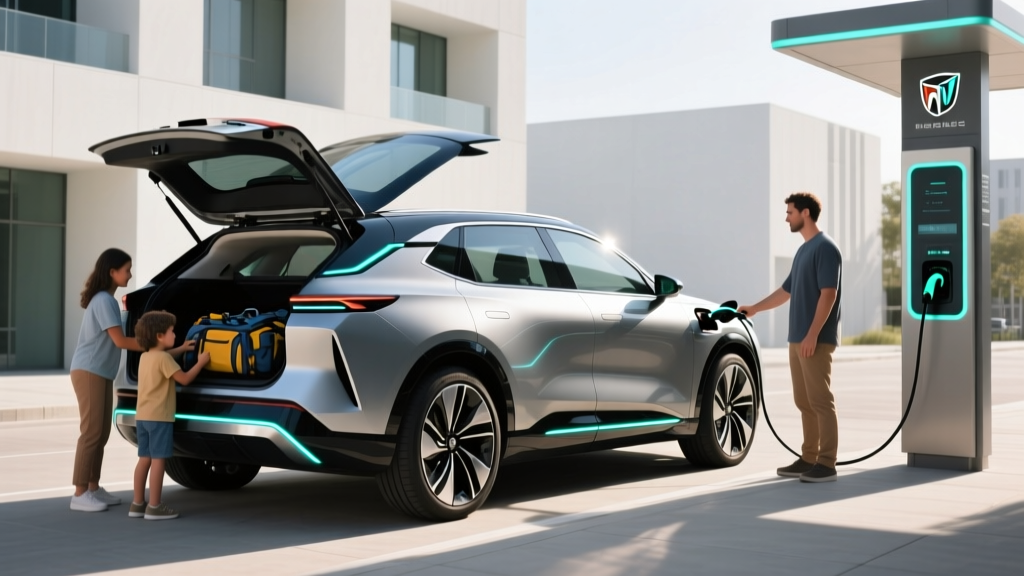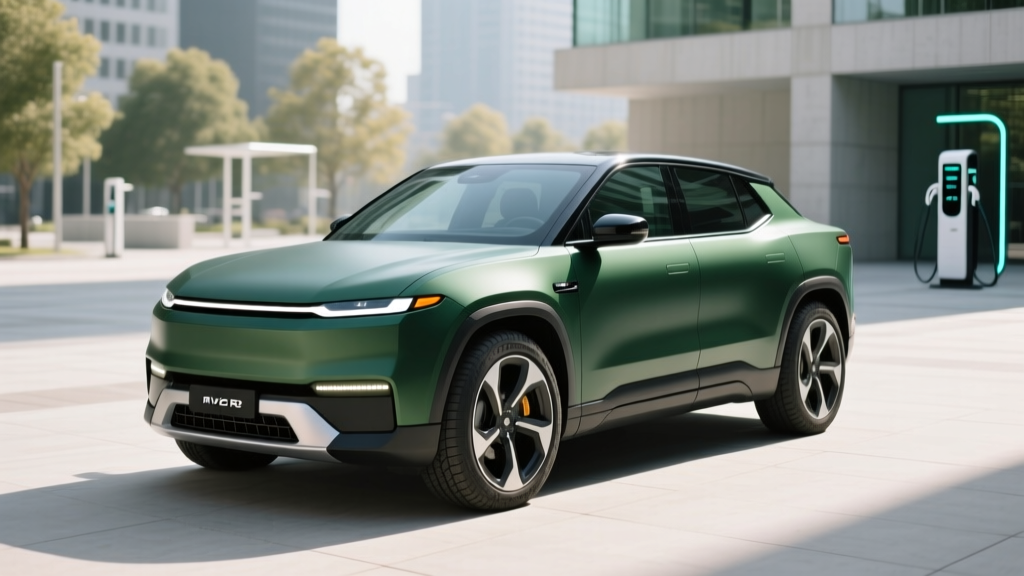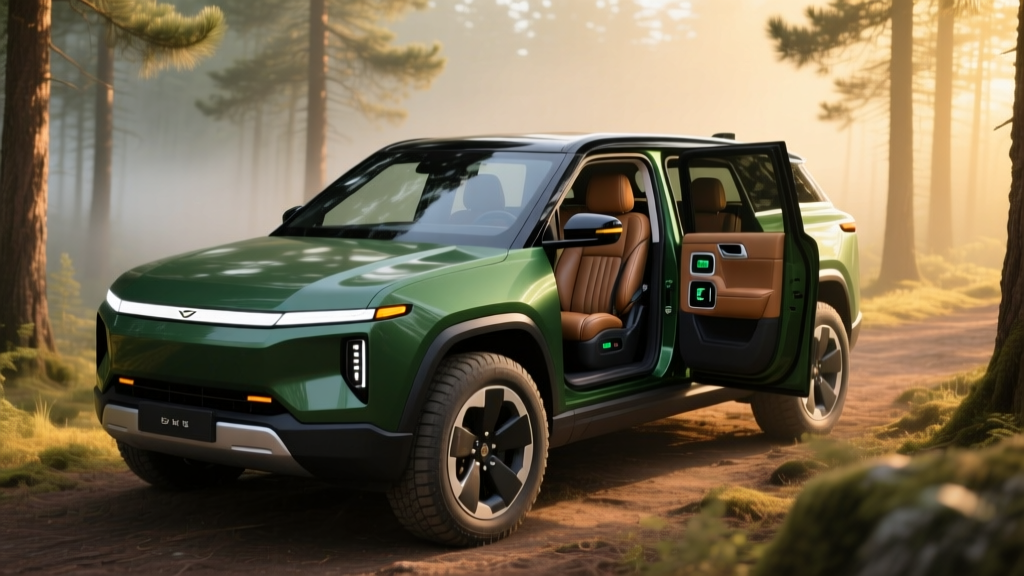
The three-row electric SUV market has exploded, but few vehicles balance off-road capability, family practicality, and genuine long-range efficiency like the Rivian R1S. Now in its second generation on the updated Gen 2 platform, the R1S has matured from a promising startup product into one of the most complete electric family haulers on the road. With up to 410 miles of EPA-estimated range, a NACS-native charging port granting access to Tesla's Supercharger network, and a genuinely usable third row, the R1S makes a compelling case for families ready to go electric without compromise.
But the R1S isn't cheap, the competitive landscape has shifted dramatically with the Kia EV9, Hyundai Ioniq 9, and Tesla Model X all vying for the same buyer, and real-world range rarely matches the sticker. This review breaks down every spec, cost, and ownership consideration you need before signing on the dotted line.
Range, Battery, and Real-World Efficiency
The 2026 Rivian R1S offers three battery configurations across its trim lineup. The Standard Pack uses a ~92 kWh (usable) lithium-ion NMC (nickel manganese cobalt) pack, the Large Pack steps up to ~109 kWh NMC, and the Max Pack pushes to approximately ~141 kWh NMC for maximum range. Rivian does not currently offer an LFP (lithium iron phosphate) option in the R1S, sticking with higher-energy-density NMC chemistry to achieve its range targets in a heavy three-row vehicle.
| Configuration | EPA Est. Range | Real-World Highway (70 mph) | Cold Weather (20°F) |
|---|---|---|---|
| Dual-Motor Standard Pack | ~270 mi | ~230–245 mi | ~190–210 mi |
| Dual-Motor Large Pack | ~340 mi | ~290–310 mi | ~240–260 mi |
| Dual-Motor Max Pack | ~410 mi | ~350–370 mi | ~290–320 mi |
Rivian's EPA figures are competitive, but the R1S's boxy aerodynamics and 5,900+ lb curb weight mean highway efficiency takes a hit compared to sleeker crossovers. Expect roughly 2.0–2.3 kWh/mi in mixed driving. In sustained 70+ mph highway driving, plan for a 10–15% reduction from EPA. Cold weather compounds this with an additional 15–25% loss due to battery heating demands and cabin climate load, even with the R1S's standard heat pump.
Efficiency on the EPA cycle lands around 69–73 MPGe combined depending on configuration, or roughly 45–49 kWh per 100 miles. That's thirstier than a Tesla Model X (~100 MPGe) but competitive with the Kia EV9 and expected for a body-on-frame vehicle of this size and capability.
Charging Speed: DC Fast, Level 2, and Network Access
Charging is where the 2026 R1S has made a significant generational leap. All R1S models now come equipped with a native NACS (North American Charging Standard) port, meaning direct plug-in access to Tesla's Supercharger network — over 20,000 stalls in North America — without an adapter. This single change dramatically improves the R1S's road-trip viability compared to the CCS-equipped first-generation model.
| Charging Level | Power / Rate | Speed (Approx.) |
|---|---|---|
| Level 1 (120V household) | ~1.4 kW | ~3–4 miles per hour |
| Level 2 (240V home, 48A) | 11.5 kW | ~25–28 miles per hour |
| DC Fast Charge (Max Pack) | Peak 220 kW | 10–80% in ~30 min |
| DC Fast Charge (Large Pack) | Peak 200 kW | 10–80% in ~33 min |
| DC Fast Charge (Standard) | Peak 190 kW | 10–80% in ~28 min |
The R1S's DC fast-charging curve is typical for a large NMC pack: peak rate is achieved between roughly 15–35% State of Charge, then the curve tapers progressively. From 80–100%, charging slows dramatically to protect battery health — expect that final 20% to add 25–35 minutes. For road trips, the practical strategy is to charge from 10–80% and move on, which takes about 30 minutes in the Max Pack variant.
At home on a Level 2 wall connector (hardwired, 60A circuit / 48A continuous), the R1S's 11.5 kW onboard charger adds roughly 25–28 miles of range per hour. A full overnight charge from 20% to 80% takes approximately 6–7 hours. Home charging installation typically runs $800–$2,500 depending on panel capacity and run length — budget for a potential 200A panel upgrade if your home has older electrical service.
Performance and Drivetrain
The 2026 R1S is offered in Dual-Motor and Quad-Motor configurations. The volume seller is the Dual-Motor AWD, which pairs one motor on each axle for standard all-wheel drive.
| Spec | Dual-Motor AWD | Quad-Motor AWD |
|---|---|---|
| Horsepower | 533 hp | 1,025 hp |
| Torque | 610 lb-ft | 1,100+ lb-ft |
| 0–60 mph | 4.5 seconds | ~2.9 seconds |
| Drivetrain | AWD (2 motors) | AWD (4 motors) |
| Towing Capacity | 7,700 lbs | 7,700 lbs |
| Ground Clearance | Up to 14.9 in (air suspension) | Up to 14.9 in (air suspension) |
The Dual-Motor's 4.5-second 0–60 mph time is genuinely quick for a 5,900-lb SUV and more than adequate for highway merging, passing, and daily driving. The Quad-Motor is a performance statement — sub-3-second acceleration in a three-row SUV is absurd by any measure — but it comes at a significant price premium and range penalty due to the extra weight and energy draw of four motors.
The standard air suspension provides adjustable ride height, from an aero-efficient highway mode to a maximum 14.9 inches of ground clearance for off-road use. The R1S includes a dedicated off-road mode with torque vectoring and a virtual front locker, making it legitimately capable on trails — a differentiator against crossovers like the EV9 that are pavement-focused.
Interior, Cargo, and Third-Row Practicality
The R1S's interior has been refined for 2026 with improved material quality, a redesigned center console, and updated software. The cabin uses vegan leather standard with available Nappa leather, real wood trim, and a minimalist design anchored by a 15.6-inch center touchscreen and a 12.3-inch digital instrument cluster.
The third row is the R1S's key advantage over two-row competitors. Unlike many mid-size SUVs where the third row is punishment seating, the R1S offers 32.3 inches of third-row legroom — enough for adults on shorter trips and comfortable for children on longer ones. Second-row captain's chairs are available, reducing seating from seven to six but improving individual comfort and third-row access.
| Behind Third Row | Behind Second Row | Behind First Row (Max) |
|---|---|---|
| 21.0 cu ft | 57.0 cu ft | 104.7 cu ft |
The 21.0 cubic feet behind the third row is competitive — enough for a week's groceries or a couple of carry-on bags. Fold the third row and you get 57 cu ft, suitable for large Costco runs or camping gear. The R1S also includes a front trunk (frunk) of approximately 11.0 cu ft, useful for charging cables or a soft cooler.
Pricing, Trims, and Federal Tax Credit Eligibility
The 2026 R1S is offered in Adventure and Ascend trim levels, with the Dual-Motor Standard Pack Adventure serving as the entry point. Pricing has shifted upward from Rivian's original launch figures, reflecting both platform upgrades and market positioning.
| Trim / Config | Base MSRP | As-Tested (Typical) | Est. Federal Credit* | Effective Price |
|---|---|---|---|---|
| Adventure Dual-Motor Standard | $75,900 | $79,000–$83,000 | Up to $7,500 | ~$68,400–$75,500 |
| Adventure Dual-Motor Large | $82,900 | $87,000–$93,000 | Up to $7,500 | ~$75,400–$85,500 |
| Ascend Dual-Motor Max | $94,900 | $100,000–$108,000 | Up to $7,500 | ~$87,400–$100,500 |
| Ascend Quad-Motor Large | $99,900 | $106,000–$115,000 | Up to $7,500 | ~$92,400–$107,500 |
*Federal tax credit eligibility under IRS §30D is subject to multiple requirements. Consult IRS.gov and a tax professional before purchasing.
- MSRP Cap: SUVs must have an MSRP at or below $80,000. Several R1S configurations exceed this cap — only the Adventure Dual-Motor Standard Pack (at $75,900 base) clearly qualifies on price alone.
- Buyer Income Limits: Modified AGI must not exceed $300,000 (married filing jointly), $225,000 (head of household), or $150,000 (single).
- Battery Sourcing: $3,750 of the credit requires critical minerals from the U.S. or FTA partners; another $3,750 requires battery components manufactured or assembled in North America. Sourcing requirements tighten annually.
- Point-of-Sale Transfer: Eligible buyers can transfer the credit to the dealer at purchase for an immediate price reduction rather than waiting to claim it on their tax return.
- FEOC Restriction: Vehicles with battery components from a Foreign Entity of Concern (e.g., certain Chinese suppliers) may be disqualified.
Because the R1S is assembled in Normal, Illinois, it benefits from domestic manufacturing. However, battery cell and critical-mineral sourcing compliance shifts yearly. Verify current eligibility at fueleconomy.gov before purchasing.
Warranty and Long-Term Ownership
Rivian provides a competitive warranty package for the R1S:
- Battery Pack: 8 years / 175,000 miles (whichever comes first), with a minimum 70% capacity retention threshold
- Powertrain (motors, reducers): 8 years / 175,000 miles
- Bumper-to-Bumper: 5 years / 60,000 miles
- Corrosion: 5 years / unlimited miles
The 175,000-mile battery warranty is among the longest in the segment, exceeding the federal minimum of 8 years/100,000 miles. The 70% retention threshold is standard — if your Max Pack drops below ~99 kWh usable capacity within the warranty period, Rivian is obligated to repair or replace. Real-world degradation data from first-generation R1S owners suggests approximately 5–8% loss over the first 60,000 miles, with the curve flattening significantly afterward, consistent with NMC chemistry under Rivian's thermal management system.
Insurance costs for the R1S tend to run 15–25% higher than comparable ICE SUVs, reflecting repair costs, parts availability, and the vehicle's value. Expect annual premiums of $2,800–$4,200 depending on your location, driving record, and coverage level. Get quotes before purchasing to avoid surprises.
Tech, Driver Assistance, and Standout Features
The R1S runs Rivian's proprietary software stack, which has received multiple over-the-air updates improving navigation, charge planning, and driver-assist performance. Key tech highlights include:
- Driver+ (Level 2 ADAS): Adaptive cruise control with lane centering on supported highways. This is an SAE Level 2 system — the driver must remain engaged with hands on the wheel and eyes on the road at all times. It is not autonomous driving.
- Highway Assist: Enhanced lane-keeping on divided highways with automatic lane-change initiation (driver confirmation required).
- 15.6" touchscreen with embedded navigation, charge-route planning, and streaming apps.
- Over-the-air updates continuously adding features and refining performance.
- Camp Mode and Gear Tunnel: Built-in camping features and the R1S-exclusive gear tunnel (on select configs) for long, narrow cargo.
- Vehicle-to-Load (V2L): Power external devices from the vehicle's battery — useful for camping, tailgating, or emergency backup.
Rivian's Driver+ is an SAE Level 2 driver-assistance system. It does NOT make the R1S a self-driving vehicle. The driver is legally and practically responsible for all vehicle operation. Hands-off-wheel detection will issue warnings and eventually disengage the system if the driver is inattentive. Performance in construction zones, faded lane markings, and heavy rain may be degraded.
Rivian R1S vs. the Competition
| Spec | Rivian R1S (Dual-Motor Large) | Kia EV9 (GT-Line AWD) | Tesla Model X (Long Range) |
|---|---|---|---|
| EPA Range | ~340 mi | ~280 mi | ~335 mi |
| Battery | ~109 kWh NMC | ~100 kWh NMC | ~100 kWh (est.) |
| DC Fast Charge Peak | 200 kW | 210 kW | 250 kW |
| 0–60 mph | 4.5 sec | 5.0 sec | 3.8 sec |
| 3rd-Row Legroom | 32.3 in | 32.0 in | 37.1 in |
| Towing Capacity | 7,700 lbs | 5,000 lbs | 5,000 lbs |
| Base MSRP | ~$82,900 | ~$73,900 | ~$81,630 |
| Off-Road Capability | Excellent | Limited | Limited |
The R1S's advantages are clear: best-in-class towing, genuine off-road capability, NACS Supercharger access, and a longer battery warranty. The Kia EV9 undercuts it on price by nearly $10,000 while offering similar interior space, making it the value pick. The Tesla Model X offers more third-row room and faster Supercharging but at a premium price and with Tesla's polarizing build-quality reputation.
Choose the Rivian R1S if: You need serious towing capacity (7,700 lbs), plan to drive off-pavement, value NACS Supercharger access for road trips, and can absorb a $75K+ purchase price.
Choose the Kia EV9 if: Budget is a primary concern, you want a well-equipped 3-row EV under $75K, your driving is mostly pavement-based, and you can use CCS charging infrastructure or an adapter.
Choose the Tesla Model X if: Maximum third-row space is essential, you want the fastest DC charging speeds, and you're already invested in the Tesla ecosystem.
Pros and Cons
- Up to 410 miles EPA range (Max Pack) — longest in the 3-row EV segment
- Native NACS port with full Tesla Supercharger access
- 7,700-lb towing capacity — best in class
- Genuine off-road capability with air suspension and 14.9" ground clearance
- 8-year/175,000-mile battery warranty
- Usable third row for adults on short trips
- Regular OTA updates improving the vehicle over time
- Base price starts at $75,900; most configurations exceed the $80K tax-credit MSRP cap
- Efficiency lags behind unibody competitors (~69–73 MPGe)
- DC fast charging peaks at 220 kW — slower than Tesla Model X or Hyundai Ioniq 9
- Insurance premiums 15–25% higher than comparable ICE SUVs
- Service center network still expanding — wait times in some regions
- No LFP battery option for buyers prioritizing longevity over energy density
Who Is the Rivian R1S For?
The R1S is ideal for active families who tow (boats, campers, horse trailers under 7,700 lbs), outdoor enthusiasts who need genuine off-road capability and ground clearance, and road-trippers who value Supercharger network access and 340+ mile range. It also works well as a daily commuter for households that need three rows but don't want a minivan.
It is less ideal for budget-conscious buyers (the EV9 is $10K+ cheaper), urban-only drivers who'll never use its off-road capabilities, or anyone whose primary priority is maximizing MPGe efficiency. If you rarely use a third row, a two-row EV like the Hyundai Ioniq 5 or Tesla Model Y will save you thousands and deliver better efficiency.
Frequently Asked Questions
What is the real-world range of the Rivian R1S?
The EPA-estimated range is up to 410 miles for the Max Pack Dual-Motor configuration. In real-world highway driving at 70 mph, expect approximately 350–370 miles. In cold weather (below 30°F), that drops to roughly 290–320 miles. The Standard Pack delivers around 270 miles EPA, with real-world highway use closer to 230–245 miles.
How fast does the R1S charge at home and on the road?
On DC fast charging, the R1S peaks at 190–220 kW depending on pack size, achieving a 10–80% charge in approximately 28–33 minutes. At home on a Level 2 (240V, 48A) charger, the 11.5 kW onboard charger adds about 25–28 miles of range per hour, fully replenishing overnight.
Does the Rivian R1S qualify for the $7,500 federal EV tax credit?
It depends on the configuration and your income. Under IRS §30D, SUVs must have an MSRP at or below $80,000 to qualify. Only the Adventure Dual-Motor Standard Pack ($75,900 base) clearly meets the MSRP cap. Buyer income must be under $300K (joint), $225K (head of household), or $150K (single). Battery sourcing requirements also apply and change annually. Verify at fueleconomy.gov and consult a tax professional.
Is the R1S worth buying over the Kia EV9 or Tesla Model X?
If you need towing capacity above 5,000 lbs, genuine off-road capability, and NACS Supercharger access, the R1S is the strongest choice in the segment. If budget is paramount and your driving is pavement-only, the Kia EV9 offers similar practicality for roughly $10,000 less. The Tesla Model X provides more third-row space and faster charging but at a higher price with less off-road ability.
What are the biggest drawbacks of the Rivian R1S?
The primary concerns are pricing (most trims exceed the $80K tax-credit MSRP cap), lower efficiency compared to unibody competitors (~69–73 MPGe), DC fast-charge speeds that lag behind the fastest-charging rivals, and a still-growing service center network that may mean longer wait times for repairs in some regions.
How long will the R1S battery last?
Rivian warranties the battery for 8 years or 175,000 miles with a minimum 70% capacity retention. Based on first-generation owner data, NMC packs in the R1S show approximately 5–8% degradation over the first 60,000 miles, with the rate slowing significantly afterward. With proper care (avoiding frequent 100% charges, using preconditioning for DC fast charging), the pack should deliver well over 200,000 miles before approaching the warranty threshold.