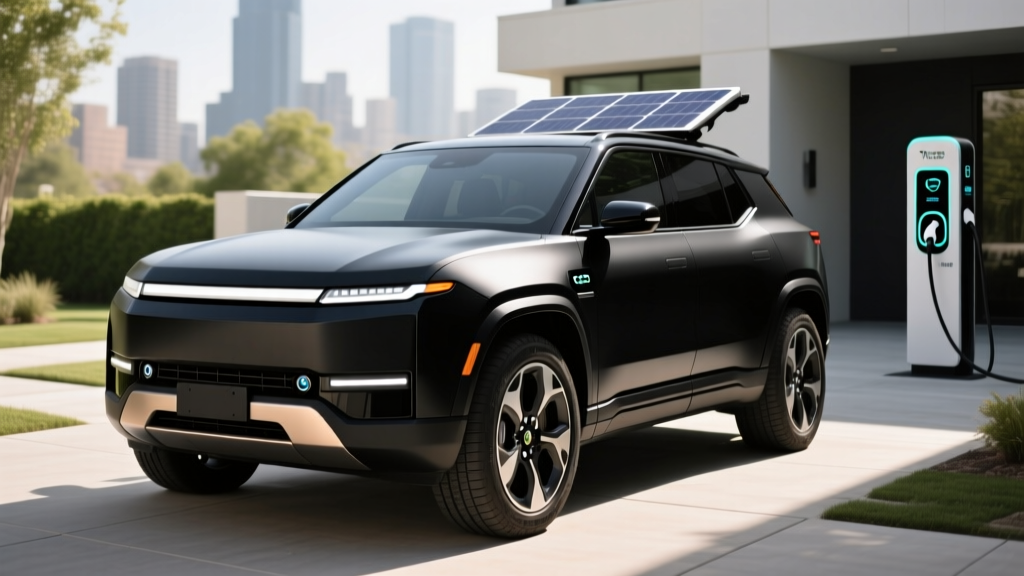
If you've spent any time scrolling through Rivian owner forums or spotting the R1S and R1T on the trail, you've likely encountered the Rivian mascot — the brand's friendly, geometric "R" emblem and the animated Gear Guard character that lives on the touchscreen. But beyond the branding and community culture, the 2026 Rivian R1S is a serious three-row electric SUV competing directly with the Tesla Model X, BMW iX, and the refreshed Hyundai Ioniq 9. This review breaks down every spec that matters: real-world range, charging speeds, tax credit math, and whether the R1S earns its premium price tag.
2026 Rivian R1S at a Glance: Core Specifications
| Spec | Standard Pack (Dual-Motor) | Max Pack (Dual-Motor) | Tri-Motor Performance |
|---|---|---|---|
| EPA Range | 270 mi | 410 mi | 390 mi |
| Battery (usable) | 92 kWh (LFP) | 141 kWh (NMC) | 141 kWh (NMC) |
| Horsepower | 533 hp | 533 hp | 850 hp |
| 0–60 mph | 4.5 sec | 4.5 sec | 2.9 sec |
| Drivetrain | AWD (Dual-Motor) | AWD (Dual-Motor) | AWD (Tri-Motor) |
| Max DC Fast Charge | 200 kW | 200 kW | 200 kW |
| 10–80% DC Time | ~30 min | ~42 min | ~42 min |
| Level 2 Home Rate | 11.5 kW (~30 mi/hr) | 11.5 kW (~30 mi/hr) | 11.5 kW (~30 mi/hr) |
| MPGe (combined) | 69 MPGe | 65 MPGe | 62 MPGe |
| Efficiency | 48 kWh/100mi | 52 kWh/100mi | 54 kWh/100mi |
| Towing Capacity | 7,700 lbs | 7,700 lbs | 7,700 lbs |
| Base MSRP | $75,900 | $89,900 | $99,900 |
Source: fueleconomy.gov and Rivian official specifications, 2026 model year.
Real-World Range: What the EPA Sticker Doesn't Tell You
EPA Estimated: 410 miles (Max Pack Dual-Motor)
Real-World Highway (70 mph, 68°F): ~330–350 miles
Real-World Cold Weather (30°F, mixed driving): ~270–300 miles
Towing a 5,000-lb trailer: ~180–210 miles
The 410-mile EPA figure on the Max Pack R1S is impressive on paper — it's among the longest-range three-row SUVs you can buy. But as with every EV, the real-world number depends heavily on how and where you drive. In highway testing at sustained 70–75 mph speeds, the R1S Max Pack typically delivers between 330 and 350 miles before hitting the 10% state-of-charge warning. The boxy, upright design that gives the R1S its rugged character also creates a higher drag coefficient than sleeker crossovers, and that aero penalty shows up most at highway speeds.
Cold weather compounds the loss. At 30°F with cabin heating active, expect a 25–30% reduction from the EPA sticker, landing you in the 270–300 mile range. The R1S uses a heat pump for cabin conditioning, which helps mitigate the loss compared to resistive heating, but physics is physics — lithium-ion cells are less efficient at low temperatures, and heating a large three-row cabin demands significant energy.
If you plan to tow, plan your charging stops accordingly. Towing a mid-weight camper (around 5,000 lbs) cuts range roughly in half. The R1S is a capable tow vehicle with its 7,700-lb rating, but no current EV handles long-distance towing without frequent charging stops.
Charging Speed: DC Fast Charging and Home Level 2 Setup
The R1S charges via the NACS (North American Charging Standard) connector natively on 2026 models, giving it direct access to the Tesla Supercharger network — currently the most reliable and extensive DC fast-charging network in the U.S. This is a significant practical advantage over CCS-equipped competitors that still rely on Electrify America or EVgo adapters.
| Charging Level | Power / Rate | Miles Added per Hour | Notes |
|---|---|---|---|
| Level 1 (120V household) | 1.4 kW | ~3 mi/hr | Emergency/trickle only |
| Level 2 (240V, 48A home charger) | 11.5 kW | ~30 mi/hr | Full charge in ~12–14 hrs (Max Pack) |
| DC Fast Charge (peak) | 200 kW | ~400 mi/hr (at peak) | 10–80% in ~30–42 min depending on pack |
Understanding the charge curve: The 200 kW peak rate applies only at lower states of charge (roughly 10–40% SoC on the Max Pack). As the battery fills, the rate tapers — by 70% SoC, you're typically seeing 80–100 kW, and above 80%, charging slows dramatically to protect the cells. This is why manufacturers quote 10–80% times rather than 0–100%. On the Standard Pack with its smaller 92 kWh LFP battery, the 10–80% time is quicker at roughly 30 minutes because there's less total energy to push, even though the peak kW is the same.
For home charging, Rivian recommends a 48-amp Level 2 wall connector on a 60-amp circuit. Expect a full overnight charge to replenish roughly 300 miles — more than enough for daily driving. Installation costs typically run $800–$2,000 depending on your electrical panel's capacity and the distance from the panel to your garage or parking spot. If your home has a 200-amp panel with spare capacity, you're looking at the lower end. A panel upgrade to support Level 2 charging can add $1,500–$3,500.
Performance and Drivetrain: Dual-Motor vs. Tri-Motor
The dual-motor R1S produces 533 horsepower and hits 60 mph in 4.5 seconds — brisk for a 6,900-lb three-row SUV. The torque vectoring between front and rear motors provides confident all-weather traction without the mechanical complexity of a traditional AWD system. In normal driving, the R1S feels planted and responsive, with one-pedal driving (strong regenerative braking) making stop-and-go traffic nearly effortless.
The Tri-Motor Performance variant adds a third motor on the rear axle, pushing output to 850 hp and dropping the 0–60 time to a supercar-rivaling 2.9 seconds. It's a party trick more than a daily necessity, but the extra rear-axle torque also improves off-road crawl capability and high-speed passing confidence. Both configurations use Rivian's quad-motor-compatible air suspension, which provides up to 14.9 inches of ground clearance in Off-Road mode and drops to 6.7 inches in Park for easy entry.
The Rivian Mascot and Brand Identity: More Than a Logo
The Rivian mascot isn't a single character in the traditional automotive sense — it's an evolving brand identity built around the geometric "R" emblem, the Gear Guard touchscreen avatar, and the community-driven culture that Rivian has cultivated since the R1T and R1S launched. The Gear Guard character, an animated figure that appears on the central display to walk you through vehicle settings and trip planning, has become an unofficial mascot among owners. Rivian has leaned into this with merchandise, owner events, and software updates that expand the character's role.
This branding strategy stands in contrast to legacy automakers, where mascots are typically marketing afterthoughts. Rivian's approach mirrors Tesla's community-centric model but with a warmer, more outdoorsy personality that resonates with the adventure-oriented buyer demographic. The mascot and brand identity don't change the driving experience, but they do reflect a company that understands owner engagement as part of the product — something worth noting if brand culture factors into your purchase decision.
Pricing, Tax Credits, and Total Cost of Ownership
| Trim | Base MSRP | §30D Credit Eligible? | Estimated Net Price |
|---|---|---|---|
| Dual-Motor Standard Pack (Adventure) | $75,900 | Yes — under $80K SUV cap | ~$68,400 (with full $7,500 credit) |
| Dual-Motor Max Pack (Adventure) | $89,900 | No — exceeds $80K SUV cap | $89,900 |
| Tri-Motor Performance | $99,900 | No — exceeds $80K SUV cap | $99,900 |
The federal EV tax credit under IRS §30D offers up to $7,500 for qualifying new EVs, but the rules are specific. For SUVs, the MSRP cap is $80,000. Only the Dual-Motor Standard Pack Adventure trim at $75,900 clears this threshold. Add options or step up to the Max Pack, and you lose eligibility entirely.
Beyond the MSRP cap, buyer income limits apply: modified adjusted gross income cannot exceed $300,000 for joint filers, $225,000 for heads of household, or $150,000 for single filers. Battery component and critical mineral sourcing requirements also apply and can reduce the credit to $3,750 if only one of the two sourcing thresholds is met. The credit can now be transferred to the dealer at the point of sale, effectively reducing your purchase price upfront rather than waiting for a tax refund. Always verify current eligibility on the IRS Clean Vehicle Credit page, as sourcing rules tighten annually.
For buyers who don't qualify for the federal credit — or who want the Max Pack — some states offer additional rebates. Check your state's energy office or fueleconomy.gov's incentive database for local programs.
Interior Space, Cargo, and Daily Livability
The R1S seats up to seven passengers across three rows. Second-row captain's chairs (standard on Adventure trims) reduce capacity to six but dramatically improve third-row access. Key interior dimensions:
- Cargo behind third row: 20.0 cu ft
- Cargo behind second row (third row folded): 57.0 cu ft
- Max cargo (all rear seats folded): 104.0 cu ft
- Front legroom: 41.3 in
- Second-row legroom: 39.5 in
- Third-row legroom: 32.1 in
- Front trunk (frunk): 11.0 cu ft
The 11-cubic-foot frunk is a standout feature — it's large enough for a full grocery run or a set of charging cables and road-trip gear, and it's lockable and drainable (useful as a cooler on camping trips). The third row is best suited for children or shorter adults on trips under an hour; legroom is tight compared to the full-size SUV competition. The 15.6-inch center touchscreen runs Rivian's in-house OS, which is responsive and well-designed, with native trip planning that integrates charging stops along your route.
Driver Assistance and Safety Tech
Rivian's Driver+ system is an SAE Level 2 driver-assistance feature. It combines adaptive cruise control and lane-centering for hands-on-wheel highway driving. The driver must remain attentive and engaged at all times. This is not a self-driving system. Level 4 autonomy (no driver required) currently exists only in geofenced robotaxi services like Waymo.
Rivian's Driver+ system provides competent highway assistance with smooth lane-keeping and adaptive cruise behavior. It doesn't yet match the hands-free capability of GM's Super Cruise or Ford's BlueCruise on mapped highways, but Rivian has been steadily improving the system via over-the-air updates. The R1S earned top marks in IIHS testing, achieving Good ratings across crash-test categories.
Pros and Cons: The Honest Assessment
- Class-leading range (410 mi Max Pack) for a three-row EV SUV
- Native NACS connector — direct Supercharger access
- Genuine off-road capability with air suspension and 14.9" ground clearance
- Excellent frunk (11 cu ft) and flexible cargo layout
- Strong OTA update track record improving features post-purchase
- Engaging brand community and owner events
- Only base Standard Pack qualifies for $7,500 federal credit
- Highway range drops significantly due to boxy aerodynamics
- Third-row legroom is tight for adults (32.1 in)
- 200 kW peak DC charging is slower than Hyundai/Kia's 800V architecture
- Premium pricing — Max Pack and Tri-Motor push past $90K–$100K
- Limited service center footprint compared to legacy brands
Who Should Buy the 2026 Rivian R1S?
The R1S is best for active families and adventure-oriented buyers who need three rows, value off-road capability, and want access to the Supercharger network for road trips. If your typical week includes school runs, weekend trailhead drives, and a few 300+ mile road trips per year, the R1S Max Pack is one of the few EVs that handles all of it without compromise.
If your priority is maximum efficiency and lowest cost, the Standard Pack at ~$68,400 after the federal credit is compelling — you trade 140 miles of range for a $14,000 price reduction. If you don't need three rows, the two-row Rivian R1T pickup or competitors like the BMW iX or Hyundai Ioniq 9 may offer better value. And if you tow frequently over long distances, consider that every EV — including the R1S — loses roughly half its range under load.
Frequently Asked Questions
What is the real-world range of the Rivian R1S?
The EPA rates the Max Pack R1S at 410 miles, but expect 330–350 miles in real-world highway driving at 70 mph, and 270–300 miles in cold weather (around 30°F). The Standard Pack's 270-mile EPA rating translates to roughly 220–240 miles on the highway.
How fast does the R1S charge at home and on the road?
At home on a 240V Level 2 charger (48A), the R1S adds about 30 miles of range per hour, fully charging overnight. On DC fast chargers, it peaks at 200 kW and charges from 10–80% in approximately 30 minutes (Standard Pack) or 42 minutes (Max Pack).
Does the 2026 Rivian R1S qualify for the federal EV tax credit?
Only the Dual-Motor Standard Pack Adventure trim at $75,900 qualifies, as it falls under the $80,000 MSRP cap for SUVs under IRS §30D. Buyer income limits and battery sourcing requirements also apply. The Max Pack and Tri-Motor trims exceed the MSRP cap and are not eligible.
Is the Rivian R1S worth buying over the Tesla Model X or BMW iX?
The R1S wins on off-road capability, adventure utility (frunk, ground clearance, tow rating), and brand community. The Model X offers faster Supercharging, more third-row space, and a lower starting price. The BMW iX is more refined on-road but only seats five. Your choice depends on whether three rows, off-road chops, or luxury refinement matter most.
What is the Rivian mascot?
The Rivian mascot is primarily the brand's geometric "R" emblem and the Gear Guard character — an animated avatar on the R1S touchscreen that guides owners through vehicle settings, trip planning, and feature tutorials. Rivian has built a strong community identity around these brand elements, differentiating itself from legacy automakers.
What is the battery warranty on the R1S?
Rivian covers the battery pack and drive unit for 8 years or 175,000 miles, whichever comes first, with a capacity retention threshold of 70%. The general vehicle warranty is 5 years or 60,000 miles.