Quick Verdict: The R1S Is a Supercar in SUV Clothing
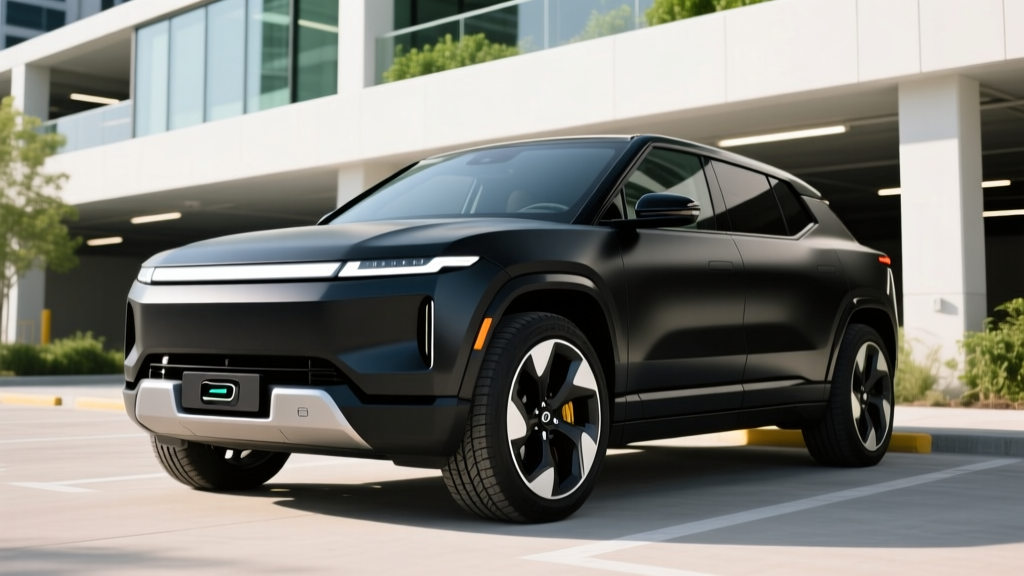
If you've ever wondered how a three-row, 6,800-pound electric SUV manages to embarrass sports cars at stoplights, the 2026 Rivian R1S is your answer. With the Tri-Motor AWD powertrain, Rivian quotes a 0-60 mph time of 2.9 seconds — a figure that places this family hauler in hypercar territory. But the R1S isn't just a straight-line novelty. It pairs that acceleration with genuine off-road capability, up to 410 miles of EPA-estimated range on the Max Pack, and a NACS-native charging architecture that unlocks the full Tesla Supercharger network.
This review breaks down every performance number, charging curve, and ownership cost you need to evaluate the R1S against rivals like the Tesla Model X, BMW iX, and Mercedes EQS SUV. We'll also address the real-world range gap, the tax credit situation, and whether the R1S justifies its premium pricing in 2026.
Performance: Rivian R1S 0-60 Time by Powertrain
The 2026 R1S is offered in three powertrain configurations, each with distinctly different performance personalities. The Dual-Motor is the efficiency-oriented choice, the Performance Dual-Motor adds meaningful punch, and the Tri-Motor is the headline-grabber.
| Specification | Dual-Motor AWD | Performance Dual-Motor | Tri-Motor AWD |
|---|---|---|---|
| 0-60 mph | 4.5 seconds | 3.4 seconds | 2.9 seconds |
| Horsepower | 533 hp | 665 hp | 850 hp |
| Torque (lb-ft) | 610 | 829 | 1,103 |
| Drivetrain | Dual-Motor AWD | Dual-Motor AWD | Tri-Motor AWD |
| Top Speed | 125 mph | 130 mph | 130 mph |
| Towing Capacity | 7,700 lbs | 7,700 lbs | 7,700 lbs |
The Tri-Motor's 2.9-second 0-60 time is achieved with a launch procedure that pre-conditions the battery and manages torque distribution across all three motors in real time. In practice, the acceleration is violent — the kind of thrust that presses you deep into the seat and makes passengers laugh involuntarily. But here's the nuance most reviews skip: sustaining that performance requires thermal management. After two or three consecutive hard launches, the R1S will throttle output to protect the battery and motors. For daily driving and occasional highway merges, this is a non-issue. For track-day fantasies, manage your expectations.
The Performance Dual-Motor at 3.4 seconds is, for most buyers, the sweet spot. You sacrifice half a second to 60 mph but save roughly $15,000 and gain a marginal efficiency advantage. The standard Dual-Motor's 4.5 seconds is still quicker than most V8-powered SUVs from five years ago and perfectly adequate for a family vehicle.
Range, Battery, and Real-World Efficiency
The R1S uses Rivian's second-generation skateboard platform with three battery pack options. Rivian has transitioned to a mix of NMC (nickel manganese cobalt) chemistry for the Standard and Large packs, and LFP (lithium iron phosphate) for the Standard pack on base trims to reduce cost and critical-mineral dependency.
| Battery Pack | Usable Capacity | Chemistry | EPA Range (Dual-Motor) | EPA Range (Tri-Motor) |
|---|---|---|---|---|
| Standard | 92 kWh | LFP | 270 miles | 240 miles |
| Large | 117 kWh | NMC | 352 miles | 321 miles |
| Max | 141 kWh | NMC | 410 miles | 371 miles |
Efficiency varies significantly by configuration. According to EPA data on fueleconomy.gov, the Dual-Motor Large Pack achieves approximately 73 MPGe combined (roughly 46 kWh/100 mi), while the Tri-Motor drops to around 65 MPGe (52 kWh/100 mi). The Tri-Motor's extra weight and power draw exact a tangible efficiency penalty — something to weigh if your commute is long and charging access is limited.
Charging Speed: DC Fast Charging and Home Level 2
The 2026 R1S comes equipped with a native NACS (North American Charging Standard) port, meaning it plugs directly into Tesla Superchargers without an adapter. This is a significant practical advantage for road-trip charging reliability in 2026.
| Charging Level | Max Power (kW) | Rate (miles/hr) | 10-80% Time |
|---|---|---|---|
| Level 1 (120V household) | 1.4 kW | ~4 mi/hr | N/A (days) |
| Level 2 (240V, 48A home) | 11.5 kW | ~33 mi/hr | ~9–12 hours (full) |
| DC Fast Charge (Max Pack) | 220 kW peak | ~250+ mi/hr (peak) | ~27 minutes |
| DC Fast Charge (Large Pack) | 200 kW peak | ~230 mi/hr (peak) | ~30 minutes |
| DC Fast Charge (Standard) | 175 kW peak | ~200 mi/hr (peak) | ~28 minutes |
Charging curve reality: The Max Pack's 220 kW peak is sustained only between roughly 10–35% state of charge. Above 50%, the rate tapers to ~150 kW, and above 80% it drops sharply to protect the battery. A 10–80% charge in 27 minutes is realistic at a V4 Supercharger or a 350 kW Electrify America station — but only if you arrive with a preconditioned battery. Use the R1S's built-in navigation to route to a charger, and the vehicle will warm the pack automatically. Cold-soak the battery (arriving without preconditioning in winter), and that 27-minute stop can stretch to 40+ minutes.
For home charging, the R1S's 11.5 kW onboard charger is competitive. A full charge from 10% on the Large Pack takes roughly 10 hours — plug in at night, wake up full. Rivian offers a Wall Charger rated at 48 amps; installation typically runs $800–$2,500 depending on your electrical panel's capacity and distance from the panel to the garage. If your home has a 200-amp service panel with available capacity, you're likely set. Older 100-amp panels may require a $2,000–$4,000 upgrade — a hidden cost buyers should budget for.
Pricing, Trims, and Federal Tax Credit Eligibility
The 2026 R1S lineup spans a wide price range depending on powertrain, battery, and trim. Here's where things stand before incentives:
| Trim / Configuration | Base MSRP | As-Tested (typical options) |
|---|---|---|
| Dual-Motor, Standard Pack, Adventure | $79,900 | $83,000–$87,000 |
| Dual-Motor, Large Pack, Adventure | $85,900 | $89,000–$94,000 |
| Performance Dual-Motor, Large Pack | $93,900 | $97,000–$102,000 |
| Tri-Motor, Max Pack, Ascend | $109,900 | $115,000–$122,000 |
- MSRP cap: SUVs must be under $80,000 — only the base Dual-Motor Standard Pack Adventure qualifies on price.
- Buyer income limits: $300,000 joint / $225,000 head of household / $150,000 individual AGI.
- Battery sourcing: Critical minerals and battery components must meet escalating domestic-content thresholds that tighten annually. Rivian has worked to qualify partial or full credits on eligible trims, but battery-sourcing compliance varies by build date.
- Point-of-sale transfer: Eligible buyers can apply the credit as an immediate price reduction at delivery rather than waiting for tax filing.
Bottom line: Most R1S configurations exceed the $80,000 MSRP cap. If you want the credit, target the base Dual-Motor Standard Pack and confirm eligibility with Rivian and a tax professional before ordering. Never assume a flat $7,500 — the actual credit may be $3,750 (partial sourcing compliance) or $0 depending on build specifics.
Interior, Cargo, and Technology
The R1S seats up to seven passengers across three rows. The second row offers a bench (three-across) or optional captain's chairs (reducing capacity to six). Third-row space is genuinely usable for adults on shorter trips — a meaningful advantage over the BMW iX and most midsize EV SUVs.
| Measurement | Value |
|---|---|
| Front headroom | 41.1 in |
| Front legroom | 41.3 in |
| Second-row legroom | 38.4 in |
| Third-row legroom | 32.3 in |
| Cargo (behind 3rd row) | 10.6 cu ft |
| Cargo (3rd row folded) | 46.7 cu ft |
| Cargo (all rear rows folded) | 88.2 cu ft |
| Front trunk (frunk) | 11.0 cu ft |
Tech highlights: The R1S runs Rivian's proprietary software stack on a 15.6-inch center touchscreen with a clean, responsive interface. Wireless Apple CarPlay and Android Auto are supported. The vehicle receives regular over-the-air (OTA) updates that have meaningfully improved features like navigation, charging optimization, and driver-assist behavior since launch. The Rivian Driver+ system provides adaptive cruise control and lane-centering on highways — this is an SAE Level 2 driver-assistance system requiring constant driver supervision. It is not autonomous driving, and it does not rival Tesla's FSD or GM's Super Cruise in hands-free capability. It's competent for highway commuting, but you must keep your hands on the wheel and eyes on the road.
A standout feature is the built-in air compressor (available on Adventure and Ascend trims) for airing up tires off-road or inflating gear. The R1S also offers a Gear Tunnel (on the R1T truck, not the R1S) but compensates with a powered tonneau-style cargo shade and available camp kitchen accessory for the frunk.
Notable drawbacks: The R1S's ride quality on 22-inch wheels can be firm over broken pavement — the 20-inch all-season or all-terrain tires offer noticeably better compliance. Road noise at highway speeds is present but not excessive. The glass roof lacks a shade, which can make the cabin warm on sunny days; an aftermarket or dealer-installed shade is a common owner upgrade. And while Rivian's service network has expanded significantly, it still doesn't match the density of Tesla Service Centers or legacy dealer networks in rural areas.
Warranty and Ownership Costs
Rivian backs the R1S with competitive warranty coverage:
- Basic vehicle warranty: 5 years / 60,000 miles
- Battery and drive unit warranty: 8 years / 175,000 miles (retains ≥70% capacity)
- Corrosion warranty: 5 years / unlimited miles
- Roadside assistance: 5 years / 60,000 miles
The 8-year/175,000-mile battery warranty is above the industry standard of 8 years/100,000 miles and reflects Rivian's confidence in its pack durability. The 70% capacity retention threshold is typical — if your battery degrades below 70% of original capacity within the warranty window, Rivian will repair or replace it. Real-world degradation data from early R1S owners (2022–2024 models) suggests roughly 5–8% loss over the first 60,000 miles, which is consistent with NMC chemistry norms.
Insurance costs are a real consideration. The R1S, particularly in Tri-Motor form, carries premiums 30–50% higher than comparable internal-combustion SUVs due to repair costs, parts pricing, and the vehicle's performance classification. Get a quote before ordering — it can add $200–$400/month depending on your profile and location.
Who Should Buy the Rivian R1S?
Choose the R1S If:
- You need three rows of seating with genuine adult-capable third-row space
- You want supercar-rivaling acceleration (2.9s 0-60) in a family vehicle
- Off-road capability matters (14.9 inches of ground clearance, wading mode)
- You tow regularly (7,700-lb capacity)
- You value NACS native access to the Supercharger network
- Adventure lifestyle and overlanding are part of your routine
Look Elsewhere If:
- Your budget is under $80,000 and you need the federal tax credit
- Maximum efficiency is the priority (the iX xDrive50 gets better MPGe)
- You want hands-free highway driving (GM Super Cruise or Ford BlueCruise)
- You live in a rural area far from Rivian service centers
- You rarely use the third row and prefer a smaller, lighter EV
- Insurance premiums are a dealbreaker
How the R1S Stacks Up Against Key Competitors
| Spec | Rivian R1S (Tri-Motor) | Tesla Model X Plaid | BMW iX M60 | Mercedes EQS 580 SUV |
|---|---|---|---|---|
| 0-60 mph | 2.9 sec | 2.5 sec | 3.6 sec | 4.1 sec |
| EPA Range (max config) | 371 mi | 326 mi | 296 mi | 305 mi |
| Third Row? | Yes (7 seats) | Yes (7 seats) | No (5 seats) | Optional (7 seats) |
| Towing | 7,700 lbs | 5,000 lbs | 3,500 lbs | 3,500 lbs |
| Starting MSRP | $109,900 | $94,990 | $111,500 | $105,550 |
| Ground Clearance | 14.9 in (max) | 9.0 in | 8.7 in | 8.8 in |
The R1S's combination of 2.9-second acceleration, 371-mile range, 7-seat capacity, and 7,700-lb towing is unmatched in this segment. The Model X Plaid is quicker but offers less range, significantly less ground clearance, and a polarizing interior. The BMW iX is a refined luxury cruiser but lacks a third row entirely. The Mercedes EQS SUV is the comfort benchmark but can't touch the R1S on performance or off-road capability. If you need do-everything versatility with genuine performance, the R1S stands alone.
Frequently Asked Questions
What is the real-world range of the Rivian R1S?
On the highway at 70–75 mph in mild weather, expect roughly 85–90% of the EPA sticker — so about 340–360 miles for the Max Pack Dual-Motor (EPA 410 mi), 280–310 for the Large Pack (EPA 352 mi), and 220–245 for the Standard (EPA 270 mi). In sub-freezing temperatures, subtract another 10–15%. City driving with regenerative braking can actually exceed EPA estimates.
How fast does the R1S charge at home and on the road?
At home on a Level 2 (240V, 48A) charger, the R1S adds roughly 33 miles of range per hour — a full overnight charge covers most needs. On DC fast chargers, the Max Pack peaks at 220 kW and charges from 10–80% in approximately 27 minutes at a compatible station with a preconditioned battery.
Does the Rivian R1S qualify for the $7,500 federal EV tax credit?
Only the base Dual-Motor Standard Pack at $79,900 MSRP clears the $80,000 SUV cap. Even then, buyer income limits ($150K–$300K AGI depending on filing status) and battery-sourcing requirements determine the actual credit amount, which may be $0, $3,750, or $7,500. Consult IRS §30D guidelines and a tax professional before relying on the credit.
Is the Rivian R1S worth buying over a Tesla Model X?
If you prioritize off-road capability, towing (7,700 vs. 5,000 lbs), interior build quality, and a more rugged adventure ethos, the R1S wins decisively. If you want the absolute quickest 0-60 time, the most extensive proprietary Supercharger network (though Rivian now has NACS access), and hands-free driving aspirations, the Model X has merits. For most three-row EV SUV buyers in 2026, the R1S offers a more well-rounded package.
What are the biggest pros and cons of the R1S?
- Class-leading 0-60 time (2.9s Tri-Motor)
- Up to 410 mi EPA range (Max Pack)
- Genuine off-road hardware (14.9" clearance)
- 7-seat versatility with usable 3rd row
- Native NACS / Supercharger access
- 7,700-lb towing capacity
- Most trims exceed $80K tax-credit MSRP cap
- High insurance premiums
- Firm ride on 22-inch wheels
- No glass roof shade
- Driver+ is competent but not class-leading ADAS
- Service network still growing
How long will the R1S battery last?
Rivian warrants the battery for 8 years or 175,000 miles at ≥70% capacity retention. Based on NMC chemistry norms and early owner data, expect 85–92% capacity after 100,000 miles with normal use. The battery should remain functional well beyond 200,000 miles, though with progressively reduced range. LFP packs (Standard) degrade more slowly but start with less total capacity.