If you've been searching for the Rivian Q3, you're not alone—but you might be looking for a vehicle that doesn't exist under that exact name. The "Q3" moniker has circulated in EV forums and search queries as a catch-all for Rivian's long-rumored compact crossover, a vehicle positioned below the R1S and R1T to compete with the Tesla Model Y, Volvo EX30, and upcoming entries from legacy automakers. What we do know is that Rivian has officially confirmed its next-generation, more affordable EV platform, headlined by the Rivian R2 (a midsize SUV) and the smaller Rivian R3, both built on a new, cost-optimized architecture.
As of early 2026, the R2 is entering production at Rivian's new Georgia facility, with the R3 expected to follow. This article consolidates everything confirmed and reasonably projected about Rivian's compact EV lineup—what buyers sometimes call the "Rivian Q3"—including expected range, charging architecture, pricing, and whether it will qualify for the federal EV tax credit.
What Is the 'Rivian Q3,' and What Are Rivian Actually Building?
Rivian has never officially used the name "Q3" for any production or concept vehicle. The term appears to be a community-generated placeholder—possibly conflating Audi's Q3 (a gas-powered compact SUV) with Rivian's anticipated smaller model. Rivian's actual compact EV strategy centers on two vehicles:
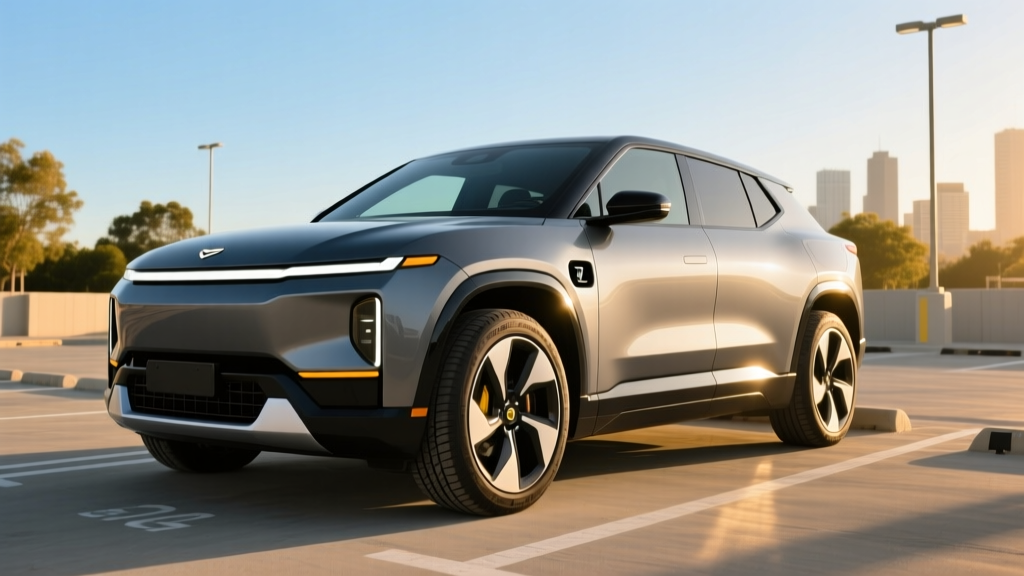
- Rivian R2: A midsize, two-row SUV roughly the footprint of a Tesla Model Y, targeting a starting price near $45,000. Production began in early 2026 at Rivian's new Stanton, Georgia plant.
- Rivian R3: A subcompact crossover, smaller than the R2, targeting an even lower price point (estimated $30,000–$35,000). Expected production start in late 2026 or 2027.
Both vehicles ride on Rivian's new midsize platform, which uses a structural battery pack, a simplified wiring architecture, and fewer motors to cut costs. Rivian CEO RJ Scaringe has stated publicly that the R2 is designed to be the company's volume seller, with a target of over 100,000 units annually once production ramps.
Expected Range, Battery, and Efficiency
Rivian has confirmed that the R2 will launch with multiple battery options, though final EPA certification numbers are still being finalized for all trims. Based on Rivian's disclosures and the platform's known architecture, here is what we know and can reasonably project:
| Spec | R2 (Standard Range) | R2 (Max Range) | R3 (Projected) |
|---|---|---|---|
| EPA Est. Range | ~275 mi | ~330+ mi | ~250 mi (est.) |
| Battery Capacity | ~75 kWh (usable) | ~100 kWh (usable) | ~65 kWh (est.) |
| Battery Chemistry | NMC (expected) | NMC | LFP likely |
| Drivetrain | Dual-Motor AWD | Dual-Motor AWD | Single/Dual TBD |
| Horsepower | ~400 hp | ~450 hp | ~250–350 hp |
| 0-60 mph | ~5.0 sec | ~4.5 sec | ~6.0 sec (est.) |
| Efficiency (est.) | ~110 MPGe / 30 kWh/100mi | ~115 MPGe / 29 kWh/100mi | ~115 MPGe (est.) |
Charging Speed: DC Fast Charging and Home Level 2
Charging speed is often the make-or-break factor for EV buyers, and Rivian's new platform is designed to address one of the R1's biggest criticisms: relatively slow DC fast charging compared to Hyundai/Kia's E-GMP or Tesla's architecture.
| Charging Level | Power / Rate | Time / Miles Added |
|---|---|---|
| Level 1 (120V) | ~1.4 kW | ~3–4 mi/hr |
| Level 2 (240V, 48A) | ~11.5 kW | ~30–35 mi/hr; full charge in ~9–10 hr |
| DC Fast Charge (Peak) | ~200–220 kW (peak) | 10–80% in ~25–30 min (est.) |
| DC Sustained (avg. 10-80%) | ~150 kW (avg.) | Expect taper above 80% SoC |
Rivian has confirmed the R2 platform will support a NACS (North American Charging Standard) connector natively, giving it direct access to Tesla's Supercharger network—now the largest and most reliable DC fast-charging network in the U.S. This is a significant advantage over the R1 generation, which launched with a CCS1 port and required an adapter for Supercharger access.
Charge curve reality: Peak kW numbers are not sustained across the entire session. Expect the R2 to hit peak charge rate (roughly 200–220 kW) between approximately 10–40% state of charge, then taper progressively. The 10–80% time of 25–30 minutes is competitive with the Tesla Model Y and Hyundai Ioniq 5, though not class-leading compared to 800V architectures like the Kia EV6, which can achieve 10–80% in roughly 18 minutes at a 350 kW charger.
Pricing, Trims, and Federal Tax Credit Eligibility
Rivian has positioned the R2 as a mass-market EV, with a base price designed to undercut the Tesla Model Y Long Range and land near key incentive thresholds.
| Trim | Base MSRP | §30D Credit Eligible? | Effective Price (if eligible) |
|---|---|---|---|
| R2 Standard Range AWD | ~$45,000 | Likely (below $80K SUV cap) | ~$37,500 |
| R2 Max Range AWD | ~$52,000 | Likely | ~$44,500 |
| R2 Adventure (loaded) | ~$58,000 | Likely | ~$50,500 |
| R3 (base, projected) | ~$30,000–$35,000 | Likely (below $80K cap) | ~$22,500–$27,500 |
- MSRP Cap: SUVs must have an MSRP at or below $80,000. All confirmed R2 trims fall well under this limit.
- Buyer Income Cap: Modified adjusted gross income must not exceed $150,000 (single), $225,000 (head of household), or $300,000 (joint). Check IRS §30D guidelines for current-year thresholds.
- Battery Sourcing: The full $7,500 credit requires meeting both critical-mineral and battery-component sourcing requirements. Rivian has been working to localize its supply chain, but final credit amounts ($3,750 or $7,500) depend on the specific battery pack and model year. Always verify at fueleconomy.gov before purchasing.
- Point-of-Sale Transfer: As of 2024, buyers can transfer the credit to the dealer at purchase, reducing the upfront cost rather than waiting for a tax refund. This should apply to the R2 if eligible.
Interior, Cargo, and Practicality
The R2 is designed as a two-row, five-passenger SUV. Rivian has emphasized that the R2 retains key brand DNA—the adventure-oriented design language, the gear tunnel (on R1T), and a focus on outdoor utility—while shrinking the footprint and cost.
Based on Rivian's published exterior dimensions and platform details:
- Passenger volume: Expected ~105–110 cu ft, competitive with the Model Y (~106 cu ft).
- Cargo behind rear seats: Estimated 30–35 cu ft, with a flat load floor.
- Cargo with rear seats folded: Estimated 65–72 cu ft.
- Front trunk (frunk): Rivian has confirmed a front trunk on the R2, though volume is smaller than the R1's—estimated 5–7 cu ft.
- Ground clearance: Expected 8.5–9.5 inches, maintaining Rivian's off-road credibility.
- Towing capacity: Rivian has not published a final number, but the midsize platform is expected to support 3,500–4,500 lbs—adequate for a small camping trailer but not heavy-duty hauling.
Tech, Driver Assistance, and Standout Features
Rivian's software and driver-assistance stack has matured significantly since the R1 launch. The R2 will ship with the company's latest generation of infotainment and ADAS:
- Infotainment: A 15.6-inch center touchscreen running Rivian's proprietary OS, with native navigation, over-the-air updates, and integrated trip planning with charging stops.
- Driver assist: Rivian's "Driver+" system, a Level 2 hands-on ADAS offering adaptive cruise control, lane centering, and automatic lane changes on divided highways. This is not a hands-off or self-driving system—the driver must remain engaged at all times.
- Camera and sensor suite: 11 cameras, 5 radar units, and a proprietary perception stack. Rivian has notably avoided lidar, unlike some competitors.
- Unique features: Expected to include Rivian's camp kitchen compatibility (accessory), integrated gear management, and a "Nature Mode" for quiet off-road driving. The R2 will also feature vehicle-to-load (V2L) capability for powering external devices.
Warranty and Ownership Costs
Rivian's warranty structure for the R1 generation has been competitive, and the R2 is expected to follow suit:
- Battery & Powertrain: 8 years / 120,000 miles (expected, matching or exceeding the R1's 8/100,000). Federal law mandates a minimum of 8/100,000 for battery capacity retention on EVs.
- Vehicle (bumper-to-bumper): 5 years / 60,000 miles (expected).
- Battery degradation threshold: Rivian's warranty typically covers capacity loss below 70% of original capacity within the warranty period.
Ownership economics for the R2 will depend heavily on home charging access. At a national average electricity rate of ~$0.16/kWh and an efficiency of ~30 kWh/100 miles, the R2 would cost approximately $4.80 per 100 miles to charge at home—compared to roughly $12–$15 per 100 miles for a 25 MPG gas SUV at $3.50/gallon. Public DC fast charging, at $0.35–$0.50/kWh, raises the cost to $10.50–$15.00 per 100 miles, narrowing the gap with gasoline.
Rivian R2 vs. Key Competitors
The R2 enters one of the most competitive segments in the EV market. Here's how it stacks up against confirmed or projected rivals:
| Attribute | Rivian R2 Max Range | Tesla Model Y LR (2026) | Hyundai Ioniq 5 (2026) |
|---|---|---|---|
| EPA Range | ~330 mi (est.) | ~320 mi | ~310 mi |
| Base MSRP | ~$52,000 | ~$48,000 | ~$45,000 |
| DC Fast Charge (10-80%) | ~28 min | ~25 min | ~18 min |
| Connector | NACS (native) | NACS (native) | NACS (2025+) |
| Off-Road Capability | High (8.5+ in. clearance) | Low | Low |
| Frunk | Yes (~5-7 cu ft) | Yes (~4 cu ft) | Yes (~2 cu ft) |
- Choose the R2 if: You want a midsize electric SUV with genuine off-road capability, a large frunk, Rivian's adventure ecosystem, and NACS Supercharger access—all while staying under $55,000 before incentives.
- Choose the Tesla Model Y if: You prioritize the lowest price, the most mature Supercharger network experience, and the fastest over-the-air software iteration, and you don't need off-road clearance.
- Choose the Hyundai Ioniq 5 if: Fastest DC charging speed (800V architecture) is your priority, or you prefer a more conventional crossover design with strong IIHS safety ratings.
- Wait for the R3 if: You want a sub-$35,000 compact EV and can hold off until late 2026 or 2027. The R3 could be one of the most affordable new EVs in the U.S. market if it hits its price target.
Pros and Cons
- Strong projected range (330+ mi Max Range)
- Native NACS / Supercharger access
- Class-leading off-road capability for an EV SUV
- Adventure-focused design and accessories
- Competitive pricing for the segment
- Likely eligible for full $7,500 §30D credit
- DC charging speed trails 800V competitors (Ioniq 5, EV6)
- New Georgia plant — production ramp risk and early build quality unknowns
- Final EPA numbers and pricing not yet fully certified
- R3 still over a year from production
- No hands-off / Level 3+ driver assist (nor should you expect one at this price)
Frequently Asked Questions
What is the real-world range of the Rivian R2?
The R2 Max Range is targeting an EPA estimate of 330+ miles. In real-world highway driving at 75 mph in moderate temperatures, expect roughly 280 miles. In cold weather (below 30°F), range may drop to 230–250 miles due to battery chemistry and cabin heating demands. The Standard Range model (~275 mi EPA) will likely deliver 230–240 miles on the highway.
How fast does the R2 charge at home and on the road?
At home on a 240V Level 2 charger (48A), the R2 is expected to add roughly 30–35 miles of range per hour, fully charging overnight in about 9–10 hours. On a DC fast charger, peak rate is projected at 200–220 kW, with a 10–80% session taking approximately 25–30 minutes. Charging slows significantly above 80% state of charge to protect battery longevity.
Does the Rivian R2 qualify for the $7,500 federal EV tax credit?
The R2 is expected to qualify for the full $7,500 §30D federal tax credit, as all known trims fall well below the $80,000 SUV MSRP cap. However, eligibility also depends on the buyer's income (under $150K single / $300K joint) and the battery's critical-mineral and component sourcing. Rivian has been localizing its supply chain, but the exact credit amount ($3,750 or $7,500) may vary by model year and battery pack. Always verify on fueleconomy.gov before purchasing.
Is the Rivian R2 worth buying over the Tesla Model Y?
It depends on your priorities. The R2 offers more ground clearance, a larger frunk, an adventure-oriented design, and potentially longer Max Range. The Model Y currently has a lower starting price, a more established service network, and faster software iteration. If off-road capability and brand identity matter to you, the R2 is a strong alternative. If lowest cost and proven charging infrastructure are paramount, the Model Y remains the default.
When will the Rivian R3 be available?
The R3 is announced but not yet in production. Rivian has indicated a target production start in late 2026 or 2027 at its Georgia facility. Pricing is projected at $30,000–$35,000, which would make it one of the most affordable new EVs on the U.S. market. All R3 specifications remain preliminary.
Is there actually a vehicle called the 'Rivian Q3'?
No. Rivian has never used the "Q3" name for any production or concept vehicle. The term appears to be an informal community label for Rivian's compact EV plans. The actual vehicles are the R2 (midsize SUV, production starting 2026) and the R3 (subcompact crossover, production expected 2026–2027).