Honda Electric Vehicle: Quick Answer
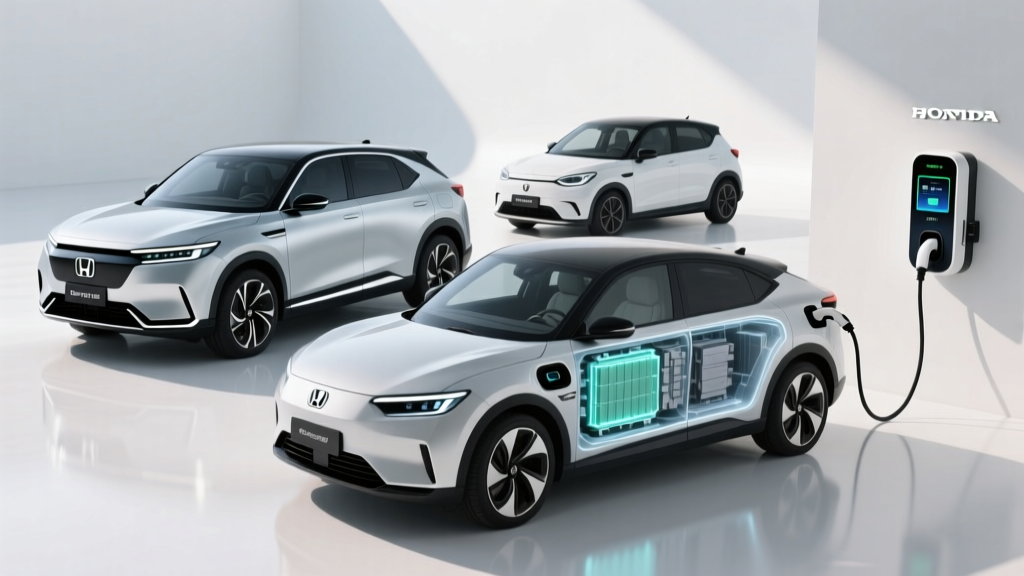
As of 2026, Honda sells one battery-electric model in the U.S.: the Honda Prologue, a midsize SUV with up to 308 miles of EPA range, a starting MSRP around $47,400, and DC fast charging peaking at roughly 155 kW (10–80% in about 27 minutes). Honda's next-generation 0 Series EVs are announced for 2026–2027 but are not yet on sale. For buyers who lack home charging or drive primarily short urban routes, Honda's hybrid lineup (CR-V Hybrid, Accord Hybrid) often delivers lower total cost with zero range compromise. For buyers with Level 2 home access and highway-heavy commutes, the Prologue is a credible, comfortable electric SUV — but it faces stiff competition from the Hyundai Ioniq 5, Tesla Model Y, and Chevrolet Equinox EV on charging speed and price.
The 2026 Honda Prologue: What You're Actually Buying
The Honda Prologue is built on General Motors' Ultium platform — the same architecture underpinning the Chevrolet Blazer EV and Cadillac Lyriq. That means Honda's first mass-market EV is essentially a co-developed product, blending GM's battery and powertrain engineering with Honda's interior design, chassis tuning, and brand identity.
Here's what the numbers look like for the 2026 model year:
| Spec | EX (FWD) | Touring (AWD) |
|---|---|---|
| EPA Range | 308 mi | 283 mi |
| Battery (usable) | ~85 kWh, NMC (Ultium) | |
| Motor Output | 212 hp / 236 lb-ft | 288 hp / 325 lb-ft |
| 0–60 mph | ~8.3 sec | ~6.0 sec |
| Max DC Fast Charge | ~155 kW (peak) | |
| 10–80% DC Charge | ~27 min | |
| Level 2 (AC) Rate | ~11.5 kW | |
| Efficiency (MPGe) | ~99 MPGe combined | ~91 MPGe combined |
| Starting MSRP | $47,400 | $55,400 |
| Battery Warranty | 8 yr / 100,000 mi | |
Real-World Range Check
The EPA sticker says 308 miles for the FWD EX. In practice, expect 250–275 miles on highway road trips at 70–75 mph, and 200–230 miles in freezing weather (below 30°F). The NMC Ultium battery manages thermals reasonably well, but like all liquid-cooled packs, cold weather forces energy into heating rather than propulsion. If your commute is 60+ miles round trip in a northern climate, plan around ~220 usable winter miles.
Charging the Prologue: Home and Public Networks
The Prologue uses the CCS1 connector for DC fast charging and J1772 for Level 2 AC. Honda has announced future models will adopt NACS (Tesla's connector), but the 2026 Prologue remains CCS-equipped. With a Tesla NACS adapter or access to Electrify America, EVgo, and ChargePoint networks, public charging is broadly available.
| Level | Power | Miles Added per Hour | Typical Use |
|---|---|---|---|
| Level 1 (120V) | ~1.4 kW | ~4–5 mi/hr | Overnight top-up (emergency) |
| Level 2 (240V) | ~11.5 kW | ~35–38 mi/hr | Home daily charging |
| DC Fast | ~155 kW peak | ~180 mi in 20 min | Road trips |
The charging-curve reality: The 155 kW peak only holds roughly from 10–40% State of Charge. Above 60%, the rate tapers to under 80 kW, and above 80% it drops below 40 kW. That 27-minute 10–80% claim assumes a capable CCS station (150 kW+) and a preconditioned battery. On a 350 kW Electrify America stall, the Prologue won't charge any faster than on a 150 kW unit — its onboard limit is the bottleneck.
Home charging cost: A Level 2 home installation (40-amp circuit, hardwired) typically runs $800–$2,200 including equipment, electrician labor, and permit — assuming your panel has spare capacity. A 200-amp panel upgrade, if needed, adds $1,500–$3,000. At the U.S. average electricity rate of ~$0.16/kWh, fully recharging the Prologue's 85 kWh battery costs roughly $13.60, or about $0.044 per mile.
Honda EV vs. Honda Hybrid: The Cost Reality
Most Honda shoppers cross-shop the Prologue against the CR-V Hybrid or Accord Hybrid. The financial case isn't straightforward — it depends heavily on your driving volume, local electricity rates, and whether you qualify for federal incentives.
| Category | Prologue EX ($47,400) | CR-V Hybrid EX-L ($38,000) |
|---|---|---|
| Purchase Price | $47,400 | $38,000 |
| Federal Tax Credit (§30D) | Up to $7,500* | $0 |
| Effective Price | ~$39,900 | $38,000 |
| 5-Yr Fuel/Energy | ~$3,400 (home charging) | ~$8,200 (36 MPG, $3.40/gal) |
| 5-Yr Maintenance | ~$1,800 | ~$3,500 |
| 5-Yr Insurance (est.) | ~$9,500 | ~$7,800 |
| 5-Yr Total Cost | ~$54,600 | ~$57,500 |
*The §30D federal tax credit requires meeting battery sourcing, buyer income caps ($150K single / $300K joint), and MSRP limits ($80K for SUVs). The Prologue's GM-sourced battery composition may affect eligibility — verify current-year rules with a tax professional. As of 2026, the credit can be transferred at the point of sale as a discount.
The Prologue wins on energy and maintenance costs, but the hybrid closes the gap through a lower purchase price and cheaper insurance. If you drive fewer than 10,000 miles per year or pay above $0.25/kWh for electricity, the hybrid's economics improve further. If you drive 20,000+ miles annually with cheap home solar or utility rates below $0.12/kWh, the EV's advantage widens substantially.
Upcoming: Honda 0 Series — What's Announced
Honda has unveiled its 0 Series EV platform, promising a dedicated Honda-designed architecture with thinner battery packs, improved aerodynamics, and a target of Level 3 autonomous capability on highways. The first 0 Series production models — expected to include a sedan and an SUV — are slated for late 2026 in Japan and 2027 in North America.
Announced targets (preliminary, not yet EPA-certified):
- 300+ mile EPA range across the lineup
- NACS connector standard
- Improved DC fast-charge speed (Honda has hinted at 200+ kW capability)
- Slimmer battery packs using proprietary thin-cell design
- Starting prices expected to undercut the Prologue, potentially in the low $40K range
If you're not in a rush, the 0 Series represents Honda's true in-house EV vision. But these specs are manufacturer estimates — expect EPA certification and real-world testing to adjust them. The Prologue is the Honda EV you can buy today.
Common Misconceptions About Honda EVs
| Myth | Fact |
|---|---|
| "Honda doesn't make real EVs." | The Prologue is a 308-mile, 288-hp AWD SUV with DC fast charging. It's a production vehicle sold nationwide. |
| "EV batteries need replacing every few years." | The Ultium battery carries an 8-year/100,000-mile warranty guaranteeing minimum 70% capacity retention. Industry data shows NMC packs typically retain 85–90% capacity after 100K miles. |
| "Charging takes hours." | Level 2 home charging adds ~35 miles per hour — an 8-hour overnight session fully replenishes the pack. DC fast charging adds ~180 miles in 20 minutes. |
| "The Prologue qualifies for the full $7,500 tax credit." | Eligibility depends on battery mineral sourcing, buyer income, and MSRP caps. The credit amount can be $0, $3,750, or $7,500 depending on sourcing compliance. Always verify at fueleconomy.gov before purchasing. |
| "Honda's EV is just a rebadged Chevy." | While the Prologue shares the Ultium platform with the Blazer EV, Honda engineers tuned the suspension, steering, interior materials, and software independently. The driving experience and cabin are distinct. |
Decision Framework: Should You Buy the Honda Prologue?
Choose the Honda Prologue If:
- You have access to Level 2 home charging (garage or driveway with a 240V circuit)
- You want a midsize SUV with a comfortable ride, Honda's build quality, and a familiar brand
- Your daily driving is under 80 miles and you take 2–3 road trips per year
- You qualify for the §30D tax credit, bringing the effective price near $40K
- You prefer Honda's dealer network for service over Tesla or startup brands
Choose a Honda Hybrid Instead If:
- You live in an apartment or lack reliable home/workplace charging
- You regularly drive in sub-zero winter climates where range loss exceeds 30%
- You tow (the Prologue isn't rated for towing; the CR-V Hybrid isn't either, but the Pilot Hybrid handles 3,500 lbs)
- Your annual mileage is under 8,000 miles — the fuel savings won't offset the price premium
Wait for the 0 Series If:
- You want a Honda-designed EV platform (not GM-shared)
- NACS native compatibility matters to you for Supercharger access without an adapter
- You're targeting a lower price point (projected low $40Ks)
- You can wait until late 2026 or 2027 to purchase
First-Time EV Buyer Checklist
- Audit your charging access. Can you install a 240V Level 2 outlet at home? Get an electrician quote before buying. If you can't charge at home, public-only charging is viable but costs 2–4x more per mile.
- Calculate your real energy cost. Check your utility's EV rate plan — many offer off-peak rates of $0.08–$0.12/kWh. At $0.10/kWh, a full Prologue charge costs $8.50.
- Verify tax credit eligibility. Use the IRS clean vehicle credit page and confirm the specific VIN's battery sourcing status with the dealer.
- Test the actual route. Drive your commute in the Prologue and note the kWh/100mi consumption displayed. Multiply by your daily miles to confirm the battery covers your needs with a 20% buffer.
- Insurance quote before signing. EV insurance premiums average 15–25% higher than equivalent gas vehicles. Get a binding quote from your insurer to budget accurately.
- Plan for road trips. Download PlugShare or the Electrify America app and map your most common long-distance route. Confirm CCS charger availability along it.
Frequently Asked Questions
Is the Honda Prologue eligible for the $7,500 federal tax credit in 2026?
Partially or fully, depending on battery sourcing compliance. The Prologue's Ultium battery uses GM-sourced cells, and the critical-mineral and battery-component requirements under §30D determine whether you receive $3,750, $7,500, or $0. Income caps ($150K single, $300K joint) and the $80K MSRP cap for SUVs also apply. Check fueleconomy.gov for the latest per-VIN eligibility and consult a tax professional.
How does the Prologue compare to the Hyundai Ioniq 5 or Tesla Model Y?
The Ioniq 5 offers faster DC charging (up to 240 kW, 10–80% in ~18 minutes on 800V architecture) and a lower starting price (~$42,000). The Model Y offers access to the Supercharger network natively and slightly better efficiency. The Prologue's advantage is its conventional SUV styling, Honda dealer support, and a more traditional interior layout that some buyers prefer over the minimalist Tesla approach.
Can I charge a Honda Prologue at a Tesla Supercharger?
Yes, with a NACS-to-CCS adapter. Honda includes or offers compatibility with adapters that enable Supercharger access. However, charging speed will still be limited by the Prologue's ~155 kW peak — you won't see Tesla-class speeds at V3 or V4 stalls.
What happens if the Prologue's battery degrades significantly?
Honda's battery warranty covers 8 years or 100,000 miles, guaranteeing at least 70% of original capacity. If the pack falls below that threshold within the warranty period, Honda will repair or replace it at no cost. Out-of-warranty replacement for an 85 kWh Ultium pack would likely cost $12,000–$18,000 based on current GM parts pricing, though industry degradation data suggests most NMC packs retain 80%+ capacity well past 150,000 miles.
Will Honda make a smaller, cheaper electric vehicle?
The 0 Series lineup is expected to include a more compact and affordable model, potentially starting in the low $40,000s. However, Honda has not confirmed U.S. pricing or availability beyond the 2026–2027 timeline. For now, the Prologue remains Honda's only electric vehicle available for purchase in the United States.