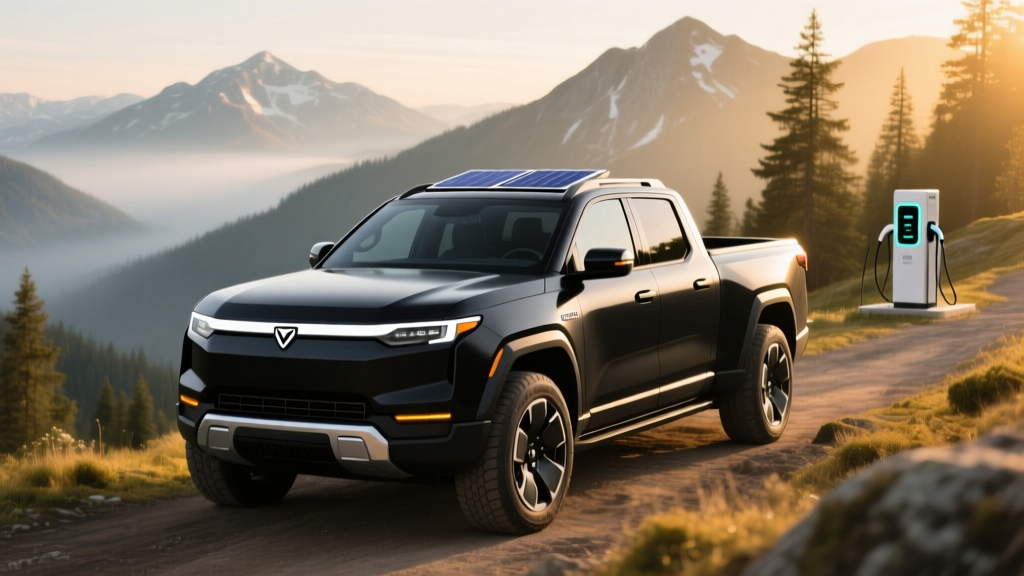
Investors tracking the Rivian Q3 earnings date are focused on production margins and delivery targets, but for prospective buyers, the real story lies in the product. As Rivian reports its third-quarter financial results in late October 2026, the R1T electric pickup stands as the company's flagship proof point — a vehicle that must justify both its premium pricing and the company's long-term viability. This review dissects the 2026 Rivian R1T's real-world capability while contextualizing what Rivian's financial trajectory means for buyers committing to a $70,000+ electric truck.
2026 Rivian R1T: Core Specifications at a Glance
| Specification | Dual-Motor Standard | Dual-Motor Max | Tri-Motor (Performance) |
|---|---|---|---|
| EPA Range | 270 miles | 420 miles | 352 miles |
| Battery Capacity | 106 kWh (NMC) | 149 kWh (NMC) | 149 kWh (NMC) |
| Horsepower | 533 hp | 533 hp | 850 hp |
| 0-60 mph | 4.5 sec | 4.5 sec | 2.9 sec |
| Drivetrain | AWD (dual-motor) | AWD (dual-motor) | AWD (tri-motor) |
| Max DC Fast Charge | 220 kW | 350 kW | 350 kW |
| 10-80% DC Time | ~30 min | ~22 min | ~22 min |
| Level 2 Charge Rate | 11.5 kW (~25 mi/hr) | 11.5 kW (~25 mi/hr) | 11.5 kW (~25 mi/hr) |
| Base MSRP | $69,900 | $79,900 | $99,900 |
| MPGe (Combined) | 73 MPGe | 70 MPGe | 68 MPGe |
| Towing Capacity | 11,000 lbs | 11,000 lbs | 11,000 lbs |
Real-World Range: Beyond the EPA Sticker
Rivian's 149 kWh Max Pack uses nickel-manganese-cobalt (NMC) chemistry, which delivers higher energy density than lithium iron phosphate (LFP) but trades some cycle life and thermal stability. For buyers in northern climates, the Max Pack's buffer against cold-weather degradation is substantial — but it adds 400+ pounds and $10,000 to the price. The Standard Pack's 106 kWh battery suffices for daily commutes under 150 miles round-trip, where home charging replenishes overnight.
Efficiency varies dramatically with use case. Towing a 7,000-pound trailer cuts range roughly in half — expect 180-210 miles from the Max Pack under load. This isn't unique to Rivian; the Ford F-150 Lightning and Chevrolet Silverado EV show similar towing penalties. The R1T's quad-motor variant (if you're tracking future trims) promises torque-vectoring precision but hasn't entered production as of 2026.
Charging Speed and Infrastructure
The R1T Max Pack supports 350 kW peak DC fast charging on compatible Electrify America or Tesla Supercharger stations (via Rivian's NACS adapter, now standard). However, peak rates are sustained only between 10-40% state of charge. The charging curve tapers significantly above 60%, meaning a 10-80% session takes approximately 22 minutes, but 80-100% adds another 25-30 minutes. For road trippers, the practical strategy is charging to 80% and moving on — the final 20% is best reserved for destination overnight charging.
| Charging Method | Power | Range Added per Hour | Use Case |
|---|---|---|---|
| Level 1 (120V outlet) | 1.4 kW | ~3-4 miles | Emergency/trickle |
| Level 2 (240V home) | 11.5 kW | ~25 miles | Daily overnight |
| DC Fast (Standard Pack) | 220 kW peak | ~140 miles in 15 min | Road trips |
| DC Fast (Max Pack) | 350 kW peak | ~190 miles in 15 min | Road trips |
Home Level 2 charging requires a 60-amp circuit and a hardwired wall connector (Rivian's branded unit or a third-party like ChargePoint or Emporia). Expect $800-$2,500 for professional installation depending on panel proximity and local permitting. Homes with 100-amp service panels may need a $2,000-$4,000 upgrade to support simultaneous EV charging and household loads — a cost often overlooked in purchase budgets.
Pricing, Tax Credits, and Ownership Economics
The 2026 R1T starts at $69,900 for the Dual-Motor Standard Pack Adventure trim. The Max Pack adds $10,000, and the Tri-Motor Performance variant reaches $99,900 before options. Destination fees, premium paint ($2,500), and the Camp Kitchen package ($5,500) push as-tested prices higher.
| Trim | Base MSRP | Federal Tax Credit (§30D) | Effective Price | Eligibility Notes |
|---|---|---|---|---|
| Dual-Motor Standard | $69,900 | $7,500 (if eligible) | $62,400 | MSRP under $80K cap; buyer income limits apply |
| Dual-Motor Max | $79,900 | $7,500 (if eligible) | $72,400 | MSRP under $80K cap; buyer income limits apply |
| Tri-Motor Performance | $99,900 | $0 (exceeds MSRP cap) | $99,900 | Trucks capped at $80K MSRP for §30D credit |
Critical tax credit caveats: The IRS §30D federal EV tax credit has strict eligibility requirements for 2026. The R1T qualifies as a truck (MSRP cap: $80,000), meaning the Tri-Motor Performance trim is ineligible. Buyer income caps apply: $300,000 joint / $225,000 head of household / $150,000 single filer (modified adjusted gross income). Additionally, battery component and critical mineral sourcing requirements must be met — Rivian has confirmed Standard and Max Pack batteries meet 2026 sourcing thresholds, but buyers should verify via the IRS's official eligibility tool before purchase. The credit can now be transferred to the dealer at point of sale, reducing your out-of-pocket cost directly rather than waiting for tax filing.
Performance, Capability, and Daily Driving
The Tri-Motor R1T's 2.9-second 0-60 time makes it one of the quickest production pickups ever built, rivaling the Tesla Cybertruck Beast and far surpassing any internal-combustion truck. But straight-line speed is only part of the story. The R1T's air suspension adjusts ride height from 6.5 inches (Standard) to 14.4 inches (Off-Road mode), and the vehicle's approach/departure angles (35.5°/30° with air suspension raised) exceed most body-on-frame competitors.
Cargo space measures 54.5 inches long (bed floor) with the tonneau closed, and the 11-cubic-foot front trunk (frunk) is lockable and weatherproofed. Rear seat legroom is 38.5 inches — adequate for adults on long trips. The gear tunnel (optional on Adventure trims, standard on Ascend) adds 11.7 cubic feet of lockable storage behind the cab, accessible from either side.
Driver assistance comes via Rivian's Highway Assist and Adaptive Cruise Control — both Level 2 SAE automation requiring constant driver supervision. The system performs competently on interstates but lacks the hands-free capability of Ford's BlueCruise or GM's Super Cruise. Rivian has not announced a Level 3 or Level 4 autonomous system, and buyers should not expect "self-driving" functionality.
Warranty, Reliability, and Long-Term Ownership
Rivian covers the R1T with a 5-year/60,000-mile bumper-to-bumper warranty and an 8-year/175,000-mile battery and powertrain warranty — the latter among the most generous in the industry. The battery warranty guarantees 70% capacity retention over the coverage period. Real-world degradation data is still emerging (the R1T launched in 2022), but early owner reports suggest 3-5% loss in the first two years, consistent with NMC chemistry norms.
Service remains a friction point. Rivian operates roughly 50 service centers nationwide as of 2026, and mobile service handles minor repairs but cannot address major drivetrain or structural issues. Wait times for collision repair and parts availability have improved since 2024 but still lag legacy automakers. Buyers in rural areas or regions without a nearby service center should factor in potential downtime and loaner-vehicle logistics.
Pros and Cons
- Class-leading 420-mile EPA range (Max Pack)
- 350 kW DC fast charging (10-80% in ~22 min)
- 11,000-lb towing capacity with integrated trailer brake controller
- Standard NACS adapter for Tesla Supercharger access
- Air suspension with 14.4" ground clearance for off-road use
- 8-year/175,000-mile battery warranty
- Frunk + gear tunnel for versatile cargo storage
- Tri-Motor exceeds $80K MSRP cap — no federal tax credit
- Limited service center network (~50 locations)
- No hands-free driver assist (Level 2 only)
- Heavy vehicle (6,800+ lbs) impacts tire wear and efficiency
- Towing cuts range by ~50%
- Cold-weather range loss significant without garage preconditioning
- Premium pricing vs F-150 Lightning base trims
Rivian's Financial Health: What Q3 Earnings Mean for Buyers
The Rivian Q3 earnings date (typically late October) reveals production volumes, gross margin trends, and cash burn — metrics that matter to buyers committing $70,000+ to a startup. Rivian's Q3 2026 report will likely address:
- Production capacity: Can the Normal, Illinois factory meet demand for R1T and the upcoming R2 SUV without quality compromises?
- Gross margin: Has Rivian reached positive gross margin per vehicle, or is each R1T still sold at a loss?
- Cash runway: Does Rivian have sufficient capital to fund R2/R3 development and expand service infrastructure?
- Software and services revenue: Are over-the-air updates and subscription features (like the Camp Kitchen integration) generating recurring revenue?
For buyers, a financially stable Rivian means better parts availability, faster service expansion, and confidence that software updates will continue. A cash-strapped Rivian risks delayed recalls, slower feature rollouts, and potential acquisition — scenarios that could impact resale value and long-term support. Review the Q3 earnings call (available on Rivian's investor relations page) before committing to a purchase, especially if you're considering the higher-margin Tri-Motor variant.
Who Should Buy the 2026 Rivian R1T?
- Outdoor enthusiasts who need off-road capability, gear storage, and 300+ mile range for remote trailheads
- Homeowners with Level 2 charging who commute under 150 miles daily and road-trip 3-5 times yearly
- Buyers who prioritize build quality, air suspension comfort, and tech-forward features over budget pricing
- Towers who need 11,000-lb capacity but accept the 50% range penalty under load
- You need a sub-$55,000 truck (Ford F-150 Lightning Pro starts at $54,995)
- You require hands-free highway driving (Chevy Silverado EV with Super Cruise)
- You live far from a Rivian service center and cannot tolerate potential downtime
- Your budget is fixed at $70K and you need the Max Pack's range (the Standard Pack won't suffice)
Frequently Asked Questions
What is the real-world range of the 2026 Rivian R1T?
The Max Pack's 420-mile EPA estimate drops to 340-360 miles highway, 280-310 miles in cold weather, and 180-210 miles when towing. The Standard Pack delivers 220-235 miles highway and 180-200 miles in freezing conditions.
How fast does the R1T charge at home and on road trips?
Home Level 2 charging (11.5 kW) adds ~25 miles per hour, fully replenishing the Max Pack in 12-13 hours. DC fast charging peaks at 350 kW (Max Pack) or 220 kW (Standard), achieving 10-80% in ~22 minutes or ~30 minutes respectively.
Does the R1T qualify for the $7,500 federal tax credit?
The Standard and Max Pack trims qualify if the buyer meets income caps ($300K joint / $150K single) and the vehicle meets battery sourcing requirements (confirmed for 2026). The Tri-Motor Performance ($99,900) exceeds the $80K MSRP cap and is ineligible.
Is the R1T worth buying vs the Ford F-150 Lightning or Chevy Silverado EV?
The R1T wins on off-road capability, air suspension versatility, and Max Pack range. The F-150 Lightning offers lower pricing and a more established service network. The Silverado EV provides hands-free Super Cruise. Choose based on your priority: adventure capability (R1T), budget (Lightning), or highway autonomy (Silverado EV).
What does Rivian's Q3 earnings report tell me as a buyer?
Q3 earnings reveal production health, gross margin trends, and cash runway. A strong report signals stable parts availability and service expansion. Weak results may indicate future support challenges. Review the earnings call before committing to a $70K+ purchase.
What is the battery warranty and expected lifespan?
Rivian's 8-year/175,000-mile battery warranty guarantees 70% capacity retention. Early data suggests 3-5% degradation in the first two years. NMC chemistry typically retains 80-85% capacity at 150,000 miles under normal use.
For official EPA efficiency data, see fueleconomy.gov. For tax credit eligibility, consult the IRS Clean Vehicle Credits page. Rivian specifications sourced from Rivian's official specs page.