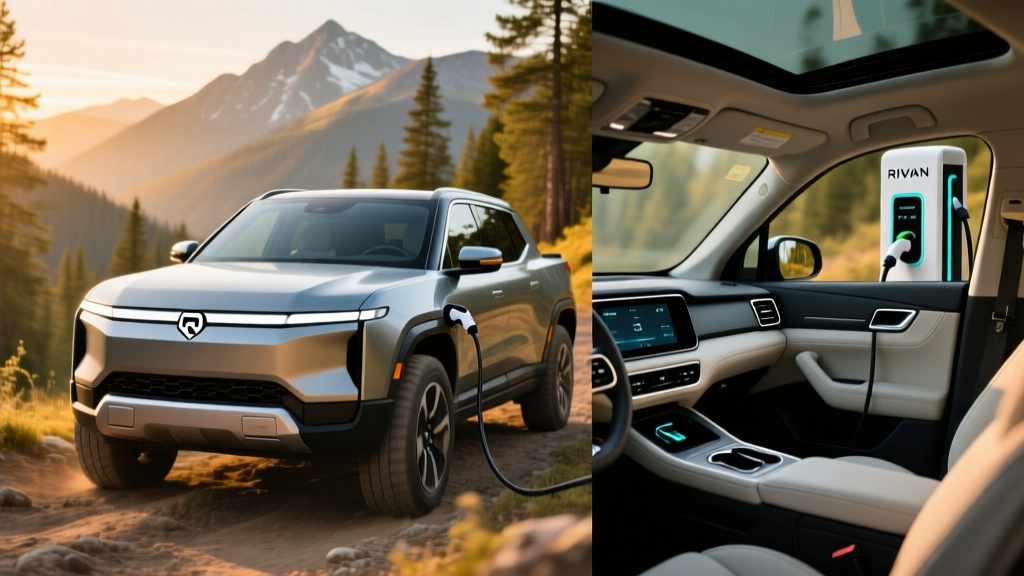
If you've been researching the electric truck and SUV market, you've likely typed "what company owns Rivian" into a search engine and found a tangle of headlines about IPOs, Amazon delivery vans, and Volkswagen investments. The short answer: Rivian Automotive, Inc. is an independent, publicly traded company (NASDAQ: RIVN) headquartered in Irvine, California. It isn't a subsidiary of Ford, GM, or any legacy automaker. However, Volkswagen Group holds a significant minority stake, and Amazon remains a major commercial partner — relationships that shape Rivian's balance sheet, technology roadmap, and production scale in 2026.
Understanding Rivian's corporate ownership matters because it directly affects the vehicles you can buy today. VW's multi-billion-dollar investment has helped fund the upcoming midsize R2 platform, while Amazon's 100,000-van EDV contract keeps the Normal, Illinois factory running at volume. For retail buyers, though, what matters most is whether the 2026 Rivian R1T (truck) and 2026 Rivian R1S (three-row SUV) deliver on range, charging speed, and daily usability. This review covers both.
Rivian's Corporate Ownership Explained
Rivian was founded in 2009 by RJ Scaringe as Mainstream Motors, later rebranded to Rivian. It went public in November 2021 in one of the largest IPOs in history. As of early 2026, the ownership structure looks like this:
- Public shareholders — Rivian trades on NASDAQ under ticker RIVN. No single entity holds majority voting control.
- Volkswagen Group — VW invested $5.8 billion across multiple tranches beginning in 2019 and expanded the partnership in 2024 with an additional joint-venture agreement focused on shared electrical architecture and software. VW holds roughly 13–15% of Rivian equity as of 2026 and has board observation rights.
- Amazon — Amazon holds an equity stake (estimated ~10–12% post-warrant adjustments) tied to its Electric Delivery Van (EDV) purchase agreement. Amazon's exclusivity clause on the EDV began loosening in 2024, allowing Rivian to sell commercial vans to other fleets.
- RJ Scaringe — The founder and CEO retains significant voting power through a dual-class share structure, keeping strategic control independent of VW or Amazon.
The bottom line: Rivian is its own company. VW is a strategic investor and technology partner, not a parent. This matters for buyers because it means Rivian's product roadmap, warranty support, and Supercharger/NACS adapter strategy remain under Rivian's direct control.
2026 Rivian R1T & R1S: Specs at a Glance
Rivian offers the R1T pickup and R1S SUV on the same skateboard platform with Dual-Motor, Performance Dual-Motor, and (for the R1T) a Tri-Motor configuration for 2026. Here are the core specifications:
| Spec | R1T Dual-Motor (Large) | R1S Dual-Motor (Large) |
|---|---|---|
| EPA Range | 352 miles | 341 miles |
| Battery (usable) | ~128.9 kWh (NMC) | ~128.9 kWh (NMC) |
| Horsepower | 533 hp | 533 hp |
| 0–60 mph | 4.5 sec | 4.6 sec |
| Drivetrain | AWD (dual-motor) | AWD (dual-motor) |
| Max DC Fast Charge | 220 kW (peak) | 220 kW (peak) |
| 10–80% DCFC Time | ~27 min | ~27 min |
| Level 2 Home Rate | 11.5 kW (~25 mi/hr) | 11.5 kW (~25 mi/hr) |
| MPGe (combined) | 73 MPGe | 72 MPGe |
| kWh/100 mi | 46 kWh | 47 kWh |
| Towing Capacity | 11,000 lbs | 7,700 lbs |
| Cargo (bed/frunk) | 54 cu ft bed + 11 cu ft frunk | 104.7 cu ft (seats folded) + 11.3 cu ft frunk |
| Base MSRP | $71,700 | $76,700 |
| Battery Warranty | 8 yr / 175,000 mi | 8 yr / 175,000 mi |
Source: fueleconomy.gov and Rivian official specs. Tri-Motor and Standard/Max pack trims vary.
Real-World Range: What the EPA Number Doesn't Tell You
EPA Sticker: 352 miles
Real-World Highway (70–75 mph): ~280–310 miles
Cold Weather (below 32°F): ~240–270 miles (30–35% reduction typical for NMC packs without preconditioning)
Towing (5,000+ lb trailer): ~170–200 miles
The R1T's 352-mile EPA figure is legitimate for mixed suburban driving at moderate speeds. However, this is a large, heavy, boxy vehicle with the aerodynamic profile of a truck. At sustained highway speeds of 75 mph, expect efficiency to drop to roughly 2.4–2.6 kWh/mile, cutting effective range to around 290 miles in fair weather.
Cold weather is the bigger variable. Rivian uses NMC (nickel manganese cobalt) chemistry in its Large Pack, which suffers more low-temperature capacity loss than LFP. Without active battery preconditioning engaged (via the navigation-linked preconditioning feature), a 20°F morning can knock 30% off your range. Always precondition before a DC fast-charge stop — the battery management system will warm the pack to optimize the charge curve, reducing your 10–80% time from a potential 40+ minutes to the rated ~27 minutes.
Charging Speed: DC Fast, Level 2, and the NACS Transition
| Charging Level | Power (kW) | Miles Added per Hour | Notes |
|---|---|---|---|
| Level 1 (120V) | ~1.4 kW | ~3 mi/hr | Emergency/trickle only |
| Level 2 (240V, 48A) | 11.5 kW | ~25 mi/hr | Full overnight charge in ~12 hrs |
| DC Fast Charge | 220 kW (peak) | ~550 mi/hr (at peak) | 10–80% in ~27 min; tapers sharply above 85% |
Rivian's 220 kW peak DC fast-charge rate is respectable but not class-leading — Hyundai's E-GMP platform (Ioniq 5/9) hits 350 kW at compatible chargers. The Rivian charge curve holds near peak from roughly 15–60% SoC, then tapers progressively. Plan for 27 minutes to 80%, but an additional 15–20 minutes if you need to push to 90% for extra highway buffer.
For 2026, Rivian has adopted the NACS (Tesla Supercharger) connector as standard on new vehicles, and existing CCS-equipped Rivians can use the official Rivian NACS adapter to access Tesla's Supercharger network (now over 25,000 stalls in North America). This dramatically improves road-trip charging reliability compared to the CCS-only era. Home charging with a Rivian Wall Charger (11.5 kW / 48A) requires a NEMA 14-50 outlet or hardwired 60A circuit — budget $800–$1,500 for professional installation depending on panel proximity.
Performance and Drivetrain
The Dual-Motor setup delivers 533 horsepower and 610 lb-ft of torque to all four wheels via independent front and rear motors. The 0–60 mph sprint takes 4.5 seconds in the R1T — quick for a 7,000-lb truck, and genuinely useful for highway merging. The Performance Dual-Motor bumps output to 665 hp (0–60 in ~3.5 sec), while the Tri-Motor R1T pushes over 850 hp with a torque-vectoring rear axle for off-road precision.
Rivian's quad-motor air suspension offers 14.9 inches of ground clearance in Off-Road mode and drops to 6.5 inches for highway efficiency. The R1T's Gear Tunnel (a pass-through storage compartment behind the cab) is a standout utility feature that no competitor offers. The R1S seats up to seven with a usable third row — a genuine advantage over the Tesla Model X, which cramps third-row occupants.
Pricing, Tax Credits, and Total Cost
| Trim | MSRP | §30D Credit Eligible? | Est. After-Credit Price |
|---|---|---|---|
| R1T Dual-Motor Standard | $69,900 | Yes (if income/sourcing met) | ~$62,400 |
| R1T Dual-Motor Large | $76,700 | No — exceeds $80K truck cap on higher trims | $76,700 |
| R1T Performance Dual-Motor | $86,200 | No — above $80,000 MSRP cap | $86,200 |
| R1T Tri-Motor Max | $100,500+ | No — above $80,000 MSRP cap | $100,500+ |
Critical tax credit caveats: Under IRS §30D rules, new electric trucks (including the R1T) face an $80,000 MSRP cap. The R1S SUV falls under the $80,000 cap for SUVs/vans. Buyer income limits apply ($300K joint / $150K single MAGI). Additionally, battery critical-mineral and component sourcing requirements must be met — Rivian's supply chain qualifies for partial or full credit depending on build date and pack origin. The credit can now be transferred to the dealer at point of sale, reducing your purchase price directly. Always verify current eligibility on fueleconomy.gov before purchasing.
The Standard Pack Dual-Motor R1T at $69,900 is the sweet spot for credit eligibility, bringing the effective price to roughly $62,400 if you qualify for the full $7,500. That positions it against the Ford F-150 Lightning Lariat and Chevrolet Silverado EV, though neither matches Rivian's combination of off-road capability and on-road refinement.
Tech, Driver Assistance, and Interior
Rivian runs its proprietary software stack on a 15.6-inch center touchscreen with a clean, responsive interface. Wireless Apple CarPlay and Android Auto are standard. The Driver+ suite includes adaptive cruise control, lane-centering, and automated lane changes on divided highways — this is an SAE Level 2 system, meaning you must keep hands on the wheel and eyes on the road at all times. It is not self-driving.
Standout tech features include:
- Driver+ camera monitoring — an interior camera tracks eye direction (not just hands) for engagement, which is less intrusive than GM's Super Cruise IR system but requires genuine attention.
- Over-the-air updates — Rivian pushes meaningful feature updates quarterly, including efficiency improvements and new drive modes.
- Camp Kitchen accessory — a slide-out kitchen system that integrates with the Gear Tunnel (R1T only).
- Vehicle-to-Load (V2L) — power tools, campsite equipment, or tailgate setups directly from the truck's battery via bed outlets.
Drawbacks: The R1T's ride quality on 20-inch all-terrain tires can be firm over highway expansion joints. The glass roof lacks a retractable shade (tinting only), which some owners find too bright in summer. The R1S third row, while more usable than the Model X, still trails the Kia EV9 for adult comfort on long trips.
Pros and Cons
- Class-leading off-road capability with air suspension and 14.9" clearance
- Gear Tunnel storage is unique and genuinely useful
- NACS Supercharger access via adapter (2024+) or native (2026 builds)
- Strong OTA update cadence improving the vehicle post-purchase
- 11,000-lb towing capacity (R1T) with integrated trailer brake controller
- 8-year / 175,000-mile battery warranty exceeds industry standard
- Most trims exceed $80K MSRP cap, disqualifying from §30D credit
- 220 kW peak DC charge rate trails Hyundai/Kia 800V platforms
- Highway efficiency suffers — 46 kWh/100mi is thirsty for the class
- Service center network still sparse outside major metros
- No third-row option on R1T; R1S third row is tight for adults
- Glass roof without physical shade
Who Should Buy a Rivian?
Choose Rivian R1S if: You want a three-row electric SUV with more ground clearance and off-road capability than a Tesla Model X or Kia EV9, and you can absorb the higher MSRP. Best for active families who camp, ski, or tow light trailers.
Look elsewhere if: Highway commuting efficiency is your top priority (consider the Hyundai Ioniq 5 or Tesla Model Y), you need maximum third-row space (Kia EV9), or you require a dense dealer/service network in rural areas (Ford F-150 Lightning wins on service access).
Frequently Asked Questions
Does Volkswagen own Rivian?
No. Volkswagen Group holds a minority equity stake (~13–15% as of 2026) and is a technology partner through a joint venture focused on shared electrical architecture and software. Rivian remains an independent, publicly traded company. VW does not control Rivian's product decisions, pricing, or operations.
Does Amazon own Rivian?
Amazon holds an equity position (estimated 10–12%) connected to its commercial van purchase agreement, but it does not own or control Rivian. Amazon was an early investor and remains Rivian's largest commercial customer through the EDV fleet program.
What is the real-world range of the Rivian R1T?
The EPA rates the R1T Dual-Motor Large Pack at 352 miles. In real-world highway driving at 70–75 mph, expect 280–310 miles. In cold weather (below freezing), plan for 240–270 miles. Towing a 5,000-lb trailer cuts range to approximately 170–200 miles.
How fast does the Rivian R1T charge?
On a DC fast charger, the R1T peaks at 220 kW and charges from 10–80% in approximately 27 minutes with battery preconditioning active. At home on a Level 2 (240V/48A) charger, it adds roughly 25 miles per hour, fully replenishing the Large Pack overnight in about 12 hours.
Does the Rivian R1T qualify for the federal EV tax credit?
The base R1T Dual-Motor Standard ($69,900) qualifies for up to $7,500 under IRS §30D if you meet income requirements ($300K joint / $150K single MAGI) and the vehicle's battery sourcing meets critical-mineral thresholds. Trims above $80,000 MSRP are not eligible. Always verify on fueleconomy.gov and consult a tax professional.
Is Rivian worth buying over the Ford F-150 Lightning?
Rivian wins on off-road capability, build quality, software experience, and NACS Supercharger access. The F-150 Lightning wins on service network breadth, Pro Power Onboard utility, and lower starting price. If you need a work truck with easy dealer service, Ford is pragmatic. If you want an adventure-capable EV with premium execution, Rivian justifies the premium.
What is Rivian's battery warranty?
Rivian covers the battery pack and drive units for 8 years or 175,000 miles (whichever comes first), retaining at least 70% capacity over that period. This exceeds the federal minimum of 8 years/100,000 miles and is among the strongest warranties in the EV truck segment.