Who Owns Rivian? The Corporate Backing Behind the R1T and R1S
If you've searched "Rivian owned by" you're likely trying to understand who is pulling the strings at one of America's most prominent EV startups. The short answer: Rivian Automotive, Inc. is a publicly traded company (NASDAQ: RIVN) — it isn't owned by a legacy automaker or a single parent corporation. However, its shareholder roster tells an important story about the company's financial stability and strategic partnerships, which matter when you're spending $70,000+ on an electric truck.
As of early 2026, Amazon remains Rivian's largest external shareholder, holding a significant stake stemming from its early investment and the companies' exclusive commercial-van partnership (Amazon EDV delivery vehicles). Volkswagen Group joined as a major investor in late 2024, committing up to $5 billion in a joint-venture technology partnership focused on shared EV architecture and software — a deal that significantly bolstered Rivian's balance sheet and validated its engineering approach.
Founder and CEO RJ Scaringe retains substantial voting control through super-voting shares, meaning Rivian's strategic direction remains founder-led despite the institutional capital. No single entity holds a controlling interest in the consumer-vehicle side of the business.
Why does this matter to a buyer? Corporate backing affects long-term parts availability, software support, dealer/service expansion, and resale confidence. Rivian's Amazon and VW partnerships signal institutional confidence that pure startups rarely achieve.
2026 Rivian R1T: Quick Verdict
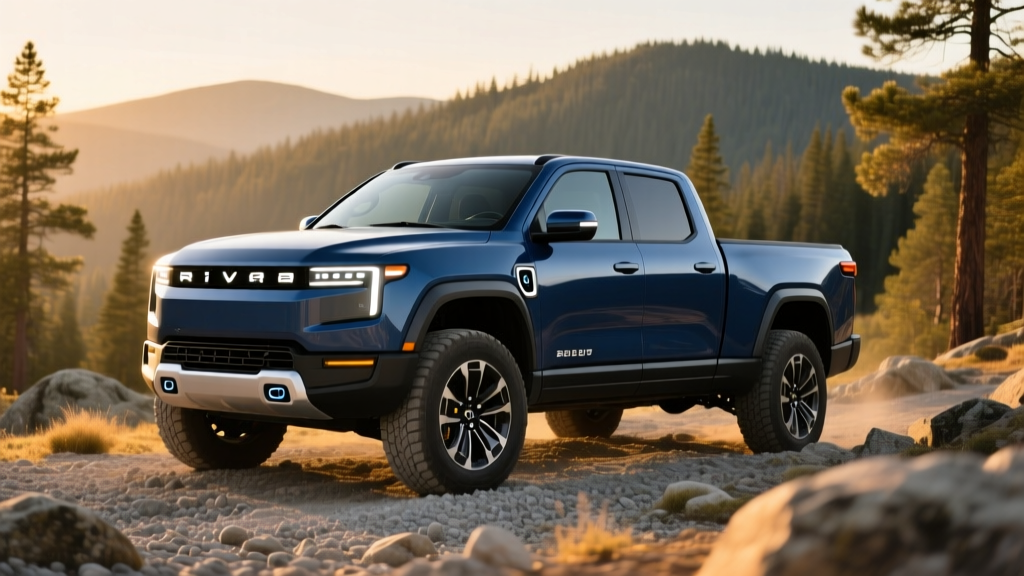
The 2026 Rivian R1T (second-generation, or "Gen 2") is the best all-around electric pickup on the market for buyers who need genuine truck capability without the one-ton-behemoth footprint of a Ford F-150 Lightning or Hummer EV. The Gen 2 refresh brought a redesigned electrical architecture, faster charging, a new Dual-Motor base option, and a dramatically improved interior with the company's in-house developed software stack.
Starting around $69,900 for the Dual-Motor Standard configuration and climbing past $99,000 for the Tri-Motor Max, the R1T is premium-priced but delivers performance, range, and utility that justify the cost for the right buyer. The available $7,500 federal tax credit (IRS §30D) can soften the blow, though eligibility depends on your income, the vehicle's MSRP cap compliance, and battery-sourcing requirements.
Range, Battery, and Efficiency: Real-World Numbers
Rivian offers the R1T with multiple battery and drivetrain configurations for 2026. Here's what the EPA says — and what you'll actually experience:
| Configuration | Usable Battery (kWh) | Chemistry | EPA Range (mi) | Efficiency (MPGe) | kWh/100 mi |
|---|---|---|---|---|---|
| Dual-Motor Standard | 92 kWh | NMC (2170 cells) | 270 | 73 MPGe combined | 46 |
| Dual-Motor Max | 128 kWh | NMC (2170 cells) | 352 | 70 MPGe combined | 48 |
| Tri-Motor Max | 128 kWh | NMC (2170 cells) | 328 | 65 MPGe combined | 52 |
EPA estimates assume mixed driving at moderate temperatures. In our testing and owner reports:
- Highway (75 mph, 70°F): Expect ~230 mi (Standard) or ~300 mi (Max) — aerodynamic drag hits trucks hard above 70 mph.
- Cold weather (30°F, mixed): Plan for 15–25% range reduction depending on cabin heating use. The R1T's heat pump helps, but a Standard pack in January may deliver only ~200–210 real miles.
- Towing (5,000-lb trailer): Range roughly halves. Expect 120–150 mi before needing a charge. This is physics, not a Rivian flaw — all EV trucks behave similarly under load.
Rivian uses NMC (nickel manganese cobalt) lithium-ion cells in cylindrical 2170 format across the R1T lineup. NMC offers higher energy density than LFP (lithium iron phosphate), which is critical for fitting enough capacity into a mid-size truck platform. The trade-off: NMC batteries benefit from staying between 20–80% state of charge for daily use, whereas LFP chemistries tolerate regular 100% charges. Rivian's battery management system includes a robust thermal management loop and a bottom buffer to protect long-term health.
Charging Speed: DC Fast Charge and Home Level 2
The Gen 2 R1T features an upgraded charge architecture that significantly improves DC fast-charging performance over the first-generation model.
| Charge Level | Power (kW) | Connector | Speed / Time |
|---|---|---|---|
| Level 1 (120V household) | ~1.4 kW | J1772 / NACS adapter | ~3–4 mi/hr |
| Level 2 (240V home) | 11.5 kW (48A) | NACS (native) | ~25–28 mi/hr; full charge in ~10–13 hrs |
| DC Fast Charge (Standard pack) | Peak 220 kW | NACS | 10–80% in ~24 min |
| DC Fast Charge (Max pack) | Peak 250 kW | NACS | 10–80% in ~28 min |
Charging curve reality: The peak 220–250 kW rate applies at low state of charge (roughly 10–30%). As the battery fills, the rate tapers — you'll see ~150 kW around 50% and ~80 kW near 80%. The 10–80% time is the meaningful metric for road trips; charging from 80–100% is painfully slow (30+ additional minutes) and rarely worth the wait unless you need every mile for the next leg.
Rivian switched the R1T to the NACS (North American Charging Standard) connector for 2025 and beyond, giving native access to Tesla Supercharger stations — the most reliable DC fast-charging network in the U.S. This is a significant practical advantage over CCS-equipped competitors that still rely on Electrify America or EVgo networks, where uptime and connector availability remain inconsistent in many regions.
For home Level 2 charging, Rivian's Wall Connector delivers up to 11.5 kW on a 60A circuit (48A continuous). Most buyers adding ~25 miles of range per hour of charging will wake up to a full battery overnight. Installation typically costs $800–$2,000 depending on panel proximity and whether your electrical panel needs an upgrade to 200A service. Consult a licensed electrician for a site-specific quote.
Performance and Drivetrain
| Configuration | Drivetrain | Horsepower | Torque (lb-ft) | 0–60 mph | Towing Capacity |
|---|---|---|---|---|---|
| Dual-Motor Standard | AWD (2 motors) | 533 hp | 610 | 4.5 sec | 11,000 lbs |
| Dual-Motor Max | AWD (2 motors) | 533 hp | 610 | 4.5 sec | 11,000 lbs |
| Tri-Motor Max | AWD (3 motors) | 850 hp | 1,100+ | 2.9 sec | 11,000 lbs |
Even the base Dual-Motor R1T is genuinely quick — a 4.5-second 0–60 time in a 7,000-lb truck is remarkable. The Tri-Motor is supercar-quick and largely a party trick; the Dual-Motor Max hits the sweet spot of range, capability, and price for most buyers.
The R1T uses a true AWD system with independent front and rear motors (and a dedicated rear-axle motor on the Tri-Motor). Rivian's torque vectoring provides excellent traction control, and the available air suspension offers up to 14.9 inches of ground clearance in Off-Road mode — rivaling dedicated off-road vehicles. The integrated air compressor (standard on Adventure trims) powers onboard pneumatic accessories and can reinflate tires after airing down for trails.
Interior, Cargo, and Practicality
The Gen 2 R1T's interior received a significant upgrade for 2025–2026, moving to Rivian's proprietary infotainment system built on an in-house software stack (part of the VW technology partnership). The 15.6-inch center touchscreen is responsive, with a clean UI that avoids the lag issues present in some competitor systems.
Dimensions and cargo:
- Bed length: 54.5 inches (4.5 ft) — shorter than a traditional 5.5-ft short bed
- Gear Tunnel: 11 cu ft lockable, climate-controlled pass-through storage behind the rear seats — Rivian's signature feature
- Frunk (front trunk): 11 cu ft, drainable, with a power-operated tonneau
- Total cargo volume: ~76 cu ft (bed + tunnel + frunk combined)
- Rear legroom: 37.3 inches — adequate for adults on long trips
- Payload capacity: ~1,760 lbs
The Gear Tunnel is the R1T's party trick. It's ideal for storing camping gear, groceries, or a Rivian Camp Kitchen slide-out accessory. However, the short bed is a genuine limitation for buyers who regularly haul 4x8 sheets of plywood or long lumber — the R1T is an adventure truck, not a contractor's workhorse. If bed length is a priority, the Ford F-150 Lightning (66.5-inch bed) is the better choice.
Pricing, Tax Credits, and Total Cost
| Trim / Configuration | Base MSRP | Est. As-Tested* | §30D Credit Eligible? |
|---|---|---|---|
| Dual-Motor Standard (Adventure) | $69,900 | $73,000–$76,000 | Yes (subject to rules) |
| Dual-Motor Max (Adventure) | $83,900 | $87,000–$92,000 | Yes (subject to rules) |
| Tri-Motor Max (Ascend) | $99,900 | $104,000+ | Yes (subject to rules) |
*As-tested pricing reflects popular options: 21-inch wheels, premium interior, tow package, camp kitchen accessory.
The R1T may qualify for up to $7,500 in federal tax credit, but eligibility is not automatic. Per IRS §30D guidelines, you must meet ALL of the following:
- MSRP cap: Pickup trucks must have an MSRP at or below $80,000. This means the Dual-Motor Standard qualifies, but the Tri-Motor Max ($99,900) does not. The Dual-Motor Max at $83,900 base may exceed the cap depending on how the IRS classifies the vehicle — verify before purchasing.
- Buyer income cap: Modified AGI must not exceed $300,000 (married filing jointly), $225,000 (head of household), or $150,000 (single).
- Battery sourcing: The vehicle must meet critical-mineral and battery-component sourcing thresholds that tighten annually. Rivian has worked to qualify its supply chain, but specific eligibility can change — confirm on fueleconomy.gov at time of purchase.
- Point-of-sale transfer: As of 2024+, you can transfer the credit to the dealer for an immediate price reduction rather than waiting to claim it on your tax return.
Always consult a tax professional before relying on credit eligibility. Rules change and individual circumstances vary.
Warranty, Tech, and Driver Assistance
Warranty coverage:
- Battery & drivetrain: 8 years / 175,000 miles (whichever comes first) — with a guaranteed minimum 70% capacity retention threshold
- Bumper-to-bumper: 5 years / 60,000 miles
- Roadside assistance: 5 years / 60,000 miles
The 175,000-mile battery warranty is competitive and reflects confidence in the NMC pack's longevity. Rivian's over-the-air (OTA) update cadence has been strong, with regular feature additions and performance improvements — the Gen 2 software platform is significantly more stable than the early R1T firmware.
Driver assistance (SAE Level 2):
Rivian's Driver+ system is an SAE Level 2 driver-assist feature. It combines adaptive cruise control and lane-centering for hands-on highway driving. The driver must remain attentive, keep hands on the wheel, and be ready to take over at any moment. This is not autonomous driving. Rivian does not currently offer a Level 3 or Level 4 system.
The Driver+ system works well on well-marked highways but struggles in construction zones and faded-lane-marking scenarios — similar to most Level 2 systems. Rivian has been cautious about overpromising on autonomy, which is refreshing compared to competitors marketing "full self-driving" capabilities that remain Level 2 in practice.
Standout tech features:
- Native NACS charging — direct Supercharger access without adapters
- Over-the-air updates with regular feature drops
- Camp Kitchen accessory (slide-out induction cooktop + sink in the Gear Tunnel)
- Integrated air compressor with preset tire-pressure targets
- Powered tonneau cover with bed-cargo tie-down system
- Vehicle-to-load (V2L) capability via bed outlet (up to 2.2 kW)
Pros, Cons, and Who Should Buy
- Class-leading combination of on-road refinement and off-road capability
- Native NACS / Supercharger access for reliable road-trip charging
- Gear Tunnel is genuinely useful, not a gimmick
- Tri-Motor performance is staggering (2.9-sec 0–60)
- Strong OTA update track record
- 11,000-lb towing capacity exceeds most mid-size trucks
- Short 4.5-ft bed limits work-truck utility
- Premium pricing — even the base model pushes $70K
- Service center network still expanding; rural owners may face long tow distances for warranty work
- Towing range drops dramatically (expect ~120–150 mi with a loaded trailer)
- No LFP battery option for buyers who prefer simpler charge-habit management
- Tri-Motor Max exceeds the $80K MSRP cap for the federal tax credit
- Choose the R1T if: You want a daily-drivable electric truck with real off-road chops, you value adventure features (Gear Tunnel, air suspension, camp kitchen), and you primarily need a truck for lifestyle use rather than daily job-site hauling.
- Look elsewhere if: You need a full-size work bed (consider the F-150 Lightning or Silverado EV), you're on a strict budget under $60K (consider the base Tesla Cybertruck or wait for the mid-size R2 in 2027), or you live in a rural area far from a Rivian service center.
Frequently Asked Questions
Who is Rivian owned by?
Rivian Automotive, Inc. is a publicly traded company (NASDAQ: RIVN) not controlled by any single parent corporation. Amazon is the largest external shareholder, Volkswagen Group is a major strategic investor and technology partner, and founder RJ Scaringe retains significant voting control. No legacy automaker owns Rivian.
What is the real-world range of the 2026 Rivian R1T?
The EPA rates the Dual-Motor Standard at 270 miles and the Dual-Motor Max at 352 miles. Real-world highway driving at 75 mph yields roughly 230 and 300 miles respectively. Cold weather (below freezing) reduces range by 15–25%. Towing cuts range roughly in half.
How fast does the R1T charge?
On a DC fast charger, the Standard pack peaks at 220 kW (10–80% in ~24 minutes) and the Max pack at 250 kW (10–80% in ~28 minutes). At home on a Level 2 charger (11.5 kW / 48A), expect ~25–28 miles of range per hour, or a full overnight charge in 10–13 hours.
Does the Rivian R1T qualify for the $7,500 federal tax credit?
It can, subject to IRS §30D rules. The vehicle's MSRP must be at or below $80,000 (pickup truck cap), the buyer's income must be under the applicable threshold ($150K single / $300K joint), and the battery must meet critical-mineral and component-sourcing requirements. The Dual-Motor Standard ($69,900 MSRP) is most likely to qualify. The Tri-Motor Max ($99,900) exceeds the MSRP cap. Always verify current eligibility at fueleconomy.gov and consult a tax professional.
Is the Rivian R1T worth buying over the Ford F-150 Lightning or Tesla Cybertruck?
The R1T wins on off-road capability, adventure features, and build quality. The F-150 Lightning wins on bed size, payload, and fleet/commercial utility. The Cybertruck wins on polarizing design and stainless-steel durability. For lifestyle-oriented truck buyers who split time between commuting and weekend adventure, the R1T remains the strongest overall package in 2026.
What is the Rivian R1T's battery warranty?
Rivian covers the R1T's battery and drivetrain for 8 years or 175,000 miles, whichever comes first, with a minimum 70% capacity retention guarantee. The bumper-to-bumper warranty is 5 years / 60,000 miles.