Why the Rivian Lease Credit End Date Matters in 2026
If you've been tracking the Rivian lease credit end date, you're not alone. For the past several years, Rivian owners who leased their R1T pickup or R1S SUV were able to capture a $7,500 federal incentive even when direct purchase didn't qualify — thanks to a commercial clean vehicle credit loophole (IRC §45W) that allowed the leasing company to claim the credit and pass savings to the lessee. That "lease loophole" has been one of the most discussed topics in EV ownership circles, and as 2026 unfolds, the window is narrowing due to evolving IRS guidance and shifting battery-sourcing requirements under §30D.
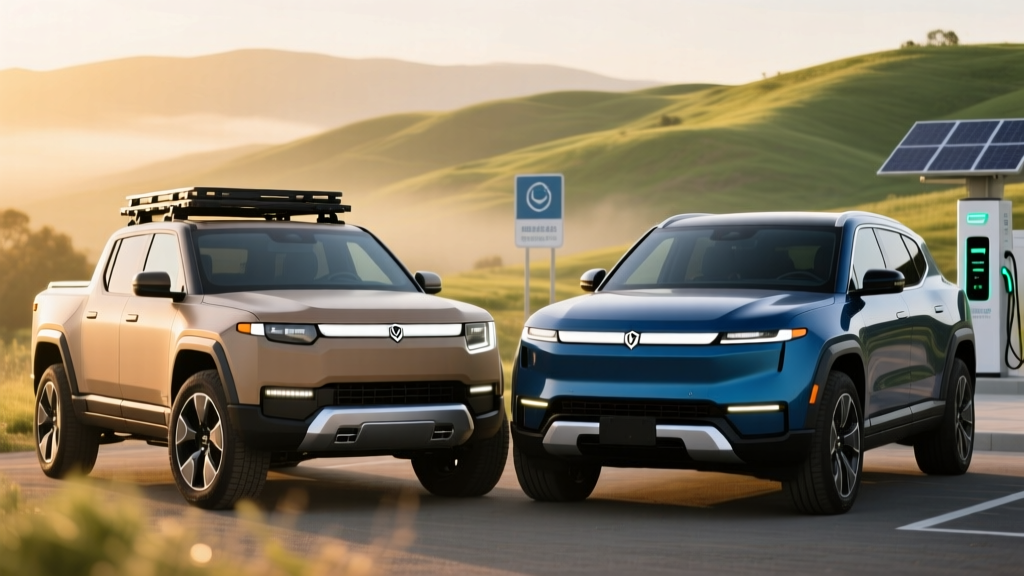
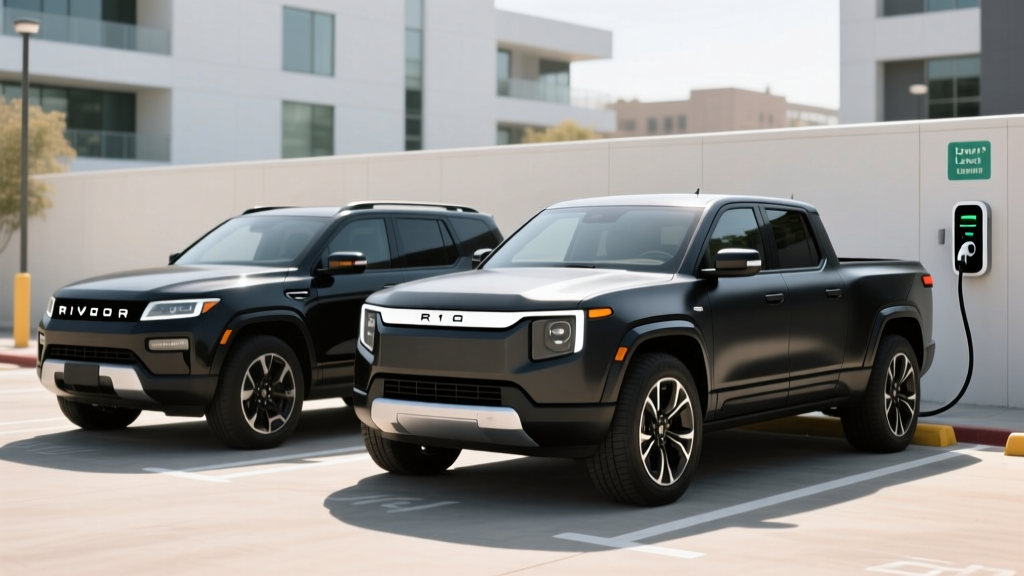
Whether you're eyeing the refreshed 2026 Rivian R1 Dual-Motor or the tri-motor R1T, understanding how leasing interacts with federal incentives — and whether the R1 lineup still makes financial sense — is critical before you sign. Below, we review the full R1T and R1S package: real-world range, charging speed, performance, pricing, and tax credit mechanics.
2026 Rivian R1T & R1S: Core Specifications
Rivian overhauled the R1 platform for the 2025 model year with new in-house motors, a revised battery pack architecture, and an updated electrical system. The 2026 models carry forward those changes with minor software and feature updates. Here's what the current lineup looks like on paper:
| Spec | R1T (Pickup) | R1S (SUV) |
|---|---|---|
| EPA Range (Standard Pack, ~92 kWh usable) | ~270 miles | ~268 miles |
| EPA Range (Large Pack, ~109 kWh usable) | ~352 miles | ~341 miles |
| EPA Range (Max Pack, ~141 kWh usable) | ~420 miles | ~400 miles |
| Battery Chemistry | NMC (Standard/Large), LFP option (Standard on select trims) | |
| Max DC Fast Charge | ~220 kW peak | |
| 10–80% DC Fast Charge | ~21–25 min (Large Pack) | |
| Level 2 Home Charging | 11.5 kW (~25 mi/hr added) | |
| 0–60 mph (Dual-Motor) | ~4.5 sec | |
| 0–60 mph (Tri-Motor) | ~2.9 sec | |
| Horsepower (Dual-Motor) | ~533 hp | |
| Horsepower (Tri-Motor) | ~850 hp | |
| Drivetrain | AWD (Dual- or Tri-Motor) | |
| MPGe (Dual-Motor Large Pack, combined) | ~73 MPGe | |
| Efficiency (kWh/100 mi) | ~46–48 kWh/100 mi | |
| Towing Capacity | 11,000 lbs | 7,700 lbs |
| Cargo (R1T bed + gear tunnel) | ~54 cu ft (bed) + 11 cu ft (tunnel) | N/A |
| Cargo (R1S behind 3rd row / folded) | N/A | ~12 / ~105 cu ft |
| Battery/Powertrain Warranty | 8 years / 175,000 miles (battery), 8 yr / 100,000 mi (powertrain) | |
| Base MSRP (Dual-Motor Standard) | $69,900 | $74,900 |
Sources: EPA fueleconomy.gov, Rivian official specs. Figures vary by pack size and motor configuration.
Real-World Range: What the EPA Sticker Doesn't Tell You
EPA sticker: 352 miles
Real-world highway (70–75 mph, moderate temps): ~280–310 miles
Real-world cold weather (below 30°F): ~240–270 miles
Towing (5,000+ lb trailer): ~150–180 miles
Rivian's boxy profile and ~7,000-lb curb weight work against highway efficiency. Expect a 15–20% range reduction at sustained highway speeds, and up to 30% in deep cold without preconditioning.
The R1 platform uses a liquid-cooled thermal management system with a heat pump, which helps mitigate cold-weather losses compared to resistive heating. However, the truck's aerodynamic drag coefficient means highway range falls off noticeably above 70 mph. In mixed city/highway driving in mild conditions, most owners report landing within 5–10% of the EPA figure. On the Max Pack, that still means 360+ real-world miles — enough for most road trips with one DC fast-charge stop.
Charging Speed: DC Fast, Level 2, and the Charge Curve
Rivian's 2026 R1 lineup supports CCS1 and NACS (via adapter or native NACS port on newer builds) for DC fast charging. Here's what charging looks like across levels:
| Charging Level | Power (kW) | Rate (miles/hr added) | Notes |
|---|---|---|---|
| Level 1 (120V standard outlet) | ~1.4 kW | ~3–4 mi/hr | Emergency/trickle only |
| Level 2 (240V home, 48A) | 11.5 kW | ~25 mi/hr | Full charge overnight (~10–14 hrs for Large Pack) |
| DC Fast (peak) | ~220 kW | N/A | Peak rate sustained to ~55% SoC |
| DC Fast 10–80% | Avg ~150–180 kW | N/A | ~21–25 min (Large Pack); tapers above 80% |
A critical note on the charge curve: Rivian's peak 220 kW rate is not sustained across the entire session. Like most EVs, the R1T and R1S ramp up quickly but begin tapering above 55–60% State of Charge (SoC). By 80%, you're typically charging at 50–70 kW. This is standard behavior governed by battery management to protect cell longevity, but it means a 10–90% session takes considerably longer than the 10–80% benchmark. For road trips, plan your stops around the 10–80% window and move on.
At home, an 11.5 kW Level 2 charger (requiring a 60-amp circuit) will replenish the Large Pack from 20% to full in roughly 9–10 hours. Most owners who charge nightly at home rarely use more than 30–40% of the pack per day, making this more than adequate.
The Rivian Lease Credit End Date and §30D Tax Credit Eligibility
This is where the Rivian lease credit end date becomes a make-or-break factor for many buyers. Here's the landscape as of 2026:
Direct Purchase (§30D Clean Vehicle Credit): Under current IRS rules, the Rivian R1T and R1S face several eligibility hurdles for the full $7,500 federal tax credit:
- MSRP Cap: Vans, SUVs, and pickups must be under $80,000 MSRP. The R1T Standard and some Large configurations qualify; Max Pack and Tri-Motor trims often exceed the cap. The R1S faces the same $80,000 ceiling.
- Buyer Income Cap: AGI must not exceed $150,000 (single), $225,000 (head of household), or $300,000 (joint).
- Battery Sourcing (§30D): Critical minerals and battery components must meet phased-in domestic/free-trade-partner sourcing thresholds. Rivian has been working to restructure its supply chain, but not all pack configurations meet the full $7,500 threshold — some may qualify for $3,750 (critical minerals only) or none at all depending on the build date and pack source.
- Point-of-Sale Transfer: Eligible buyers can transfer the credit to the dealer at purchase, reducing the purchase price upfront rather than waiting for a tax refund.
The Lease Pathway (IRC §45W): For years, leasing an EV allowed the lessor (the financing company) to claim the $7,500 Commercial Clean Vehicle Credit under §45W, which had fewer sourcing and MSRP restrictions. The lessor could then pass the savings to the lessee as a capitalized cost reduction (effectively lowering the lease price). This "lease loophole" was especially valuable for Rivian buyers whose purchase didn't qualify under §30D sourcing rules or who exceeded the MSRP cap.
What's changing in 2026: IRS and Treasury guidance issued in late 2024 and refined through 2025 has tightened §45W eligibility, requiring lessors to demonstrate that the credit is passed through and imposing stricter documentation on battery sourcing even in lease transactions. Several major EV lessors have adjusted their programs accordingly. While the lease credit hasn't been entirely eliminated, the window for easy, unrestricted pass-through is closing — hence the urgency around the Rivian lease credit end date.
| Scenario | MSRP | Federal Credit | Effective Price |
|---|---|---|---|
| Purchase (full §30D eligible) | $75,900 | –$7,500 | $68,400 |
| Purchase (partial §30D, $3,750) | $75,900 | –$3,750 | $72,150 |
| Purchase (no §30D eligibility) | $75,900 | $0 | $75,900 |
| Lease (§45W pass-through available) | $75,900 | –$7,500 cap cost reduction | ~$68,400 equiv. |
| Lease (§45W no longer available) | $75,900 | $0 | $75,900 equiv. |
Always verify current eligibility at IRS.gov and consult a tax professional. State incentives (e.g., California CVRP, Colorado Innovative Motor Vehicle Credit) may stack on top but vary by jurisdiction.
Performance, Tech, and Daily Livability
Rivian's in-house dual- and tri-motor drivetrains deliver serious performance. The Dual-Motor R1T hits 0–60 mph in roughly 4.5 seconds — quick for a 7,000-lb truck — while the Tri-Motor variant drops that to under 3 seconds, rivaling sports cars. Torque vectoring across the motors gives the R1T surprisingly agile handling for its size, and the adjustable air suspension (with 14.9 inches of ground clearance in Off-Road mode) makes it genuinely capable on trails.
Standout tech features:
- 15.6-inch center touchscreen with Rivian's proprietary OS — clean, fast, and well-integrated with navigation-based battery preconditioning for DC fast charging
- Driver+ (Level 2 ADAS): hands-on highway assist with adaptive cruise and lane centering — competent but not class-leading compared to GM's Super Cruise or Ford's BlueCruise on mapped highways
- Integrated air compressor (built into the bed), camp kitchen accessory, and gear tunnel with optional eCamp kitchen
- Powered tonneau cover, 11,000-lb towing with integrated trailer brake controller
- V2H (vehicle-to-home) capability announced for future OTA activation
Notable drawbacks:
- Rear-seat legroom in the R1T is tighter than full-size trucks (~37 inches) — adequate for adults on shorter trips but not limousine-like
- No Apple CarPlay or Android Auto — Rivian insists on its native infotainment, which is good but limits phone integration some buyers expect
- Insurance premiums run 15–25% higher than comparable ICE trucks, per industry data
- Service center footprint is still expanding; some owners in rural areas face long drives for warranty work
Competitive Comparison: R1T vs. the Field
- You want a mid-size electric pickup that's genuinely off-road capable, not just pavement-biased
- You value the gear tunnel, integrated camp features, and adventure-oriented design
- You need strong towing capacity (11,000 lbs) with a usable bed and don't require full-size truck dimensions
- Ford F-150 Lightning: You need full-size truck space, a larger frunk, or a lower entry price (~$55,000 base). The Lightning is less off-road focused but more practical as a work truck.
- Chevrolet Silverado EV: You want maximum range (400+ mi available) and a traditional truck layout with an available midgate.
- Tesla Cybertruck: You prioritize stainless-steel aesthetics, slightly faster DC charging, and Tesla's Supercharger network (though Rivian now has NACS adapter access).
Against the F-150 Lightning, the R1T sacrifices some interior volume and starting price for better off-road chops, a more premium cabin, and a more distinctive adventure identity. Against the Cybertruck, the R1T offers a more conventional (and to many, more usable) truck bed, better rear-seat comfort, and proven build quality after several years of production refinement.
Pros, Cons, and Final Verdict
Pros
- Class-leading off-road capability with air suspension and quad/tri-motor torque vectoring
- Up to 420 miles EPA range (Max Pack) — best in the electric pickup segment
- Thoughtful adventure features: gear tunnel, built-in compressor, camp kitchen options
- Premium interior materials and build quality that rival luxury SUVs
- Competitive DC fast charging (~220 kW peak, 10–80% in ~21–25 min)
- Strong battery warranty: 8 years / 175,000 miles
Cons
- High starting price ($69,900+) — many trims exceed the §30D MSRP cap
- Real-world highway and cold-weather range falls 15–30% below EPA
- No Apple CarPlay / Android Auto
- Insurance costs significantly above ICE truck averages
- Service network still growing; rural owners may face long wait times
- Lease credit pathway (§45W) tightening — timing matters
Verdict: The 2026 Rivian R1T and R1S remain the most well-rounded electric adventure vehicles on the market. If you can navigate the tax credit landscape — whether through a qualifying purchase or by locking in a lease before the §45W window closes further — the effective price drops meaningfully. But don't bank on the lease loophole lasting indefinitely. If the Rivian lease credit end date is a factor in your decision, act sooner rather than later and verify your specific eligibility with your tax advisor and Rivian's finance team.
Frequently Asked Questions
What is the real-world range of the Rivian R1T?
The EPA rates the R1T Dual-Motor Large Pack at 352 miles. In real-world highway driving at 70–75 mph, expect 280–310 miles. In cold weather (below 30°F), that drops to 240–270 miles. The Max Pack extends the EPA figure to ~420 miles, with real-world highway range around 340–370 miles.
How fast does the Rivian R1 charge at home and on DC fast chargers?
On a Level 2 home charger (11.5 kW / 48A), the R1 adds about 25 miles of range per hour, fully recharging the Large Pack in roughly 10 hours. On DC fast chargers, it peaks at ~220 kW, achieving a 10–80% charge in approximately 21–25 minutes (Large Pack), though the rate tapers significantly above 80% SoC.
How much does a 2026 Rivian R1T cost after tax credits?
The R1T Dual-Motor Standard Pack starts at $69,900. With the full $7,500 §30D credit (if eligible), that drops to $62,400. The Large Pack at $75,900 comes to $68,400 after the credit. However, eligibility depends on MSRP caps, buyer income, and battery sourcing — many higher trims exceed the $80,000 MSRP cap and won't qualify for purchase credits, which is where leasing has historically helped.
Does the Rivian R1T qualify for the federal EV tax credit?
It depends on the trim and your circumstances. The §30D credit requires the vehicle MSRP to be under $80,000 (for trucks/SUVs), buyer AGI below income caps ($300K joint / $150K single), and compliance with battery sourcing rules. Rivian's Standard and some Large Pack configurations can qualify, but Max Pack and Tri-Motor trims typically exceed the MSRP cap. The lease pathway (§45W) has historically bypassed some restrictions, but this is tightening in 2026.
Is the Rivian R1T worth buying over the Ford F-150 Lightning or Tesla Cybertruck?
The R1T excels as an adventure-oriented, off-road-capable mid-size electric pickup with premium build quality and innovative storage (gear tunnel, camp kitchen). The F-150 Lightning is a better value for work-oriented full-size truck needs at a lower starting price. The Cybertruck offers a polarizing design and strong Tesla network integration. If off-road capability, adventure features, and cabin quality are priorities, the R1T is the strongest pick.
What happens if I lease a Rivian and the §45W credit goes away?
If you've already signed a lease that includes the $7,500 cap cost reduction, your terms are locked in for the lease duration. The risk is for future lessees — if the Rivian lease credit end date passes (whether through regulatory action or lessor policy changes), new leases will no longer benefit from the pass-through, effectively raising the lease cost by ~$7,500 over the term.