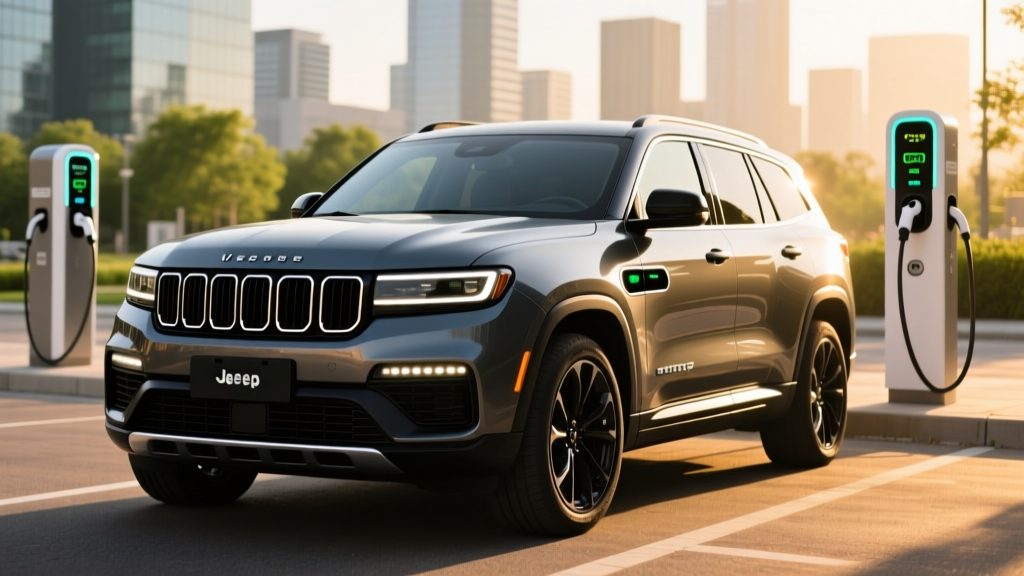
The 2025 Jeep Wagoneer S arrives as Jeep's first fully electric production SUV, built on the Stellantis STLA Large platform. It targets buyers who want the premium Wagoneer brand identity and Jeep capability cues in a battery-electric package. But with a starting MSRP near $65,000 and stiff competition from the Tesla Model Y, Hyundai Ioniq 5, and BMW iX, does the Wagoneer S justify its premium? We break down every spec that matters — range, charging, real-world efficiency, tax-credit math, and ownership practicality.
Quick Verdict: Who Is the Wagoneer S For?
The Wagoneer S is a luxury-oriented, dual-motor AWD electric SUV with genuine performance credentials (600 hp, 3.4-second 0–60) and competitive range. It suits affluent families and brand-loyal Jeep buyers who want a premium EV with a distinctive design and don't mind paying a premium over mainstream competitors. If you prioritize value-per-mile or maximum cargo space, the Model Y or Ioniq 5 serve you better. If you want something that stands out in the school drop-off lane and can handle light trail-duty aesthetics, the Wagoneer S has a lane of its own.
Range, Efficiency, and the Real-World Reality
Real-World Expectation: ~240–265 miles on highway road trips at 70–75 mph; ~200–225 miles in sustained cold weather (below 30°F) with cabin heat. City and suburban driving with regenerative braking recovers closer to the EPA sticker, around 280–300 miles.
Jeep's 300-mile EPA target for the Wagoneer S is competitive for a 100 kWh-class dual-motor SUV. For context, the Tesla Model X Long Range achieves 335 miles EPA with a larger battery pack, while the BMW iX xDrive50 posts 307 miles from a 111.5 kWh (gross) pack.
Efficiency matters as much as raw range. The Wagoneer S is estimated at roughly 86 MPGe combined (approximately 39 kWh/100 mi), which reflects its heavy curb weight and AWD drivetrain losses. That trails the more aerodynamic Ioniq 5 AWD (~110 MPGe) and Model Y Long Range (~122 MPGe). Expect higher per-mile energy costs on long highway runs, especially in the 75–80 mph range where aerodynamic drag dominates.
Battery, Platform, and Chemistry
| Spec | Detail |
|---|---|
| Battery Capacity | ~100 kWh (usable) |
| Chemistry | NMC (Nickel Manganese Cobalt) |
| Platform | STLA Large (800V architecture) |
| Drivetrain | Dual-motor AWD |
| Horsepower | 600 hp (Launch Edition) |
| Torque | 617 lb-ft |
| 0–60 mph | 3.4 seconds (estimated) |
| EPA Range | 300 miles (target) |
| EPA Efficiency | ~86 MPGe / ~39 kWh/100 mi |
| Towing Capacity | Not yet rated (estimated ~3,500 lbs) |
The STLA Large platform uses an 800-volt electrical architecture, which is the key enabler for the Wagoneer S's fast-charging capability. The NMC chemistry offers high energy density suited to the 300-mile range target, though it trades some cycle-life longevity and thermal stability compared to LFP (lithium iron phosphate) packs found in vehicles like the Tesla Model 3 RWD. NMC is the standard choice for long-range, performance-oriented EVs.
Charging: DC Fast, Level 2, and Home Setup
The 800V architecture is where the Wagoneer S differentiates itself from older 400V competitors. Here's the full charging picture:
| Level | Power / Rate | Time / Speed |
|---|---|---|
| Level 1 (120V household) | ~1.4 kW | ~4 mi/hr — emergency use only |
| Level 2 (240V home) | 11.5 kW (48A) | ~32 mi/hr; full charge in ~9 hrs |
| DC Fast Charge (peak) | ~250 kW (peak) | 10–80% in ~23 minutes |
Charging curve reality: The 250 kW peak rate applies only in the low state-of-charge window (roughly 10–35% SoC). Expect the rate to taper to ~150 kW by 50% SoC, ~80 kW by 70%, and ~40 kW by 85%. This is normal behavior for NMC packs with active thermal management, but it means the last 20% of a charge session takes disproportionately long. Plan road-trip stops around 10–80% charges for the best time efficiency.
The Wagoneer S uses the CCS1 connector standard. Jeep has not announced NACS (Tesla Supercharger) native compatibility for the 2025 model year, so Supercharger access will require an adapter — assuming Stellantis follows other automakers in adopting NACS for future model years. For now, public charging relies on Electrify America, EVgo, and ChargePoint networks. The 800V architecture means the Wagoneer S can take advantage of Electrify America's 350 kW stalls without bottlenecking.
Interior, Cargo, and Technology
The Wagoneer S seats five passengers across two rows. Stellantis has positioned this as a premium midsize SUV, competing more with the BMW iX and Mercedes EQE SUV than with three-row family haulers.
Cargo volume: Approximately 30 cu ft behind the second row and 60+ cu ft with the rear seats folded (official numbers pending EPA measurement). There is a front trunk (frunk) providing additional sealed storage, estimated at ~2–3 cu ft — useful for charging cables and wet gear.
Passenger space: Front legroom is generous at ~41 inches; rear legroom is approximately 38 inches, adequate for adults on longer trips. The flat floor (a benefit of the dedicated EV platform) improves rear-seat comfort compared to converted ICE architectures.
Infotainment: The Wagoneer S features a 12.3-inch digital instrument cluster and a 12.3-inch central touchscreen running Stellantis's Uconnect 5 system with wireless Apple CarPlay and Android Auto. An optional 10.25-inch passenger display is available. The system supports over-the-air (OTA) updates, which will be critical for feature improvements and battery-management refinements post-launch.
Driver assistance: Standard equipment includes adaptive cruise control with stop-and-go, lane-centering assist, automatic emergency braking, blind-spot monitoring, and rear cross-traffic alert. This is a SAE Level 2 driver-assist system — the driver must remain fully engaged with hands on the wheel and eyes on the road at all times. It is not autonomous or "self-driving." Available features include a surround-view camera and a hands-free driving assist system for highway use (details pending final certification).
Pricing, Trims, and Federal Tax Credit Math
| Trim | MSRP | Est. After §30D Credit* |
|---|---|---|
| Launch Edition (AWD) | $65,200 | $57,700 (if eligible) |
| Limited (expected) | ~$60,000 | ~$52,500 (if eligible) |
| Laredo (expected) | ~$55,000 | ~$47,500 (if eligible) |
*Federal §30D tax credit eligibility is NOT guaranteed. As of 2025, the up-to-$7,500 credit under IRS rules requires:
- MSRP cap: SUVs must have a manufacturer's suggested retail price at or below $80,000. All Wagoneer S trims clear this threshold.
- Buyer income cap: Adjusted gross income must not exceed $150,000 (single), $225,000 (head of household), or $300,000 (joint filers).
- Battery sourcing: A percentage of critical minerals and battery components must be sourced from the U.S. or free-trade-agreement countries. These thresholds tighten annually. The Wagoneer S's eligibility depends on Stellantis's supply-chain compliance — check the DOE/EPA qualifying vehicle list before purchasing.
- Point-of-sale transfer: Eligible buyers can transfer the credit to the dealer at purchase, reducing the upfront price rather than waiting for a tax refund.
Important: Battery-sourcing requirements have disqualified many vehicles from the full credit since 2024. Verify the Wagoneer S's current credit status on fueleconomy.gov at the time of purchase, as eligibility can change with supply-chain updates. Consult a tax professional for your specific situation.
Warranty and Long-Term Ownership
Stellantis provides the following coverage for the Wagoneer S:
- Battery warranty: 8 years / 100,000 miles (minimum capacity retention threshold typically 70% of original capacity)
- Powertrain warranty: 8 years / 100,000 miles
- Bumper-to-bumper: 3 years / 36,000 miles
- Roadside assistance: 5 years / 60,000 miles
The 8-year/100,000-mile battery warranty is federally mandated minimum for EVs and matches most competitors. For comparison, Hyundai/Kia offers 10 years/100,000 miles on battery packs. The capacity retention threshold matters: if your battery drops below 70% of its original kWh within the warranty period, Stellantis must repair or replace it. In practice, modern NMC packs with active thermal management typically lose 10–15% capacity over the first 100,000 miles, well within the warranty buffer.
How It Stacks Up Against Key Competitors
| Spec | Wagoneer S | Tesla Model Y LR | BMW iX xDrive50 | Hyundai Ioniq 5 AWD |
|---|---|---|---|---|
| EPA Range | ~300 mi | 330 mi | 307 mi | 290 mi |
| 0–60 mph | 3.4 sec | 4.8 sec | 4.4 sec | 5.1 sec |
| Peak DC Charge | ~250 kW | 250 kW | 200 kW | 240 kW |
| Base MSRP | ~$55,000 | $48,590 | $87,250 | $50,200 |
| Cargo (behind 2nd row) | ~30 cu ft | 30 cu ft | 35.5 cu ft | 27.2 cu ft |
| Federal Tax Credit | Verify* | Eligible | Over MSRP cap | Verify* |
The Wagoneer S's strongest card is performance: 600 hp and a 3.4-second 0–60 time outpace every competitor in this group. Its weakest card is efficiency — the Model Y delivers 22% more MPGe, which translates to lower charging costs and longer real-world range from a smaller battery. The BMW iX offers more interior volume and a more established luxury pedigree but costs significantly more. The Ioniq 5 undercuts on price and efficiency but lacks the Wagoneer S's power and brand cachet.
Pros
- 600 hp dual-motor performance is thrilling
- 800V architecture enables competitive DC fast charging
- Distinctive design — nothing else looks like it
- Premium interior with Uconnect 5 and OTA updates
- Under $80K MSRP cap for potential tax credit
Cons
- Efficiency trails lighter, more aerodynamic rivals
- CCS-only for 2025 — no native NACS/Supercharger access
- Real-world highway range likely 240–265 miles, not 300
- Two-row only — no three-row option for larger families
- Towing capacity unproven and likely modest
- Battery-sourcing credit eligibility uncertain at launch
Bottom Line: Should You Buy the 2025 Wagoneer S?
Buy the Wagoneer S if: You want a high-horsepower electric SUV with head-turning design, value Jeep brand heritage, and typically drive routes where 250 miles of real-world range is sufficient. The 600-hp Launch Edition delivers sports-car acceleration in a family SUV package.
Look elsewhere if: You prioritize maximum efficiency (Model Y), need three rows (Kia EV9), want proven Supercharger network access (Tesla), or need verified full tax-credit eligibility before committing. Budget-conscious buyers will find better value in the Ioniq 5 or Model Y.
Frequently Asked Questions
What is the real-world range of the 2025 Jeep Wagoneer S?
The EPA estimates 300 miles combined, but real-world highway driving at 70–75 mph yields approximately 240–265 miles. In cold weather below 30°F with cabin heating, expect 200–225 miles. City driving with regenerative braking can recover closer to the EPA number.
How fast does the Wagoneer S charge at home and on the road?
At home on a Level 2 (240V, 48A) charger, the Wagoneer S adds about 32 miles of range per hour, fully charging overnight in roughly 9 hours. On DC fast chargers, it peaks at approximately 250 kW, reaching 10–80% in about 23 minutes under ideal conditions. The 800V architecture helps sustain higher charge rates than 400V competitors.
How much does the Wagoneer S cost after the federal tax credit?
The Launch Edition starts at $65,200. If you qualify for the full $7,500 §30D credit (income within limits, battery sourcing compliant), the effective price drops to $57,700. Lower trims expected later could start near $55,000, potentially reaching ~$47,500 after credit. Verify eligibility on fueleconomy.gov before purchasing — battery-sourcing rules have disqualified many vehicles.
Does the 2025 Wagoneer S qualify for the $7,500 federal EV tax credit?
It may, but eligibility is not guaranteed. The MSRP is under the $80,000 SUV cap, which clears one hurdle. However, the critical-minerals and battery-component sourcing requirements under §30D are strict and change over time. The buyer must also meet income caps ($150K single / $300K joint). Check the IRS qualifying vehicle list and consult a tax professional.
Is the Wagoneer S worth buying over the Tesla Model Y or Hyundai Ioniq 5?
If performance and design uniqueness are your top priorities, the Wagoneer S's 600 hp and distinctive styling have no direct rival in its price range. If efficiency, charging-network access, and value matter more, the Model Y Long Range (330 mi EPA, Supercharger network, ~$48K) or the Ioniq 5 AWD (~$50K, 240 kW charging) are more practical choices. The Wagoneer S is a statement purchase; its competitors are appliance-grade rational ones.
Can the Wagoneer S use Tesla Superchargers?
Not natively for the 2025 model year. The Wagoneer S uses a CCS1 connector. Stellantis has signaled future NACS adoption across its lineup, but 2025 buyers will rely on Electrify America, EVgo, ChargePoint, and other CCS-compatible networks. A CCS-to-NACS adapter may provide Supercharger access if Stellantis follows Ford and GM in enabling it — watch for announcements.