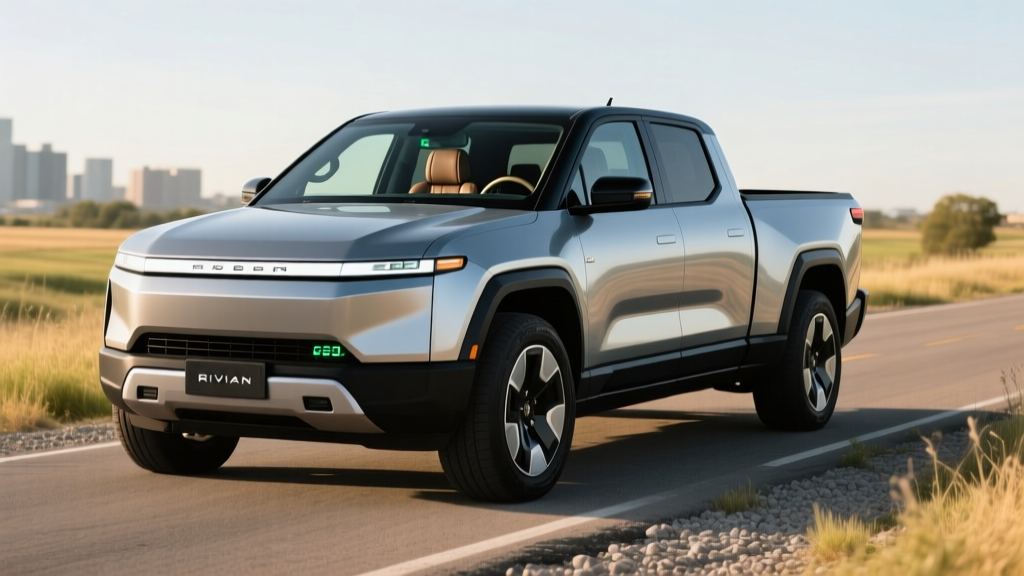
Headlines about a Rivian layoff inevitably trigger buyer hesitation. When an EV maker trims staff, shoppers wonder: Will parts be available? Will software updates continue? Is the company building toward long-term viability, or is this the beginning of the end? These are fair questions, and anyone considering a 2026 Rivian R1T deserves straight answers grounded in data — not speculation.
This review examines the current-generation R1T (the refreshed dual-motor and tri-motor lineup sold through early 2026) across every metric that matters: real-world range, charging speed, pricing after federal tax credits, performance, and ownership practicality. We'll also address the layoff context directly, because understanding why Rivian is restructuring tells you more about the company's trajectory than the headline alone.
The Rivian Layoff in Context: What Buyers Need to Know
Rivian has undergone multiple workforce reductions since late 2024, with the most significant cuts targeting non-production roles — administrative overhead, certain R&D divisions, and middle management. Crucially, Rivian has not cut assembly-line workers at its Normal, Illinois plant, nor has it reduced its service-center headcount in most markets. The company has framed these layoffs as a pivot from growth-at-all-costs to operational efficiency, a necessary move as the EV market shifted from early-adopter hype to mainstream price competition.
Rivian's partnership with Volkswagen Group — a $5.8 billion joint venture focused on software and electrical architecture — provides a financial backstop that most EV startups lack. This isn't a company running out of runway overnight. But the restructurings do signal that the R2 (the smaller, more affordable SUV) timeline and production scale-up are existential priorities. For R1T buyers today, the takeaway is this: the vehicle in your driveway won't be orphaned, but resale value could face headwinds if the brand's long-term trajectory remains uncertain.
2026 Rivian R1T: Core Specifications at a Glance
| Spec | Dual-Motor (Standard Pack) | Dual-Motor (Max Pack) | Tri-Motor (Max Pack) |
|---|---|---|---|
| EPA Range | 270 miles | 352 miles | 328 miles |
| Battery Capacity (usable) | 92 kWh (LFP) | 141 kWh (NMC) | 141 kWh (NMC) |
| Horsepower | 533 hp | 533 hp | 850 hp |
| 0-60 mph | 4.5 sec | 4.5 sec | 2.9 sec |
| Drivetrain | AWD (dual-motor) | AWD (dual-motor) | AWD (tri-motor) |
| Max DC Fast Charge | 200 kW | 200 kW | 200 kW |
| 10-80% DC Charge Time | ~27 min | ~42 min | ~42 min |
| Level 2 Home Charge Rate | 11.5 kW (~25 mi/hr) | 11.5 kW (~25 mi/hr) | 11.5 kW (~25 mi/hr) |
| MPGe (combined) | 73 MPGe | 70 MPGe | 65 MPGe |
| Towing Capacity | 11,000 lbs | 11,000 lbs | 11,000 lbs |
| Base MSRP | $69,900 | $83,900 | $99,900 |
Source: EPA Fuel Economy, Rivian official specifications.
Real-World Range: What the EPA Sticker Doesn't Tell You
Rivian's LFP (lithium iron phosphate) Standard Pack battery offers a different ownership profile than the NMC (nickel manganese cobalt) Max Pack. LFP chemistry sacrifices energy density — hence the lower range — but gains cycle life longevity and can be charged to 100% daily without the degradation concerns that NMC owners manage by capping at 80-90%. If your daily commute is under 100 miles and you charge at home nightly, the LFP pack is arguably the smarter long-term play, even with the range tradeoff.
The R1T's efficiency sits at roughly 48 kWh/100mi for the Max Pack — heavier and less aero-efficient than a sedan like the Hyundai IONIQ 6, which is expected for a 7,000+ lb truck. Highway efficiency worsens noticeably above 70 mph; if road-trip range is your priority, holding 65 mph yields meaningful gains.
Charging Speed: DC Fast Charging and Home Setup
| Charging Level | Power (kW) | Speed (miles added/hr) | Notes |
|---|---|---|---|
| Level 1 (120V outlet) | ~1.4 kW | ~3 mi/hr | Emergency/trickle only; impractical for Max Pack |
| Level 2 (240V, 48A) | 11.5 kW | ~25 mi/hr | Full overnight charge in 10-14 hrs depending on pack |
| DC Fast Charge (peak) | 200 kW | ~140 mi in 20 min (peak curve) | Tapers significantly above 80% SoC |
The R1T's 200 kW peak DC fast-charge rate is competitive but not class-leading — the Hyundai IONIQ 5 and Kia EV9 both push past 235 kW on 800V architectures. In practice, Rivian's charge curve is relatively flat from 10-60% SoC, then tapers sharply above 80%. On a road trip, plan your stops around 10-80% sessions: roughly 27 minutes for the Standard Pack and 42 minutes for the Max Pack. Charging from 80-100% on DC fast charging can add another 30+ minutes for minimal range gain.
For home charging, Rivian includes a portable charger capable of Level 2 speeds on a NEMA 14-50 outlet. A dedicated wall connector installed by a licensed electrician typically costs $800-$1,500 (equipment plus labor), assuming your electrical panel has capacity. The R1T's 11.5 kW onboard charger means a full Standard Pack charge takes about 10 hours, while the Max Pack needs closer to 14 hours — both easily manageable with overnight charging.
Pricing, Trims, and Federal Tax Credit Eligibility
| Configuration | Base MSRP | Federal Tax Credit (§30D) | Effective Price (if eligible) |
|---|---|---|---|
| Dual-Motor Standard Pack | $69,900 | Up to $7,500 | ~$62,400 |
| Dual-Motor Max Pack | $83,900 | $0 (exceeds MSRP cap) | $83,900 |
| Tri-Motor Max Pack | $99,900 | $0 (exceeds MSRP cap) | $99,900 |
Federal tax credit eligibility under IRS §30D is where the R1T lineup splits sharply. The IRS caps the credit at vehicles with an MSRP of $80,000 or less for trucks and SUVs. Only the Dual-Motor Standard Pack (at $69,900 base) clears this threshold — and even then, only if you stay within the buyer income limits ($150,000 single / $300,000 joint modified AGI) and the vehicle meets critical-mineral and battery-component sourcing requirements, which shift annually.
The point-of-sale transfer option (available since 2024) lets you apply the credit as an immediate discount at the dealer rather than waiting for tax filing. Rivian supports this, but confirm eligibility with your tax professional before committing — the battery-sourcing rules are complex and change year to year.
- Vehicle MSRP ≤ $80,000 (trucks/SUVs)
- Buyer MAGI ≤ $150K single / $300K joint
- Battery critical minerals and component sourcing thresholds met (varies by year)
- Vehicle assembled in North America (R1T qualifies — built in Illinois)
Performance, Interior, and Daily Ownership
The R1T's dual-motor setup delivers 533 hp and a 4.5-second 0-60 time — quick for a truck, though the tri-motor's 850 hp and 2.9-second sprint border on supercar territory. All configurations use a single-speed reduction gear (no traditional transmission), and the regenerative braking offers adjustable levels including a true one-pedal driving mode that most owners set and forget.
Interior space is generous for a midsize truck: 54.4 cubic feet behind the rear seats with the bed tonneau closed, plus the signature Gear Tunnel — a 11.7-cubic-foot pass-through between the cab and bed that's ideal for skis, camping gear, or groceries. Rear legroom measures 38.2 inches, adequate for adults on longer trips. The 11.7-cubic-foot frunk adds secure, weatherproof storage that gas trucks simply can't match.
Rivian's 15.6-inch center touchscreen runs a proprietary infotainment system that's responsive and visually clean, though it lacks wireless Apple CarPlay and Android Auto — a notable omission in 2026. The Driver+ assistance suite is a solid SAE Level 2 system with adaptive cruise and lane-centering on highways, but it requires hands-on-wheel supervision at all times. It is not a self-driving system, and Rivian makes no Level 3 or Level 4 claims.
Warranty Coverage
Rivian covers the R1T with a 5-year/60,000-mile bumper-to-bumper warranty and an 8-year/175,000-mile battery and drive-unit warranty. The battery warranty guarantees the pack will retain at least 70% of its original capacity during the coverage period — a reasonable threshold, though some competitors guarantee 70% at 100,000 miles (a lower bar). Rivian's 175,000-mile battery coverage is among the most generous in the segment.
How the R1T Stacks Up Against Key Competitors
| Spec | 2026 Rivian R1T (Dual-Motor Max) | 2026 Ford F-150 Lightning (Ext. Range) | 2026 Chevy Silverado EV (4WT) |
|---|---|---|---|
| EPA Range | 352 mi | 320 mi | 380 mi |
| Max DC Charge | 200 kW | 150 kW | 200 kW |
| 0-60 mph | 4.5 sec | 3.8 sec | 4.5 sec |
| Towing | 11,000 lbs | 10,000 lbs | 10,000 lbs |
| Base MSRP | $83,900 | $76,995 | $79,900 |
| Tax Credit Eligible | No (MSRP cap) | Yes (select trims) | No (MSRP cap) |
The R1T's advantage lies in its adventure-oriented design: the Gear Tunnel, integrated camp kitchen option, and standard air suspension with adjustable ride height make it the most capable overlanding platform in the segment. The F-150 Lightning wins on value and tax-credit accessibility, while the Silverado EV edges out on maximum range. If you need a work-first truck with fleet pricing, the Lightning is the pragmatic choice. If your weekends involve trails, kayaks, and rooftop tents, the R1T's ecosystem is unmatched.
Pros and Cons
- 352-mile Max Pack range is segment-leading for trucks
- Gear Tunnel and frunk offer unmatched storage versatility
- 11,000-lb towing capacity leads the EV truck class
- 8-year/175,000-mile battery warranty is generous
- Tri-motor performance (2.9s 0-60) is extraordinary
- Over-the-air updates continue to add features post-purchase
- Only base Standard Pack qualifies for $7,500 tax credit
- 200 kW peak charge rate trails 800V competitors
- No wireless Apple CarPlay or Android Auto
- Service center network still sparse in rural markets
- Layoff headlines may suppress resale value short-term
- Max Pack 42-min 10-80% charge is slow for road trips
Who Should Buy the 2026 Rivian R1T?
- Choose the R1T Standard Pack if: You want an adventure-ready EV truck, your commute is under 100 miles daily, you charge at home, and you want to capture the $7,500 federal tax credit.
- Choose the R1T Max Pack if: You regularly road-trip 200+ miles between charges, tow heavy (boats, campers), and the $14,000 premium over the Standard Pack fits your budget without the tax credit.
- Choose the F-150 Lightning instead if: You need a lower entry price, broader dealer/service network, or tax-credit eligibility on higher trims.
- Wait if: The layoff news makes you nervous about long-term support. Rivian's VW partnership and R2 pipeline suggest stability, but if resale value is paramount, a 12-month wait for clarity is reasonable.
Frequently Asked Questions
What is the real-world range of the Rivian R1T?
The Max Pack's 352-mile EPA estimate translates to roughly 280-310 highway miles in mild weather and 240-270 in cold conditions. The LFP Standard Pack delivers about 210-240 real-world highway miles. Towing cuts range dramatically — expect a 40-50% reduction when pulling near the 11,000-lb maximum.
How fast does the R1T charge at home and on the road?
At home on a 240V Level 2 connection, the R1T charges at 11.5 kW, adding about 25 miles of range per hour. On DC fast chargers, it peaks at 200 kW, completing a 10-80% session in roughly 27 minutes (Standard Pack) or 42 minutes (Max Pack). Charging slows significantly above 80% SoC — plan your road-trip stops accordingly.
Does the Rivian R1T qualify for the $7,500 federal EV tax credit?
Only the Dual-Motor Standard Pack at $69,900 MSRP qualifies, and only if your income is under $150K (single) or $300K (joint) and the vehicle's battery meets current-year critical-mineral sourcing rules under IRS §30D. Max Pack and Tri-Motor trims exceed the $80,000 MSRP cap and are ineligible.
Is the R1T worth buying despite the Rivian layoff news?
The layoffs target overhead, not production or service. Rivian's VW partnership provides financial stability, and the Normal, Illinois plant continues operating at capacity. If the R1T's specs and adventure features match your needs, the layoff headlines are more noise than signal — but expect potentially softer resale values until the company's next growth phase (R2 launch) materializes.
How does the R1T compare to the Ford F-150 Lightning?
The Lightning offers a lower entry price ($76,995 vs $83,900), broader dealer support, and more tax-credit-eligible trims. The R1T counters with longer Max Pack range (352 vs 320 miles), higher towing capacity (11,000 vs 10,000 lbs), and unique adventure features like the Gear Tunnel. For work-focused buyers, the Lightning wins on value. For lifestyle and overlanding, the R1T has no equal.
Always verify current pricing, tax-credit eligibility, and specifications on Rivian's official site and fueleconomy.gov before purchasing. Rules and specs may change.