From MIT Thesis to American EV Automaker: The Rivian Story
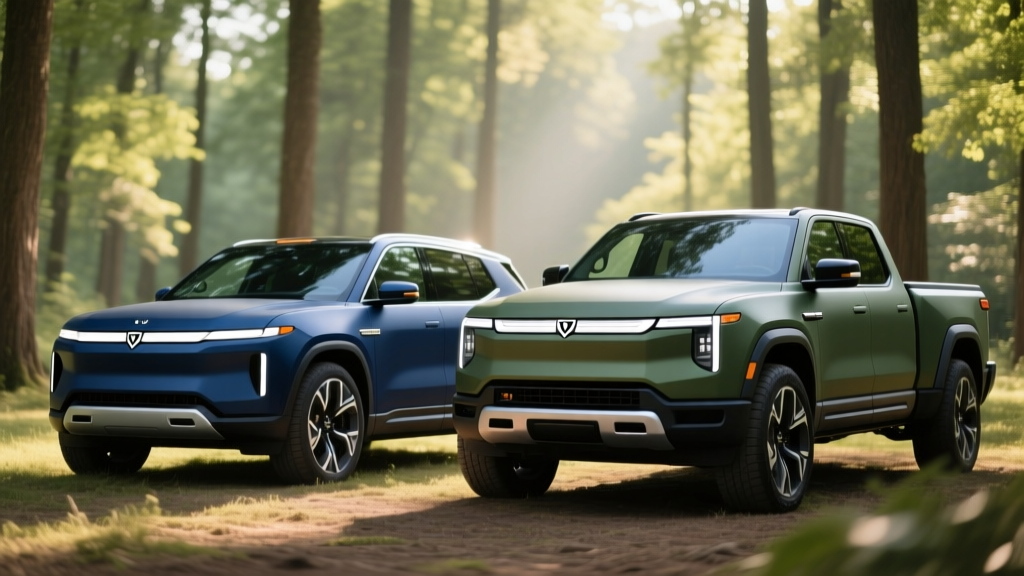
Before Rivian became a household name among EV truck and SUV buyers, it was an idea scribbled in a graduate notebook. Understanding Rivian history isn't just an exercise in automotive trivia — it explains why the R1T pickup and R1S SUV are engineered the way they are, from their skateboard platform to their quad-motor performance variants. For shoppers weighing a 2026 Rivian purchase, the company's origin story reveals its priorities: adventure-ready capability, software-defined architecture, and vertical integration that rivals Tesla's approach.
This profile traces Rivian's evolution and then puts the current 2026 R1T and R1S lineup under the microscope — range, charging speed, real-world efficiency, pricing, tax-credit eligibility, and how they stack up against the Ford F-150 Lightning, Tesla Cybertruck, and Chevrolet Silverado EV.
Rivian History Timeline: Key Milestones (2009–2026)
RJ Scaringe founded what would become Rivian in 2009 under the name Mainstream Motors, later renaming it Rivian Automotive. The company quietly developed a skateboard EV platform — a flat chassis housing batteries, motors, and suspension — that could support multiple body styles. Here are the inflection points that shaped the brand:
- 2009: Founded in Florida by RJ Scaringe, initially focused on a sports car concept before pivoting to adventure vehicles.
- 2011: Renamed Rivian Automotive; began developing the skateboard architecture.
- 2018: Unveiled the R1T (truck) and R1S (SUV) prototypes at the LA Auto Show, generating massive industry attention.
- 2019: Secured $700M from a consortium led by Cox Automotive and a $1.2B investment from Amazon.
- 2021: IPO raised ~$13.7 billion — the largest U.S. IPO of the year. Began R1T deliveries in September and R1S deliveries shortly after.
- 2022: Opened the Normal, Illinois factory to full production; launched the Electric Delivery Van (EDV) fleet for Amazon.
- 2023: Introduced Dual-Motor and Standard battery configurations to lower entry pricing.
- 2024: Rolled out the updated Gen 2 platform with tri-motor options, NACS charging port adoption, and improved software.
- 2025–2026: Announced the R2 (smaller, more affordable SUV) for production in Normal, IL, while expanding the R1 lineup with refreshed battery chemistries and performance trims.
Rivian's history is marked by a rare discipline: resisting the urge to launch before the product was ready. The company burned through billions in R&D before delivering its first customer vehicle — a patience that's reflected in the build quality and platform maturity of today's R1T and R1S.
2026 R1T and R1S: Current Lineup at a Glance
For the 2026 model year, Rivian offers both the R1T (crew-cab pickup) and R1S (three-row SUV) in Dual-Motor, Performance Dual-Motor, and Tri-Motor configurations. Battery options include a Standard pack and a Max pack. Below is a consolidated spec table for the most popular configurations:
| Spec | R1T Dual-Motor (Standard) | R1T Tri-Motor (Max) | R1S Dual-Motor (Standard) | R1S Tri-Motor (Max) |
|---|---|---|---|---|
| EPA Range | 270 mi | 420 mi | 270 mi | 410 mi |
| Battery (usable) | ~92 kWh (NMC) | ~141 kWh (NMC) | ~92 kWh (NMC) | ~141 kWh (NMC) |
| Horsepower | 533 hp | 850 hp | 533 hp | 850 hp |
| 0–60 mph | 4.5 sec | 2.9 sec | 4.6 sec | 3.0 sec |
| Drivetrain | AWD (Dual-Motor) | AWD (Tri-Motor) | AWD (Dual-Motor) | AWD (Tri-Motor) |
| Max DC Fast Charge | 200 kW | 220 kW | 200 kW | 220 kW |
| 10–80% DC Time | ~28 min | ~38 min | ~28 min | ~38 min |
| Level 2 Home Rate | 11.5 kW (~25 mi/hr) | 11.5 kW (~25 mi/hr) | 11.5 kW (~25 mi/hr) | 11.5 kW (~25 mi/hr) |
| Efficiency (MPGe) | 73 MPGe combined | 69 MPGe combined | 74 MPGe combined | 70 MPGe combined |
| Towing Capacity | 11,000 lbs | 11,000 lbs | 7,700 lbs | 7,700 lbs |
| Base MSRP | $69,900 | $99,900 | $75,900 | $104,900 |
Source: Rivian R1T specs and EPA fueleconomy.gov. Specs reflect 2026 model year estimates; confirm with dealer at time of order.
Real-World Range: What the EPA Sticker Doesn't Tell You
The R1T Dual-Motor Standard carries an EPA estimate of 270 miles. In real-world mixed driving, expect 240–260 miles. On sustained highway runs at 75 mph, that drops to roughly 210–230 miles. In sub-freezing temperatures (below 32°F), plan for a 15–25% range reduction — meaning a cold-weather highway trip might yield 180–200 miles before you're hunting for a charger.
The R1T Tri-Motor Max, rated at 420 miles EPA, is more forgiving: expect ~350–380 miles in mixed driving and ~300–330 miles highway. Cold weather brings the floor to ~280–310 miles — still enough for most single-leg road trips without en-route charging.
Rivian's heat pump (standard on Gen 2 models) mitigates some cold-weather cabin-draw losses, but physics wins: a 6,000+ lb. truck pushing air at 75 mph consumes energy at a steep rate.
For R1S buyers, the math is nearly identical — the SUV's slightly heavier curb weight and boxier greenhouse shave a few miles versus the R1T in equivalent configurations. Neither vehicle leads the EV truck segment in efficiency; the Tesla Cybertruck AWD, for comparison, achieves roughly 2.0–2.1 kWh/mile versus the R1T's 2.4–2.6 kWh/mile. That gap matters on long road trips.
Charging Speed: DC Fast, Level 2, and the Rivian Adventure Network
Rivian adopted the NACS (North American Charging Standard) connector starting with 2025 models, giving R1T and R1S owners native access to Tesla Supercharger stalls via adapter (included with new vehicles) and the growing Rivian Adventure Network along popular outdoor routes.
| Level | Power | Rate (mi/hr added) | Notes |
|---|---|---|---|
| Level 1 (120V) | ~1.4 kW | ~3 mi/hr | Emergency/trickle only; not practical for daily use |
| Level 2 (240V home) | 11.5 kW | ~25 mi/hr | Full charge in ~8–12 hours depending on pack size |
| DC Fast (Standard pack) | Peak 200 kW | ~140 mi in 20 min | 10–80% in ~28 min; tapers above 80% |
| DC Fast (Max pack) | Peak 220 kW | ~150 mi in 20 min | 10–80% in ~38 min; larger pack = longer sustained curve |
A critical nuance: peak kW is not sustained kW. The R1T Max pack hits 220 kW only in a narrow state-of-charge window (roughly 15–35% SoC), then tapers progressively. Average power across a 10–80% session is closer to 140–160 kW. That's respectable but trails the Hyundai Ioniq 5's 800V architecture, which sustains higher average power across a wider SoC band.
For home charging, Rivian's Wall Connector (or any J1772/NACS Level 2 EVSE on a 60-amp circuit) delivers 11.5 kW. Most owners report waking up to a full battery every morning — the single biggest ownership convenience advantage over gas trucks.
Performance, Cargo, and Everyday Practicality
The R1T's party trick is straight-line acceleration that defies its 7,000-lb. curb weight. The Tri-Motor variant's 850 hp and 2.9-second 0–60 time put it in supercar territory, while the Dual-Motor's 4.5-second sprint is still quicker than most sport sedans. Rivian's quad-motor torque vectoring (on Tri-Motor models with the front-axle disconnect) enables precise off-road rock crawling and confident on-road cornering.
Cargo and Passenger Dimensions (R1T):
- Bed length: 54 inches (4.5 ft) with tailgate up; extends to ~82 inches with Gear Tunnel access
- Gear Tunnel: 11.7 cu ft of lockable, pass-through storage between cab and bed — a Rivian-exclusive feature
- Frunk (front trunk): 11.1 cu ft, drainable — doubles as a cooler
- Rear legroom: 38.2 inches
- Max towing: 11,000 lbs (properly equipped)
Cargo and Passenger Dimensions (R1S):
- Cargo behind 3rd row: 20.5 cu ft
- Cargo behind 2nd row (3rd row folded): 57.1 cu ft
- Max cargo (all rows folded): 104.7 cu ft
- Third-row legroom: 30.4 inches (best suited for children on long trips)
- Max towing: 7,700 lbs
The R1T's 4.5-foot bed is shorter than a traditional full-size truck's 5.5- or 6.5-foot bed — a genuine limitation for buyers who regularly haul lumber, motorcycles, or large cargo. The Gear Tunnel partly compensates with secure, weather-sealed storage, but it won't replace a full bed for commercial use.
Pricing, Trims, and Federal Tax Credit Eligibility
Rivian pricing has evolved significantly since the early $75,000+ Launch Editions. The 2026 lineup starts lower, though option packages (paint, wheels, off-road upgrades, camp kitchen) can add $5,000–$15,000 quickly.
| Configuration | Base MSRP | As-Tested (typical options) | Est. §30D Credit | Effective Price |
|---|---|---|---|---|
| R1T Dual-Motor Standard | $69,900 | $74,500 | $3,750–$7,500* | $62,400–$71,150 |
| R1T Tri-Motor Max | $99,900 | $109,000 | $0 (above MSRP cap) | $109,000 |
| R1S Dual-Motor Standard | $75,900 | $82,000 | $3,750–$7,500* | $68,400–$78,250 |
| R1S Tri-Motor Max | $104,900 | $115,000 | $0 (above MSRP cap) | $115,000 |
*§30D credit eligibility depends on battery component and critical-mineral sourcing requirements, buyer income caps ($150K single / $300K joint MAGI), and MSRP caps ($80K for trucks, vans, SUVs; $55K for sedans). The Tri-Motor Max configurations exceed the $80K MSRP cap for trucks/SUVs and are ineligible. Dual-Motor Standard trims may qualify for partial or full credit depending on battery sourcing compliance. Verify current rules at IRS.gov §30D and consult a tax professional. Point-of-sale transfer is available at participating dealers.
Tech, Driver Assistance, and Software
Rivian runs a proprietary software stack with OTA (over-the-air) updates that have materially improved the vehicles since launch. Key tech features:
- Infotainment: 15.6-inch center touchscreen + 12.3-inch driver cluster + 6.8-inch rear touchscreen. No Apple CarPlay or Android Auto — a polarizing decision. Rivian's native navigation and media apps are robust, but phone-mirroring holdouts will notice.
- Rivian Driver+: Adaptive cruise control with lane centering on divided highways. This is an SAE Level 2 driver-assist system — the driver must remain attentive with hands on or near the wheel at all times. It is not autonomous driving.
- Highway Assist: Enables hands-off driving on mapped divided highways with eye-monitoring via an interior camera. Still Level 2 — similar in concept to GM's Super Cruise or Ford's BlueCruise.
- Off-Road Modes: Dedicated software profiles for snow, sand, rock crawl, and all-terrain, adjusting suspension height, throttle mapping, and torque distribution.
- Camp Features: Built-in camp kitchen option (slide-out induction cooktop + sink), integrated air compressor, and vehicle-to-load (V2L) power output for running campsite appliances.
Rivian Driver+ and Highway Assist are SAE Level 2 systems. They do not make the vehicle self-driving. The driver is legally and practically responsible for steering, braking, and monitoring traffic at all times. Hands-free highway driving is limited to pre-mapped divided highways and requires active eye monitoring. Performance degrades in heavy rain, construction zones, and faded lane markings.
Pros and Cons: The Honest Assessment
Pros
- Class-leading off-road capability with air suspension and 14.9 inches of ground clearance
- Gear Tunnel and drainable frunk offer genuinely unique storage
- Tri-Motor performance (2.9 sec 0–60) is astonishing for a truck
- OTA updates have continuously improved the product post-purchase
- Rivian Adventure Network provides curated charging along outdoor corridors
- NACS adoption grants access to Tesla Superchargers
- Premium interior materials rival luxury OEMs at similar price points
Cons
- Efficiency lags Tesla Cybertruck and Silverado EV (higher kWh/mile)
- Short 4.5-ft bed limits traditional truck utility
- No Apple CarPlay or Android Auto
- DC fast-charge taper above 80% is aggressive; 80–100% adds significant time
- Third-row R1S seating is tight for adults on long trips
- Tri-Motor Max trims are ineligible for the federal tax credit due to MSRP cap
- Insurance premiums run 15–25% above comparable gas trucks (industry-wide EV pattern)
Who Should Buy a Rivian — and Who Should Look Elsewhere?
- You want an adventure-first lifestyle truck for skiing, camping, and trail riding
- Off-road capability and ground clearance are non-negotiable
- You value unique storage (Gear Tunnel, frunk) over a traditional long bed
- You can charge at home and your typical road trips are under 350 miles between stops
- You need three-row seating for a family but want EV efficiency
- You tow a boat or camper under 7,700 lbs and want electric torque
- Premium interior quality and OTA-improving tech matter to you
- You need a full-size 6.5-ft bed for commercial work (consider Ford F-150 Lightning or Silverado EV)
- Maximum highway efficiency is your top priority (Tesla Cybertruck is more efficient)
- Your budget is under $65,000 (wait for the R2 or explore used R1T market)
- Apple CarPlay/Android Auto integration is a must-have
Warranty and Long-Term Ownership
Rivian backs both the R1T and R1S with:
- Vehicle Limited Warranty: 5 years / 60,000 miles (bumper to bumper)
- Battery & Drive Unit Warranty: 8 years / 175,000 miles, retaining at least 70% of original capacity
- Roadside Assistance: 5 years / 60,000 miles
The 175,000-mile battery warranty is competitive and reflects confidence in Rivian's NMC cell packaging and thermal management. Real-world degradation data from 2022–2024 Launch Edition owners suggests 3–5% capacity loss over the first 40,000 miles — in line with industry norms for liquid-cooled NMC packs. Long-term data (100K+ miles) is still accumulating given the brand's youth.
One ownership note: Rivian operates a direct-to-consumer sales and service model (no franchised dealers). Service centers are expanding but are concentrated in metro areas. Rural owners may face longer service-trip logistics compared to Ford or Chevy truck buyers with a dealer on every corner.
Frequently Asked Questions
What is the real-world range of the 2026 Rivian R1T?
The R1T Dual-Motor Standard is EPA-rated at 270 miles; expect 240–260 in mixed driving, 210–230 highway, and 180–200 in cold weather. The Tri-Motor Max is EPA-rated at 420 miles with real-world mixed driving yielding 350–380 miles.
How fast does the Rivian R1T charge at home and on the road?
On a Level 2 home charger (11.5 kW), the R1T adds ~25 miles per hour — a full overnight charge for most owners. On DC fast chargers, the Standard pack peaks at 200 kW (10–80% in ~28 min) and the Max pack at 220 kW (10–80% in ~38 min).
Does the Rivian R1T qualify for the federal EV tax credit?
The Dual-Motor Standard ($69,900 MSRP) may qualify for a partial or full §30D credit ($3,750–$7,500) depending on battery critical-mineral and component sourcing, and buyer income limits ($150K single / $300K joint). The Tri-Motor Max ($99,900+) exceeds the $80K MSRP cap for trucks and is ineligible. Always verify at IRS.gov.
Is the Rivian R1T worth buying vs. the Ford F-150 Lightning or Tesla Cybertruck?
The R1T wins on off-road capability, unique storage (Gear Tunnel), and premium interior. The F-150 Lightning offers a larger bed and broader service network. The Cybertruck is more efficient on the highway but polarizing in design. Your priority — adventure capability vs. work utility vs. efficiency — determines the winner.
What are the biggest drawbacks of owning a Rivian?
The short bed, lack of Apple CarPlay/Android Auto, aggressive DC charge taper above 80%, and limited rural service centers are the most common owner complaints. Efficiency also trails competitors, meaning more frequent charging stops on road trips.
How does Rivian's history influence the current vehicles?
Rivian's decade of R&D before launch (2009–2021) resulted in a mature skateboard platform with exceptional off-road geometry, integrated Gear Tunnel storage, and a software-defined architecture that improves via OTA updates. The company's Amazon partnership also funded production scale-up that most EV startups never achieve.
Editorial note: Specifications, pricing, and tax-credit rules reflect 2026 model year information available at time of publication. Rivian frequently updates configurations and pricing; confirm details with Rivian directly or via rivian.com before ordering. Tax-credit eligibility is complex and subject to IRS rule changes — consult a qualified tax professional.