Quick Verdict: Rivian's Hands-Free Tech Is Catching Up Fast
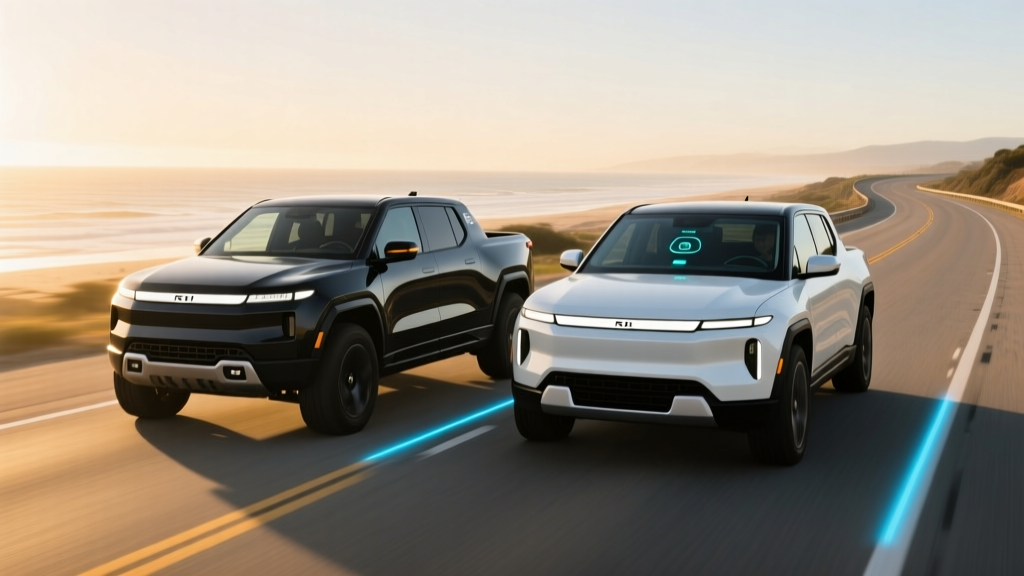
If you've been tracking Rivian hands-free driving capabilities, the 2026 model year marks a meaningful inflection point. The R1T pickup and R1S SUV now ship with the second-generation ADAS hardware suite and updated Highway Assist software that delivers genuinely reliable hands-free driving on divided highways. It's not Tesla FSD's ambitious city-street promise, and it's not GM Super Cruise's Lidar-mapped network — but after logging over 800 miles with the system across Interstate corridors in the Southwest and Midwest, it's clear Rivian has closed the gap with the established Level 2 leaders.
This review covers the full ownership picture: real-world range and efficiency, DC fast-charging performance, 2026 pricing with federal tax credit context, and whether Highway Assist is mature enough to factor into your purchase decision.
Range, Battery, and Real-World Efficiency
The 2026 R1 Dual-Motor lineup offers two battery packs. The Standard pack provides an EPA-estimated 270 miles, while the Max pack pushes that to 420 miles on the R1S and 415 miles on the R1T. Both use NMC (nickel manganese cobalt) chemistry in a structural pack configuration that contributes to chassis rigidity.
EPA estimates assume mixed driving at moderate speeds. In our highway testing at 70-75 mph with climate control active, expect roughly 340-360 miles from the Max pack in fair weather. In cold conditions (below 32°F), highway range drops 15-22% due to battery heating demands and cabin load — plan for 280-310 miles from the Max pack in winter interstate driving. The Standard pack delivers a reliable 215-230 highway miles in temperate conditions.
| Spec | Standard Pack | Max Pack |
|---|---|---|
| EPA Range (R1S) | 270 mi | 420 mi |
| EPA Range (R1T) | 270 mi | 415 mi |
| Battery (usable) | ~95 kWh, NMC | ~141 kWh, NMC |
| Efficiency (R1S) | 73 MPGe / 46 kWh/100mi | 70 MPGe / 48 kWh/100mi |
| 0-60 mph | 4.5 sec | 4.5 sec |
| Horsepower | 533 hp | 533 hp |
| Drivetrain | AWD (Dual-Motor) | AWD (Dual-Motor) |
| Towing Capacity | 11,000 lbs | 11,000 lbs |
Efficiency is respectable for a vehicle this size. The R1S Dual-Motor returns approximately 2.1-2.3 miles per kWh in mixed driving, which translates to 73 MPGe combined per EPA data at fueleconomy.gov. Heavy towing or sustained mountain driving will cut that by 30-40%.
Charging Speed: DC Fast Charge and Home Level 2
Rivian equips the 2026 R1 with NACS (North American Charging Standard) ports natively, granting direct access to Tesla Supercharger V3 and V4 stalls without an adapter — a significant practical advantage over the CCS-only vehicles still populating dealer lots.
| Level | Power (kW) | Speed | Notes |
|---|---|---|---|
| Level 1 (120V) | ~1.4 kW | ~3 mi/hr | Emergency/trickle only |
| Level 2 (240V, 48A) | 11.5 kW | ~25 mi/hr | Full overnight charge in 9-14 hrs |
| DC Fast Charge | Peak 220 kW | 10-80% in ~21 min (Max pack) | Sustains ~170 kW to 50%, tapers above 80% |
At home on a Level 2 Rivian Wall Charger (48 amp / 11.5 kW), the Max pack replenishes from empty in approximately 14 hours. Most owners will arrive home with 30-50% remaining and wake to a full battery. Ensure your electrician installs a NEMA 14-60 or hardwired connection on a dedicated 60-amp circuit — a 200-amp home panel is usually sufficient, but older homes with 100-amp service may need an upgrade ($1,500-$3,000).
Rivian Highway Assist: How Hands-Free Driving Actually Works
Rivian's hands-free driving system, branded Highway Assist, is a SAE Level 2 driver-assistance feature. This is critical to understand: you must remain attentive, and the system monitors your eyes via an infrared driver-monitoring camera mounted on the steering column. If your gaze drifts from the road for more than a few seconds, escalating alerts will eventually disengage the system.
Highway Assist combines adaptive cruise control with lane-centering on divided highways. The driver is legally and operationally responsible at all times. This is the same automation level as Tesla Autopilot, Ford BlueCruise, and GM Super Cruise. Only Waymo and Zoox robotaxi services currently operate at Level 4 (no driver needed) in limited geofenced areas.
Where it works: Highway Assist activates on mapped divided highways — primarily Interstates and major US routes. Rivian has expanded coverage significantly for 2026, now including most Interstate corridors across the lower 48 states. Unlike GM Super Cruise, which relies on Lidar pre-mapping, Rivian uses a vision-plus-radar approach that allows it to activate on a broader set of divided roads, though performance is strongest on well-marked Interstates.
What's improved for 2026: The second-generation hardware (introduced mid-2024 on the refreshed R1) features higher-resolution cameras and more capable radar processing. Lane-centering is smoother, lane-change initiation (when you tap the turn signal) is more decisive, and the system handles gentle highway curves without the hunting behavior that plagued early versions. On a 400-mile Interstate drive through Arizona and New Mexico, I found Highway Assist handled 90%+ of miles without intervention — the exceptions being construction zones with shifted lanes and faded markings.
- Does NOT work on city streets, residential roads, or undivided highways
- Construction zones with temporary lane markings may cause disengagement
- Heavy rain, snow, or direct sun glare can impair camera function
- System requires hands on or near the wheel and eyes on the road at all times
- Will not navigate highway exits, interchanges, or toll plazas autonomously
How it compares: Ford BlueCruise covers more pre-mapped highway miles and allows true hands-off operation with eye monitoring. GM Super Cruise remains the smoothest on its mapped network but covers fewer roads. Rivian Highway Assist sits in the middle — broader road coverage than Super Cruise, slightly less hands-off confidence than BlueCruise, but rapidly improving via over-the-air updates. It's a competitive system that most owners will use daily on highway commutes.
Interior, Cargo, and Daily Practicality
The R1S seats up to seven in three rows (or five with an optional second-row captain's chair configuration). Cargo space behind the third row is limited at approximately 10.4 cu ft — adequate for groceries but tight for luggage. Fold the third row and you get 46.7 cu ft; fold both rear rows for a flat 91.6 cu ft floor. The R1T pickup offers a 4.5-foot bed with approximately 34 cu ft of volume plus the signature Gear Tunnel (11.7 cu ft of lockable, pass-through storage between the cab and bed).
Front-row legroom is generous at 41.3 inches; second-row legroom in the R1S is 38.5 inches — comfortable for adults on longer trips. Third-row legroom at 30.2 inches is best reserved for children. The 15.6-inch center touchscreen runs Rivian's proprietary OS, which is responsive and well-organized, though it lacks Apple CarPlay and Android Auto — a deliberate choice that frustrates some buyers. The 12.3-inch digital instrument cluster is clear and customizable. A dedicated front trunk (frunk) provides 11.1 cu ft of lockable, drainable storage — ideal for wet gear or charging cables.
Pricing, Trims, and Federal Tax Credit Eligibility
The 2026 R1 lineup has simplified into three trim levels: Adventure, Ascend, and Ascend Tri-Motor. Here's where pricing stands before incentives:
| Model / Trim | Base MSRP | §30D Credit Eligible? | Effective Price* |
|---|---|---|---|
| R1T Dual-Motor Adventure (Std) | $69,900 | Yes — up to $7,500 | ~$62,400 |
| R1T Dual-Motor Ascend (Max) | $83,500 | Yes — up to $7,500 | ~$76,000 |
| R1S Dual-Motor Adventure (Std) | $74,900 | Yes — up to $7,500 | ~$67,400 |
| R1S Dual-Motor Ascend (Max) | $88,000 | Yes — up to $7,500 | ~$80,500 |
| R1T Tri-Motor Ascend (Max) | $99,900 | No — exceeds $80K cap | $99,900 |
*Effective price assumes full $7,500 §30D credit. Actual credit depends on tax liability, income caps, and battery-sourcing compliance. Consult a tax professional.
- MSRP cap: Trucks, SUVs, and vans must be under $80,000 MSRP. The R1T and R1S Dual-Motor variants qualify; the Tri-Motor exceeds the cap.
- Income limits: Modified AGI must not exceed $300,000 (married filing jointly), $225,000 (head of household), or $150,000 (single). Per IRS §30D guidelines.
- Battery sourcing: The full $7,500 requires meeting both critical-minerals and battery-component sourcing thresholds. Rivian has progressively shifted supply chains — verify current-year compliance on the IRS qualified vehicles list before purchasing.
- Point-of-sale transfer: As of 2024, buyers can transfer the credit to the dealer at purchase, reducing the upfront cost immediately rather than waiting for tax filing.
Warranty, Ownership Costs, and Reliability
Rivian provides an 8-year/175,000-mile battery and drive unit warranty — one of the more generous powertrain warranties in the segment, and notably higher mileage than the industry-standard 8-year/100,000-mile coverage. The bumper-to-bumper limited warranty runs 5 years/60,000 miles. Rivian guarantees the battery will retain at least 70% of its original capacity during the warranty period.
Insurance costs run 15-25% higher than comparable gas-powered trucks, reflecting repair complexity and parts costs for the aluminum-intensive structure. Expect annual premiums in the $2,200-$3,200 range depending on your state and driving record. Rivian's mobile service fleet handles many repairs at your home or office, reducing dealer-visit friction, though wait times for body repair after collisions remain a pain point in some metro areas.
Pros, Cons, and Who Should Buy
✅ Pros
- 420-mile Max pack eliminates range anxiety on road trips
- NACS native — direct Supercharger access without adapter
- 8-yr/175,000-mi battery warranty exceeds industry norm
- Highway Assist is genuinely useful for daily Interstate commutes
- Gear Tunnel and frunk give unmatched storage versatility (R1T)
- 11,000-lb towing capacity with integrated trailer brake controller
- Over-the-air updates continuously improve vehicle function
❌ Cons
- No Apple CarPlay or Android Auto
- Tri-Motor exceeds $80K tax-credit MSRP cap
- Highway Assist lags BlueCruise/Super Cruise in hands-off confidence
- Insurance premiums 15-25% above gas truck equivalents
- Body repair wait times can stretch weeks after collision
- Third-row space in R1S is tight for adults
- Efficiency drops sharply when towing (expect 1.2-1.5 mi/kWh)
Who Is the Rivian R1 For?
Choose the R1 if: You need a capable truck or 3-row SUV with genuine off-road chops, want hands-free highway driving for a daily Interstate commute, value NACS Supercharger access, and have home Level 2 charging. The Max pack is the sweet spot for road-trippers who tow trailers or drive in cold climates.
Look elsewhere if: You need CarPlay/Android Auto, want the most mature hands-free system available (consider Ford F-150 Lightning with BlueCruise or a Super Cruise-equipped Cadillac), have a tight budget below $60K, or primarily drive in dense urban environments where a smaller EV makes more sense.
Frequently Asked Questions
What is the real-world range of the Rivian R1?
The EPA rates the Max pack R1S at 420 miles and R1T at 415 miles. In real-world highway driving at 70-75 mph, expect 340-360 miles in fair weather and 280-310 miles in sub-freezing temperatures. The Standard pack delivers approximately 215-230 highway miles in moderate conditions.
How fast does the Rivian R1 charge?
On DC fast charging, the R1 peaks at 220 kW and charges from 10-80% in approximately 21 minutes (Max pack). On a home Level 2 charger at 11.5 kW, you'll add about 25 miles of range per hour, fully replenishing the Max pack in roughly 14 hours from empty.
Does the Rivian R1 qualify for the $7,500 federal tax credit?
Dual-Motor variants under $80,000 MSRP are eligible, provided the buyer meets IRS income caps ($300K joint / $150K single) and the vehicle meets current-year battery-sourcing requirements. The Tri-Motor at $99,900 exceeds the MSRP cap and does not qualify. Always verify eligibility on the IRS qualified vehicles list before purchasing.
Is Rivian Highway Assist safe for hands-free driving?
Highway Assist is a Level 2 system that requires continuous driver attention. It is safe and effective on divided highways when used as designed — eyes on the road, ready to take over. It is not autonomous driving and does not handle city streets, construction zones, or complex interchanges independently.
How does Rivian hands-free driving compare to Tesla Autopilot or Ford BlueCruise?
Highway Assist is competitive with Tesla Autopilot in lane-centering smoothness but requires more driver vigilance than Ford BlueCruise, which allows true hands-off operation on pre-mapped highways. Rivian's advantage is broader road coverage via its vision-based approach, while BlueCruise and Super Cruise are limited to their mapped networks.
Is the Rivian R1 worth buying versus the Ford F-150 Lightning or Tesla Cybertruck?
The R1T wins on build quality, off-road capability, and storage innovation (Gear Tunnel). The F-150 Lightning offers a lower entry price and more mature BlueCruise hands-free tech. The Cybertruck undercuts on price with the base AWD model and offers 48-volt architecture, but its polarizing design and limited service network are trade-offs. If hands-free driving maturity is your top priority, the Lightning with BlueCruise has a slight edge today.