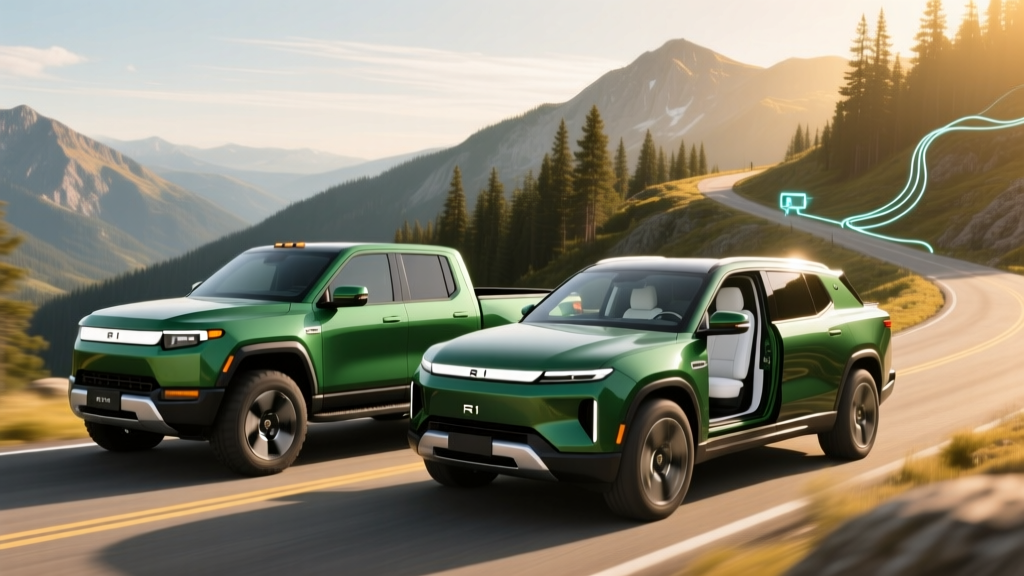
The Rivian Founding: From MIT Lab to America's Electric Truck Maker
Before Rivian became synonymous with electric adventure trucks and SUVs, it was a quiet startup called Mainstream Motors, incorporated in 2009 by Robert "RJ" Scaringe. Scaringe, who earned his mechanical engineering PhD from MIT, initially envisioned a sports car before pivoting to an all-electric skateboard platform capable of underpinning trucks, SUVs, and delivery vans. The company rebranded as Rivian Automotive in 2011, but it wasn't until a $700 million investment from Amazon in 2019 — followed by Ford's $500 million stake the same year — that the Rivian founding story became a household narrative in the EV world.
Rivian's IPO in November 2021 raised nearly $13.7 billion, one of the largest public debuts in U.S. history. By 2026, Rivian has delivered tens of thousands of R1T pickups and R1S SUVs, secured a multi-billion-dollar partnership with Volkswagen Group, and expanded its Normal, Illinois production facility. The question for buyers today isn't whether Rivian is legitimate — it's whether the R1 platform earns its premium price tag against rivals like the Tesla Cybertruck, Ford F-150 Lightning, and Chevrolet Silverado EV.
2026 Rivian R1T and R1S: Full Spec Breakdown
The 2026 Rivian lineup continues on the updated Gen 2 platform introduced for the 2025 model year, which brought a redesigned electrical architecture, fewer ECUs, a new heat pump, and enhanced drive motors. Below are the core specifications for both the R1T pickup and R1S three-row SUV across available battery configurations.
| Spec | Dual-Motor (Standard Pack) | Dual-Motor (Large Pack) | Tri-Motor (Max Pack) |
|---|---|---|---|
| EPA Range (R1T) | ~270 mi | ~352 mi | ~420 mi |
| EPA Range (R1S) | ~260 mi | ~340 mi | ~410 mi |
| Battery Capacity (usable) | ~92 kWh (LFP) | ~128 kWh (NMC) | ~149 kWh (NMC) |
| Horsepower | 533 hp | 533 hp | 850 hp |
| 0–60 mph | 4.5 sec | 4.5 sec | 2.9 sec (Tri-Motor) |
| Drivetrain | AWD (dual-motor) | AWD (dual-motor) | AWD (tri-motor) |
| Peak DC Fast Charge | ~200 kW | ~220 kW | ~250 kW |
| 10–80% DC Charge Time | ~28 min | ~30 min | ~36 min |
| Level 2 Home Charge Rate | 11.5 kW (~25 mi/hr) | 11.5 kW (~25 mi/hr) | 11.5 kW (~25 mi/hr) |
| Efficiency (R1T Dual-Motor) | ~2.1 kWh/mi (~48 MPGe combined) | ~2.3 kWh/mi (~44 MPGe) | |
| Max Towing Capacity | 11,000 lbs | 11,000 lbs | 11,000 lbs |
For the most current official EPA data, refer to the EPA fueleconomy.gov listing for Rivian models.
Real-World Range: What the EPA Sticker Doesn't Tell You
EPA estimates for the R1T Dual-Motor Large Pack sit at ~352 miles. In real-world highway testing at 70–75 mph, expect roughly 280–310 miles in mild weather. In cold-weather conditions (below 32°F), range can drop an additional 15–25%, putting realistic winter highway range closer to 230–270 miles. The Tri-Motor Max Pack's massive 149 kWh battery provides a larger buffer, but its heavier curb weight and higher consumption partially offset the capacity advantage.
Rivian's Gen 2 heat pump, introduced for 2025, meaningfully improves cold-weather efficiency compared to the original Gen 1 resistive heating system. Owners in northern climates report 10–15% better winter range retention on the updated platform. Still, the R1T and R1S are large, heavy vehicles with the aerodynamics of trucks — highway efficiency will always lag behind a sedan like the Hyundai Ioniq 6 or Tesla Model 3.
If your typical commute is under 80 miles round-trip and you charge at home nightly, even the Standard Pack's ~270-mile EPA rating provides ample buffer. Road trippers should plan around 200–250 miles between DC fast-charge stops to stay in the optimal charging window and avoid the steep taper above 80% State of Charge (SoC).
Charging Speed: DC Fast, Level 2, and the Rivian Adventure Network
Rivian uses the NACS (North American Charging Standard) connector on all 2026 models, giving R1 owners native access to the Tesla Supercharger network — a major advantage over CCS-only competitors that still require adapters. The Rivian Adventure Network, the company's proprietary charging system, continues to expand along popular outdoor recreation corridors.
| Charging Level | Power / Rate | Miles Added per Hour | Typical Use Case |
|---|---|---|---|
| Level 1 (120V outlet) | ~1.4 kW | ~3–4 mi/hr | Emergency / trickle top-up |
| Level 2 (240V home / destination) | 11.5 kW (48A) | ~25 mi/hr | Overnight home charging |
| DC Fast Charge (Standard Pack) | Peak ~200 kW | ~140 mi in 20 min | Road trips, public stations |
| DC Fast Charge (Large Pack) | Peak ~220 kW | ~150 mi in 20 min | Road trips, public stations |
| DC Fast Charge (Max Pack) | Peak ~250 kW | ~160 mi in 20 min | Road trips, public stations |
Charging curve reality check: Like all EVs, Rivian's peak charge rate is not sustained across the entire session. The Large Pack typically holds near 200+ kW from roughly 10–40% SoC, then tapers progressively. The 10–80% time of ~30 minutes is respectable for a pack this size, but the final 80–100% can add another 25–35 minutes. For road trips, plan to charge from 10–80% and drive on — charging above 80% is rarely time-efficient.
For home Level 2 charging, Rivian recommends a 60-amp circuit with a 48-amp wall connector. Installation costs vary widely: expect $800–$2,500 if your electrical panel has capacity, or $3,000–$5,000+ if a panel upgrade to 200A service is needed. Always get a quote from a licensed electrician before purchasing equipment.
Pricing, Trims, and Federal Tax Credit Eligibility
The 2026 Rivian R1T and R1S are premium-priced vehicles, and the federal EV tax credit situation is nuanced. Under IRS §30D rules, the R1T qualifies as a light truck (MSRP cap: $80,000) while the R1S qualifies as an SUV (MSRP cap: $80,000). However, battery component and critical mineral sourcing requirements, plus buyer income limits, determine whether you actually receive the full credit.
| Configuration | Base MSRP (R1T) | Base MSRP (R1S) | §30D Credit Eligibility |
|---|---|---|---|
| Dual-Motor Standard Pack | ~$69,900 | ~$75,900 | Partial up to $7,500 (sourcing rules apply) |
| Dual-Motor Large Pack | ~$76,900 | ~$82,900 | Partial — R1S may exceed $80K cap |
| Tri-Motor Max Pack | ~$92,000+ | ~$99,000+ | Exceeds MSRP cap — no §30D credit |
Key §30D requirements to verify before purchase:
- Income caps: Modified AGI ≤ $150,000 (single), $225,000 (head of household), $300,000 (joint filers)
- MSRP caps: $80,000 for trucks/SUVs/vans; $55,000 for sedans
- Battery sourcing: Increasing percentages of critical minerals and battery components must be sourced from the U.S. or FTA partners — these thresholds tighten annually
- Point-of-sale transfer: Eligible buyers can transfer the credit to the dealer at purchase for an immediate price reduction
Always verify current-year eligibility on IRS.gov's clean vehicle credits page and consult a tax professional. Rules change annually, and Rivian's battery sourcing composition may shift between model years.
Interior, Cargo, Tech, and Driver Assistance
The R1T is a midsize pickup with a crew-cab layout, seating five. The R1S is a three-row SUV with seating for up to seven. Both share Rivian's minimalist interior design anchored by a 15.6-inch central touchscreen and a 12.3-inch digital instrument cluster running Rivian's proprietary software.
R1T cargo highlights:
- Bed length: ~54 inches (4.5 ft)
- Gear Tunnel: 11.7 cu ft of lockable, pass-through storage behind the rear seats — a signature Rivian feature
- Front trunk (frunk): ~11.1 cu ft with a drain plug (doubles as a cooler)
- Total enclosed storage: significantly more than the bed dimensions suggest
R1S cargo highlights:
- Behind third row: ~10.6 cu ft
- Third row folded: ~46.7 cu ft
- All rear rows folded: ~88.2 cu ft
- Frunk: ~11.1 cu ft
Standout tech features:
- Rivian Driver+: A Level 2 (SAE) driver-assistance suite combining adaptive cruise control, lane centering, and automatic lane changes on divided highways. This is not self-driving — the driver must remain engaged and hands must stay on or near the wheel at all times.
- Over-the-air (OTA) updates: Rivian regularly pushes software updates that add features, improve efficiency, and refine the driving experience.
- Camp Mode & Pet Mode: Climate-control presets that maintain cabin temperature while parked — popular with the overlanding community.
- Powered tonneau cover (R1T): Available retractable bed cover that integrates with the vehicle's locking system.
- Quad-motor option (discontinued after 2024): The Tri-Motor replaced the original Quad-Motor as the top performance tier for 2025+.
Notable drawbacks:
- Apple CarPlay and Android Auto are not supported — Rivian uses its own infotainment ecosystem, which frustrates some buyers accustomed to phone mirroring.
- Service center network is still expanding; owners in rural areas may face longer wait times for repairs.
- The R1T's 54-inch bed is shorter than full-size truck beds (67–78 inches), limiting utility for long lumber or equipment hauling.
- Insurance premiums tend to be higher than comparable gas trucks due to repair costs and EV-specific parts.
Warranty Coverage and Long-Term Battery Outlook
Rivian's warranty structure is competitive within the premium EV segment:
- Battery & Drive Unit: 8 years / 175,000 miles (whichever comes first), with a capacity retention threshold of 70% minimum
- Limited Vehicle Warranty: 5 years / 60,000 miles bumper-to-bumper
- Roadside Assistance: 5 years / unlimited miles
The 175,000-mile battery warranty exceeds the federal minimum of 8 years / 100,000 miles. Rivian uses NMC (nickel manganese cobalt) chemistry in its Large and Max packs, which offers higher energy density than LFP (lithium iron phosphate) but typically shows slightly more degradation over high cycle counts. The Standard Pack's LFP chemistry is more durable for frequent 100% charging and high-mileage drivers, though it sacrifices some range due to lower energy density.
For battery longevity best practices: avoid routinely charging NMC packs to 100% (set daily limits to 80–90%), use DC fast charging sparingly, and take advantage of the vehicle's preconditioning feature before fast charging in cold weather to protect cell health.
How Rivian Stacks Up Against the Competition
| Attribute | Rivian R1T (Dual-Motor Large) | Tesla Cybertruck (AWD) | Ford F-150 Lightning (Ext. Range) |
|---|---|---|---|
| EPA Range | ~352 mi | ~340 mi | ~320 mi |
| Base MSRP | ~$76,900 | ~$79,990 | ~$71,990 |
| 0–60 mph | 4.5 sec | 3.9 sec | ~4.0 sec |
| Max Tow | 11,000 lbs | 11,000 lbs | 10,000 lbs |
| Bed Length | 54 in | 72 in | 67 in |
| Charging Connector | NACS (native) | NACS (native) | CCS (adapter needed for NACS) |
| Unique Storage | Gear Tunnel (11.7 cu ft) | Vault (lockable bed) | Mega Power Frunk (14.1 cu ft) |
The R1T's Gear Tunnel and frunk give it a total enclosed storage advantage for gear-heavy buyers (skis, camping equipment, bikes). The Cybertruck wins on bed length and raw performance, while the F-150 Lightning offers the most traditional truck experience with a lower entry price. For buyers who prioritize adventure-oriented design, build quality, and a premium cabin, the Rivian holds a distinct position.
For official safety data, check NHTSA's Rivian safety ratings and IIHS testing results.
Who Should Buy the 2026 Rivian R1T or R1S?
Choose the Rivian R1T if:
- You want a premium electric pickup with adventure-focused storage (Gear Tunnel, frunk, camp-ready features)
- You need 11,000-lb towing capability and genuine off-road competence
- You value OTA software updates and a vertically integrated tech experience
- Your typical drives are under 300 miles or you're willing to plan DC fast-charge stops
- You need three-row seating for up to seven passengers
- You want electric SUV range with off-road capability (Rivian's air suspension provides up to 14.4 inches of ground clearance)
- You prefer a sealed, car-like cabin over a pickup bed
- You need a full-size truck bed (67+ inches) — consider the F-150 Lightning or Silverado EV
- Your budget is under $60,000 — no Rivian configuration fits this range new
- You depend on Apple CarPlay or Android Auto for daily driving
- You live far from a Rivian service center and cannot tolerate potential repair delays
Frequently Asked Questions
What is the real-world range of the 2026 Rivian R1T?
The EPA rates the R1T Dual-Motor Large Pack at approximately 352 miles. Real-world highway driving at 70–75 mph typically yields 280–310 miles in mild weather and 230–270 miles in cold conditions (below 32°F). City driving with regenerative braking can match or slightly exceed EPA estimates.
How fast does the Rivian R1T charge at home and on the road?
At home on a Level 2 (240V, 48A) charger, the R1T adds roughly 25 miles of range per hour, fully charging a Large Pack overnight in about 12–13 hours. On DC fast chargers, the Large Pack peaks at ~220 kW and charges from 10–80% in approximately 30 minutes. The Max Pack peaks at ~250 kW but takes ~36 minutes for 10–80% due to its larger capacity.
How much does a 2026 Rivian cost after tax credits?
The R1T Dual-Motor Standard Pack starts at ~$69,900. If you qualify for the full $7,500 federal §30D credit (subject to income limits, MSRP caps, and battery sourcing rules), the effective price drops to ~$62,400. Higher trims like the Tri-Motor Max Pack exceed the $80,000 MSRP cap and do not qualify for the federal credit. State and local incentives may provide additional savings — check your state's energy office for current programs.
Does the Rivian R1T qualify for the $7,500 federal EV tax credit?
It depends on the specific configuration and your personal tax situation. The Dual-Motor Standard and Large Pack R1T models fall under the $80,000 MSRP cap for trucks. However, the credit amount is split between battery component sourcing ($3,750) and critical mineral sourcing ($3,750), and both thresholds tighten annually. Buyer income must not exceed $150K (single) / $300K (joint). Verify current-year details at IRS.gov and consult a tax professional.
Is the Rivian R1T worth buying over the Tesla Cybertruck or Ford F-150 Lightning?
The R1T excels in premium interior quality, adventure-specific storage (Gear Tunnel), and off-road capability with air suspension. The Cybertruck offers a longer bed, faster acceleration, and native Supercharger access. The F-150 Lightning provides a more traditional truck layout at a lower entry price. If adventure lifestyle, build quality, and unique storage solutions are priorities, the R1T is a compelling choice. If bed length or lowest cost is paramount, look to the Lightning or Cybertruck.
What are the biggest pros and cons of owning a Rivian?
Pros: Adventure-first design (Gear Tunnel, frunk, Camp Mode), strong off-road capability, over-the-air updates, NACS charging with Supercharger access, competitive range, 11,000-lb towing. Cons: No Apple CarPlay/Android Auto, premium pricing, short 54-inch bed, expanding but still limited service network, higher insurance costs, Tri-Motor trims exceed tax credit MSRP cap.
How did the Rivian founding story shape the company's vehicles?
RJ Scaringe's engineering background and focus on a flexible skateboard platform — conceived during the company's 2009 founding — directly enabled the R1T and R1S to share a common architecture while offering distinct body styles. The early pivot from sports car to electric truck, combined with Amazon's investment (which also led to the EDV commercial delivery van), gave Rivian the capital and manufacturing discipline to scale production in Normal, Illinois, and pursue the VW partnership that will fund next-generation, more affordable vehicles expected later this decade.