Why Rivian Lease Deals Are Dominating 2026 EV Conversations
If you've been tracking Rivian ev lease deals in 2026, you've likely noticed something unusual: leasing a Rivian R1T or R1S can sometimes cost less per month than financing the same vehicle — and in some cases, the lease actually unlocks a tax credit the buyer couldn't claim outright. This isn't a marketing gimmick. It's a structural quirk of the IRS §30D tax credit rules combined with Rivian's own incentive stacking, and it fundamentally changes the math for buyers on the fence between the R1T truck and R1S SUV.
But lease deals only make sense if the total cost of ownership — not just the monthly payment — actually pencils out. Below, we break down the real numbers behind a 2026 Rivian lease: the federal credit mechanics, 5-year cost projections, fuel and maintenance savings, the insurance premium reality, and what happens at lease-end when residual values hit the used market.
Current Rivian R1T and R1S Pricing and Lease Structures
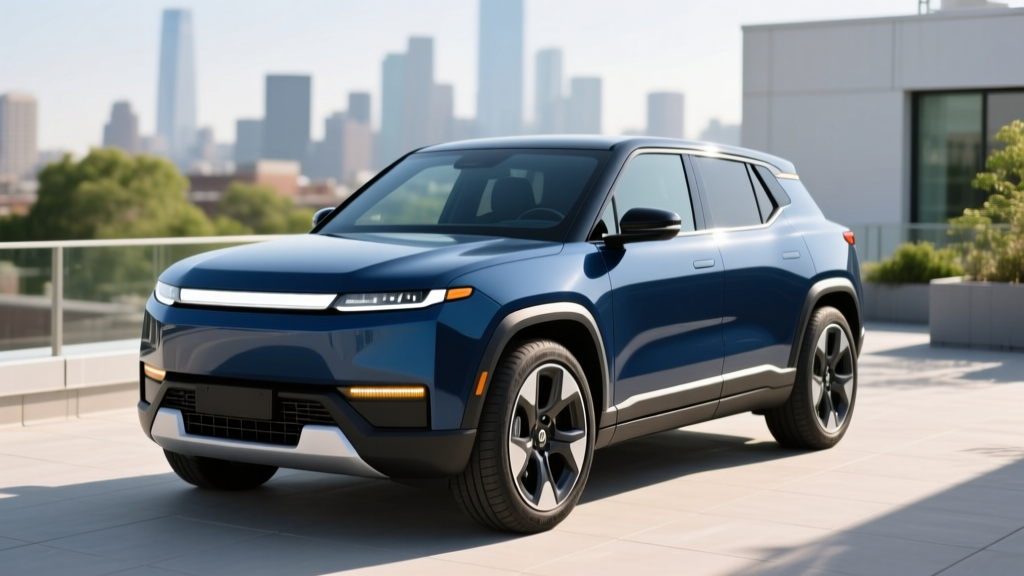
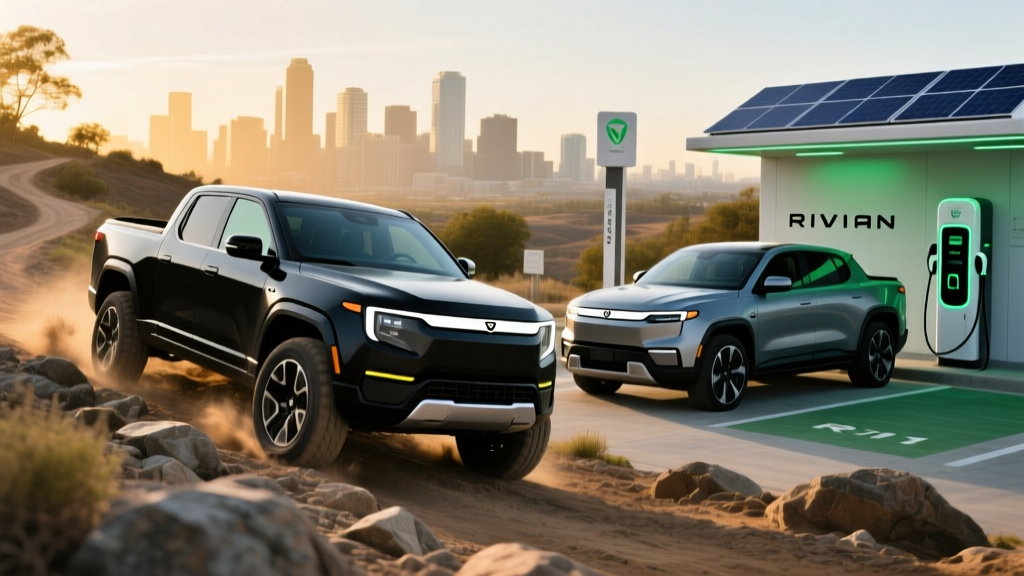
For the 2026 model year, Rivian offers the R1T pickup and R1S three-row SUV across Dual-Motor, Performance Dual-Motor, and Tri-Motor configurations, with Standard (92 kWh usable, LFP), Large (109 kWh usable, NMC), and Max (141 kWh usable, NMC) battery packs.
| Model / Trim | Battery (kWh) | EPA Range | 0-60 mph | HP | Base MSRP |
|---|---|---|---|---|---|
| R1T Dual-Motor Standard | 92 kWh (LFP) | 270 mi | 4.5 sec | 533 | $69,900 |
| R1T Dual-Motor Large | 109 kWh (NMC) | 352 mi | 4.5 sec | 533 | $75,900 |
| R1T Tri-Motor Max | 141 kWh (NMC) | 420 mi | 2.9 sec | 850 | $99,900 |
| R1S Dual-Motor Standard | 92 kWh (LFP) | 260 mi | 4.6 sec | 533 | $75,900 |
| R1S Dual-Motor Large | 109 kWh (NMC) | 340 mi | 4.6 sec | 533 | $81,900 |
| R1S Tri-Motor Max | 141 kWh (NMC) | 400 mi | 3.0 sec | 850 | $105,900 |
Rivian's in-house leasing arm typically offers 24-, 36-, and 48-month terms with money factors that fluctuate quarterly. As of early 2026, competitive lease offers on Dual-Motor Standard trims have appeared with money factors around 0.00125 (equivalent to roughly 3.0% APR) and residuals between 52-58% for 36-month terms. Higher trims and Max packs carry lower residuals due to faster depreciation curves on premium configurations.
The §30D Lease Credit Loophole Explained
Here's where Rivian lease deals get interesting — and where many buyers get confused. Under current IRS §30D rules, the federal clean vehicle credit of up to $7,500 is subject to strict buyer income caps, MSRP limits, and battery-sourcing requirements when you purchase a vehicle. But there's a parallel path: the commercial clean vehicle credit under §45W, which leasing companies can claim and pass through to the lessee as a capitalized cost reduction.
- Income caps: Modified AGI ≤ $150,000 (single), $225,000 (head of household), $300,000 (joint)
- MSRP caps: ≤ $80,000 for vans/SUVs/pickups; ≤ $55,000 for sedans
- Battery sourcing: Critical minerals and battery components must meet phased-in domestic/free-trade-agreement thresholds — percentages increase annually
- Point-of-sale transfer: Eligible buyers can transfer the credit to the dealer for an immediate price reduction
- One credit per taxpayer per year; VIN must be registered and reported
Lease alternative (§45W): The lessor (Rivian's finance arm) claims the commercial credit and may pass the $7,500 benefit to the lessee as a cap-cost reduction — with no buyer income or MSRP caps. This is why high-income buyers or those eyeing a $99,900+ Tri-Motor often find leasing more advantageous. Confirm pass-through in your lease agreement before signing.
For Rivian specifically, the R1T Dual-Motor Standard at $69,900 and the R1S Dual-Motor Standard at $75,900 both fall under the $80,000 MSRP cap for trucks and SUVs, making them eligible for the purchase credit if the buyer meets income and sourcing requirements. But the Tri-Motor Max variants at $99,900+ exceed the MSRP cap entirely — meaning the only path to a federal credit on those trims is through a lease structure.
5-Year Total Cost of Ownership: Lease vs. Finance vs. Gas Truck
Monthly payments tell only part of the story. To evaluate whether Rivian EV lease deals deliver genuine value, we modeled a 5-year/75,000-mile ownership scenario comparing a leased 2026 R1T Dual-Motor Large ($75,900 MSRP), a financed R1T at the same spec, and a comparably equipped gasoline full-size pickup averaging 19 MPG combined.
| Cost Category | R1T Leased (36-mo, then 24-mo refi) | R1T Financed (60-mo) | Gas Truck (19 MPG, $3.50/gal) |
|---|---|---|---|
| Vehicle payments (5 yr) | $42,600 | $46,200 | $39,000 |
| Fuel / Charging | $5,625 | $5,625 | $13,816 |
| Maintenance | $1,800 | $1,800 | $4,500 |
| Insurance | $14,400 | $14,400 | $10,200 |
| Tax credit / lease credit | -$7,500 | -$7,500* | $0 |
| Depreciation / equity loss | $22,800 (residual gap) | $18,975 | $16,500 |
| 5-Year Total | $79,725 | $79,500 | $84,016 |
*Assumes buyer qualifies for §30D purchase credit. If income or MSRP caps disqualify the buyer, financed total rises to $87,000.
A few things jump out. First, the leased and financed R1T land within a few hundred dollars of each other over 5 years — but the lease protects the buyer from residual-value risk, which is significant in a rapidly evolving EV market. Second, both electric scenarios beat the gas truck by roughly $4,300-$4,500, driven primarily by fuel and maintenance savings that offset higher insurance premiums. Third, if the financed buyer doesn't qualify for the tax credit, the gas truck actually wins on pure cost.
Charging vs. Gasoline: The Per-Mile Math
Rivian's R1T and R1S average roughly 2.0-2.3 kWh per mile in mixed driving (the R1T Dual-Motor Large achieves approximately 48 MPGe combined per EPA data). Your actual cost per mile depends entirely on where and how you charge.
| Charging Scenario | Rate | Cost per Mile | Annual Cost (15,000 mi) |
|---|---|---|---|
| Home Level 2 (national avg residential) | $0.16/kWh | $0.035 | $525 |
| Home with utility EV rate / off-peak | $0.09/kWh | $0.020 | $300 |
| Public DC fast charging (avg) | $0.40/kWh | $0.088 | $1,320 |
| Tesla Supercharger network (NACS adapter) | $0.30/kWh | $0.066 | $990 |
| Gas truck at 19 MPG | $3.50/gallon | $0.184 | $2,763 |
Home-charging dominance is the key variable. A Rivian owner who charges 80% at home on a standard residential rate and 20% on public DC fast chargers will spend roughly $675 annually on electricity — about 75% less than the gas truck's $2,763 fuel bill. But if you live in an apartment without charging access and rely entirely on public DC fast chargers, your annual "fuel" cost jumps to $1,320, cutting the savings roughly in half.
Maintenance Savings: Where EVs Quietly Win
Electric vehicles eliminate several routine maintenance categories that gas-vehicle owners take for granted. The R1T and R1S have no engine oil, no transmission fluid, no spark plugs, no timing belts, and no exhaust system. Regenerative braking dramatically reduces brake-pad wear — many EV owners report original brake pads lasting 80,000-100,000 miles.
| Maintenance Item | Gas Truck (5 yr / 75k mi) | Rivian R1T/R1S (5 yr / 75k mi) |
|---|---|---|
| Oil changes (8-10 over 5 years) | $600-$900 | $0 |
| Transmission fluid / service | $250-$400 | $0 |
| Brake pads (2 sets typical) | $600-$1,000 | $0-$300 (regen extends life) |
| Air filters, cabin filters | $200-$350 | $100-$150 (cabin only) |
| Coolant / spark plugs / belts | $400-$700 | $0 |
| Tire rotation / replacement | $1,200-$1,800 | $1,400-$2,000 (heavier vehicle) |
| Total Estimated | $3,250-$5,150 | $1,500-$2,450 |
The one area where EVs can cost more is tires. The R1T Dual-Motor Large weighs approximately 7,150 lbs, and instant electric torque accelerates tread wear. Budget for one tire replacement over 5 years at roughly $1,400-$2,000 for a set of all-terrain or all-season tires. Even with that premium, total Rivian maintenance runs about $2,500 less than the gas equivalent over 5 years.
Insurance Costs: The Uncomfortable Truth
EV insurance premiums are typically 15-30% higher than equivalent gas vehicles, and Rivians sit at the upper end of that range. Several factors drive this:
- Higher repair costs: Rivian's aluminum-intensive body structure, integrated battery pack, and advanced ADAS sensor suite (11 cameras, 5 radar units, LiDAR on some trims) make collision repairs expensive. Fewer body shops are certified for Rivian structural work compared to legacy brands.
- Higher vehicle values: A $75,900 MSRP means higher comprehensive and collision premiums regardless of powertrain.
- Specialized parts supply chain: Rivian's vertical integration means some parts have longer lead times, increasing rental-car reimbursement costs for insurers.
- Performance profile: The Tri-Motor's 850 HP and sub-3-second 0-60 time pushes the R1T into sports-car insurance territory.
Based on national averages and owner reports, expect annual premiums of $2,400-$3,600 for an R1T or R1S depending on your driving record, ZIP code, and coverage levels. That's roughly $600-$1,000 more per year than a comparably priced gas truck. Over 5 years, the insurance premium gap costs $3,000-$5,000 — a meaningful offset to fuel and maintenance savings that many EV cost calculators conveniently omit.
Mitigation strategies: shop quotes from EV-friendly insurers (GEICO, Progressive, and Liberty Mutual tend to be competitive for Rivians), bundle with homeowners, and consider higher deductibles if you have emergency savings to absorb them.
Depreciation and Residual Values: The Lease Safety Net
EV depreciation has been volatile. Between 2023 and 2025, Tesla's aggressive price cuts cascaded through the used EV market, depressing resale values across all brands. Rivian was not immune — 3-year-old R1T Launch Editions that originally transacted above $90,000 were selling in the $48,000-$55,000 range by late 2025.
Current residual value trends for 2026 Rivian models at 36 months:
- Dual-Motor Standard: 52-56% residual (moderate depreciation, LFP battery longevity may support values)
- Dual-Motor Large: 48-53% residual
- Tri-Motor Max: 44-49% residual (higher initial price + performance niche = steeper depreciation)
This is precisely why leasing can be the smarter financial move for Rivian buyers. A lease locks in the residual value at signing. If the EV market depreciates further — whether from new competition, battery technology breakthroughs, or tariff-driven price shifts — that's the lessor's problem, not yours. If you finance and the vehicle depreciates faster than the loan amortizes, you can end up underwater on the loan.
Rivian's 8-year/175,000-mile battery and drive-unit warranty (with a capacity-retention threshold of 70%) provides a floor of confidence for second-owners, which should stabilize long-term residuals somewhat. But the pace of EV technology advancement means today's 352-mile range may feel dated by 2029.
Rivian EV Lease Deals: The Decision Framework
- Your income exceeds §30D caps but the §45W lease credit pass-through is available
- You want a Tri-Motor Max that exceeds the $80,000 MSRP purchase cap
- You plan to upgrade in 3-4 years and want to avoid residual-value risk
- You drive 12,000-15,000 miles/year (within standard lease limits)
- You want lower monthly payments and can accept no equity at lease-end
- You qualify for the §30D purchase credit (income, MSRP, sourcing all clear)
- You drive fewer than 12,000 miles/year or plan to keep the vehicle 6+ years
- You want to build equity and avoid perpetual car payments
- You can absorb depreciation risk and plan to sell privately for maximum value
Frequently Asked Questions
How much does it really cost to own a Rivian over 5 years?
Our modeling shows a 5-year total cost of approximately $79,500-$79,700 for an R1T Dual-Motor Large whether leased or financed (assuming tax credit eligibility), compared to roughly $84,000 for a comparable gas truck. The savings come from $8,000+ in fuel savings and $2,500+ in maintenance savings, partially offset by $3,000-$5,000 in additional insurance costs.
Do I qualify for the federal tax credit on a Rivian?
For a purchase, you must meet all §30D requirements: income under $150K/$225K/$300K (single/HOH/joint), MSRP under $80,000 (which eliminates Tri-Motor Max trims), and the vehicle must meet battery critical-mineral and component sourcing thresholds that tighten annually. For a lease, the §45W commercial credit has no buyer income or MSRP caps — but the benefit depends on whether Rivian's leasing arm passes the credit through as a cap-cost reduction. Always confirm this in writing before signing.
How much do I save on fuel and maintenance with a Rivian?
Fuel savings run $6,000-$8,200 over 5 years depending on your home electricity rate and public-charging mix. Maintenance savings add another $1,500-$2,700. Combined, that's $7,500-$10,900 in operational savings — enough to offset most or all of the insurance premium increase.
Are Rivians more expensive to insure?
Yes. Expect to pay 15-30% more than a comparable gas truck, or roughly $2,400-$3,600 annually. The primary drivers are higher repair costs (aluminum body, sensor suite, limited certified shops), higher vehicle values, and the Tri-Motor's performance profile. Shop multiple insurers and consider higher deductibles to manage costs.
How well do Rivians hold their value?
Moderately. Current 36-month residuals range from 44-56% depending on trim, with Standard/Large packs holding value better than Max packs. This is below Toyota Tacoma resale but comparable to other premium EVs. Leasing transfers depreciation risk to the lessor, which is a significant advantage in a market where battery technology and competitive dynamics shift rapidly.
What happens if I exceed the lease mileage limit?
Most Rivian leases set limits at 10,000, 12,000, or 15,000 miles per year. Excess mileage fees typically run $0.20-$0.30 per mile. If you regularly drive more than 15,000 miles annually, financing is likely the better choice — or negotiate a higher-mileage lease upfront, which will increase the monthly payment but reduce the end-of-term surprise.
Can I buy the Rivian at the end of the lease?
Yes, most Rivian leases include a purchase option at the predetermined residual value. If the used EV market has depreciated below that residual, you simply return the vehicle. If the market is stronger than the residual, exercising the purchase option and either keeping or reselling the vehicle can capture positive equity. This asymmetry is one of leasing's underappreciated advantages.