Quick Answer: Who Makes Amazon Electric Vans?
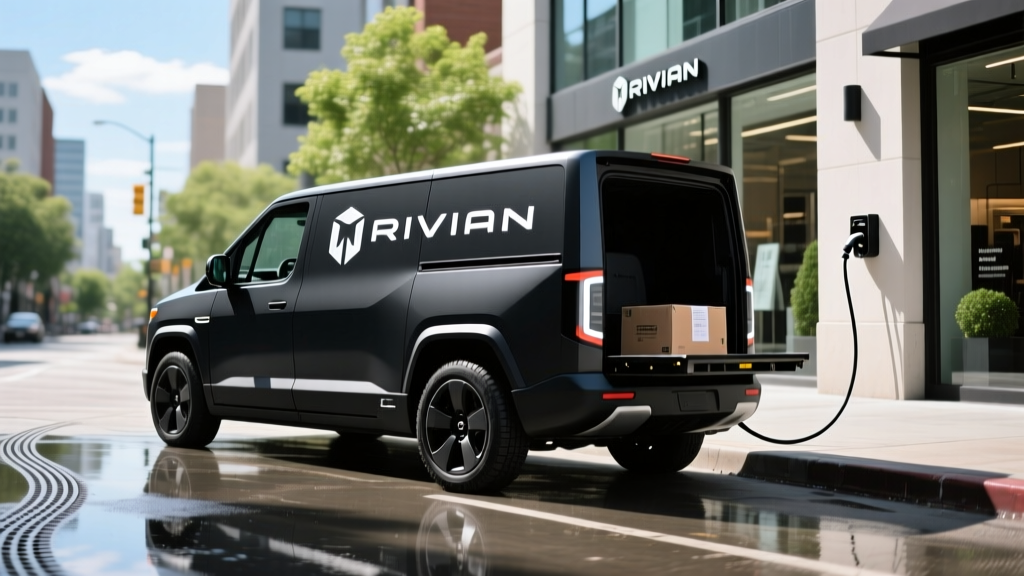
Rivian manufactures Amazon's electric delivery vans, officially called the Rivian EDV (Electric Delivery Van). Amazon ordered 100,000 custom EDVs in 2019, and by 2026, over 20,000 are in active service across North American delivery stations. The EDV is built on Rivian's commercial skateboard platform at the company's Normal, Illinois factory. It is not available for consumer purchase — it is a fleet-only vehicle exclusive to Amazon's Last Mile delivery network.
When you spot a boxy, blue-and-gray electric van with the Amazon smile logo rolling through your neighborhood, you're looking at one of the largest commercial EV deployments in history. But behind that distinctive shape is a partnership that reshaped both a startup automaker and a global logistics giant. Here's everything EV-curious buyers and fleet operators need to know about the Rivian EDV — and what its existence means for the broader electric-vehicle market.
Rivian EDV: Specs, Range, and the Numbers That Matter
The Rivian EDV isn't a consumer vehicle with an EPA sticker on fueleconomy.gov, so official efficiency ratings aren't published in the same format as a Model Y or Ioniq 5. However, fleet data, regulatory filings, and Rivian disclosures give us solid numbers:
| Specification | Rivian EDV (Large Variant) |
|---|---|
| Battery Capacity | ~135 kWh usable (NMC lithium-ion) |
| EPA Range (estimated) | ~150 miles (varies by payload & route) |
| Real-World Range | ~120–140 miles (stop-and-go, HVAC, cold weather) |
| Motor Configuration | Single rear motor, ~350 hp |
| DC Fast Charging | Peak ~125 kW (CCS1), 10–80% in ~55 min |
| Level 2 Charging | ~11.5 kW onboard charger |
| Cargo Volume | Up to 640 cu ft (large variant) |
| Payload Capacity | ~2,500 lbs |
| GVWR | Under 10,000 lbs (Class 2b) |
Why 150 miles is enough: Amazon's Last Mile delivery routes average 70–90 miles per day with a return to the same depot. A 150-mile range provides a comfortable buffer even in cold climates where battery performance drops 15–30%. The vans charge overnight at Amazon delivery stations using a mix of Level 2 and DC fast chargers, so range anxiety doesn't apply the way it would for a cross-country road tripper.
The Amazon-Rivian Partnership: How It Started and Where It Stands
Amazon led a $700 million investment round into Rivian in 2019, simultaneously announcing an order for 100,000 electric delivery vans — the largest EV fleet order in history at the time. The deal included an exclusivity clause preventing Rivian from selling competing commercial vans to other companies until late 2023, a provision that drew antitrust scrutiny but ultimately expired on schedule.
By early 2026, the partnership has evolved:
- Amazon remains Rivian's largest commercial customer, with deliveries ramping toward the 100,000-unit target (expected completion around 2030).
- Rivian has begun selling its commercial van platform to other fleet operators including AT&T, Uber, and municipal governments, diversifying beyond Amazon dependency.
- Amazon has supplemented its fleet with additional electric vehicles from other manufacturers for specific use cases (e.g., Stellantis e-Transit for certain European routes).
For consumer EV buyers, the significance is twofold: Amazon's massive order gave Rivian the revenue stability to survive its cash-hungry early years, and the EDV's real-world mileage data has accelerated commercial EV adoption across the logistics industry.
EDV vs. Gas Delivery Vans: The Real Cost Comparison
The core question for fleet operators — and the reason this matters to anyone evaluating EV economics — is whether electric vans actually save money. Here's how the Rivian EDV stacks up against the Mercedes-Benz Sprinter and Ford Transit, the two gas/diesel vans Amazon relied on before electrification:
| Metric | Rivian EDV (Electric) | Ford Transit 3.5L EcoBoost (Gas) |
|---|---|---|
| Estimated Vehicle Cost | ~$70,000–$80,000 (fleet) | ~$48,000–$55,000 |
| Fuel/Energy Cost per Mile | ~$0.08–$0.12 (commercial electricity) | ~$0.22–$0.30 (gasoline at $3.40/gal, 14 MPG) |
| Maintenance Cost per Mile | ~$0.04–$0.06 | ~$0.10–$0.15 |
| 5-Year Fuel/Energy (100k mi) | ~$8,000–$12,000 | ~$22,000–$30,000 |
| 5-Year Maintenance (100k mi) | ~$4,000–$6,000 | ~$10,000–$15,000 |
| Brake Wear | Minimal (regen braking) | Standard replacement cycle |
| Oil Changes | None | Every 7,500–10,000 mi |
The bottom line: The EDV costs roughly $20,000–$25,000 more upfront, but saves $15,000–$25,000 in fuel and maintenance over five years of heavy use. For a fleet vehicle running 20,000+ miles annually, the payback period is approximately 3–4 years. Amazon also benefits from lower depot-level emissions and compliance with increasingly strict urban clean-air regulations.
For individual consumers, the math differs because personal mileage is lower (typically 12,000–15,000 miles/year). But the principle holds: higher upfront cost, lower operating cost, with the break-even point depending heavily on local electricity rates and annual mileage.
What the EDV Means for Consumer EV Buyers
You can't buy a Rivian EDV for your driveway — but the technology and manufacturing lessons from the program directly benefit consumer EV shoppers in several ways:
Manufacturing Scale-Up
Building 20,000+ commercial vans forced Rivian to dramatically improve its production efficiency at the Normal, Illinois plant. The same assembly line also produces the R1T pickup and R1S SUV, meaning consumer models benefit from faster build times, better quality control, and reduced per-unit costs. Rivian's R1 platform pricing has become more competitive as a direct result of EDV volume.
Battery Durability Data
Amazon's EDVs are accumulating billions of real-world miles in extreme conditions — Arizona heat, Minnesota cold, stop-and-go urban routes with 150+ daily starts and stops. This data informs Rivian's battery management systems and warranty policies across all its vehicles. When Rivian advertises an 8-year/175,000-mile battery warranty on the R1S, that confidence is partly built on EDV fleet performance.
Charging Infrastructure Ripple Effects
Amazon has installed thousands of Level 2 and DC fast chargers at its delivery stations, often in industrial areas that previously had zero EV infrastructure. While these aren't public chargers, the grid upgrades and utility partnerships they require expand commercial EV readiness in surrounding communities.
Three EDV Variants: One Platform, Different Routes
Rivian designed the EDV in three sizes to match Amazon's delivery-route profiles:
| Variant | Cargo Volume | Typical Use Case |
|---|---|---|
| EDV-500 (Small) | ~420 cu ft | Dense urban routes, tight streets |
| EDV-700 (Medium) | ~530 cu ft | Suburban routes, moderate volume |
| EDV-900 (Large) | ~640 cu ft | High-volume suburban/rural routes |
All three share the same skateboard chassis, battery architecture, and powertrain. The primary difference is wheelbase and roof height. This modular approach mirrors what Rivian has done with its consumer R1 lineup — shared engineering, multiple body configurations — reducing complexity and cost.
Common Misconceptions About the Amazon Electric Van
| Myth | Fact |
|---|---|
| "Amazon makes its own electric vans." | Rivian designs and manufactures the EDV. Amazon is the customer, not the automaker. |
| "The EDV is a rebadged consumer van." | The EDV is a ground-up commercial design with no consumer equivalent. It shares platform architecture with the R1T/R1S but has a unique body, suspension, and interior. |
| "Electric vans can't handle cold weather." | The EDV operates year-round in Minneapolis, Chicago, and Boston. Range drops ~15–25% in sub-freezing temps, but routes are planned around the reduced buffer. The thermal management system includes a heat pump for cabin conditioning. |
| "Amazon vans are fully self-driving." | The EDV uses SAE Level 2 driver-assistance features (lane-keeping, adaptive cruise, automated emergency braking). A human driver is always present and responsible. This is not autonomous delivery. |
| "The exclusivity deal gave Amazon a monopoly." | The exclusivity clause expired in late 2023. Rivian now sells commercial vans to other fleets. |
Important: The EDV Is Not Self-Driving
Despite the high-tech image, Amazon's electric delivery vans are SAE Level 2 vehicles. This means the driver-assistance system can help with steering and acceleration under certain conditions, but the human driver must remain fully attentive and in control at all times. Amazon has faced scrutiny and NTSB investigation over driver fatigue and safety practices, but the vans themselves are not autonomous. Only Level 4 systems (like Waymo's driverless taxis operating in Phoenix and San Francisco) qualify as truly self-driving.
Decision Framework: What This Means for Your EV Purchase
How the Rivian-Amazon Story Affects Your Buying Decision
Choose a Rivian R1S or R1T if:
- You want the benefit of a platform proven across billions of commercial fleet miles
- You need a 3-row SUV (R1S) or a capable pickup (R1T) with ~350+ miles of EPA range
- You value Rivian's expanding service network and over-the-air update cadence
- You qualify for the IRS §30D federal tax credit (subject to MSRP caps, buyer income limits, and battery-sourcing requirements — verify current-year eligibility with a tax professional)
Look at a commercial EV (Ford E-Transit, BrightDrop Zevo) if:
- You operate a small business or delivery fleet
- Your routes are predictable and under 150 miles daily
- You can install depot charging (Level 2 or DC fast)
- You want to benefit from the IRS §45W commercial clean vehicle credit (up to $7,500 for vehicles under 14,000 lbs GVWR)
Wait or reconsider if:
- You were hoping to buy a used Amazon EDV — these are not sold to consumers and remain Amazon property
- You need a long-range road-trip vehicle — the EDV's 150-mile range and commercial design make it impractical for personal use even if one became available
Ownership Takeaways for First-Time EV Buyers
The Rivian EDV program offers three practical lessons for anyone entering the EV market:
- Range needs are usually lower than you think. Amazon's 150-mile vans handle routes that cover most Americans' daily driving. The average US driver travels about 37 miles per day. Before paying a premium for 400+ miles of range, calculate your actual daily mileage and charging access.
- Home charging is the real game-changer. Amazon's vans succeed because they return to a depot with chargers every night. For consumer EVs, a Level 2 home charger (240V, 30–50 amp circuit, ~$500–$2,000 installed) transforms ownership. Without home charging, public infrastructure reliability becomes a daily friction point.
- Total cost of ownership beats sticker price. The EDV costs more upfront but saves $15,000–$25,000 over five years. The same principle applies to consumer EVs — higher MSRP, lower fuel and maintenance costs. Always calculate 5-year TCO before deciding.
Frequently Asked Questions
Can I buy an Amazon Rivian van for personal use?
No. The Rivian EDV is built exclusively for Amazon's delivery fleet and is not available for consumer purchase, new or used. Amazon retains ownership of all EDVs in service.
Does Rivian make any commercial vans I can buy?
Yes. After its Amazon exclusivity clause expired in late 2023, Rivian began offering its commercial van platform to other fleet operators. As of 2026, Rivian's commercial division sells to qualified fleet buyers — check Rivian's commercial page for current availability and requirements.
How many Amazon electric vans are on the road?
As of early 2026, approximately 20,000+ Rivian EDVs are in active service across Amazon's North American Last Mile network, with more being delivered monthly toward the 100,000-unit target.
What battery chemistry does the EDV use?
The Rivian EDV uses NMC (nickel-manganese-cobalt) lithium-ion cells, similar to the R1T and R1S consumer vehicles. NMC offers higher energy density than LFP (lithium iron phosphate), which matters for a large commercial van that needs to maximize range within a fixed chassis footprint.
Are Amazon's electric vans made in the USA?
Yes. All Rivian EDVs are assembled at Rivian's manufacturing facility in Normal, Illinois. Battery cells are sourced from Samsung SDI, with pack assembly occurring at the same Illinois plant.
How does the EDV charge, and how long does it take?
The EDV supports DC fast charging via CCS1 at up to ~125 kW, reaching 10–80% state of charge in approximately 55 minutes. At Amazon depots, most vans charge overnight on Level 2 (240V) chargers at ~11.5 kW, which fully replenishes the 135 kWh battery in about 12 hours — sufficient for next-day route readiness.
Does the Amazon van qualify for EV tax credits?
Because Amazon purchases the EDVs as a fleet, the vehicles fall under the IRS §45W commercial clean vehicle credit rather than the §30D consumer credit. The §45W credit provides up to $7,500 for qualifying commercial vehicles under 14,000 lbs GVWR. Individual consumers cannot claim any credit on an EDV because they cannot purchase one.