The Short Answer
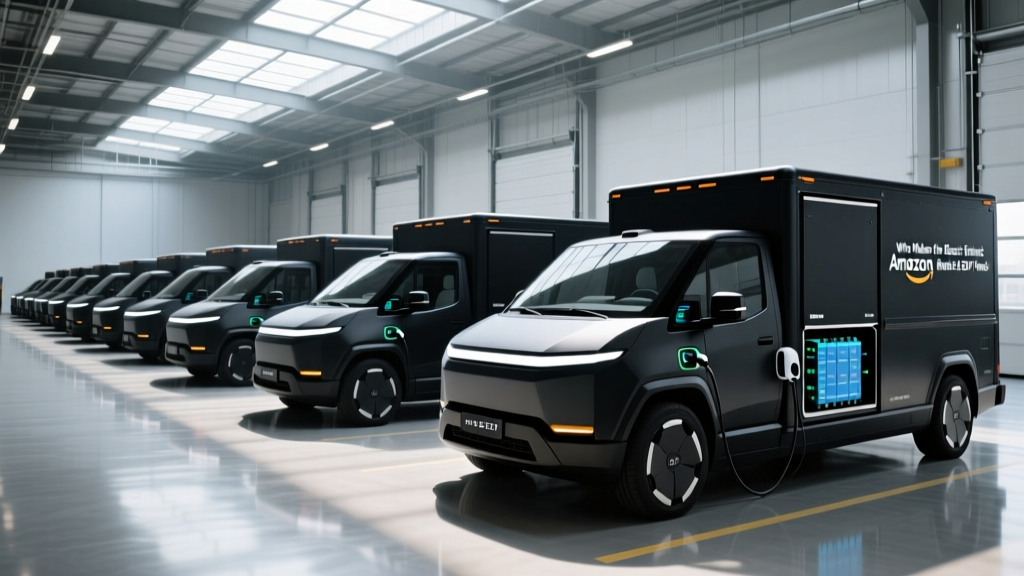
Rivian Automotive makes the electric Amazon vans. Officially called the Electric Delivery Van (EDV), it was co-developed by Rivian and Amazon starting in 2019, with deliveries beginning in mid-2022. Amazon ordered 100,000 EDVs — the largest commercial EV order in history — and Rivian holds an exclusive production agreement through 2026, after which Rivian can sell variants to other fleet operators. As of early 2026, over 25,000 EDVs are in active service across Amazon's U.S. and European delivery network.
Why Amazon Chose Rivian for Its Electric Fleet
Amazon committed to The Climate Pledge in 2019, targeting net-zero carbon by 2040. Electrifying its last-mile delivery fleet — over 100,000 vehicles globally — was the single biggest lever. Rather than adapting an existing van platform, Amazon invested $700 million in Rivian and partnered to build a ground-up electric delivery vehicle.
The EDV wasn't designed as a consumer product. It was engineered around Amazon's specific delivery workflow: frequent stops (averaging 135 per shift), tight urban routes, package accessibility, and driver ergonomics. The result is a purpose-built commercial EV that differs significantly from retrofitted ICE vans like the Mercedes-Benz Sprinter or Ford Transit.
Rivian EDV Specs: Range, Battery, and Charging
The EDV comes in three body configurations — the EDV-500, EDV-700, and EDV-900 — with cargo volumes of approximately 500, 700, and 900 cubic feet, respectively. The largest variant (EDV-900) is the most common in Amazon's U.S. fleet.
| Specification | Value |
|---|---|
| Battery Capacity (usable) | ~135 kWh (NMC lithium-ion) |
| EPA-Estimated Range | ~150 miles (fully loaded) |
| Real-World Range (urban delivery route) | 120–145 miles depending on payload & climate |
| Peak DC Fast Charge Rate | ~120 kW (CCS1) |
| 10–80% DC Charge Time | ~50–55 minutes |
| Level 2 AC Charging | ~11 kW onboard charger |
| Motor / Drivetrain | Single rear motor, RWD |
| Power Output | ~250 kW (335 hp) |
| Payload Capacity | ~2,500 lbs |
| Cargo Volume | ~900 cu ft (EDV-900) |
| Turning Radius | ~45 feet |
A 150-mile EPA range may sound modest compared to consumer EVs, but for last-mile delivery it's deliberate. Amazon's average daily delivery route covers 60–90 miles. Carrying a larger battery adds weight, reduces payload, and increases cost. The EDV is optimized for route adequacy, not range maximization.
Real-World Range Reality
The EDV's 150-mile EPA figure assumes moderate conditions. In cold-weather markets (Chicago, Minneapolis, Boston), expect a 20–30% range reduction during winter months, dropping effective range to 105–120 miles. Amazon mitigates this through route optimization software that factors in temperature, payload weight, and terrain when assigning daily routes. The van's heat pump (standard on newer 2025+ builds) reduces cabin heating energy draw by roughly 30% compared to resistive heating.
EDV vs. Gas Delivery Vans: Cost and Efficiency Comparison
The business case for the EDV hinges on total cost of ownership (TCO), not sticker price. Commercial EVs carry higher upfront costs, but fleet operators recover the difference through lower fuel, maintenance, and downtime expenses over a 10–15 year service life.
| Cost Category | Rivian EDV (Electric) | Gas Van (e.g., Ford Transit) |
|---|---|---|
| Purchase / Acquisition | ~$85,000–$100,000 (estimated) | ~$45,000–$55,000 |
| Fuel / Energy (10 years) | ~$12,000–$18,000 (depot charging at $0.10–$0.15/kWh) | ~$38,000–$50,000 (gas at $3.20–$4.00/gal, 12 MPG avg) |
| Maintenance (10 years) | ~$5,000–$8,000 | ~$15,000–$22,000 |
| Estimated Downtime Cost | Lower (fewer moving parts) | Higher (transmission, exhaust, oil services) |
| Estimated 10-Year Total | ~$102,000–$126,000 | ~$98,000–$127,000 |
At scale, the TCO is roughly equivalent or slightly favorable for the EDV — but the trajectory matters. As battery costs decline and depot solar/charging infrastructure amortizes, the EDV's operating cost advantage widens each year. Gas van costs trend upward with fuel price volatility.
Amazon also benefits from reduced emissions reporting, ESG compliance, and urban zero-emission zone access (increasingly mandated in European cities like London and Paris).
Charging Infrastructure: How Amazon Powers the EDV Fleet
The EDV charges primarily at Amazon delivery stations — not public charging networks. Amazon has invested heavily in depot-level charging infrastructure, installing thousands of Level 2 and DC fast chargers at its fulfillment and delivery centers.
Most EDVs charge overnight on Level 2 (11 kW), which adds roughly 35–40 miles of range per hour. A full overnight session (10–12 hours) replenishes the 135 kWh battery from near-empty. For mid-day top-ups on extended routes, Amazon deploys 120 kW DC fast chargers at select hubs, capable of adding ~80 miles of range in 30 minutes.
This depot-charging model eliminates the biggest pain point of consumer EV ownership — finding reliable public chargers. Every EDV returns to base nightly, and charging is managed by fleet software that balances grid load, electricity pricing, and next-day route requirements.
Driver Experience: What Makes the EDV Different
Amazon delivery drivers (typically employed by third-party Delivery Service Partners, or DSPs) report significant quality-of-life improvements in the EDV compared to gas vans:
- Quieter cabin: No engine noise reduces fatigue over 135+ daily stops
- Lower step-in height: The flat floor (no transmission tunnel) makes entry/exit faster and easier
- Regenerative braking: One-pedal-capable driving reduces brake wear and driver effort in stop-and-go urban routes
- 360-degree cameras and automated emergency braking: Standard ADAS features reduce collision risk in tight delivery zones
- Integrated delivery tech: The dashboard display integrates Amazon's delivery app, reducing phone handling
The EDV includes SAE Level 1 driver-assistance features (forward collision warning, automatic emergency braking, lane departure warning). It does not include Level 2 or higher automation — the driver remains fully responsible for vehicle operation at all times.
Can You Buy a Rivian EDV? Availability and Future Plans
As of 2026, the EDV is not available for consumer or non-Amazon commercial purchase. Rivian's exclusive agreement with Amazon runs through the end of 2026. After that, Rivian has signaled plans to offer a commercial van variant to other fleet operators — potentially including UPS, FedEx, and municipal fleets.
Rivian has also teased a smaller EDV variant for urban markets where the 900 cu ft van is impractical. Details remain preliminary, but industry analysts expect a formal announcement in late 2026 or early 2027.
For consumers interested in Rivian's EV technology, the R1S SUV and R1T pickup share the same underlying skateboard platform and battery architecture as the EDV, though tuned for consumer use cases.
| Myth | Fact |
|---|---|
| "Amazon makes its own electric vans." | Amazon partnered with and invested in Rivian, which designs and manufactures the EDV at its Normal, Illinois factory. |
| "The EDV has 300+ miles of range." | The EDV's EPA range is approximately 150 miles — sufficient for delivery routes but not long-haul. |
| "EDVs charge at Tesla Superchargers." | The EDV uses CCS1 connectors and charges at Amazon depot chargers, not public networks. |
| "Anyone can buy one." | Exclusive to Amazon through 2026; other fleet sales may begin in 2027+. |
| "It's basically a Rivian R1T with a box on it." | The EDV shares the skateboard platform but has a unique chassis, single-motor RWD layout, and commercial-specific software. |
What the EDV Means for the Broader EV Market
The Amazon-Rivian EDV program is the largest real-world validation of commercial EV viability to date. Over 25,000 vans accumulating millions of delivery miles provide hard data on battery degradation, maintenance intervals, and operational cost savings that benefit the entire industry.
Key takeaways for prospective EV buyers — consumer or fleet:
- Purpose-built beats retrofitted: The EDV was designed from scratch as an EV, yielding better packaging, efficiency, and ergonomics than ICE-to-EV conversions.
- Depot charging solves the infrastructure problem: Fleet operators who control their charging environment avoid public-charging unreliability entirely.
- TCO parity is real: At fleet scale, the EDV demonstrates that EVs can match or beat ICE vehicles on 10-year cost, even with higher acquisition prices.
Decision Framework: Should Your Fleet Consider EVs?
Choose electric delivery vans if:
- Your routes are predictable and under 150 miles/day
- You have depot or warehouse space where chargers can be installed
- You operate in cities with zero-emission zones or congestion pricing
- Your vehicles stay in service 10+ years (maximizing TCO advantage)
Stick with gas or hybrid vans if:
- Your routes regularly exceed 200 miles/day or are highly variable
- You lack depot charging access and rely on street parking
- Your fleet turns over every 3–5 years (insufficient time to recover higher upfront EV cost)
- You operate in extreme cold climates without route-optimization software
Frequently Asked Questions
Does Amazon own Rivian?
No. Amazon holds a significant equity stake in Rivian (roughly 16–18% as of 2025 filings) but does not own the company. Rivian is a publicly traded independent automaker (NASDAQ: RIVN) that also sells the R1S and R1T to consumers.
Where are the Amazon electric vans built?
The EDV is manufactured at Rivian's production facility in Normal, Illinois — the same factory that builds the R1S SUV and R1T pickup. Rivian has expanded this facility to meet EDV production volume, reaching an estimated production rate of 150+ vans per day in 2025.
How much does an Amazon electric van cost?
Rivian has not publicly disclosed per-unit EDV pricing. Industry estimates place the EDV-900 at approximately $85,000–$100,000, roughly double the cost of a comparable gas-powered Ford Transit or Mercedes-Benz Sprinter. The higher acquisition cost is offset by lower fuel and maintenance expenses over the vehicle's service life.
Do Amazon electric vans work in cold weather?
Yes, but with reduced range. In sub-freezing conditions, the EDV loses approximately 20–30% of its rated range due to battery chemistry limitations and cabin/cargo heating demands. Amazon compensates by shortening winter routes or assigning EDVs to denser urban routes where range requirements are lower. Newer 2025+ EDV builds include a heat pump that partially mitigates cold-weather energy loss.
Will Rivian sell electric vans to other companies?
Rivian's exclusivity agreement with Amazon runs through the end of 2026. After that, Rivian has indicated it plans to offer commercial van variants to other fleet operators. Companies like UPS, FedEx, and DHL have expressed interest, and several municipal governments are evaluating the platform for public works and transit applications.
What battery chemistry does the EDV use?
The EDV uses NMC (nickel manganese cobalt) lithium-ion cells, consistent with Rivian's consumer vehicles. NMC offers higher energy density than LFP (lithium iron phosphate), which matters in a large van where battery weight directly reduces payload capacity. For fleet operators, NMC's faster degradation rate compared to LFP is offset by Amazon's managed charging protocols that limit routine charging to 80–90% state of charge, extending battery life.