If you have been browsing Rivian owner forums or NHTSA complaint databases over the past year, you have likely encountered the phrase Rivian door release failure. It is one of the more specific — and frustrating — quirks reported by R1T and R1S owners since the vehicles launched. As an EV publication that tracks ownership realities alongside spec sheets, we think the issue deserves a clear, data-driven breakdown: what is actually happening, how Rivian has addressed it, and whether it should change your mind about buying one of the most capable electric trucks and SUVs on the market in 2026.
This article covers the door release problem in detail, then provides the full ownership picture — range, charging, pricing, tax credits, and how the R1S and R1T stack up against competitors — so you can make an informed decision.
What Is the Rivian Door Release Failure Issue?
The Rivian R1T and R1S use electronic door release buttons rather than traditional mechanical handles. Inside, a push-button actuator unlatches the door; outside, a flush-mounted electronic release performs the same function. This design is clean and aerodynamic, but it has generated a pattern of complaints:
- Interior release unresponsive: Owners report pressing the interior door-release button with no actuator response, trapping occupants inside the vehicle until a secondary release or power cycle resolves it.
- Exterior release intermittency: The exterior touch-sensitive release occasionally fails to register, particularly in cold weather or when the 12V auxiliary system is under load.
- Software-related latch resets: Some failures trace to firmware bugs in the body controller module, addressed via over-the-air (OTA) updates in late 2024 and 2025.
- Mechanical actuator wear: A smaller subset of reports points to physical actuator degradation requiring hardware replacement under warranty.
The National Highway Traffic Safety Administration (NHTSA) complaint database contains multiple filings related to door latch behavior on 2022–2025 Rivian models. Rivian has issued service campaigns addressing actuator calibration and, in some cases, replacing latch assemblies. The company's OTA-first approach means many software-side fixes were deployed without a dealership visit, but hardware-level failures still require service-center attention.
2026 Rivian R1S & R1T: Full Spec Breakdown
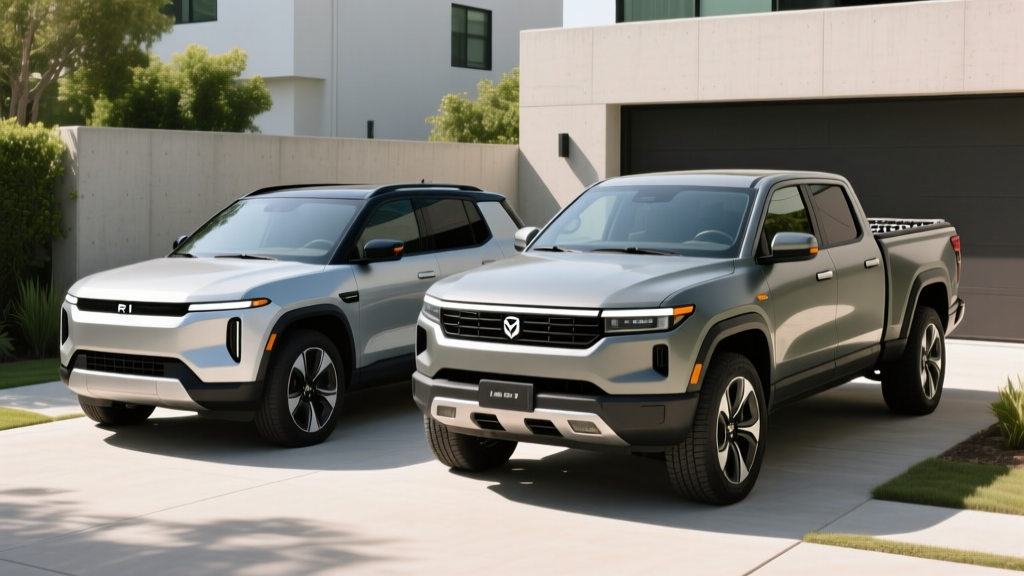
Understanding the door release issue in context requires knowing what you are getting for the money. The 2026 R1S (three-row SUV) and R1T (pickup) share Rivian's dual-motor and quad-motor platforms, built on a skateboard architecture with a structural battery pack.
| Spec | R1S Dual-Motor (Standard) | R1S Quad-Motor |
|---|---|---|
| EPA Range | ~330 miles (Standard Pack) / ~410 miles (Max Pack) | ~352 miles (Max Pack) |
| Battery Capacity | ~95 kWh usable (Standard) / ~141 kWh usable (Max) | ~141 kWh usable (Max) |
| Battery Chemistry | NMC (nickel manganese cobalt) | NMC |
| Horsepower | 533 hp | 1,025 hp |
| 0-60 mph | 4.5 seconds | ~2.9 seconds |
| Drivetrain | AWD (dual-motor) | AWD (quad-motor, individual wheel torque) |
| Max DC Fast Charge | ~200 kW peak | ~220 kW peak |
| 10-80% DC Charge Time | ~30 min (Standard) / ~42 min (Max) | ~42 min (Max Pack) |
| Level 2 Home Charge Rate | 11.5 kW (~25 mi/hr) | 11.5 kW (~25 mi/hr) |
| Efficiency (MPGe) | ~69 MPGe combined | ~63 MPGe combined |
| Towing Capacity | 7,700 lbs | 7,700 lbs |
| Cargo (R1S behind 3rd row) | ~20.2 cu ft | ~20.2 cu ft |
| Cargo (R1S all rows folded) | ~104.7 cu ft | ~104.7 cu ft |
| Base MSRP (2026 est.) | ~$79,900 (Dual-Motor Standard) | ~$99,900 (Quad-Motor Max) |
| Federal Tax Credit (§30D) | Eligibility varies — see below | Eligibility varies — see below |
Sources: EPA fueleconomy.gov, Rivian official specifications. Real-world figures may vary by configuration, wheel size, and driving conditions.
Real-World Range: What the EPA Sticker Doesn't Tell You
EPA Estimate: Up to 410 miles (R1S Dual-Motor Max Pack)
Real-World Highway (70-75 mph): Expect ~320–350 miles in mild weather. Aerodynamic drag hits large, boxy vehicles hard at sustained highway speeds.
Cold Weather (below 32°F): Plan for 20–30% range loss. The R1S Max Pack may deliver ~270–310 miles in freezing conditions, even with Rivian's heat pump and battery preconditioning.
Towing: Range drops dramatically when towing — expect 150–200 miles at most with a loaded trailer near the 7,700-lb limit.
The R1S and R1T are heavy vehicles (over 7,000 lbs curb weight). Efficiency suffers compared to lower, lighter EVs. If your daily driving is under 100 miles with home charging, even the Standard Pack is more than sufficient. Road-trippers should opt for the Max Pack or plan charging stops carefully.
Rivian's NMC battery chemistry delivers strong energy density, which is how the Max Pack fits over 140 kWh of usable capacity into the skateboard platform. The trade-off versus LFP (lithium iron phosphate) chemistry is that NMC degrades slightly faster over thousands of cycles and is more sensitive to sustained 100% state-of-charge storage. Rivian recommends daily charging to 85–90% and reserving 100% for trips.
Charging Speed: DC Fast Charging and Home Setup
| Charging Level | Power (kW) | Miles Added Per Hour | Notes |
|---|---|---|---|
| Level 1 (120V outlet) | ~1.4 kW | ~3 mi/hr | Emergency/top-up only; full charge takes days |
| Level 2 (240V, 48A) | 11.5 kW | ~25 mi/hr | Full overnight charge in ~10–14 hours depending on pack |
| DC Fast Charge (peak) | 200–220 kW | ~700+ mi/hr (at peak) | 10-80% in ~30–42 min; tapers significantly above 80% |
Rivian uses the CCS1 connector for DC fast charging on 2022–2024 models and has been transitioning to NACS (Tesla's connector standard) on newer production vehicles. The 2026 R1S and R1T are expected to ship with NACS natively, granting access to Tesla Supercharger stations via Rivian's adapter or direct plug-in, depending on production date. This significantly expands the usable fast-charging network for Rivian owners — one of the biggest practical improvements for road-trip usability.
Charging curve reality: The ~200–220 kW peak rate applies only between roughly 10–40% state of charge. Above 60%, the rate tapers to protect the NMC cells. Expect the 60–80% portion to add 10–15 minutes to your stop. Plan road-trip charging around 10–70% windows for the fastest turnaround.
Pricing, Tax Credits, and Total Cost
| Trim / Config | Base MSRP | §30D Credit Eligibility |
|---|---|---|
| R1S Dual-Motor Standard | ~$79,900 | Exceeds $80,000 SUV MSRP cap in most configs — likely ineligible |
| R1T Dual-Motor Standard | ~$73,900 | Below $80,000 truck cap — potentially eligible, subject to sourcing + income rules |
| R1S Quad-Motor Max | ~$99,900 | Exceeds MSRP cap — ineligible |
| R1T Quad-Motor Max | ~$94,000 | Exceeds $80,000 truck cap — ineligible |
The IRS §30D federal tax credit imposes an MSRP cap of $80,000 for SUVs and $80,000 for trucks (as of current rules), plus buyer income limits ($150,000 single / $300,000 joint AGI) and strict battery critical-mineral and component sourcing requirements. Most Rivian configurations — especially with option packages — push above the MSRP threshold. The base R1T Dual-Motor Standard is the most likely candidate for partial or full credit eligibility, but battery-sourcing rules change annually. Always verify current-year eligibility on the IRS website and consult a tax professional before purchasing.
Rivian offers a point-of-sale transfer option for the credit where applicable, meaning the discount can be applied at delivery rather than waiting until tax filing. This requires the dealer (Rivian direct) to process the transfer and the buyer to meet all eligibility criteria at the time of purchase.
The Door Release Problem in Context: Should It Stop You?
Every new-platform vehicle has early-production growing pains. The Rivian door release failure sits in the category of electronic-latch issues that also plagued early Tesla Model X falcon-wing doors and some BMW iX units. Here is how to weigh it:
- Rivian has addressed many reports via OTA updates and service campaigns
- Manual override exists for interior door releases
- Issues appear concentrated in 2022–2024 build years; 2025+ hardware revisions may incorporate improved actuators
- Full 8-year/175,000-mile battery and powertrain warranty covers actuator-related failures linked to electrical systems
- Class-leading off-road capability, towing, and adventure features remain unmatched in the EV truck/SUV segment
- Electronic door releases add a failure point that mechanical handles do not have
- Service-center wait times can stretch weeks in low-density Rivian markets
- Repeated actuator replacements suggest a design-level weakness, not just early-production bugs
- If you frequently travel with children, a door-release failure is a higher-stakes concern
- Rivian's service network is still expanding — rural owners may face long tow distances for hardware repairs
How the R1S and R1T Compare to Key Competitors
The Rivian's main rivals in 2026 include the Tesla Cybertruck, Ford F-150 Lightning, GMC Hummer EV, and (for the R1S) the Kia EV9 and Tesla Model X. Each makes different trade-offs:
- Tesla Cybertruck: Lower starting price (~$80K dual-motor), faster Supercharger network access, but polarizing design, stainless-steel panel quality concerns, and its own set of early-production issues. Uses traditional mechanical door handles.
- Ford F-150 Lightning: More conventional truck experience, wider dealer network for service, lower starting price (~$55K base), but less off-road capability and lower range on standard battery. Mechanical door handles throughout.
- Kia EV9 (R1S alternative): Three-row SUV at ~$55K–$73K, qualifies for tax credit in many trims, excellent value, but no serious off-road capability and less cargo space. Conventional door handles.
- GMC Hummer EV: Extreme off-road capability rivaling Rivian, but significantly higher price ($100K+), lower efficiency, and massive physical footprint.
The Rivian occupies a unique niche: genuine off-road chops (with features like adjustable air suspension, tank turns on quad-motor, and a gear tunnel on the R1T) combined with a refined on-road ride and premium interior. If you need an EV that can handle Moab on Saturday and a school run on Monday, the Rivian has few true peers. The door release issue is a real mark against it, but it is one fixable item on an otherwise highly capable platform.
Warranty and Ownership Protections
Rivian's warranty coverage is competitive within the EV truck segment:
- Battery & Powertrain: 8 years / 175,000 miles (whichever comes first), covering capacity retention above a specified threshold (typically ~70% state of health).
- Bumper-to-Bumper: 5 years / 60,000 miles — this covers door actuators, electronic releases, and body-controller modules.
- OTA Updates: Ongoing software support included for the life of the vehicle, which has resolved some door-release firmware issues without service visits.
Door-release actuator failures occurring within the bumper-to-bumper period should be covered at no cost. If you are purchasing a used Rivian outside this window, budget for potential actuator replacement — parts and labor at a Rivian service center typically run $200–$500 per door, based on owner reports.
Frequently Asked Questions
Has Rivian issued a recall for the door release failure?
As of early 2026, Rivian has conducted service campaigns and OTA updates addressing door-latch behavior, but a formal NHTSA safety recall has not been issued for all affected vehicles. Check the NHTSA recalls page with your specific VIN for the most current status. Service campaigns are less formal than recalls but still indicate the manufacturer is aware of and addressing the issue.
Can I open the door if the electronic release fails?
Yes. Rivian equips the R1S and R1T with a manual override mechanism — typically a pull-cable located behind a small trim panel near the door. Consult your owner's manual for the exact location. Practice using it so you are prepared. If the electronic release fails, pull over safely and use the override rather than forcing the door.
Does the door release issue affect 2026 model-year Rivians?
Rivian has reportedly updated actuator hardware on newer production runs, and OTA firmware updates have addressed software-side causes. However, it is too early to confirm that 2025–2026 builds are entirely free of the issue. Monitor owner forums and NHTSA filings as more 2026 vehicles accumulate miles.
What is the real-world range of the Rivian R1S?
The EPA rates the R1S Dual-Motor Max Pack at approximately 410 miles. In real-world highway driving at 70–75 mph, expect 320–350 miles. In freezing weather, plan for 270–310 miles. The Standard Pack (~330 miles EPA) delivers roughly 260–290 miles highway in mild weather.
Does the Rivian R1T qualify for the $7,500 federal EV tax credit?
The base R1T Dual-Motor Standard (MSRP ~$73,900) falls under the $80,000 truck cap, making it potentially eligible. However, eligibility also depends on buyer income limits, battery critical-mineral sourcing requirements, and North American assembly rules — all of which change annually. Verify on IRS.gov and consult a tax professional before relying on the credit.
How fast does the Rivian charge at home?
On a Level 2 home charger (240V, 48A), the R1S and R1T accept up to 11.5 kW, adding roughly 25 miles of range per hour. A full charge from empty takes approximately 10–14 hours depending on pack size. Most owners charge overnight and wake up to a full battery daily.
Is the Rivian worth buying despite the door release issue?
For buyers who need serious off-road capability, three-row seating (R1S), or a pickup bed (R1T) in an EV, the Rivian remains one of the best options available. The door release failure is a legitimate concern but one that Rivian is actively addressing through hardware revisions, OTA updates, and warranty coverage. If you live near a Rivian service center and are comfortable with the manual override procedure, the vehicle's strengths outweigh this single-category weakness. If door reliability is a non-negotiable priority — especially for families with young children — test the system thoroughly on a demo drive and consider competitors with mechanical handles.