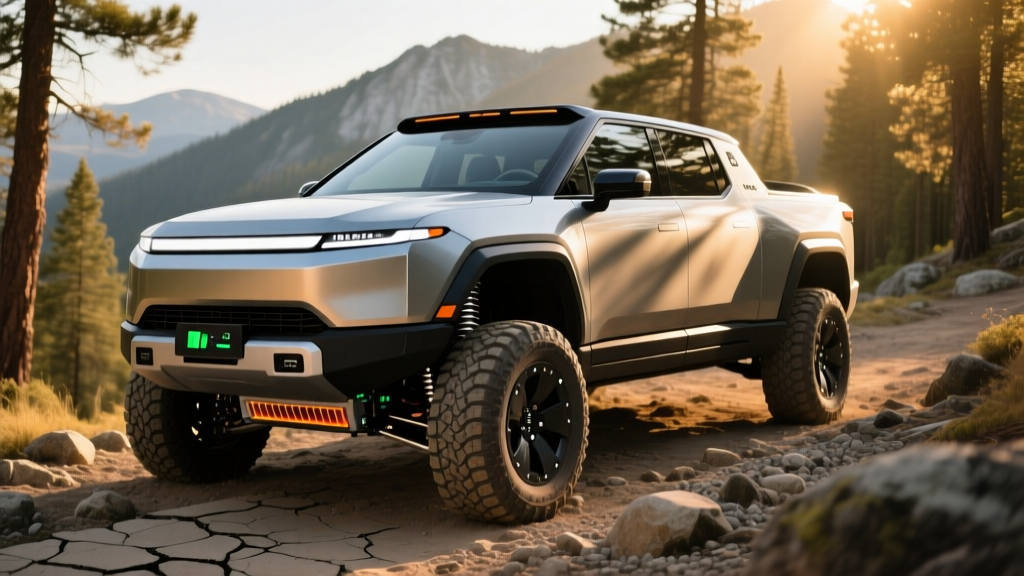
Rivian carved out a unique niche with the R1S SUV and R1T pickup — adventure-ready electric vehicles with genuine off-road chops, distinctive design, and a premium price tag. But as the EV market matures, buyers shopping the R1S or R1T now have more choices than ever. Whether you want to save $15,000, gain faster charging, or simply compare before committing, understanding the Rivian competitive landscape is essential.
This guide breaks down the top Rivian competitors across the electric SUV and truck segments, using real-world testing data, EPA figures, and current 2026 pricing. We'll cover range, charging speed, tax credit eligibility, and which alternative actually makes the most sense for your use case.
The Rivian R1S and R1T: Baseline Specs for 2026
Before evaluating alternatives, let's establish what Rivian currently offers. The 2026 R1S (three-row SUV) and R1T (crew-cab pickup) share Rivian's updated dual-motor and quad-motor powertrains, with the company's in-house battery packs.
| Spec | R1S Dual-Motor | R1T Dual-Motor | R1S Quad-Motor | R1T Quad-Motor |
|---|---|---|---|---|
| EPA Range | 352 mi (Max Pack) | 352 mi (Max Pack) | 328 mi | 328 mi |
| Battery (usable) | ~149 kWh (Max Pack, NMC) | ~149 kWh (Max Pack, NMC) | ~149 kWh (NMC) | ~149 kWh (NMC) |
| Peak DC Charge | 220 kW | 220 kW | 220 kW | 220 kW |
| 10–80% DC Time | ~30 min | ~30 min | ~30 min | ~30 min |
| Level 2 Home Rate | 11.5 kW (~25 mi/hr) | 11.5 kW (~25 mi/hr) | 11.5 kW | 11.5 kW |
| 0–60 mph | 4.5 sec | 4.5 sec | 2.9 sec | 2.9 sec |
| Horsepower | 533 hp | 533 hp | 1,025 hp | 1,025 hp |
| MPGe (combined) | 73 MPGe | 73 MPGe | 70 MPGe | 70 MPGe |
| Towing Capacity | 7,700 lb | 11,000 lb | 7,700 lb | 11,000 lb |
| Base MSRP | $75,900 | $69,900 | $99,900 | $93,900 |
| Battery Warranty | 8 yr / 175,000 mi | 8 yr / 175,000 mi | 8 yr / 175,000 mi | 8 yr / 175,000 mi |
Top Rivian Competitors: SUV Alternatives Compared
The electric SUV market has expanded considerably. Here are the models most frequently cross-shopped against the Rivian R1S, each with distinct trade-offs.
Tesla Model X (2026)
The Model X remains the benchmark for three-row electric SUVs. With up to 342 miles of EPA range (Long Range AWD), access to Tesla's Supercharger network (now open to other brands via NACS adoption), and a starting price around $79,990, it competes directly with the R1S on price and capability. The falcon-wing rear doors are polarizing but functional in tight parking spots. The refreshed interior is improved, though panel quality still draws criticism. The Model X qualifies for no federal tax credit under current §30D rules due to battery sourcing requirements.
Hyundai Ioniq 9 (2026)
Hyundai's three-row Ioniq 9 is a newer entrant built on the E-GMP platform with an 800V architecture. EPA range tops out at approximately 335 miles with the Long Range RWD model, and its 10–80% DC fast charge time of roughly 24 minutes at up to 240 kW is among the quickest in the segment. Starting around $56,000, it undercuts the R1S by nearly $20,000. The trade-off: less ground clearance, no serious off-road capability, and a smaller third row. The Ioniq 9 currently qualifies for a partial $3,750 federal credit (meeting critical minerals requirements but not full battery component sourcing).
Kia EV9 (2026)
Sharing the E-GMP platform with the Ioniq 9, the Kia EV9 offers a more rugged aesthetic and slightly more cargo room. EPA range reaches 304 miles (GT-Line AWD) to 336 miles (Light RWD). V2L capability lets you power devices or a campsite. Pricing starts at $54,900, with the GT-Line around $65,000. Like the Ioniq 9, it earns a partial $3,750 credit. The EV9 is a compelling family hauler but lacks Rivian's off-road hardware — no air suspension, no wading mode, no tank turns.
Tesla Model Y (2026 Refresh)
The refreshed Model Y (Juniper update) is smaller than the R1S — a compact/mid-size crossover rather than a full-size three-row SUV — but its pricing ($44,990–$52,990) and efficiency make it a cross-shopper for budget-conscious buyers. EPA range is up to 320 miles (Long Range AWD), with ~250 kW peak charging and ~25-minute 10–80% times. Supercharger access remains a major advantage. No federal credit under current sourcing rules. If you don't need three rows or off-road capability, the Model Y offers the lowest total cost of ownership in this group.
Top Rivian Competitors: Truck Alternatives Compared
The R1T occupies a rare space as a lifestyle electric pickup. Its competitors take different approaches to the electric truck formula.
Ford F-150 Lightning (2026)
The F-150 Lightning is the volume electric truck, designed for fleet and traditional truck buyers. The Extended Range battery delivers 320 miles EPA, with a 131 kWh usable NMC pack. Peak DC charging is 155 kW — noticeably slower than the R1T's 220 kW, resulting in a 10–80% time of approximately 41 minutes. The Lightning's Pro Power Onboard (up to 9.6 kW V2L) is a standout for job sites and tailgating. Pricing starts at $54,995 for the Pro trim and around $77,000 for the Lariat Extended Range. The commercial-focused trims may qualify for the commercial clean vehicle credit (§45W) rather than §30D. For personal buyers, §30D eligibility depends on battery sourcing and MSRP caps — currently the Lightning qualifies for $3,750 on eligible trims.
Chevrolet Silverado EV (2026)
Built on GM's Ultium platform, the Silverado EV 4WT starts at $54,800 and offers up to 390 miles EPA with the Max Range battery — the longest range of any electric truck. The 800V-capable architecture supports peak charging at 350 kW, with a claimed 10–80% time of ~20 minutes under ideal conditions. Real-world charging at most public stations will be slower, but the headroom is impressive. The trade-off: the Silverado EV uses a midgate design rather than a traditional bed, which limits some use cases. It qualifies for a partial $3,750 credit on eligible trims. The RST trim pushes past $80,000.
Tesla Cybertruck (2026)
The Cybertruck's polarizing design and stainless-steel exoskeleton make it a different kind of competitor. The AWD dual-motor variant delivers 340 miles EPA with a range-extender option projected to push past 400 miles (announced, not yet widely available). Peak charging is 250 kW at V4 Superchargers, with 10–80% in ~20 minutes. Pricing starts at $79,990 for the AWD model. Build quality has improved since the 2024 launch, but the bed is shorter than the R1T's (6 ft vs. ~4.5 ft with the Cybertruck's vault). No federal tax credit under current sourcing rules. The Cybertruck's steer-by-wire and 48V architecture are technically innovative, but its real-world practicality for traditional truck tasks remains debated.
Charging Speed Comparison: Rivian vs. the Field
Charging speed is where many Rivian competitors pull ahead — or fall behind. Here's how the key models stack up on DC fast charging and home Level 2 rates.
| Model | Peak DC kW | 10–80% Time | Level 2 Home Rate | Miles Added/Hr (L2) |
|---|---|---|---|---|
| Rivian R1S/R1T (Dual-Motor) | 220 kW | ~30 min | 11.5 kW | ~25 mi/hr |
| Tesla Model X | 250 kW | ~27 min | 11.5 kW | ~30 mi/hr |
| Hyundai Ioniq 9 | 240 kW | ~24 min | 10.9 kW | ~28 mi/hr |
| Kia EV9 | 236 kW | ~24 min | 10.9 kW | ~28 mi/hr |
| Tesla Model Y | 250 kW | ~25 min | 11.5 kW | ~35 mi/hr |
| Ford F-150 Lightning | 155 kW | ~41 min | 11.3 kW | ~22 mi/hr |
| Chevy Silverado EV | 350 kW | ~20 min | 11.5 kW | ~28 mi/hr |
| Tesla Cybertruck | 250 kW | ~20 min | 11.5 kW | ~28 mi/hr |
A critical note on charge curve taper: peak kW ratings are not sustained. Most EVs hold peak speed only between 10–40% SoC, then progressively taper. Rivian's 220 kW peak is respectable, but Hyundai/Kia's 800V E-GMP platform sustains higher average speeds across the curve, making their real-world 10–80% times slightly quicker despite similar peak numbers. The Silverado EV's 350 kW capability is future-proofed for the fastest chargers being deployed, though most public infrastructure in 2026 still maxes at 150–250 kW.
Price, Tax Credits, and Total Cost of Ownership
Sticker price tells only part of the story. Federal tax credits under IRS §30D can reduce effective cost by up to $7,500, but eligibility depends on MSRP caps ($80,000 for SUVs/pickups, $55,000 for sedans), buyer income limits ($300,000 joint / $150,000 single AGI), and battery component and critical mineral sourcing requirements that tighten each year.
| Model | Base MSRP | Federal Credit (§30D) | Effective Price (est.) |
|---|---|---|---|
| Rivian R1T Dual-Motor | $69,900 | $0 (sourcing) | $69,900 |
| Rivian R1S Dual-Motor | $75,900 | $0 (sourcing) | $75,900 |
| Tesla Model X | $79,990 | $0 (sourcing) | $79,990 |
| Hyundai Ioniq 9 | $56,000 | $3,750 | $52,250 |
| Kia EV9 | $54,900 | $3,750 | $51,150 |
| Tesla Model Y LR AWD | $47,990 | $0 (sourcing) | $47,990 |
| Ford F-150 Lightning XLT | $59,995 | $3,750 | $56,245 |
| Chevy Silverado EV 4WT | $54,800 | $3,750 | $51,050 |
| Tesla Cybertruck AWD | $79,990 | $0 (sourcing) | $79,990 |
Rivian's lack of federal tax credit eligibility in 2026 (due to battery component sourcing from entities of concern) is a meaningful $3,750–$7,500 disadvantage against Korean and domestic competitors. Point-of-sale transfer is available for eligible vehicles — check the latest DOE/FuelEconomy qualified vehicle list before purchasing.
On total cost of ownership, the Model Y and Ioniq 9 lead due to lower purchase prices, better efficiency (higher MPGe), and available credits. The R1S/R1T cost more to insure (adventure-vehicle premiums are elevated) and consume more kWh per mile due to weight and aerodynamics.
Who Should Buy a Rivian — And Who Shouldn't
Why Choose Rivian
- Off-road capability: Air suspension, 14.9" ground clearance, wading mode, quad-motor tank turns — no competitor matches this
- R1T gear tunnel: The unique cross-vehicle storage is unmatched for adventure gear
- Build quality and design: Premium materials, thoughtful details, strong brand identity
- Over-the-air updates: Active development with meaningful feature additions
- Rivian Adventure Network: Growing proprietary charger network at trailheads and destinations
Why Look Elsewhere
- No federal tax credit: $3,750–$7,500 disadvantage vs. Hyundai, Kia, Ford, GM
- Charging speed: 220 kW is good but trails Hyundai/Kia (800V), GM (350 kW), and Tesla (250 kW)
- Efficiency: 73 MPGe combined trails Model Y (122 MPGe) and Ioniq 9 (~90 MPGe)
- Service center availability: Rivian's service network is still expanding — rural owners may face long tow distances
- Third row (R1S): Usable but tight compared to the Model X or large ICE SUVs
Choose Rivian R1T if: You want an electric lifestyle pickup with premium build quality, need the gear tunnel, and tow occasionally rather than daily.
Choose Hyundai Ioniq 9 / Kia EV9 if: You want a three-row electric family SUV under $60K, prioritize fast charging, and don't need off-road capability.
Choose Ford F-150 Lightning if: You need a full-size work truck with V2L, want traditional truck ergonomics, and value the lowest entry price in electric pickups.
Choose Chevy Silverado EV if: Maximum range (390 mi) and fastest charging (350 kW peak) are your top priorities in an electric truck.
Choose Tesla Model Y if: You want the most efficient, affordable electric crossover with Supercharger access and don't need three rows.
What About the Rivian R2 and R3?
Rivian's upcoming R2 (mid-size SUV, ~$45,000) and R3 (compact crossover, ~$35,000–$40,000) are announced but not yet available for delivery. The R2 is expected to begin production in early 2026 at Rivian's Normal, Illinois facility, with the R3 following in 2027. These models target a much broader market and will compete directly with the Model Y and Ioniq 5. If you're considering a Rivian but find the R1S/R1T too large or expensive, the R2 may be worth waiting for — but it cannot be ordered and delivered today.
Frequently Asked Questions
What is the real-world range of the Rivian R1S and R1T?
With the Max Pack (149 kWh), expect 300–320 miles in mixed driving, 270–300 miles at sustained highway speeds, and 220–250 miles in cold weather (below 30°F). Towing with the R1T drops range to approximately 150–175 miles depending on trailer weight and aerodynamics. These are real-world estimates based on owner reports and independent testing — always plan trips with a 15–20% buffer.
How fast does the Rivian R1S/R1T charge?
On a DC fast charger, the R1S and R1T peak at 220 kW and reach 10–80% in approximately 30 minutes. On a home Level 2 charger (11.5 kW / 48A), you'll add about 25 miles of range per hour, meaning a full charge from 10% takes roughly 12–14 hours. Rivian supports NACS (Tesla) connectors natively on 2025+ models, giving access to Superchargers with an adapter on earlier vehicles.
Does the Rivian R1S or R1T qualify for the federal EV tax credit?
As of 2026, Rivian vehicles do not qualify for the §30D federal clean vehicle credit. This is due to battery component sourcing rules that exclude vehicles with components from foreign entities of concern (FEOC). Rivian has been working to re-source battery materials, but as of this writing, no Rivian model appears on the DOE qualified vehicles list. Always verify current eligibility on fueleconomy.gov before purchasing, as rules and manufacturer compliance can change.
Is the Rivian R1T worth it vs. the Ford F-150 Lightning?
It depends on your use case. The R1T is a premium lifestyle truck — better off-road, more unique storage (gear tunnel), higher build quality, and faster charging. The Lightning is a more traditional full-size truck with a larger bed, Pro Power Onboard for job-site use, a lower starting price (~$55K vs. ~$70K), and a partial federal tax credit. For fleet or work use, the Lightning wins. For adventure and daily driving, the R1T is more refined.
Which Rivian competitor has the best range?
The Chevrolet Silverado EV Max Range leads at 390 miles EPA, followed by the Rivian R1S/R1T Max Pack at 352 miles and the Tesla Model X Long Range at 342 miles. Remember that real-world highway and cold-weather range will be 15–25% lower than EPA estimates across all models.
What are the biggest drawbacks of Rivian ownership in 2026?
The main concerns are the lack of federal tax credit eligibility, relatively high energy consumption (low MPGe), a still-growing service center network, and insurance costs that run 20–30% higher than comparable ICE vehicles. On the positive side, owner satisfaction scores remain among the highest in the industry, and OTA updates continue to add features.
Sources: EPA range and efficiency data from fueleconomy.gov; federal tax credit rules from IRS §30D guidance; manufacturer specifications from Rivian, Tesla, Hyundai, Kia, Ford, and GM press sites. All pricing and credit eligibility current as of early 2026 — verify before purchase.