The 2020 Tesla Model Y was the vehicle that proved an electric crossover could outsell sedans. As the first Model Y rolled out of Fremont in early 2020, it combined the Model 3's efficiency with SUV practicality, instantly becoming one of the most compelling family EVs on the market. Now, six years later, early Model Y examples are flooding the used market at tempting prices. But a first-production-year EV carries unique considerations — from battery chemistry to build-quality quirks — that every prospective buyer needs to understand before signing.
This review breaks down exactly what you're getting with a used 2020 Model Y: real-world range versus the EPA sticker, charging behavior on DC fast chargers and at home, the nuances of its NMC battery pack, and where it stands against newer competition in 2026. Whether you're eyeing a Long Range or Performance variant, here's the data-driven analysis you need.
2020 Tesla Model Y: Core Specifications at a Glance
| Specification | Long Range AWD | Performance AWD |
|---|---|---|
| EPA Range | 316 miles | 291 miles |
| Battery (usable) | ~75 kWh (NMC) | ~75 kWh (NMC) |
| Drivetrain | Dual-Motor AWD | Dual-Motor AWD |
| Horsepower | ~384 hp | ~456 hp |
| 0–60 mph | 4.8 seconds | 3.5 seconds |
| Peak DC Charge Rate | 250 kW | 250 kW |
| 10–80% DC Time | ~27 minutes | ~27 minutes |
| Level 2 Charge Rate | 11.5 kW (44 mi/hr) | 11.5 kW (44 mi/hr) |
| MPGe (combined) | 121 MPGe | 111 MPGe |
| Efficiency | 28 kWh/100 mi | 30 kWh/100 mi |
| Cargo (rear seats up) | 30.2 cu ft | 30.2 cu ft |
| Cargo (seats folded) | 76.2 cu ft | 76.2 cu ft |
| Battery Warranty (new) | 8 yr / 120,000 mi | 8 yr / 120,000 mi |
| Original MSRP | $52,990 | $60,990 |
Real-World Range: What the EPA Sticker Doesn't Tell You
EPA Estimated: 316 miles
Real-World Highway (70–75 mph, moderate temps): ~255–275 miles
Real-World Cold Weather (below 32°F, mixed driving): ~210–240 miles
Real-World City/Commuter (mild weather, regen-heavy): ~290–310 miles
The 2020 Model Y Long Range carries a 316-mile EPA rating — impressive for its era and still competitive in 2026. But the EPA test cycle includes generous low-speed and regenerative-braking segments that don't reflect sustained highway travel. In our experience and consistent with third-party highway range tests, expect 255 to 275 miles at interstate speeds in moderate temperatures (60–80°F).
Cold weather is the great equalizer for all EVs, and the 2020 Model Y is no exception. The NMC battery loses roughly 20–30% of its effective capacity in sustained sub-freezing temperatures, even with Tesla's battery preconditioning. If your winters regularly dip below freezing, budget for 210–240 miles of usable range. The 2020 Model Y does include a heat pump — wait, no. The heat pump was introduced with the 2021 refresh. The 2020 model year uses a resistive PTC heater, which draws more energy from the pack in winter and reduces efficiency further compared to newer Model Y variants. This is a meaningful ownership detail that used-car listings rarely mention.
For city commuters with access to home charging, the Model Y's strong regenerative braking and stop-and-go efficiency can push you close to the EPA number. One-pedal driving in the Model Y is intuitive and reduces brake wear substantially — expect original brake pads to last 80,000+ miles under normal use.
Charging Speed: DC Fast Charging and Home Level 2
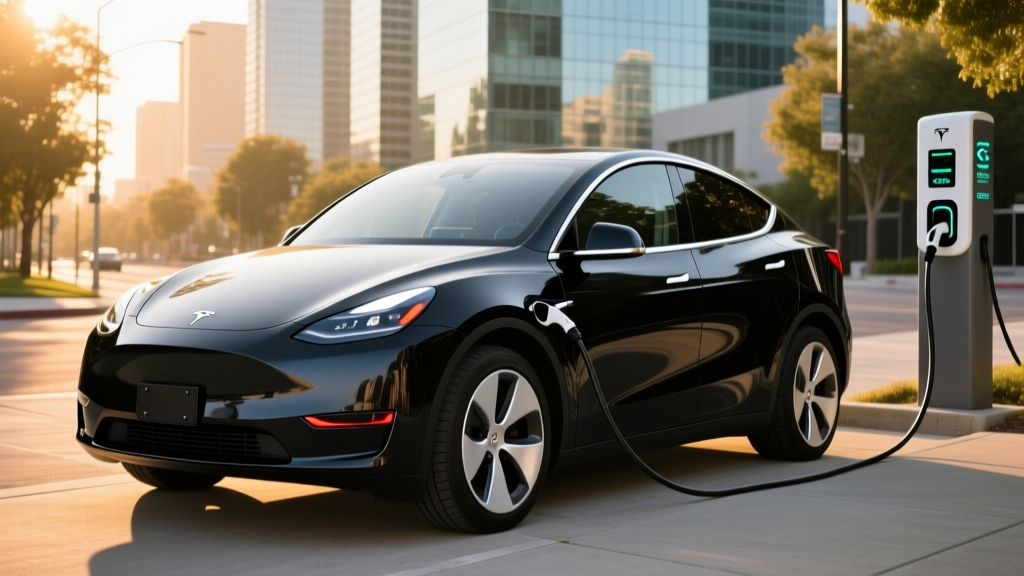
The 2020 Model Y supports Tesla's V3 Supercharger architecture at a peak rate of 250 kW. That was class-leading in 2020 and remains respectable in 2026, though newer EVs from Hyundai, Kia, and Porsche push 350 kW or more. The key metric isn't peak kW — it's the charge curve, or how long the vehicle sustains high charging rates before tapering.
| Charging Level | Power / Rate | Miles Added per Hour | Notes |
|---|---|---|---|
| Level 1 (120V household) | ~1.4 kW | ~3–4 mi/hr | Emergency/trickle only |
| Level 2 (240V, 48A) | 11.5 kW | ~44 mi/hr | Full charge in ~7–8 hours |
| DC Fast (V3 Supercharger) | Peak 250 kW | ~1,000+ mi/hr at peak | 10–80% in ~27 min |
| DC Fast (CCS adapter, 2026) | Up to 250 kW | Varies by station | Requires Tesla CCS adapter |
On a V3 Supercharger, the 2020 Model Y peaks near 250 kW at low state of charge (SoC), typically between 5–25%, then progressively tapers. By 60% SoC, you're typically seeing 100–120 kW; by 80%, it drops to around 50–60 kW. This is why the 10–80% time of roughly 27 minutes is the practical benchmark — charging above 80% slows dramatically and is best reserved for destination charging or overnight.
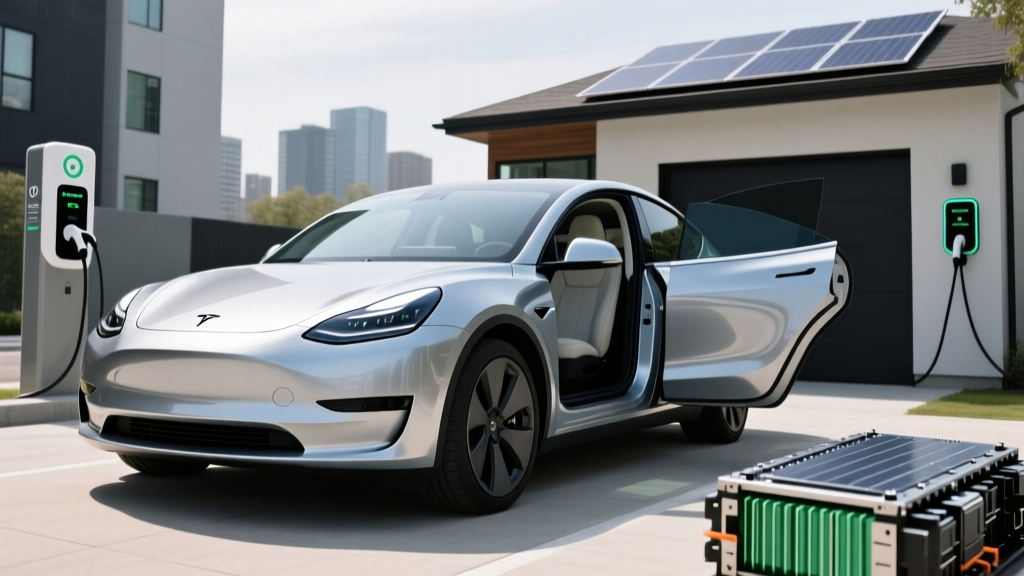
At home, the onboard charger accepts up to 11.5 kW on a 240V/48A circuit (such as a Tesla Wall Connector or equivalent Level 2 unit). That translates to roughly 44 miles of range per hour of charging, meaning a depleted pack reaches full overnight in 7–8 hours. For most owners who plug in nightly, the Model Y is always topped up and ready — the real "fueling" experience is waking up to a full battery every morning.
A critical note for 2026 used buyers: the 2020 Model Y originally shipped with a Tesla proprietary (NACS) connector. With Tesla opening the Supercharger network to other brands and the industry adopting NACS, the 2020 Model Y is natively compatible with the largest DC fast-charging network in North America — a significant advantage over 2020-era competitors using CCS that now require adapters for Superchargers.
Battery Chemistry, Degradation, and Warranty Remaining
The 2020 Model Y uses a Nickel Manganese Cobalt (NMC) lithium-ion battery pack with approximately 75 kWh of usable capacity (roughly 82 kWh gross, with a top and bottom buffer to protect longevity). NMC chemistry offers high energy density — enabling the 316-mile range in a relatively compact pack — but it has different care requirements compared to the LFP (Lithium Iron Phosphate) batteries Tesla introduced in later Standard Range models.
NMC batteries degrade faster when regularly charged to 100% or deeply discharged. Tesla's own recommendation for daily driving is to set the charge limit to 80–90% and only charge to 100% when you need the full range for a road trip. Following this practice, real-world data from high-mileage Tesla owners shows NMC packs retaining approximately 90–93% of original capacity after 50,000 miles and 85–90% after 100,000 miles. The degradation curve is steepest in the first 20,000–30,000 miles, then flattens considerably.
Tesla's battery warranty covers 8 years or 120,000 miles (whichever comes first) with a minimum 70% capacity retention threshold. For a 2020 Model Y, that warranty extends through 2028 at the latest. If you're buying one in 2026 with 40,000–60,000 miles, you likely have 2+ years and 60,000+ miles of battery warranty remaining — a meaningful safety net. Always request a battery health reading (accessible via the Tesla service menu or third-party diagnostic tools) before purchase.
Performance and Driving Dynamics
The 2020 Model Y Long Range AWD delivers 384 combined horsepower from its dual electric motors, reaching 0–60 mph in 4.8 seconds. That's sports-sedan acceleration in a family crossover — and it's delivered instantly, with no turbo lag or transmission hesitation. The Performance variant bumps output to approximately 456 hp and drops the 0–60 time to 3.5 seconds, putting it in supercar territory.
Ride quality was a common criticism of the 2020 Model Y. The suspension tuning is firm — some would say harsh — over broken pavement, and the 2020 model year predates Tesla's comfort-oriented suspension revisions that came with later builds. Road noise is also more pronounced than in luxury competitors like the BMW iX or even the Ford Mustang Mach-E. If ride comfort is a priority, test-drive on rough roads before committing.
Handling is a strong point. The low center of gravity (battery pack under the floor) gives the Model Y cornering composure that defies its crossover ride height. Steering is precise and quick, though it lacks the feel and feedback of traditional performance SUVs. The dual-motor AWD system provides confident traction in rain and light snow, though ground clearance (6.6 inches) limits any serious off-road ambition.
Tech, Interior, and Autopilot: What 2020 Buyers Got
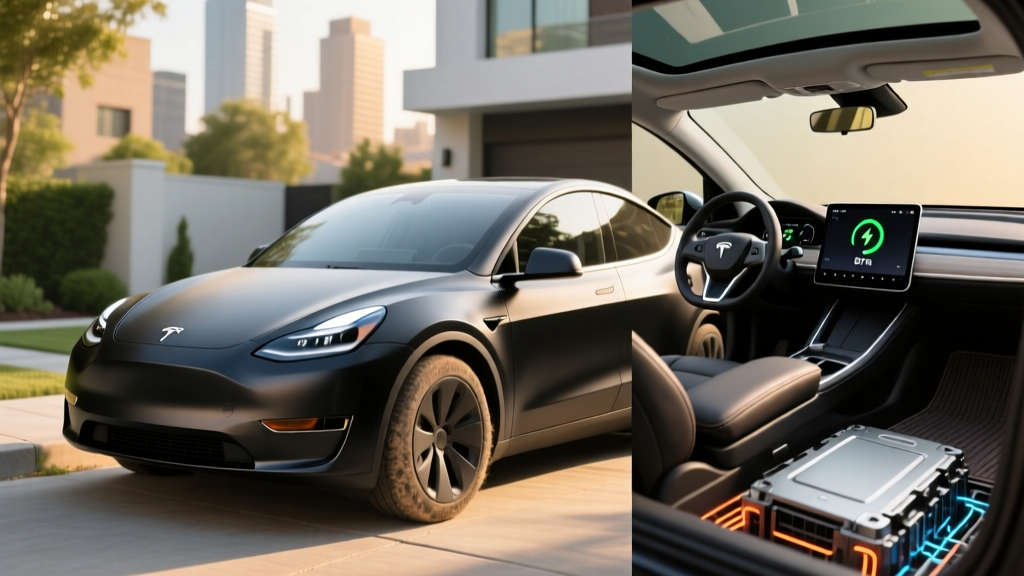
The 2020 Model Y's interior is defined by minimalism — a single 15-inch touchscreen handles navigation, media, climate, and vehicle settings with no physical buttons. This was polarizing in 2020 and remains so in 2026. The infotainment system is responsive, receives regular over-the-air (OTA) updates, and includes features like streaming media, Sentry Mode dashcam recording, and a mobile app for remote preconditioning and monitoring.
Every 2020 Model Y came with Tesla's basic Autopilot, which includes Traffic-Aware Cruise Control and Autosteer (lane-centering). This is an SAE Level 2 driver-assistance system — it requires the driver to remain fully engaged, keep hands on the wheel, and monitor the road at all times. It is not self-driving. Tesla's Full Self-Driving (FSD) capability was available as a paid option ($7,000–$10,000 at the time), but its value on a used 2020 vehicle is debatable: FSD features have evolved substantially since 2020, and the version a used car may have received isn't necessarily equivalent to the current FSD (Supervised) system. Check the vehicle's software menu to confirm what's actually enabled.
The 2020 Model Y's Autopilot and available FSD are SAE Level 2 systems. The driver must remain attentive, hands on wheel, and ready to take over immediately. These are driver-assistance features, not autonomous driving. Only Level 4 services (e.g., Waymo) operate without a human driver.
Build quality on the 2020 Model Y — a first-production-year vehicle from the Fremont factory — is its most documented weakness. Panel gaps, paint imperfections, interior trim misalignment, and occasional rattles were common. Tesla's build quality improved noticeably in subsequent years, so inspect any 2020 example carefully. Many of these cosmetic issues are tolerable given the vehicle's overall value proposition, but they're worth factoring into your expectations.
Cargo, Passenger Space, and Family Practicality
The Model Y's hatchback design is a major practicality advantage over the Model 3 sedan. With rear seats upright, you get 30.2 cubic feet of cargo space — enough for a full week of family groceries or multiple suitcases. Fold the rear seats flat, and capacity expands to 76.2 cubic feet, rivaling midsize SUVs like the Toyota RAV4.
Rear-seat legroom measures 40.5 inches, adequate for adults on longer trips, though the sloping roofline cuts into headroom for passengers over 6 feet tall. The front trunk (frunk) adds 4.1 cubic feet of secure, weatherproof storage — ideal for charging cables, groceries, or a small bag. Some 2020 Model Y vehicles were equipped with an optional third row, but this is only practical for small children and eliminates nearly all rear cargo space when deployed.
For families, the Model Y checks most boxes: easy car-seat installation (LATCH anchors are accessible), a flat load floor for strollers, and the ability to precondition the cabin remotely via the Tesla app — a huge quality-of-life feature for cold mornings or hot afternoons.
Pricing, Used Market Value, and Tax Credit Eligibility
The 2020 Model Y originally started at $52,990 for the Long Range AWD and $60,990 for the Performance variant (before any incentives). By 2026, used examples typically trade between $22,000 and $32,000 depending on mileage, condition, and Autopilot/FSD inclusion.
| Trim | Original MSRP | 2026 Used Range (est.) | Federal Used EV Credit (§25E) |
|---|---|---|---|
| Long Range AWD | $52,990 | $22,000–$29,000 | Up to $4,000 (if eligible) |
| Performance AWD | $60,990 | $25,000–$32,000 | Up to $4,000 (if eligible) |
An important incentive for used EV buyers: the IRS §25E Used Clean Vehicle Credit offers up to $4,000 (or 30% of the sale price, whichever is less) on eligible pre-owned EVs purchased from a dealer. Key requirements include:
- Sale price must be $25,000 or less (this eliminates many 2020 Model Y Performance examples)
- Buyer income caps: $75,000 single / $112,500 head of household / $150,000 joint (modified AGI)
- Vehicle must be at least 2 model years old (2020 qualifies in 2026)
- Must purchase from a licensed dealer (private-party sales don't qualify)
- Credit can be applied at point of sale to reduce the purchase price
The new-vehicle §30D credit of up to $7,500 does not apply to used purchases. Always verify eligibility with a tax professional and check the latest IRS guidance, as rules can shift.
2020 Model Y vs. 2026 Competition: Is It Still Worth It?
The EV landscape has evolved dramatically since 2020. Here's how a used Model Y stacks up against key alternatives a buyer might cross-shop in 2026:
| Metric | 2020 Model Y LR | 2022–2023 Mach-E ER | 2023 Ioniq 5 LR | 2026 Model Y (new) |
|---|---|---|---|---|
| EPA Range | 316 mi | 314 mi | 303 mi | 320+ mi (est.) |
| Peak DC Charge | 250 kW | 150 kW | 235 kW | 250+ kW |
| 0–60 mph | 4.8 sec | 5.1 sec | 5.1 sec | ~4.8 sec |
| Cargo (rear up) | 30.2 cu ft | 29.7 cu ft | 27.2 cu ft | 30+ cu ft |
| Used Price (2026) | $22K–$29K | $20K–$27K | $24K–$31K | $44K+ (new) |
| Charging Network | Native NACS/Supercharger | CCS (adapter for SC) | CCS (adapter for SC) | Native NACS/Supercharger |
The 2020 Model Y's strongest card in 2026 is native Supercharger access. While Ford and other automakers now provide CCS-to-NACS adapters for Supercharger use, native compatibility means fewer adapter hassles, more reliable plug-and-charge authentication, and access to the full network including older stalls. The Supercharger network's reliability remains a major ownership advantage over CCS-dependent competitors.
Where competitors pull ahead: the Hyundai Ioniq 5's 800V architecture enables faster 10–80% charging (under 20 minutes at a 350 kW station), and the Mach-E offers a more conventional interior with physical controls that some buyers prefer. But for total package — range, efficiency, charging network, software, and cargo space — the 2020 Model Y remains highly competitive at its used-market price.
Pros and Cons: The Honest Assessment
- 316-mile EPA range still competitive in 2026
- Native NACS / Supercharger network access
- 250 kW DC fast charging with strong charge curve
- Best-in-class cargo capacity for the segment
- OTA updates keep software current
- Strong regenerative braking reduces brake wear
- Excellent efficiency (28 kWh/100 mi)
- Dual-motor AWD for all-weather confidence
- First-year build quality issues (panel gaps, trim)
- No heat pump — resistive heater hurts winter range
- Firm ride and noticeable road noise
- Minimalist interior not for everyone
- NMC battery requires 80–90% daily charge limit
- Rear headroom tight for tall passengers
- Autopilot/FSD is Level 2 only — not self-driving
- Insurance costs often higher than comparable ICE SUVs
Who Should Buy a Used 2020 Model Y?
Choose the 2020 Model Y if:
- You want maximum range and Supercharger access under $30,000
- You have home Level 2 charging and can charge nightly
- You value cargo versatility and hatchback practicality
- You want Tesla's software ecosystem and OTA updates
- You commute in moderate climates where winter range loss is manageable
- You live in a region with extreme winters and no garage charging (no heat pump hurts)
- You prioritize ride comfort and cabin quietness over performance
- You want physical buttons and a traditional interior layout
- You need the latest 800V charging architecture for fastest possible DC fills
- First-year build-quality variance makes you uncomfortable
The 2020 Model Y is best suited for tech-forward commuters and young families who have reliable home charging and want the most range-per-dollar in the used EV market. It excels as a daily driver that can handle road trips thanks to Supercharger infrastructure, and its cargo space makes it genuinely practical for family life. It's less ideal for buyers in harsh winter climates without garage charging, or those who prioritize luxury ride quality over efficiency and technology.
Frequently Asked Questions
What is the real-world range of a 2020 Tesla Model Y?
The EPA rates the 2020 Model Y Long Range at 316 miles. In real-world highway driving at 70–75 mph, expect 255–275 miles. In cold weather below freezing, plan for 210–240 miles. City driving with regenerative braking can approach the EPA figure in mild temperatures.
How fast does the 2020 Model Y charge?
On a V3 Supercharger (DC fast charging), it peaks at 250 kW and charges from 10–80% in approximately 27 minutes. At home on a 240V/48A Level 2 charger, it adds about 44 miles of range per hour, fully charging overnight in 7–8 hours.
Does a used 2020 Model Y qualify for any federal tax credit?
The new-vehicle §30D credit does not apply. However, the IRS §25E Used Clean Vehicle Credit can provide up to $4,000 if the sale price is $25,000 or less, you buy from a licensed dealer, and your income falls under the caps ($75K single / $150K joint). Consult a tax professional for your specific situation.
How long will the 2020 Model Y battery last?
Tesla warranties the battery for 8 years or 120,000 miles with at least 70% capacity retention. Real-world data suggests NMC packs retain 85–93% capacity at 50,000–100,000 miles when charged responsibly (daily limit of 80–90%). A 2020 Model Y's warranty runs through 2028.
Is the 2020 Model Y still worth buying in 2026?
At used-market prices of $22,000–$32,000, the 2020 Model Y offers an exceptional combination of range, efficiency, Supercharger access, and cargo space. It's one of the best value propositions in the used EV market, provided you accept the first-year build-quality quirks and lack of a heat pump. For buyers who can charge at home and don't face extreme winters, it remains a compelling choice.
What should I check before buying a used 2020 Model Y?
Request a battery health report (State of Health percentage), inspect panel gaps and paint carefully (first-year build issues), verify which Autopilot/FSD features are active in the software menu, confirm remaining warranty coverage, and check service history for any drive-unit or suspension work. A pre-purchase inspection at a Tesla Service Center is recommended.