Rivian's 2026 Paint Shake-Up: What Changed and Why It Matters
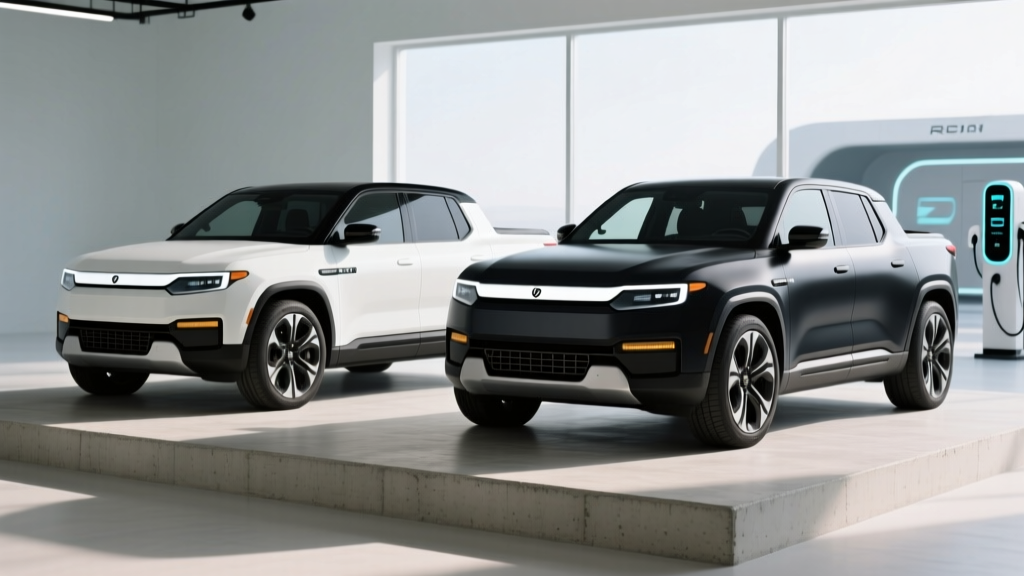
Rivian has streamlined its exterior color palette for the 2026 model year, discontinuing several fan-favorite shades across both the R1T pickup and R1S SUV. The Rivian color discontinuation affects builds ordered from mid-2025 onward and reflects the automaker's push to simplify production at its Normal, Illinois factory while introducing new tri-coat and matte options. If you're configuring an R1 Dual-Motor, Performance Dual-Motor, or the new Tri-Motor, understanding which colors remain — and how the change impacts resale, delivery timelines, and your overall spec — is essential before you lock in an order.
This guide covers the full 2026 color lineup, plus a deep-dive review of the current R1 platform: real-world range, charging speeds, performance, pricing, federal tax credit eligibility under IRS §30D, and how Rivian stacks up against the Tesla Cybertruck, Ford F-150 Lightning, and Chevrolet Silverado EV.
Which Colors Were Discontinued — and What Replaces Them?
Rivian's pre-2026 palette included up to 10 exterior colors depending on model year and launch-edition status. For 2026, the following shades have been discontinued:
- El Cap Granite — the popular matte gray previously standard on Adventure packages
- Midnight (dark blue metallic) — a launch-era color carried through 2024-2025
- Rivian Blue — the signature hero color from early R1T marketing
- Limestone — a warm off-white that was a no-cost option
The 2026 lineup consolidates around these remaining and newly introduced colors:
- Glacier White (standard, no-cost)
- Forest Green (metallic, $500 premium)
- Midnight Silver (metallic, $500 premium)
- Rivian Red (tri-coat, $1,500 premium — new for 2026)
- Stealth Matte Black (paint-protection film wrap, $3,000 premium — new for 2026)
- Sand Dune (satin, $1,500 premium — replaces Limestone)
The consolidation reduces build complexity and helps Rivian accelerate its production cadence. However, it also means that buyers who preferred the discontinued shades must either look at the used/pre-owned market or choose a comparable alternative. El Cap Granite owners, for example, may find Stealth Matte Black a spiritual successor, though at a significantly higher cost.
2026 Rivian R1T & R1S: Full Spec Breakdown
Before evaluating color choices, here's a comprehensive look at the 2026 R1 platform specs across the most popular configurations. Rivian offers the R1T (crew-cab pickup) and R1S (three-row SUV) on the same skateboard architecture, so battery, charging, and powertrain specs largely overlap.
| Spec | Dual-Motor (Standard Battery) | Dual-Motor (Large Battery) | Performance Dual-Motor (Max Battery) | Tri-Motor (Max Battery) |
|---|---|---|---|---|
| EPA Range (R1T) | ~270 mi | ~352 mi | ~420 mi | ~390 mi |
| EPA Range (R1S) | ~260 mi | ~340 mi | ~410 mi | ~380 mi |
| Battery Capacity (usable) | ~95 kWh (NMC) | ~128 kWh (NMC) | ~149 kWh (NMC) | ~149 kWh (NMC) |
| Horsepower | 533 hp | 533 hp | 665 hp | 850 hp |
| 0-60 mph | 4.5 sec | 4.5 sec | 3.5 sec | 2.9 sec |
| Drivetrain | AWD (dual-motor) | AWD (dual-motor) | AWD (dual-motor) | AWD (tri-motor) |
| Max DC Fast Charge | ~200 kW | ~220 kW | ~220 kW | ~220 kW |
| 10-80% DC Charge Time | ~28 min | ~30 min | ~35 min | ~35 min |
| Level 2 Home Charge Rate | 11.5 kW (~30 mi/hr) | 11.5 kW (~30 mi/hr) | 11.5 kW (~30 mi/hr) | 11.5 kW (~30 mi/hr) |
| MPGe (combined, R1T) | ~73 MPGe | ~73 MPGe | ~70 MPGe | ~65 MPGe |
| Efficiency (kWh/100 mi) | ~46 | ~46 | ~48 | ~52 |
| Max Towing (R1T) | 11,000 lbs | 11,000 lbs | 11,000 lbs | 11,000 lbs |
| Cargo Bed Volume (R1T) | 54 cu ft (4.5-ft bed) + 11 cu ft gear tunnel + 11 cu ft frunk | |||
| Passenger Legroom (front/rear, R1S) | 41.3 / 38.2 inches (3rd row: 28.5 in) | |||
| Base MSRP (R1T) | $69,900 | $75,900 | $84,900 | $99,900 |
| Base MSRP (R1S) | $74,900 | $79,900 | $89,900 | $104,900 |
| Battery/Powertrain Warranty | 8 years / 175,000 miles | |||
The EPA estimates above assume mixed driving. In real-world highway testing at 70-75 mph in moderate temperatures (65-75°F), expect the Large Battery R1T to deliver approximately 300-320 miles before needing a charge — a 9-15% reduction from the 352-mile EPA sticker. In cold weather (below 32°F), range drops further, often by 20-30%, putting a Large Battery R1T closer to 245-280 miles on a full charge. The Max Battery pack mitigates this somewhat due to its larger buffer, but no EV is immune to lithium-ion chemistry limitations in the cold. Rivian's heat pump and thermal management system help, but preconditioning the battery before DC fast charging remains critical for optimal charge speeds.
Charging Speed: DC Fast Charging and Home Level 2
Rivian's second-generation R1 vehicles use a NACS (North American Charging Standard) port natively, granting direct access to Tesla Supercharger V3 and V4 stalls without an adapter. This is a significant advantage for road-trip charging infrastructure coverage.
| Charging Level | Power (kW) | Miles Added per Hour | Typical Use Case |
|---|---|---|---|
| Level 1 (120V household) | ~1.4 kW | ~3-4 mi/hr | Emergency/trickle top-off |
| Level 2 (240V home, 48A) | 11.5 kW | ~30 mi/hr | Overnight home charging (full charge in 10-14 hrs depending on pack) |
| DC Fast Charge (NACS) | Up to ~220 kW peak | ~250+ mi/hr (at peak) | Road-trip stops; 10-80% in ~30-35 min |
Charging curve reality: The 220 kW peak rate is not sustained across the entire session. Rivian's charge curve peaks around 20-40% State of Charge (SoC), then progressively tapers. From 10-80%, the Max Battery pack averages closer to 160-170 kW sustained. Above 80%, charge speed drops sharply to protect the NMC cells — expect 80-100% to take an additional 25-35 minutes. For road trips, the practical strategy is to charge from 10-80% and move on, rather than waiting for a full top-off.
Home charging setup: Rivian recommends a 60-amp circuit with a 48-amp Wall Connector or equivalent Level 2 EVSE. Expect a full home installation (panel assessment, 240V run, permit, EVSE hardware) to cost between $800 and $2,500 depending on your electrical panel's proximity to the garage and whether a panel upgrade (to 200A service) is needed. Always consult a licensed electrician for final specs.
Pricing, Trims, and Federal Tax Credit Eligibility
Rivian positions the R1T and R1S as premium adventure vehicles, and pricing reflects that. Here's a breakdown of current MSRP and how the federal EV tax credit factors in.
| Configuration | Base MSRP | As-Tested (Typical Options) | Federal §30D Credit | Effective Price (if eligible) |
|---|---|---|---|---|
| R1T Dual-Motor Standard | $69,900 | $74,000 | Up to $7,500* | ~$66,500 |
| R1T Dual-Motor Large | $75,900 | $82,000 | Up to $7,500* | ~$74,500 |
| R1T Perf. Dual-Motor Max | $84,900 | $92,000 | Up to $7,500* | ~$84,500 |
| R1T Tri-Motor Max | $99,900 | $108,000 | Up to $7,500* | ~$100,500 |
| R1S Dual-Motor Standard | $74,900 | $80,000 | Up to $7,500* | ~$72,500 |
| R1S Tri-Motor Max | $104,900 | $115,000 | Up to $7,500* | ~$107,500 |
*Federal tax credit caveats (IRS §30D, 2026 rules): The full $7,500 credit requires meeting all of the following:
- MSRP cap: Vans/SUVs/pickups must have an MSRP at or below $80,000. This means the R1T Dual-Motor Standard and Large Battery trims may qualify, but Performance Dual-Motor and Tri-Motor configurations priced above $80,000 generally do not qualify.
- Buyer income cap: Modified AGI must not exceed $300,000 (joint), $225,000 (head of household), or $150,000 (single).
- Battery sourcing: Critical minerals and battery component requirements phase in annually. Rivian has been working to secure North American-sourced battery materials, but eligibility can vary by build date and supply chain. Always verify on fueleconomy.gov and consult a tax professional.
- Point-of-sale transfer: As of 2024, the credit can be transferred to the dealer at purchase, reducing your out-of-pocket cost immediately — if the vehicle qualifies.
For detailed and current eligibility, refer to the IRS Clean Vehicle Credit page.
Performance, Tech, and What It's Like to Drive
The R1 platform delivers sports-car acceleration in a body built for trails. The Tri-Motor R1T hits 0-60 mph in 2.9 seconds — quicker than a Porsche 911 Carrera — while offering 11,000 lbs of towing capacity and 14.9 inches of ground clearance in Max mode. The air suspension, quad-corner ride-height adjustment, and tank turn capability (on Tri-Motor) make it genuinely off-road capable in ways most electric trucks only gesture at.
Tech highlights:
- 15.6-inch center touchscreen running Rivian's proprietary OS with over-the-air updates
- Digital driver display + heads-up display (HUD)
- Rivian Driver+ (Level 2 ADAS) — highway assist with lane centering and adaptive cruise on mapped roads. This is not self-driving; the driver must remain engaged at all times.
- Integrated camp kitchen (optional, R1T gear tunnel), pet-friendly rear cargo area, built-in air compressor
- Vehicle-to-load (V2L) capability — power campsite equipment or tools from the truck's battery
Notable drawbacks:
- Third-row seat in the R1S is tight for adults (28.5 inches of legroom) — best for children
- Rivian's service center network is still expanding; rural owners may face long travel distances for warranty work
- Insurance premiums run 15-25% higher than comparable gas trucks, per industry data
- Software occasionally lags behind Tesla's in polish, though OTA updates continue to close gaps
How Rivian Compares to Key Competitors
If you're weighing the R1T or R1S against other electric trucks and SUVs, here's how the critical numbers stack up:
| Spec | Rivian R1T (Large Battery) | Tesla Cybertruck AWD | Ford F-150 Lightning (Ext. Range) | Chevy Silverado EV (4WT) |
|---|---|---|---|---|
| EPA Range | 352 mi | 340 mi | 320 mi | 440 mi |
| Battery (kWh) | ~128 (NMC) | ~123 (NMC) | ~131 (NMC) | ~200 (NMC) |
| 0-60 mph | 4.5 sec | 4.1 sec | 3.8 sec | 4.5 sec |
| Max DC Charge | ~220 kW | ~250 kW | ~150 kW | ~200 kW |
| Towing | 11,000 lbs | 11,000 lbs | 10,000 lbs | 10,000 lbs |
| Base MSRP | $75,900 | $79,990 | $69,995 | $74,800 |
| NACS Native? | Yes | Yes | No (CCS, adapter avail.) | No (CCS, adapter avail.) |
The R1T's advantages are its adventure-oriented features (gear tunnel, camp kitchen, air suspension with extreme articulation), native NACS charging, and premium interior materials. The Cybertruck undercuts on price and charges slightly faster. The F-150 Lightning is the value play with better fleet/familiarity appeal. The Silverado EV wins on raw range but is substantially heavier and less off-road oriented.
Who Should Buy the 2026 Rivian R1T or R1S?
Choose the Rivian R1T if:
- You want a premium electric pickup that's genuinely trail-capable, not just pavement-oriented
- You value the gear tunnel, camp kitchen, and V2L for outdoor lifestyles
- Native NACS / Supercharger access is a priority for road trips
- You can charge at home (Level 2) and your daily commute is under 200 miles round-trip
Choose the Rivian R1S if:
- You need three rows of seating for family duty (but accept the tight third row)
- You want SUV cargo versatility with the same adventure hardware as the R1T
Look elsewhere if:
- Budget is paramount — the F-150 Lightning starts ~$6,000 lower
- You need maximum range without upgrading to the Max pack — the Silverado EV 4WT offers 440 mi EPA at a similar price
- You live far from a Rivian service center and can't tolerate potential mobile-service delays
Pros and Cons at a Glance
- Best-in-class off-road capability with air suspension and 14.9" ground clearance
- Native NACS charging — seamless Supercharger access
- Tri-Motor performance: 850 hp, sub-3-second 0-60
- Premium, thoughtfully designed interior with real adventure utility
- 8-year / 175,000-mile battery warranty (above industry average)
- Strong OTA update track record improving features post-purchase
- MSRP climbs quickly — Max and Tri-Motor trims exceed $80K tax-credit cap
- Real-world highway and cold-weather range falls 15-30% below EPA
- Limited service center network vs. legacy automakers
- Insurance costs significantly above segment average
- R1S third row is impractical for adults
- Color discontinuation limits personalization for 2026 orders
Frequently Asked Questions
What is the real-world range of the 2026 Rivian R1T?
The EPA rates the Large Battery R1T at 352 miles. In real-world highway driving at 70-75 mph, expect approximately 300-320 miles. In cold weather (below freezing), range drops to roughly 245-280 miles due to battery chemistry limitations and cabin heating demands. The Max Battery (420 mi EPA) offers more buffer, but the same percentage losses apply.
How fast does the Rivian R1 charge at home and on the road?
At home on a 240V Level 2 charger (48A), the R1 adds about 30 miles of range per hour — a full overnight session (10-12 hours) replenishes the Large Battery pack. On DC fast chargers via the native NACS port, peak rate is ~220 kW, achieving a 10-80% charge in approximately 30-35 minutes. The charge curve tapers significantly above 80%, so plan to charge to 80% and move on during road trips.
Does the 2026 Rivian R1T qualify for the $7,500 federal EV tax credit?
It depends on the trim. Under IRS §30D rules, pickups must have an MSRP at or below $80,000 to qualify. The R1T Dual-Motor Standard ($69,900) and Large ($75,900) base trims may be eligible, but adding options that push the MSRP above $80,000 — or choosing the Performance or Tri-Motor trims — disqualifies the vehicle. Buyer income caps ($300K joint / $150K single) and battery-sourcing requirements also apply. Verify current eligibility on fueleconomy.gov and consult a tax professional.
Is the Rivian R1T worth buying over the Tesla Cybertruck or F-150 Lightning?
The R1T is the best choice for buyers who prioritize off-road capability, adventure utility (gear tunnel, camp kitchen, V2L), and a premium interior. The Cybertruck offers similar performance at a slightly lower price with faster DC charging, but its polarizing design and stainless-steel body aren't for everyone. The F-150 Lightning is the value and familiarity play, with a more traditional truck aesthetic and broader dealer service network, but slower DC charging and less off-road prowess.
How does the Rivian color discontinuation affect my order or resale value?
If you had your heart set on El Cap Granite, Midnight, Rivian Blue, or Limestone, those colors are no longer available on new 2026 orders. Discontinued colors may hold value well in the used market due to scarcity, particularly El Cap Granite and Rivian Blue, which were popular and distinctive. For new orders, the 2026 palette offers compelling alternatives — Sand Dune is a warm neutral that fills the Limestone gap, and the new Stealth Matte Black appeals to the same audience as El Cap Granite, albeit at a $3,000 premium.
What is Rivian's battery warranty?
Rivian covers the battery pack and powertrain for 8 years or 175,000 miles, whichever comes first. This is above the industry standard of 8 years / 100,000 miles. The warranty covers defects and capacity degradation below a specified threshold (typically 70% State of Health). Rivian's NMC battery chemistry offers high energy density; long-term degradation data on the second-generation packs is still accumulating, but first-generation R1 vehicles have shown moderate degradation consistent with industry norms (~8-12% over the first 100,000 miles).